Zhager

May 2018
The Jewish CemeterY & Holocaust Site
Defaced Holocaust sign at the cemetery


Zagare Regional Park  

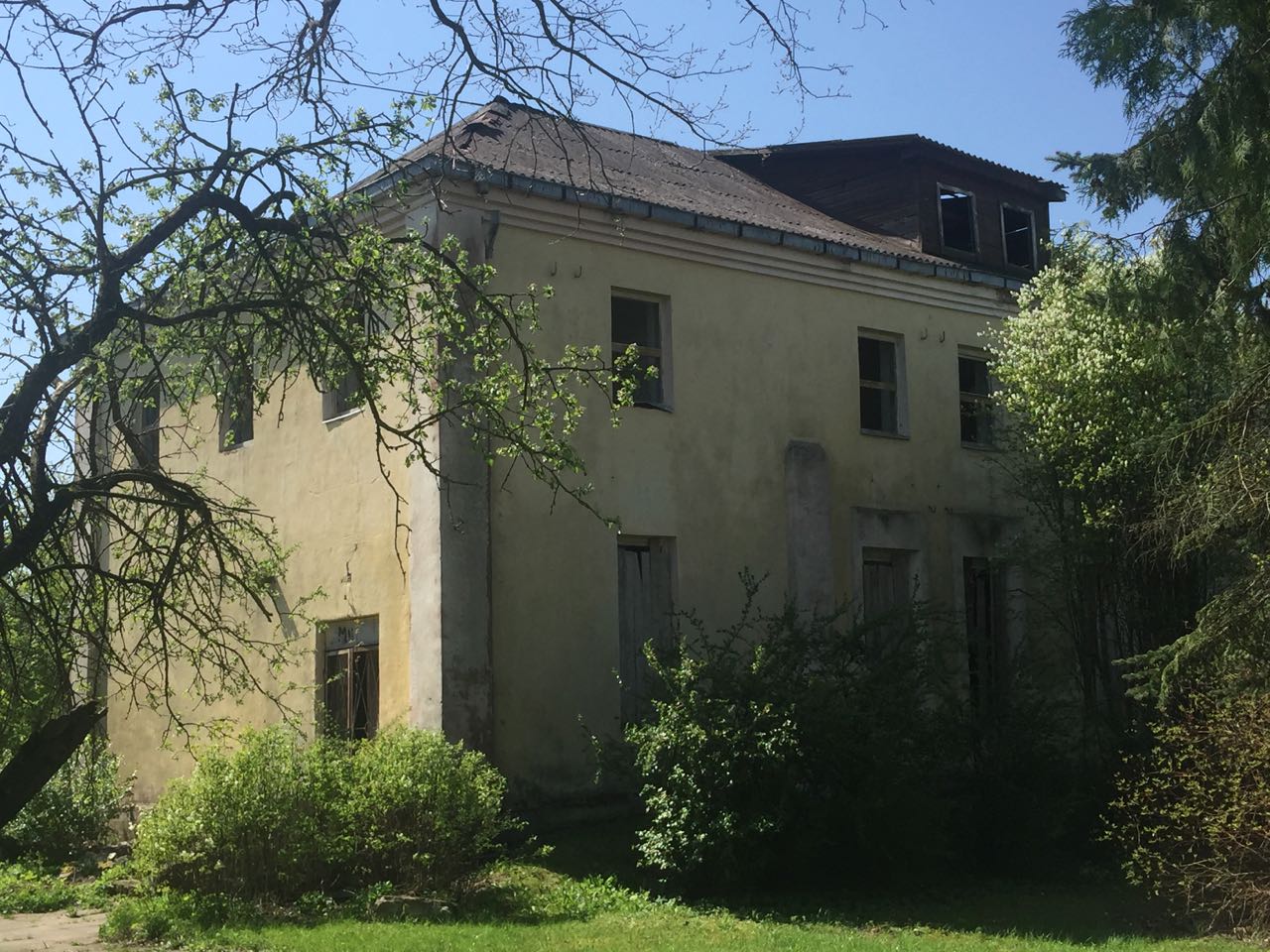
I stayed in the Palace overnight – the only one in the building. Spooky!

Walk at Dusk   


Morning has broken         
The Old Jewish Cemetery
A walk into town

Plaque and Memorial

cycling around town with Sarah Mitrike

With Sarah and Mindaugas Balciunas

At the Lithuanian / Latvian border

Video


Saulius, Sarah’s husband, making beer
With Alma, Geography teacher at Zagare High School

Video – watching my presentation

My previous visits to Zagare were in 2014 & 2016

Zagare

Photos and info from my 2016 visit.

Source: elirab.me/zagare/

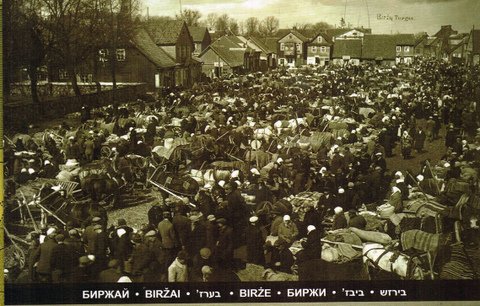
Birzh

This is my second visit to Birzai or Birzh, Lithuania, as it was called. My first was in June 2015

Birzai – My Photos from June 2015

Photos

Source: kehilalinks.jewishgen.org/birzai/Photos.html

May 2018

I met with Merunas Jukonis, the youth coordinator in the town. He and his dad, Vidmantas, have been very active in working in the field of Tolerance education, Holocaust commemoration and related projects. See report below: 


Report by Abel and Glenda Levitt, November 2015

While in Lithuania last week we spent a fascinating 4 days in Birzai, known to the Jews who lived there as Birzh.

On 8th August 1941 the 2400 Jews of the town were marched to the forest where they were all murdered, Men, Women and Children.

There exists in Birzai an ancient Karaite and Jewish cemetery. For years it remained neglected and uncared for.

And then a few years ago, the local teacher of History and Tolerance, Vidmantas Jukonis, together with his son Merunas, also a teacher of History, started a project of cleaning up the cemetery  ,  removing the overgrown grass and weeds, and cutting the trees.  They were joined by the local Reformed Lutheran Church where they are members ,and then by a Lutheran community in Germany who came to Birzai in the summer, camped outside the walls of the cemetery, and helped with the work. Later they made contact with SEFER, the well-known organization in Moscow specializing in Jewish Heritage,  Sefer conducted a big 3 year academic international project

The participants were:

1) Center for University Teaching of Jewish Civilization “SEFER” .Moscow                                 

2) Institute of Slavic Studies of the Russian Academy of Sciences .Moscow                                     

3) Centre for the Studies of the Culture and History of East European Jews . Vilnius                                   

4)Birzai Regional Museum “Sela” Birzai                                 

 5) Yad Vashem The Holocaust Martyrs and Heroes Remembrance Authority . Jerusalem

Professionals and Volunteers joined in the project and expertly cleaned the gravestones, identified the names, and mapped out the gravestones that were still there. The leader of the final group was Motl Gordon, a St. Petersburg Jew, who became religious a few years agofluent in Yiddish.  This final group was funded by the Birzai municipality (half) and by local sponsors, including the family of Sheftel Melamed, the last Jew in Birzai, who passed away on 31st August 2015. The Birzai district municipality also helped with materials, logistics and more.

The Birzai “Ausra” secondary school’s Tolerance Education Centre,  headed by Vidmantas Jukonis  provided volunteers , citizens of Birzai, who remembered Jews, arranged meetings for those people, and drove groups of students to meet them.

In Birzai on Friday afternoon an event was held to celebrate the completion of the project, and to launch the book that had been written about the project and its findings.

The book, 374 pages , in Russian, was published by SEFER  with the help of the  GENESIS Philanthropy Group and the UJA FEDERATION OF NEW YORK.

INSIDE OF FRONT COVER

There is little in English in the book. But from the table of contents (in English) it appears that there is much of interest. The book is written in the form of essays written by scholars involved in the project and tables recording the 1627 stones that were found in the cemetery, mostof them with names.

Glenda and I were given a copy. When I asked if we could buy some more, for family and friends with an interest in Birzai (Birzh) Motl Gordon told usthat they had distributed the few copies that they had brought for the event, but that he would enquire from Sefer in Moscowwhat the cost would be to buy.

It is hoped that a translation into English will be available via a PDF document on-line. Attached are photos of the front cover (1), the back cover (2), a photo on the inside front cover (5) and a photo on the inside back cover (6). This book is of great historic importance.

A rough check of the list of tombstones shows that the last two tombstones to be erected and that remain are those of Barukh Michaelson (he was the famous town photographer) who died on 13th July 1939, and Herce (Hirsch) Evin,  who died in 1940.  Michaelson’s tombstone was found buried during the work on the cemetery and restored.  It should be noted that after the Soviet occupation in June 1940 Jewish religious life came to a halt and it is probable that no further Jewish funerals and consecration of tombstones took place.  There was however a tombstone dated 1945. And the newer tombstones from the ’30’s were probably stolen and used in building as was the case throughout Lithuania.


Bennie Rabinowitz and The Birzh Torah

Torah

Source: kehilalinks.jewishgen.org/birzai/Torah.html

The Birzai KehilaLink

Home

Source: kehilalinks.jewishgen.org/birzai/Home.html

My Photos, May 2018

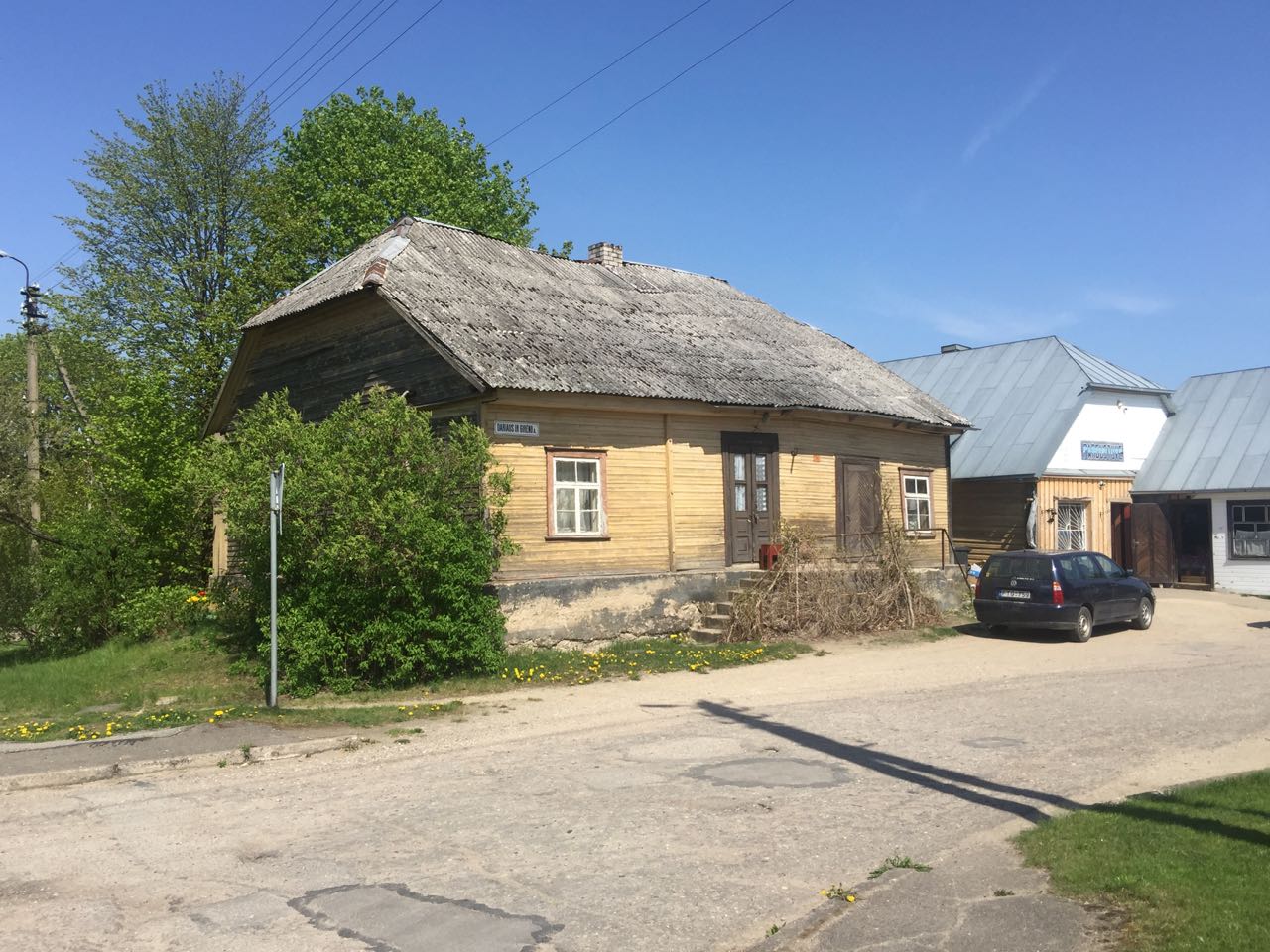
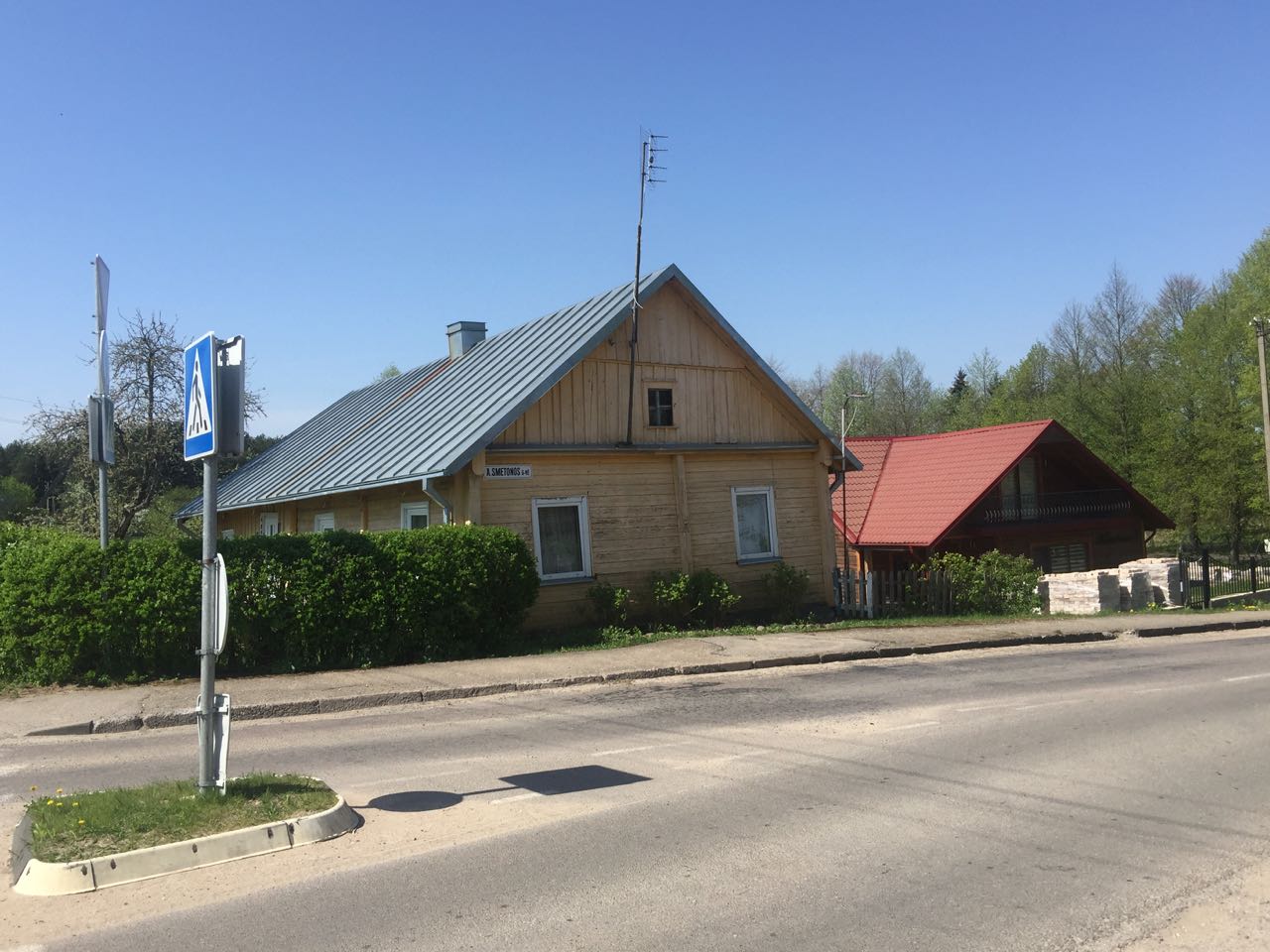
A short walk around town.  Old buildings in the former Jewish area.  

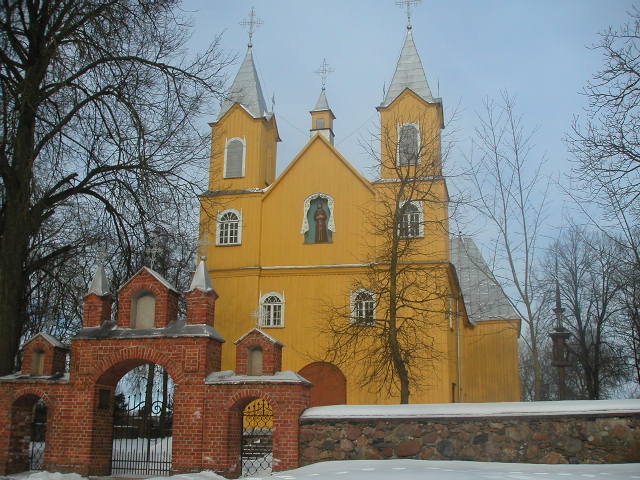
Merunas’s Lutheran Church
 
Soviet War Memorial
Merunas’s High school 

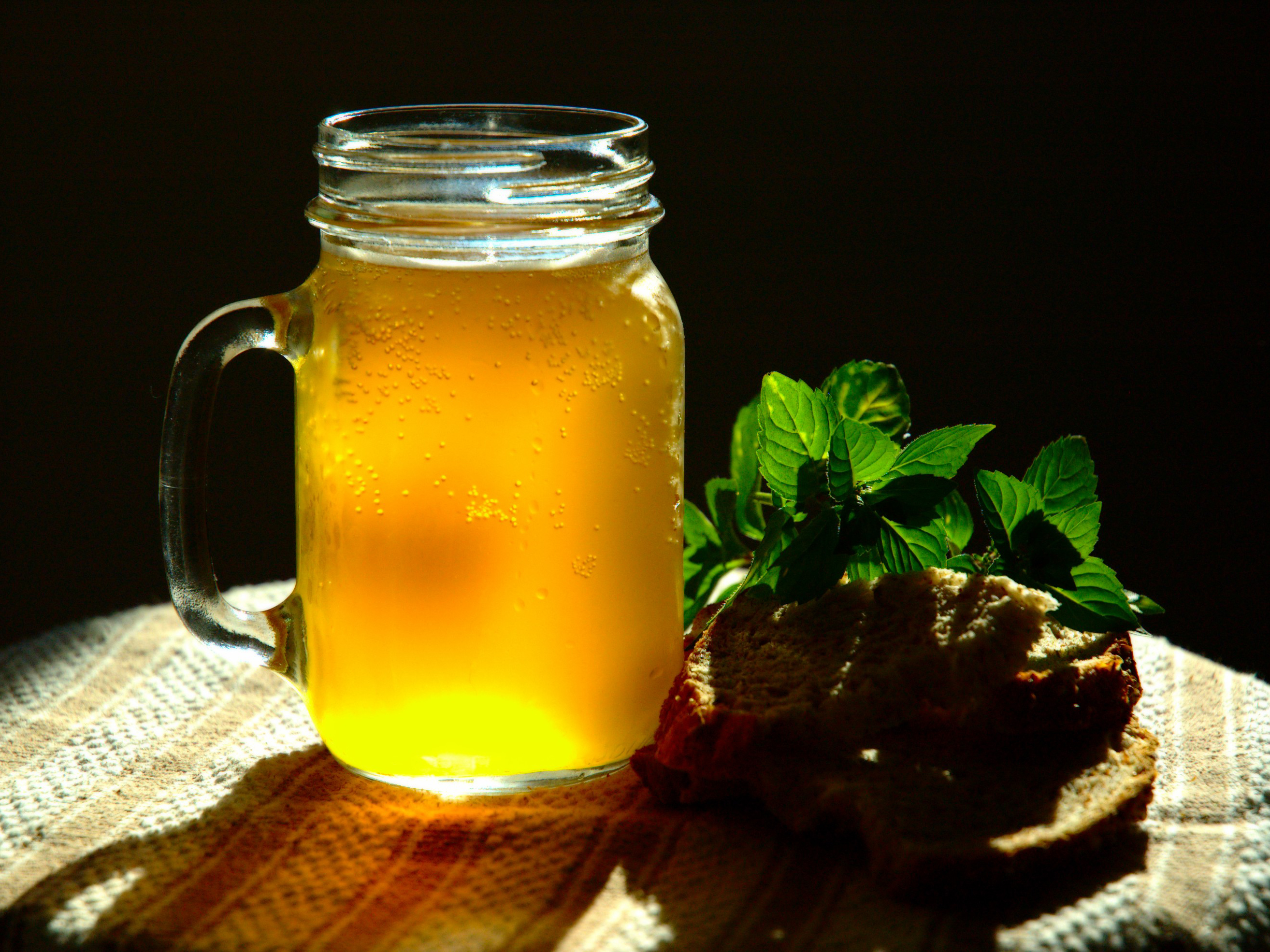
Lunch Time and enjoying kvass


Kvass 

Kvass – Wikipedia

Kvass is a traditional Slavic and Baltic beverage commonly made from rye bread ,[1] known in many Eastern European countries and especially in Ukraine and Russia as black bread. The colour of the bread used contributes to the colour of the resulting drink. It is classified as a non-alcoholic drink by Russian standards, as the alcohol content from fermentation is typically low (0.5–1.0%).[2][3] It may be flavoured with fruits such as strawberries and raisins, or with herbs such as mint.[4]

Source: en.wikipedia.org/wiki/Kvass

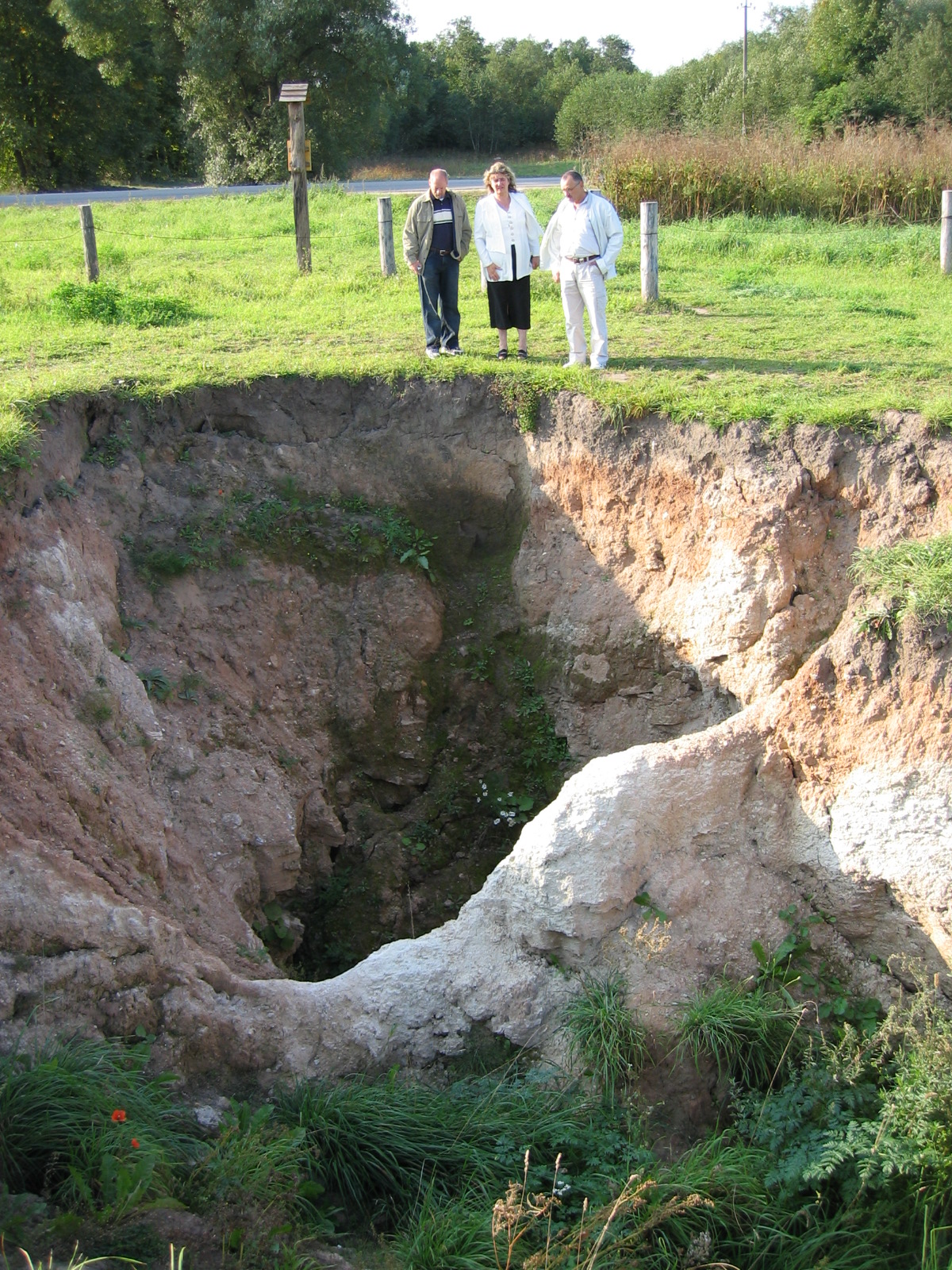
Sinkholes in Birzai


Biržai Regional Park 

Biržai Regional Park – Wikipedia

Biržai Regional Park covers 14,659 hectares (36,220 acres) in northern Lithuania near its border with Latvia. It was established in 1992 to preserve a distinctive karst landscape. About 20% of its area is covered by forest.

Source: en.wikipedia.org/wiki/Birzai_Regional_Park

 
More About Biržai 

Biržai – Wikipedia

Biržai ( pronunciation (help·info), known also by several alternative names) is a city in northern Lithuania. Biržai is famous for its reconstructed Biržai Castle manor, and the whole region is renowned for its many traditional-recipe beer breweries.

Source: en.wikipedia.org/wiki/Birzai

Shavlan

May 2018

This is my second visit to Siaulenai, Lithuania, the first being in 2016. Once again I did not seem to be able to find the location of the Jewish cemetery. Siaulenai or Shavlan as it was known, was the shtetl of my wife, Jill Reitstein Rabinowitz’s maternal Saevitzon and Meyerowitz families.

How frustrating, as Shavlan is not exactly around the corner from where I live, in Perth Australia, nor for that matter, anywhere else! However, there is good news!

Please read on:

A Stone with a Story

by Jill’s cousin,  Richard Shavei-Tzion in  Israel

9 July 2015

The picture below is of the tombstone of my father’s father’s father (all of us first- born so it happens.) You can work out your connection from that. Abba Saevitzon died in Johannesburg 103 years ago. I have been searching for his grave for a long time and with our impending trip to SA I thought I would have another try. This time the Johannesburg Chevra Kaddisha really came through.

This story is cobbled together from anecdotes I have heard over the years. The family, Abba (first time I see that his English name was Albert), his wife Chai Sarah, 3 sons, Morris, Sam and Harry and daughter Bunty arrived in Cape Town from Savlan (?) a small town in White Russia, in 1911. Shortly thereafter he heard of a work opportunity in Johannesburg and the family travelled north using their remaining funds. Within a month Abba passed away and was buried in the local Braamfontein cemetery. However the survivors had no financial means with which to purchase a tombstone. They somehow travelled back to Cape Town where the older kids were sent to foster homes. My grandfather Morris aged 14, lived in such a home and spent his days working at the Cape Town docks, receiving fish as they came off the fishing boats, cleaning them and carting them to the local fish market. Ruthy and Geoffrey both recall that they hardly saw him as kids because he was working so hard to ensure that they would be well educated. You can see where his motivation came from.

Anyway, a number of years later the family had scraped together enough funds to travel back to Johannesburg, purchase a stone and consecrate it. I personally am humbled by such an act of loving kindness. While scanning through hundreds of gravestones in the cemetery, of Jews who died in the first quarter of the 20th century, I was amazed to find that the average lifespan was 50 odd. As someone who has just turned 60, how fortunate I feel!

The stone indicates that he died on the second day of Succot and that his father’s name was Yitschak. Who knows when the name “Abba” first appeared in the family, but my father and his cousin Monty were both named after him and of my nephews and grandsons, at least 3 are named in his memory so the tradition lives on.

All being well, when we are in Johannesburg I plan on visiting the grave. It will be a privilege.

Richard Shavei-Tzion 

Richard Shavei-Tzion stands between his grandparents’ and his wife’s grandparents’ graves facing each other amongst tens of thousands in the Pinelands Cemetery, Cape Town

My family’s experience reflects the migratory patterns of South African Jewry, and nowhere is this more apparent than in the cemeteries of Cape Town. None of my great-great-grandparents is buried there, all having lived and died in Europe. Yet, with one exception, all of my great-grandparents and grandparents are laid to rest in these well-ordered cemeteries. They arrived between 1895 and 1916, three Litvak families and one from England, again a fair representation of South African Jewry’s roots.

The Jewish cemeteries in South Africa are for the most, lovingly maintained with the care that typifies Jewish communal life in the country. This is a community which thrives on an ethos of shared responsibility and mutual care. Despite its diminished number (now approximately 70,000 souls, down from 110,000 in the 1960’s) its institutions are thriving and the various burial societies are at the forefront of this phenomenon.

Unmarked children’s graves at Braamfontein Cemetery, Johannesburg

The Pinelands Cemetery in Cape Town has tens of thousands of graves. It is a well-ordered place with tombs marked by relatively standardized black upright stones. All of the graves appear on an online data base. A while ago, an American therapist friend asked if I could help her elderly South African client who had been distressed for years because she did not know her late mother’s Hebrew name. Within minutes I was able to provide her name and Yahrzeit and a photograph of the tombstone.

It is my custom to visit my ancestors’ tombstones once every few years when I travel to Cape Town from my home town of Jerusalem. Some years ago I went to visit my paternal grandparents Morris and Fanny Saevitzons’ graves. When I turned to leave, I was stunned by what I saw opposite. Call it cosmic chance, coincidence or “basheert”, but there, directly facing my grandparents’ tombstones, were the tombstones of Harry and Mina Lonstein, my wife’s maternal grandparents.

I mentioned that I have one ancestor who is not buried in Cape Town. Therein lies a story. I have been searching for this “missing” grave for a long time and with an impending trip to South Africa I thought I would try again. This time, between an intensive search of Internet sources and correspondence with the Johannesburg Chevra Kadisha, the self-styled “Chev”, we were able to locate the grave.

I happen to be an oldest son of an oldest son of an oldest son. My paternal great-grandfather, Abba Meir (Albert) Saevitzon together with his wife Chai Sarah and three sons arrived in Cape Town from Savlan, a small town in White Russia, in 1911. Their daughter was born within a few weeks of their arrival.

Almost immediately, Abba heard of a work opportunity in Johannesburg and the family travelled north, using all their remaining funds. Tragically, within a month he passed away and was buried in Johannesburg. The widowed, penniless Chai Sarah had no financial means with which to purchase a tombstone and was forced to leave the grave unmarked. She and her children returned to Cape Town with donated funds, where the older boys were sent to foster homes.

My grandfather, Morris, aged 14, lived in such a home and spent his days working at a local fishing harbor, cleaning fish as they came off the fishing boats, then carting them to the local fish market. He later became a fisherman and then worked in his father-in-law’s delicatessen store in the suburb of Wynberg, the heart of Cape Town’s Jewish community at that time. My aunt and uncle recall that as kids they hardly saw their father because he was working so hard to ensure that they would be well educated. You can see where his motivation came from. When I think of the “problems” we face in our day-to-day lives compared to those of my ancestors, I am chastened.

Yet even as the destitute family slowly began to establish itself, they did not forget their loved one’s burial place. So it was that a number of years after Abba’s passing, using the first of their savings, the family travelled for two days by train back to Johannesburg, purchased a tombstone and consecrated it.

On a typically cool but cloudless Johannesburg winter day I set out for the Westpark Cemetery, where Jews have been buried since around 1945. From there I was kindlyaccompanied by Mr. Braam Shevel who works at the Chev, to the Braamfontein Cemetery in what is now a very grungy area of the city.

Johannesburg was formally established in 1886 with the discovery of gold in the area and when the first Jew died there in 1887, a delegation of leaders of the emerging Jewish community travelled, one would imagine by horse or ox-wagon, to Pretoria to petition Paul Kruger for land for a Jewish cemetery. Kruger, president of the break-away South African Republic, and later the leader of the Boers in the Anglo-Boer War, acceded to their request and the first of approximately 90,000 Jewish graves in Johannesburg to date was dug there in Braamfontein.

Richard Shavei-Tzion at the grave of his great-grandfather at Braamfontein Cemetery, Johannesburg

Braam unlocked the heavy iron gate at the entrance to the cemetery, signaled me to drive in and locked the gate behind us. I was surprised by my feeling of peace and tranquility in this place despite its uncertain surroundings. The cemetery, shaded by tall, aged eucalyptus trees, is well maintained despite its age. As we searched for the stone, we passed tombs of the founders of the community and its institutions, mayors and mining magnates, famous personalities and the regular men and women who were drawn to the fledgling metropolis. Striking were the ages of people who died just one hundred years ago. By my very rough calculation, the average life span of the adults was no more than fifty years. Then there were the rows of children’s and infants’ graves, stark evidence of the rates of child mortality and the Spanish Flu pandemic of 1918-19.

And then from a little way off I spotted the name SAEVITZON and approached the stone, with an inexplicable sense of thanksgiving and reverence. It was in remarkable condition and I discovered that Abba Saevitzon died on the second day of Succot, having lived 37 years. Who knows when the name Abba first appeared in the family, but my father and his cousin were named after him and a number of my nephews and grandsons are named in my father’s memory so the tradition lives on.

Looking around, I noticed many unmarked graves, some whose names were unknown;  others whose names were not marked for similar financial reasons and I was humbled by this act of care, sacrifice and loving kindness on the part of my ancestors.

I placed four stones on the grave, one for each of his children’s families,and turned to go.

Source: Esra Magazine

Chai Sarah Meyerowitz Saevitzon’s tombstone in Cape Town. Very indisctinct but some of the wording can be deciphered as you zoom in.
http://www.esra-magazine.com/blog/author/Richard%20Shavei%20Tzion-706

Richard Shavei Tzion

Cape Town born Richard Shavei-Tzion is an autodidact in all his fields of creative activity. At age 18 he was invited to conduct the Pine Street Shul Choir in Johannesburg. Since then he has directed choral ensembles in both South Africa and Israel. For the past 20 years he has directed the Ramatayim Men’s Choir, Jerusalem which has grown from an ad hoc group of 4 friends into an internationally renowned ensemble consisting of 40 singers. He has conducted High Holidays services for the past 35 years in South Africa, Israel, the U.S.A. and Canada and is often invited to lead communal events, singing and playing guitar. He also composes and arranges Jewish music, mainly for the RMC. 

His poetry has been published widely over decades. In 2015 the Municipal Art Gallery of Jerusalem displayed his photographic works in a solo exhibition which received popular and critical praise.  He is the author of the “Prayer for the Preservation of the Environment” which has been read in synagogues of all denominations and other venues around the world and he writes articles of social and cultural interest.

An accountant by profession, Richard manages a property development and management company. He and his wife Cheryl nee Gantovnik who was born in Durban, have three daughters and sons-in-law and seven grandchildren. Their recently released family CD “Round Table,” has been received warmly.


Descendants of Abba Meir Saevitzon and Chai Sarah Meyerowitz


Descendant Chart Abba Meir Saevitzon
My first visit, June 2016:

My first visit to this town was not so successful. I searched for the Jewish cemetery, asked at the Christian cemetery, and was told by locals that there was a Jewish cemetery on the other side of town. I couldn’t find it and I ran out of time.
I later emailed Sandra Petrukonyte of Maceva, who kindly replied:

Dear Eli,

It is so pity that you could not find. I tried to search for exact location. The map is attached (for your future journey!).
It is seems that the way to the cemetery is not marked by any sign, the path is not paved and the cemetery itself is in a small distant forest. Not surprising that you got lost.

MACEVA does not have own photos, therefore I am adding links to another websites with general view of the cemetery:

Siaulenai_jewish_cemetery

So, I will revisit next time.

Here are some of my images taken in 2016:

My second visit in May 2018
May 2018
Once again I initially couldn’t find the cemetery. Google Maps did not recognise the address in Sandra’s link and I somehow missed her map from 2016.
 
However, I returned to the Christian cemetery and asked those working there.  I wasn’t hopeful as they appeared the type to be unlikely to understand English. However, I spotted someone younger, Gytenis Sudintas. His English was good (he is in IT). However,  he wasn’t a local! To his credit, he asked around and was directed to a man who lives across the road from the Christian cemetery. I do not recall this man’s name, but he is also in the photo below.  He put on his shirt and shoes, got into his car and told us to follow him in my car.

About 7 minutes later, we were at the “entrance” of the Jewish cemetery. I would like to thank both of them for their invaluable help.

On the other side of the town – we find the cemetery!

With Gytenis Sudintas and the man who we followed

Photos of matsevot in the cemetery

So now to see if any belong to the family!

Siaulenai KehilaLink

Siaulenai

Source: kehilalinks.jewishgen.org/Siaulenai/

Shavlan – A Woman’s Journey to Independence

Shavlan – A Woman’s Journey to Independence

Sarah Taube cowers in the bakery cellar clutching her three children, listening to the sounds of shooting and shouting by the White Cossacks during a pogrom. In order to survive, she enters into a bargain with the ruthless Commissar, Dimitri, an orthodox Jew transformed by tragedy into a high-ranking Bolshevik. Will Dimitri be able to protect Sarah Taube and her family? Will Sarah Taube be reunited with her wanderlust husband who leaves for South Africa to seek his fortune and find himself, and will she realize her life long dream to go to America?

Source: shavlan.com

Lithuanian Jewish communities

by Stuart and Nancy Schoenberg

https://archive.org/stream/nybc314248#page/n286/mode/2up/search/shavlan


Seduva – Rozalimas

More from the Seduva Museum ceremony
The LP donated by film maker Saulius  Berzinis to the Seduva Museum

Mordechai Hershman

Mordechai Hershman – Wikipedia

Mordecai Hershman (1888–1940) was a Ukrainian-born American Jewish cantor (“hazzan”) and singer.

Source: en.wikipedia.org/wiki/Mordechai_Hershman

Vinyl Donation 

Video

Vinyl Donation

by Saulius Berzinis

Source: youtu.be/EDTmu6fHRmw

Cantor Mordechai Hershman sings Eilu Devurim

Cantor Mordechai Hershman sings Eilu Devurim

Mordechai Hershman (1888-1940) Mordecai Hershman was born in Chernigov and from an early age was an active participant in several synagogue choirs. His first…

Source: youtu.be/cnc59rdf4pY


Saulius Berzinis – filmmaker – Film Studio Kopa
With Laura, film producer and associate of Saulius
A week later in Vilnius with Saulius and Laura in Vilnius


After The Ceremony
At the restaurant after the ceremony


With the ambassadors of Finland, Great Britain and USA
On my way to Rozalimas

The Rozalimas Wooden Synagogue 

Rozalimas

Rozalimas – Wikipedia

Rozalimas is a small town in Šiauliai County in northern-central Lithuania. As of 2011 it had a population of 746.[1]

Source: en.wikipedia.org/wiki/Rozalimas

Two railway crossings, same train!

On  the way to Siauliai

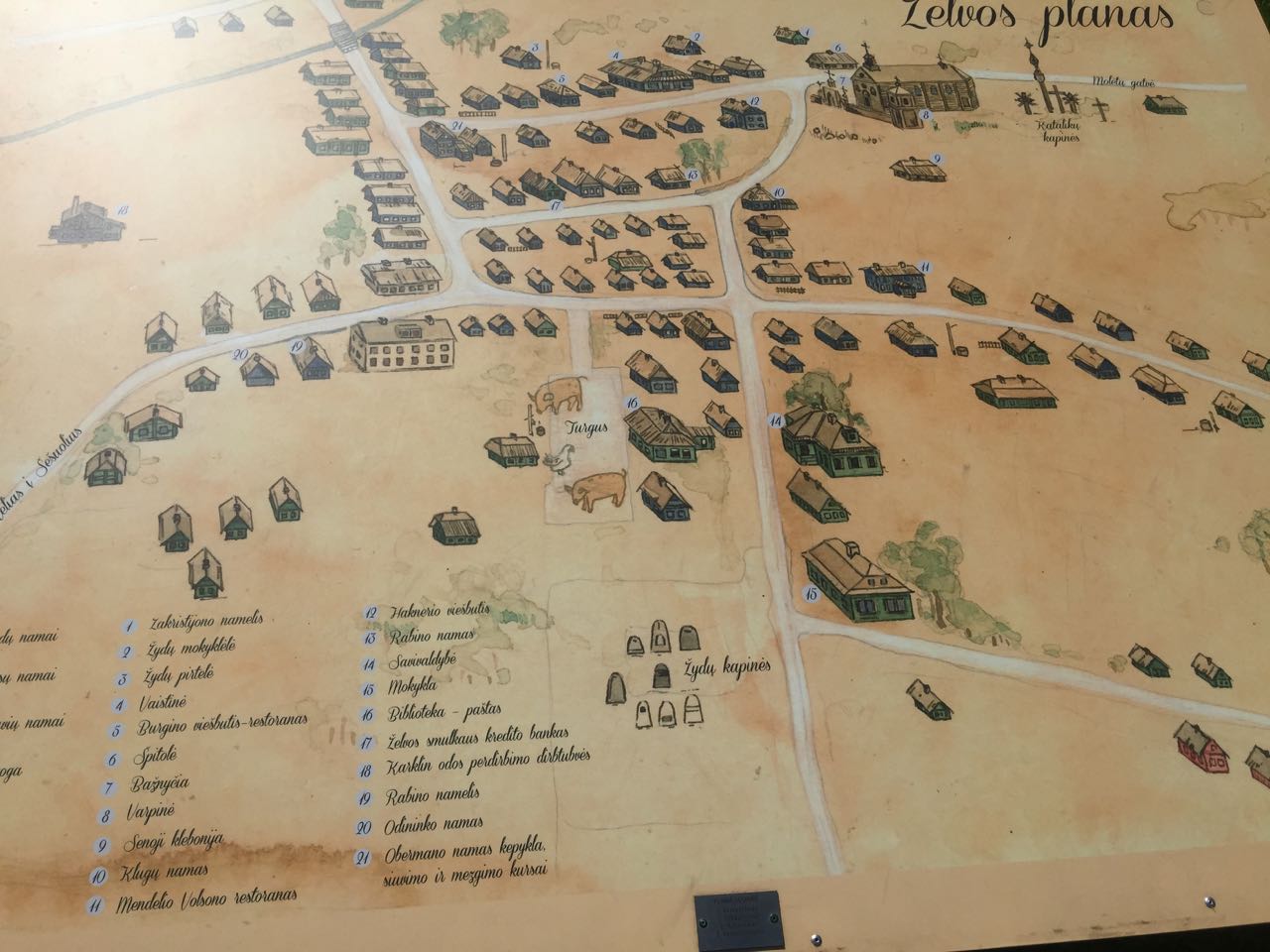
Zelva Lithuania

Zelva, Lithuania KehilaLink

Sir Aaron Krug

Source: kehilalinks.jewishgen.org/zelva/Home.html


Alanta

Alanta – Wikipedia

Alanta (dialectal Aukštaitian name Alunta, Polish: Owanta, Yiddish אַוואָנטע) is a small town in Molėtai district municipality, Lithuania. It is the administrative seat of the Alanta Elderate. According to a census in 2011, Alanta had 348 residents.[1] It is situated at the crossing of two roads: Molėtai–Anykščiai and Utena–Alanta–Ukmergė. The town’s St. Jacob’s church was built in 1909.

Source: en.wikipedia.org/wiki/Alanta

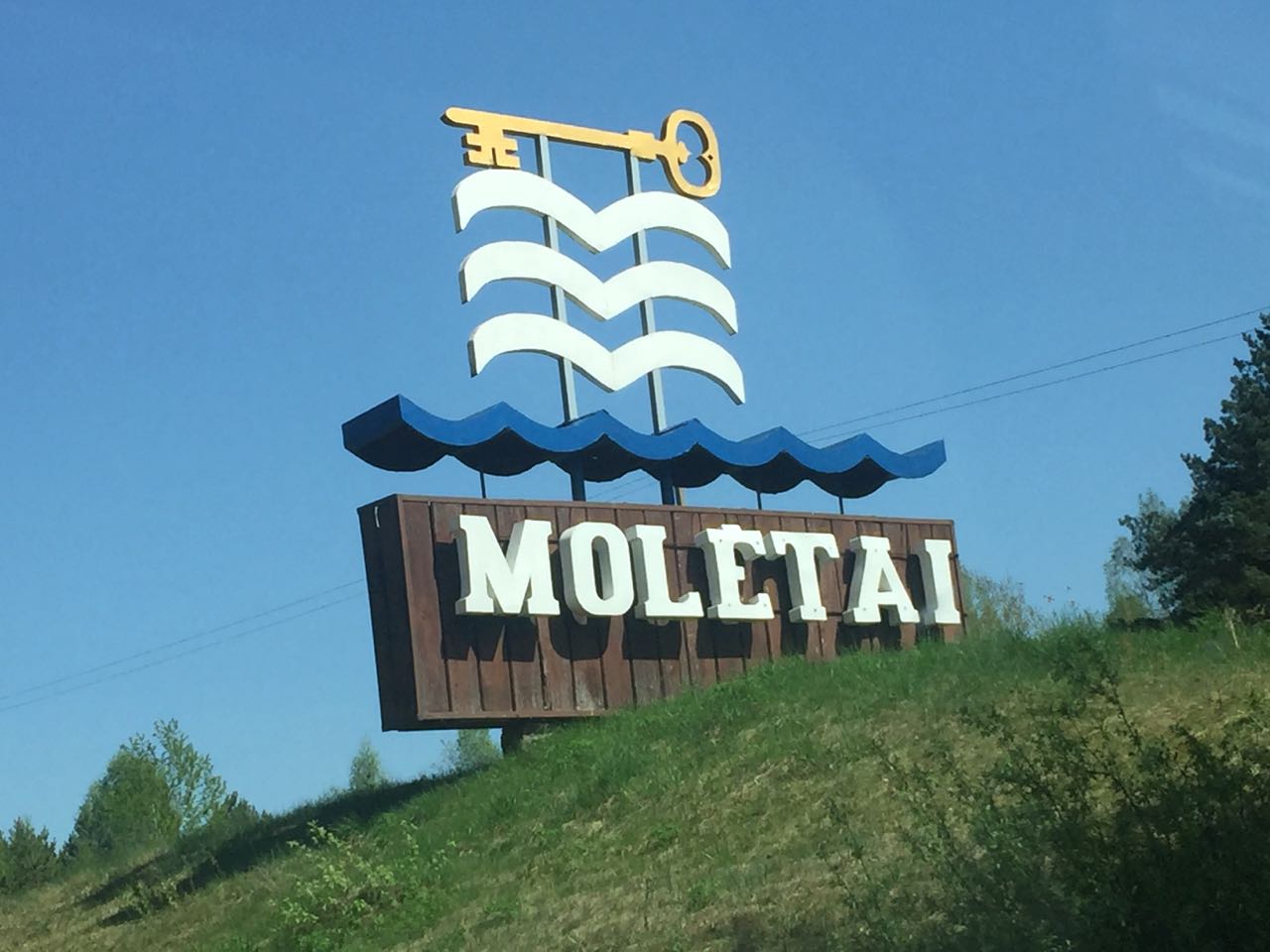
Molėtai

Molėtai – Wikipedia

Molėtai ( pronunciation (help·info)) (Polish: Malaty) is a town in north eastern Lithuania. One of the oldest settlements in Lithuania, it is a popular resort for the inhabitants of Vilnius. According to the 2013 census, it had 6,302 inhabitants.

Source: en.wikipedia.org/wiki/Moletai

The Lost Shtetl of Lithuania

My op-ed in the Australian Jewish News today


Wth Laima Ardaviciene and the students of Atzalynas High School Kedainiai
With Laima Ardaviciene and Edwin Glasenberg
With the ambassadors of Finland, Great Britain and the USA
With Milda Jakulyte and the ladies of the Lost Shtetl team
With Sergey Kanovich of the Lost Shtetl

The Australian Jewish News – AJN

The Australian Jewish News – AJN

AJN

Source: www.jewishnews.net.au

Naliboki

Nalibaki – Wikipedia

Nalibaki – Wikipedia

Nalibaki (Belarusian: Налібакі, Russian: Налибоки, Polish: Naliboki) is an agrotown in Minsk Region, in western Belarus.

Source: en.wikipedia.org/wiki/Nalibaki

Video – Jewish Historical References in Naliboki

Jewish Historical References in Naliboki

Tamara Vershitskaya 16 May 2018

Source: youtu.be/TU2ZVBzldtE

Video – Jewish Memorial in Naliboki

Jewish Memorial in Naliboki

Tamara Vershitskaya, Alexander Pilinkievich, chairman of the local village council, and Ivan – builder 16 May 2018

Source: youtu.be/Nf3QBLP-YYA

Video – Plans for Naliboki

Plans for Naliboki

Tamara Vershitskaya and Ivan 16 May 2018

Source: youtu.be/aFb4YnB9j4Q

A Private Mikvah


Video – The Private Mikvah

The Private Mikvah

Tamara Vershitskaya talks about the mikvah in Naliboki Belarus 16 May 2018

Source: youtu.be/lndsEPiKshM

Naliboki massacre – Wikipedia

Naliboki massacre – Wikipedia

The Naliboki massacre (Polish: Zbrodnia w Nalibokach) was the mass killing of 129 Poles,[2] including women and children, by Soviet partisans[3] on 8 May 1943 in the small town of Naliboki[4] in German-occupied Poland (the town is now in Belarus).[5] Before the 1939 German-Soviet invasion of Poland, Naliboki was part of Stołpce County, Nowogródek Voivodeship, in eastern Poland.[1]

Source: en.wikipedia.org/wiki/Naliboki_massacre

New Doornfontein Tour

I am posting this on behalf on my friend Ishvara.
Do not miss this tour!
I have included Links below to the 2016 tour I went on.

  Doornfontein : a journey through a Jewish Shtetl

on Sunday the 27th May 2018 at 10 am we are meeting otside Ellis Park for

a walk through the old Jewish neighbourhood of Johannesburg.

Some of the highlights en route include :
* the Lion Shul : 1906
* Yiddishe Arbeiter Klub : the Jewish Workers Club : 1928
* the Alhambra Theatre
* the Yiddishe Altesheim : Jewish Old Age Home
* Beit Hamedrash Hagodel : the Sherwell St Shul
* the first Greek Orthodox Church in Joburg : 1913
* the Beit St shops – Wachenheimers , Nussbaums etc
* the Ottoman Embassy : home of Henri Bettelheim
* the University of Johannesburg Campus
* the Jewish Govt School : IH Harris Primary
* the Hebrew High School : Talmud Torah
* the old Victorian homes on Sivewright St
* the Great Synagogue on Wolmarans St : 1914

Meeting Place : corner Dora St & Beit St at the main entrance to Ellis Park Stadium
Parking : safe free parking outside Ellis Park entrance : Dora / Beit St ( paid security guards to look after cars )

Date : Sunday 27th May 2018
Times : 10h00 till 14h00

Cost : R180-00 per person
Lunch : I suggest that you bring a snack or picnic, sorry all the Kosher delis moved away many years ago.

However there are plenty of places along the way to buy cooldrinks.

LIMITED SPACE : please send an email to confirm that there is space available before doing an EFT  deposit of R180-00 per person

NO CASH PAYMENTS ON THE DAY

NO CREDITS

NO REFUNDS

..use your surname/Doornfontein as a reference.
send an email with names and proof of payment to ishvara@africansecrets.co.za after doing an EFT

Please note – men please bring a yarmulke for entering the synagogues

***************

Doornfontein Walking Tour – Part 1 2016

Doornfontein Walking Tour – Part 1

I have divided this outstanding 4 ½ hours walking tour of Doorfontein into separate posts. Here is the first: Introduction and the Lions Shul. I only found out about this tour a couple of weeks bef…

Click on source: elirab.me/doornfontein-walking-tour-part-1/

There are 4 parts to this post!

IAJGS Conference Warsaw 2018

We are very pleased to inform you that the following proposal has been accepted for presentation at the 38th IAJGS International Conference on Jewish Genealogy in Warsaw, Poland from August 5 -10, 2018.

Schedule
2018 Conference Schedule
Abtract #1
The Partisan Song Project and Genealogy – Inspiring and Connecting a New Generation

“Zog Nit Keynmol” is the anthem of Holocaust survivors. It is a legacy that is in danger of soon dying out. The Partisan Song Project is an initiative to connect it to the next generation through meaning, context, and family histories.

This multi-media presentation follows the path of the project from its genesis in January 2017:

the initial request from a school for information;

my research methodology and content;

my “out of the box” teaching style to 1000 students;

planning and running a separate online class with five schools in the FSU and hosted by a sixth;

introducing family history to the program;

working with more schools;

spreading the message via social media, Holocaust centres and survivors;

going global with the support of World ORT; HET UK, TEC Lithuania, Yad Vashem; and

the case study of Oscar Borecki, a Bielski Partisan from Novogrudok and commemorating his legacy in Australia.

Handout

Warsaw Handout 1
Abstract #2

Back From the Polish and Litvak Diaspora: Virtual Journeys That Connect Us To Our Roots.

Back From the Polish and Litvak Diaspora: Virtual Journeys That Connect Us To Our Roots.

My first heritage visit to Poland and the Baltics was in 2011. I have returned six times since, accumulating a wealth of information, photos, stories and contacts.

In this multimedia presentation find out why and how we gather and share this data with others in mind; and why we include both past and contemporary Jewish Life.

I will help you grasp the importance of the web using the following tools, drawing on some examples:

JewishGen KehilaLinks – my 80 KehilaLinks (35 Lithuania, 7 Poland, 6 Belarus, others in Latvia, Germany, Russia, Estonia, China, Africa and Australia);

WordPress – 600 posts and pages that make up my tangential travel and Jewish Life website http://elirab.me;

online classrooms which can simultaneously connect nine schools at once;

Google, including Google Search, YouTube, Translate, Maps, Earth, Hangouts, Chrome and Drive;

social media networks such as Facebook, Twitter and LinkedIn; and

additional resources such as Wikipedia

Handout

Warsaw Handout 2


Warsaw KehilaLink

I am pleased to advise I have taken on the important project of creating
and running the Warsaw KehilaLink.

It is quite surprising that there has been no KehilaLink for Warsaw,
once the largest Jewish city in Europe and the second largest in the
world after New York.

JewishGen KehilaLinks (formerly “ShtetLinks”) is a project
facilitating web pages commemorating the places where Jews have lived.

Kehila  [Hebrew] n. (pl. kehilot): is used to refer to a Jewish
community, anywhere in the world.

KehilaLinks are hosted by JewishGen, the world’s largest Jewish
genealogical organisation. It has a user base of over 500,000 registered
users worldwide.

I invite you to send in your stories, memories, photos and family
biographies.

The link to the site under construction:

Warsaw 

Home

Jewish Community of Warsaw

Source: kehilalinks.jewishgen.org/warsaw/Home.html


IAJGS Orlando 2017

IAJGS Orlando

Orlando Jewish Info – Your Jewish Guide to Orlando Orlando Jewish Info – Your Jewish Guide to Orlando Orlando Jewish Info Guide Source: www.orlandojewishinfo.com Getting there The Swan …

Source: elirab.me/iajgs-orlando/

Chanukah In The Park

With Mickey Shaked
Rabbi Shalom White lighting the first candle

The lighting of the first candle was watched by students at the Atzalynas High School in Kedainiai, Lithuania. I used skype and my iPhone to stream this back live to Laima Ardaviciene and her class. This is the second year in a row we have engaged Laima and her class on Chanukah.

Viewing it all from the classroom in Kedainiai, Lithuania

I introduced my friend Heiny Ellert to the class. Heiny, 95, is a Holocaust survivor from Neishtot-Tavrig, today Žemaičių Naumiestis, in Lithuania.

With Heiny Ellert earlier this year

See Heiny Ellert’s Testimony

Heiny Ellert’s Testimony

Heiny Ellert, a Lithuanian Holocaust survivor, tells his story to Eli Rabinowitz. Accompanying him is his wife Toby, also from Lithuania, but who escaped to …

Source: youtu.be/118HN2_NYHs

Žemaičių Naumiestis

Žemaičių Naumiestis

Žemaičių Naumiestis Town in Lithuania Žemaičių Naumiestis is a town in Klaipėda county, Šilutė district municipality. It is located in western Lithuania between Klaipėda and Kaliningrad Oblast. The…

Source: elirab.me/zemaiciu-naumiestis/

The miracle of Chanukah and the miracle of survival for Heinry Ellert!

This is a second year in a row that:

Maoz Tzur Sung in Perth Heard in Keidan

Maoz Tzur Sung in Perth Heard in Keidan

Just think of this – when was the last time Maoz Tzur was heard in Keidan, Lithuania, sung by a Jewish kid? Maybe 75 years ago! When Laima Ardaviciene, the English teacher at Atzalyno Gymnazi…

Source: elirab.me/maoz-tzur-sung-in-perth-heard-in-keidan/

Back