It began when I started searching “Rachel Rabinowitz” on Google.
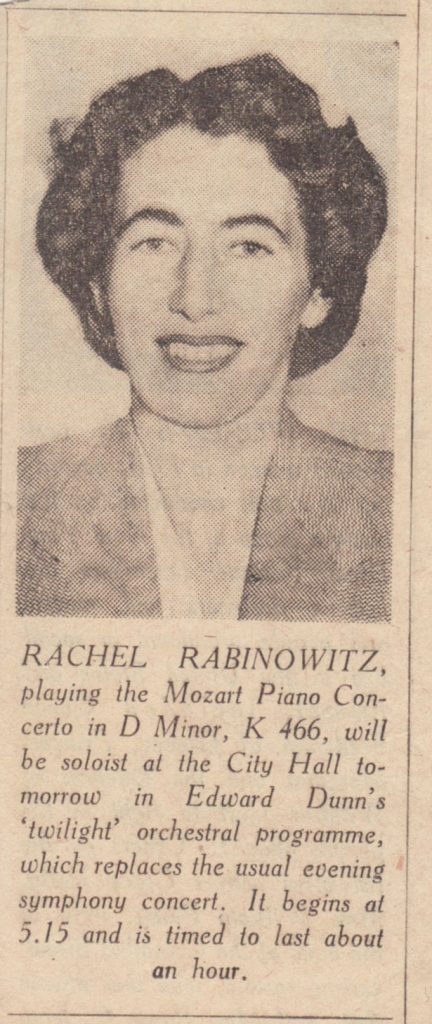
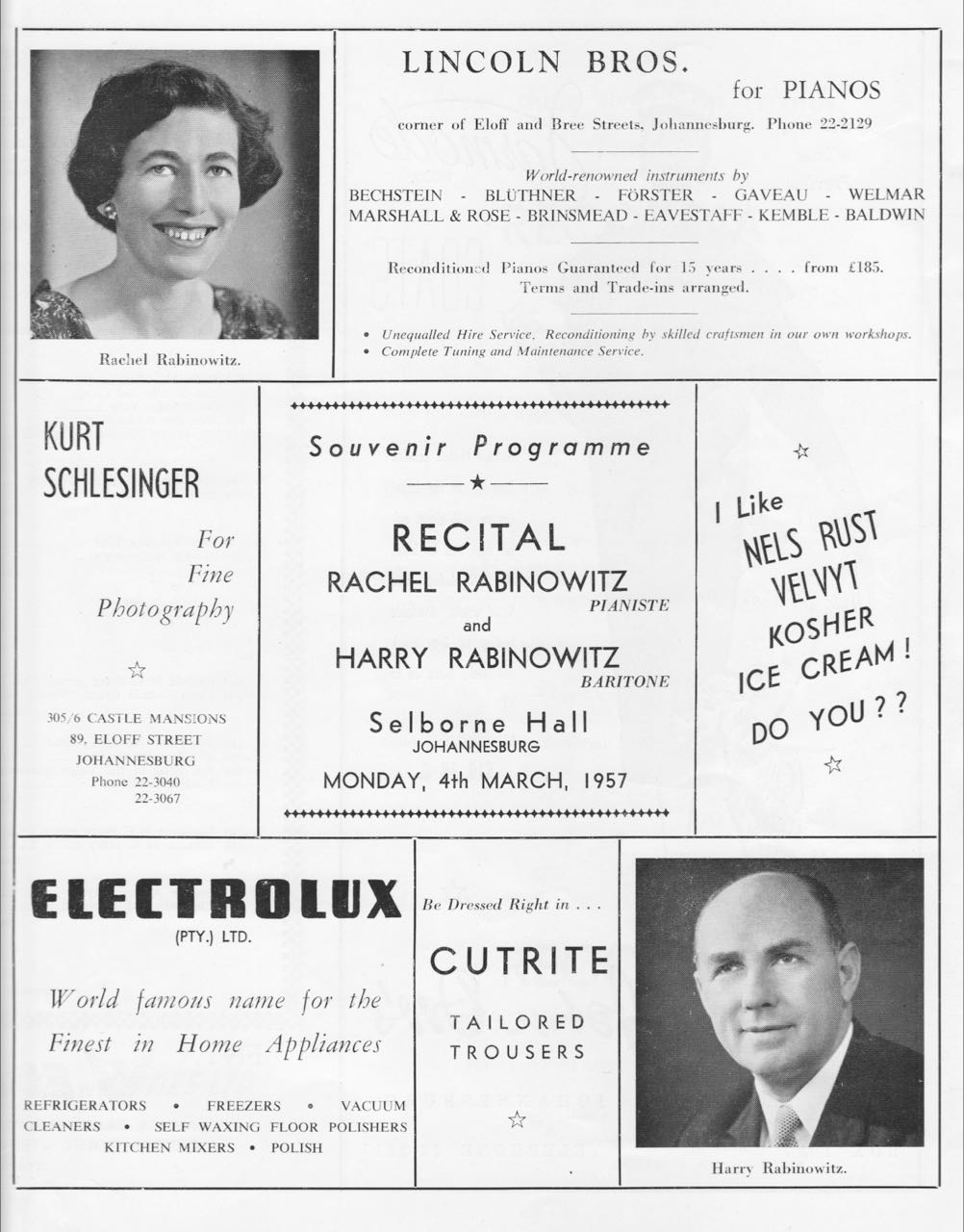
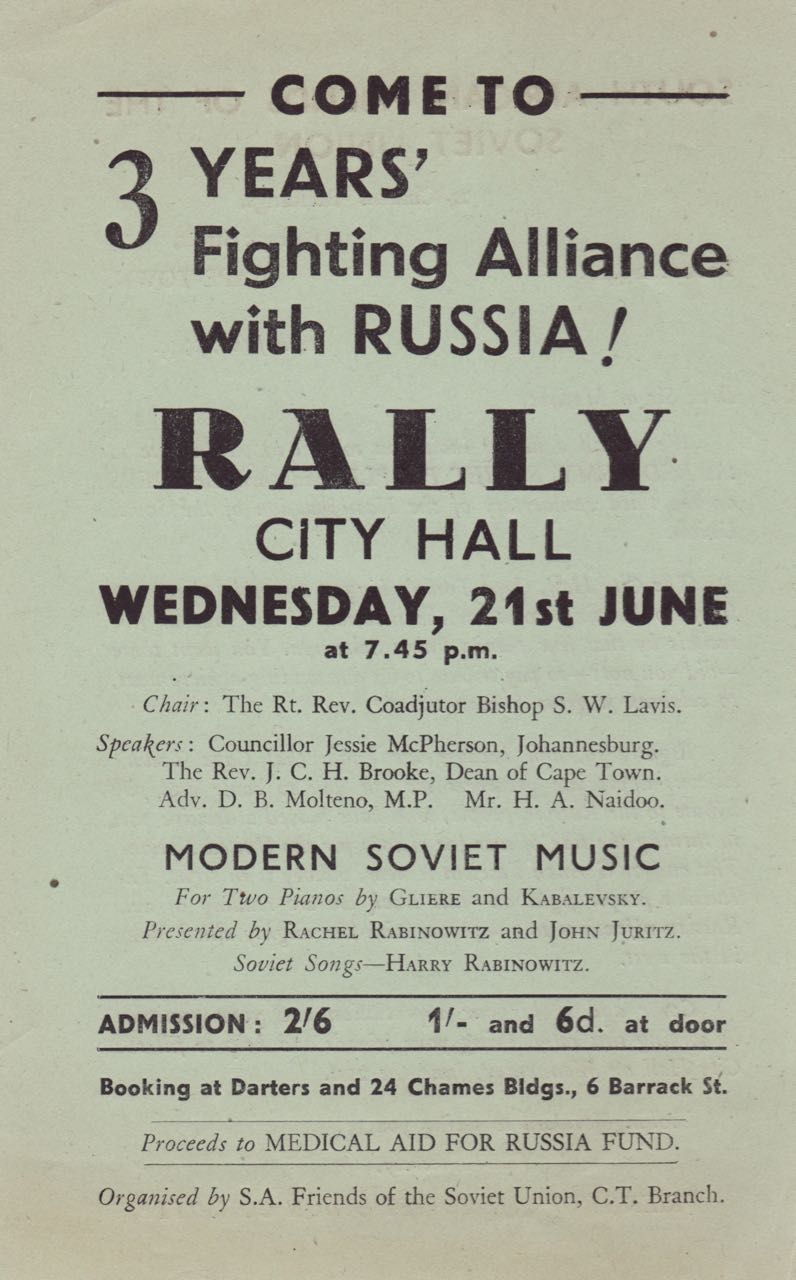
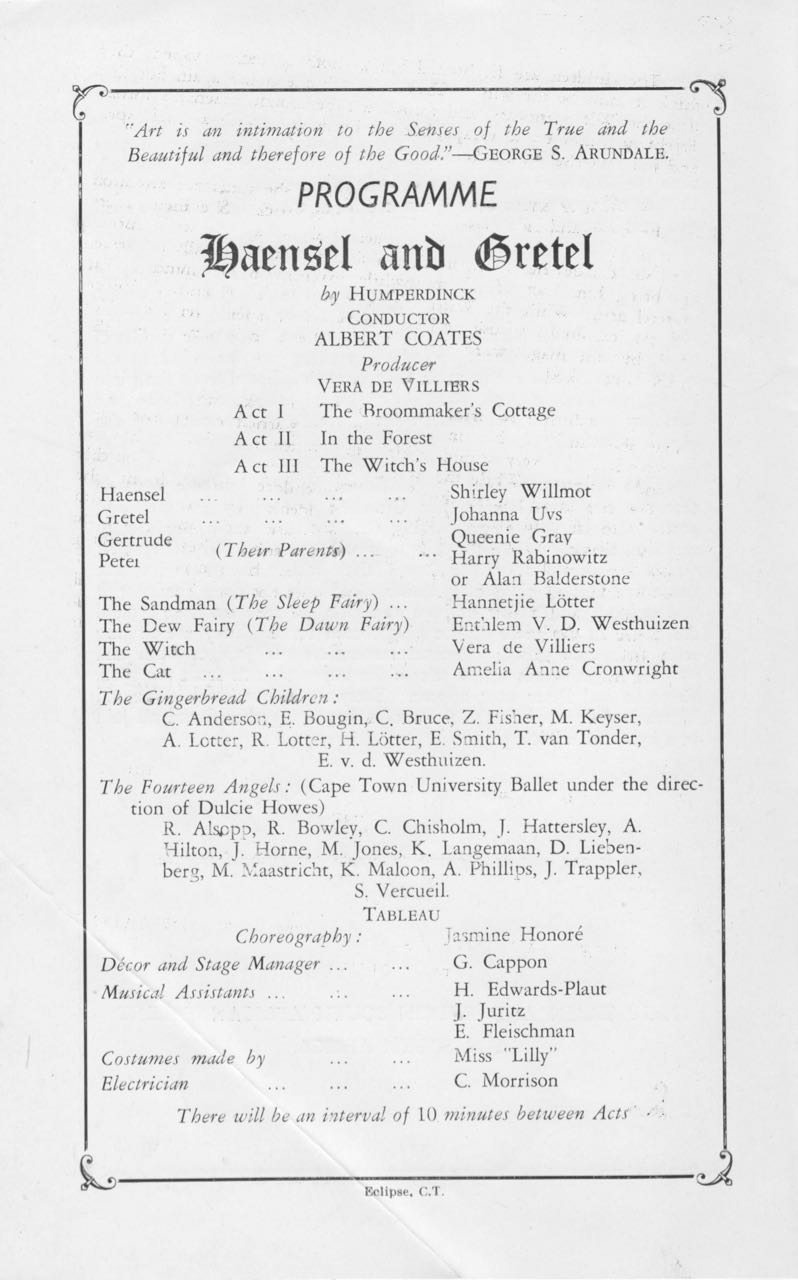
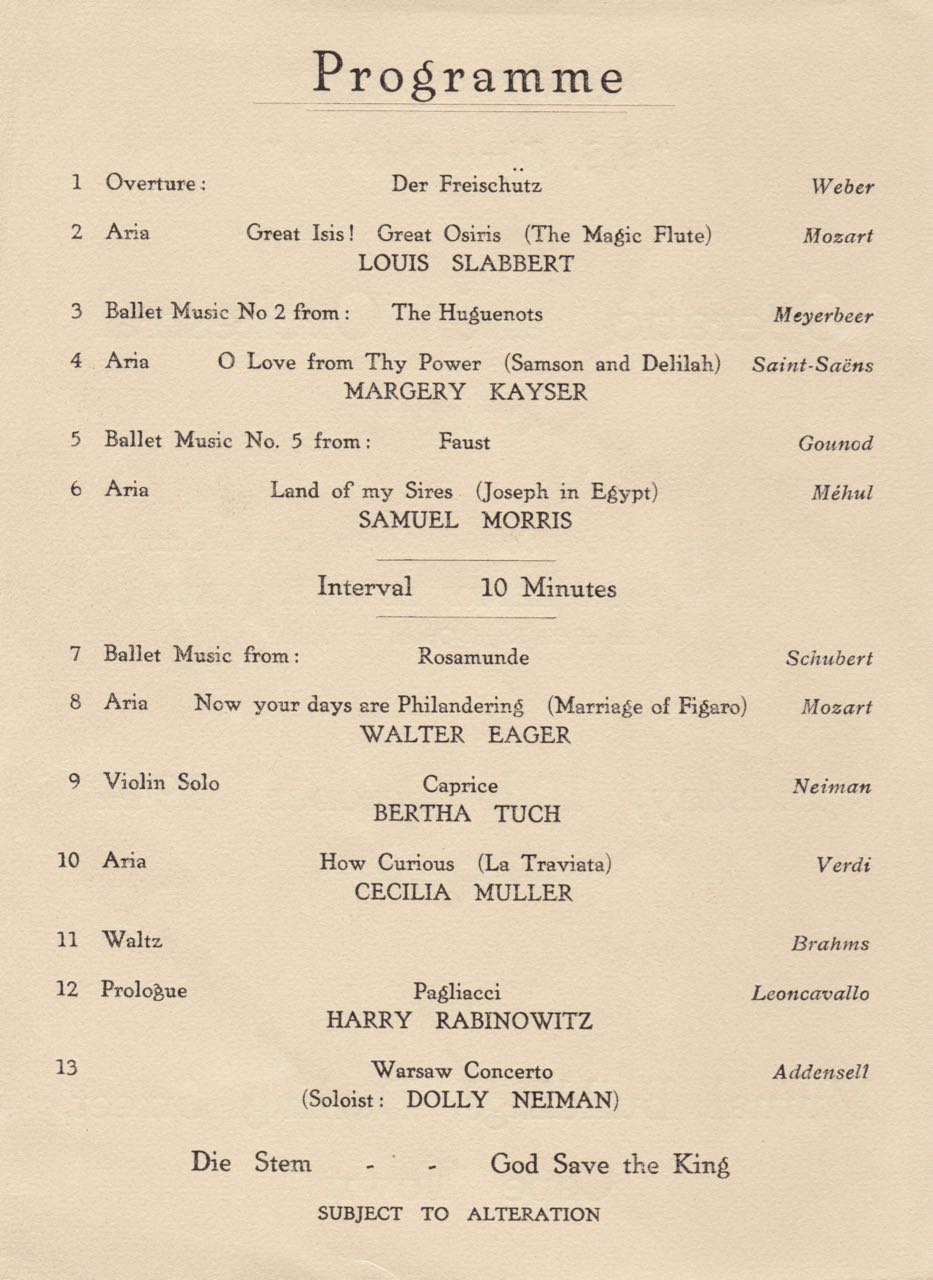
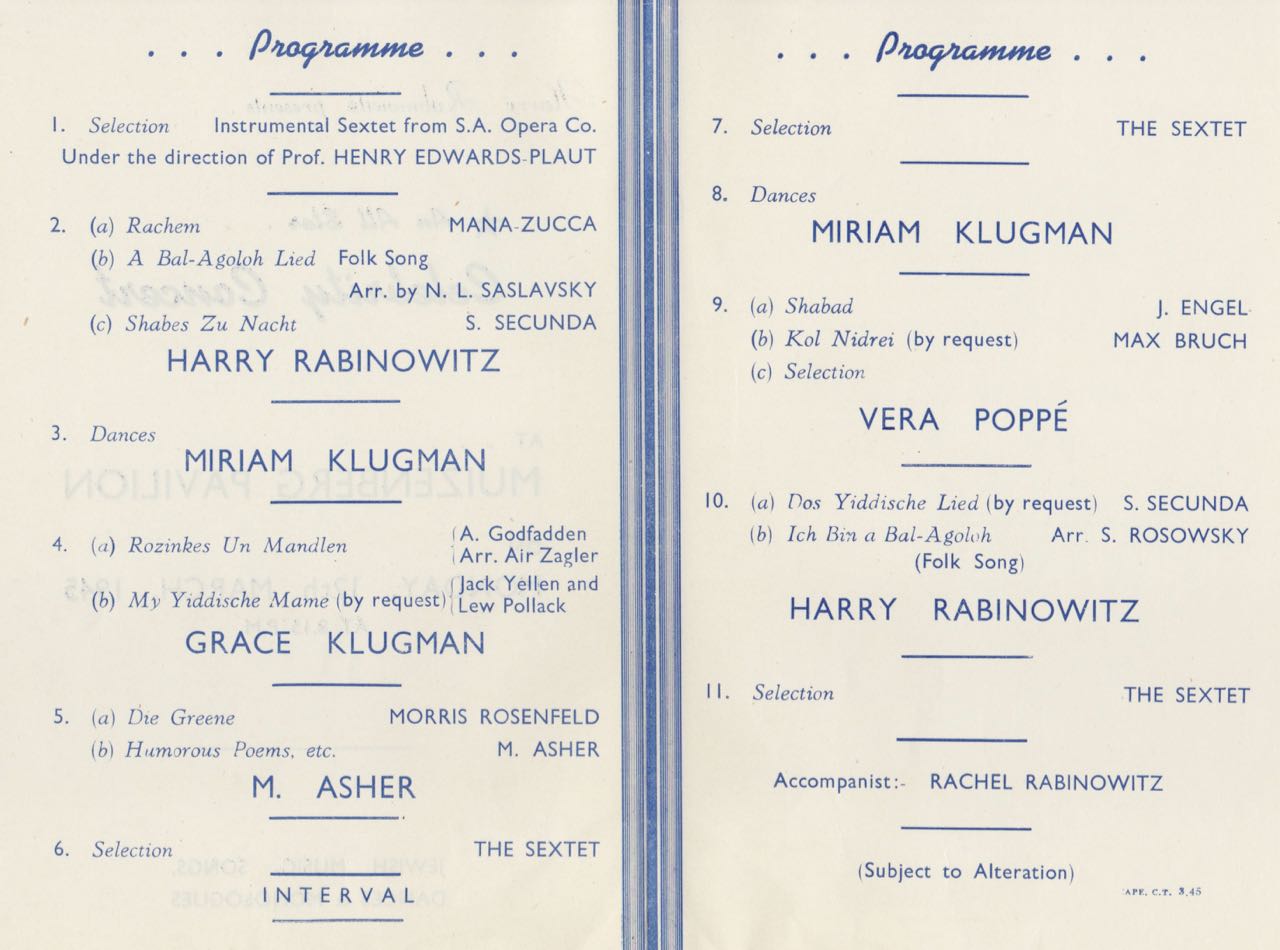
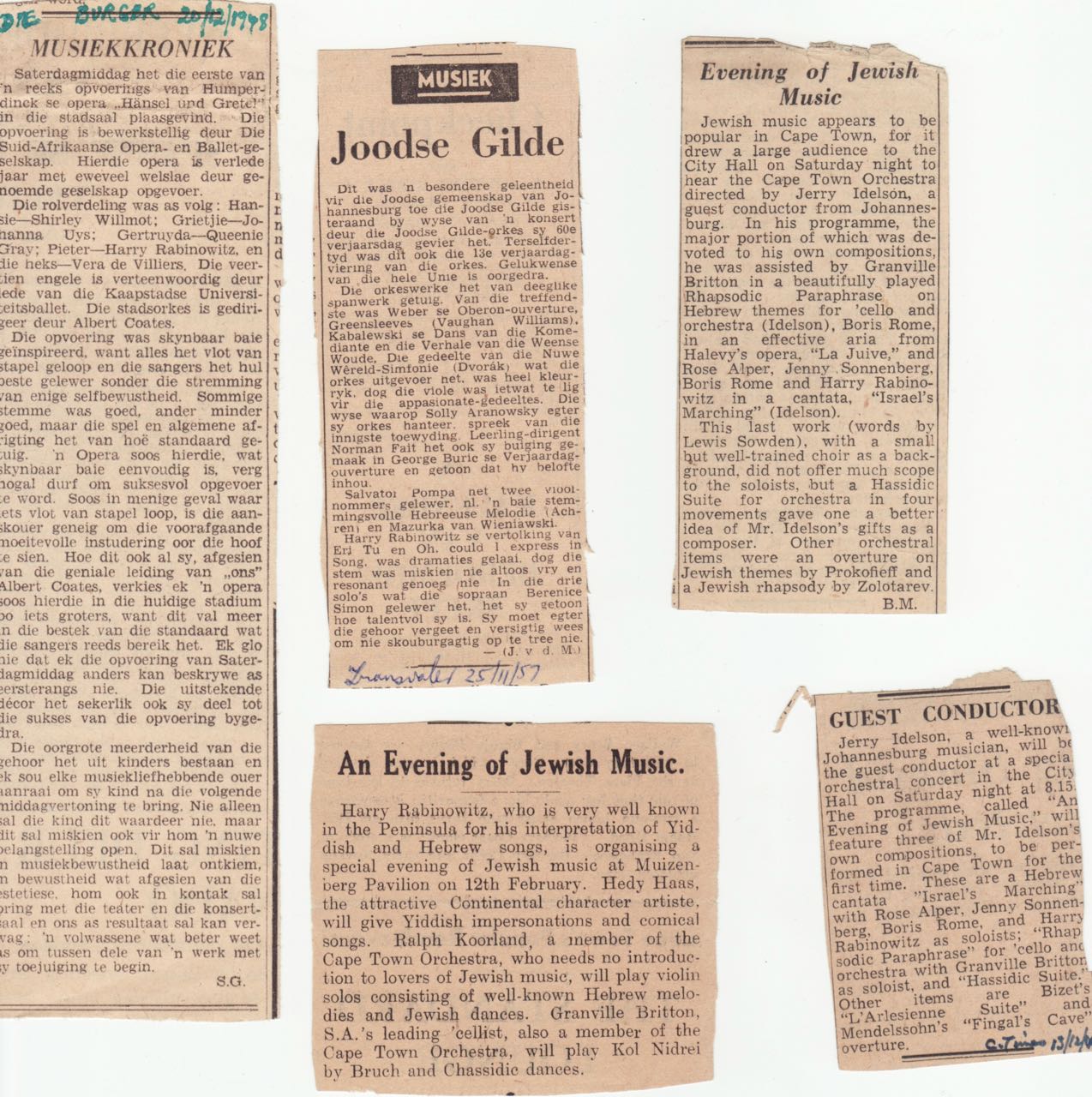
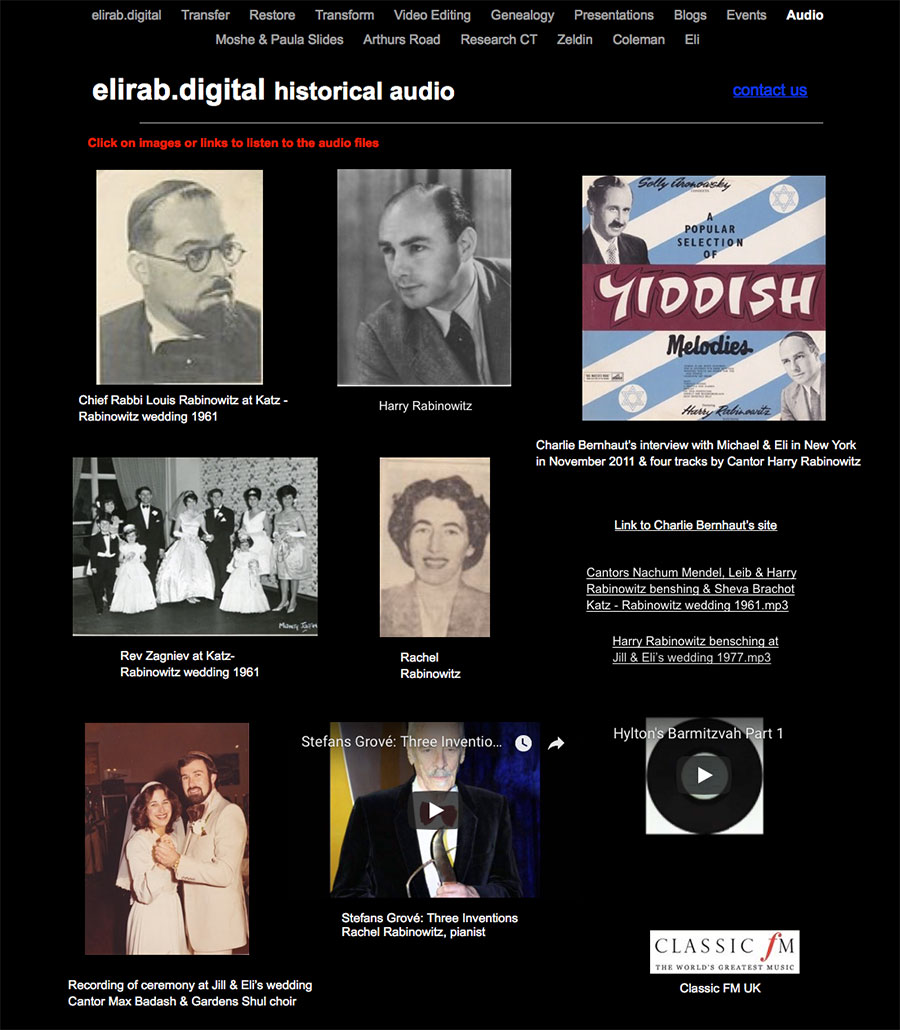
My aunt Rachel Rabinowitz had been a concert pianist in South Africa from the 1950s onwards.
I found this on YouTube:
The comments read:
Published on 24 Jan 2014
‘Three Inventions’ by composer Stefans Grové (pictured above), in a performance by pianist Rachel Rabinowitz. The work has three sections: Tokkate; Pastorale; Fuga. Other works by Stefans Grové have been recorded and are available for purchase at the below links:
I had never come across any vinyl recordings of Rachel’s playing, let alone anything on the web!
I wrote to noochinator who had posted this recording on YouTube.
This is what he said:
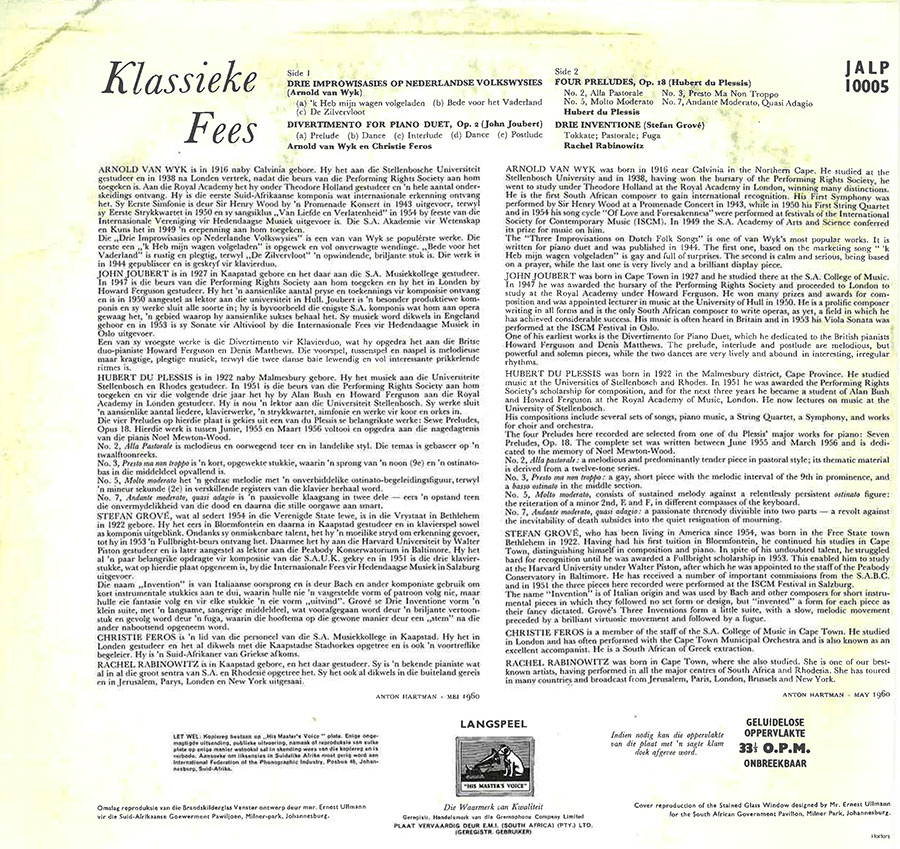
I got the recording from a South African LP issued in the 1960s. I don’t own the LP, so I don’t have any more information on it. I have no other recordings of the pianist. You could check at the IPAM, it’s a piano archives at the U. of Maryland.
Thanks to Donald Manildi, curator of IPAM and Maxwell Brown, Project Manager.
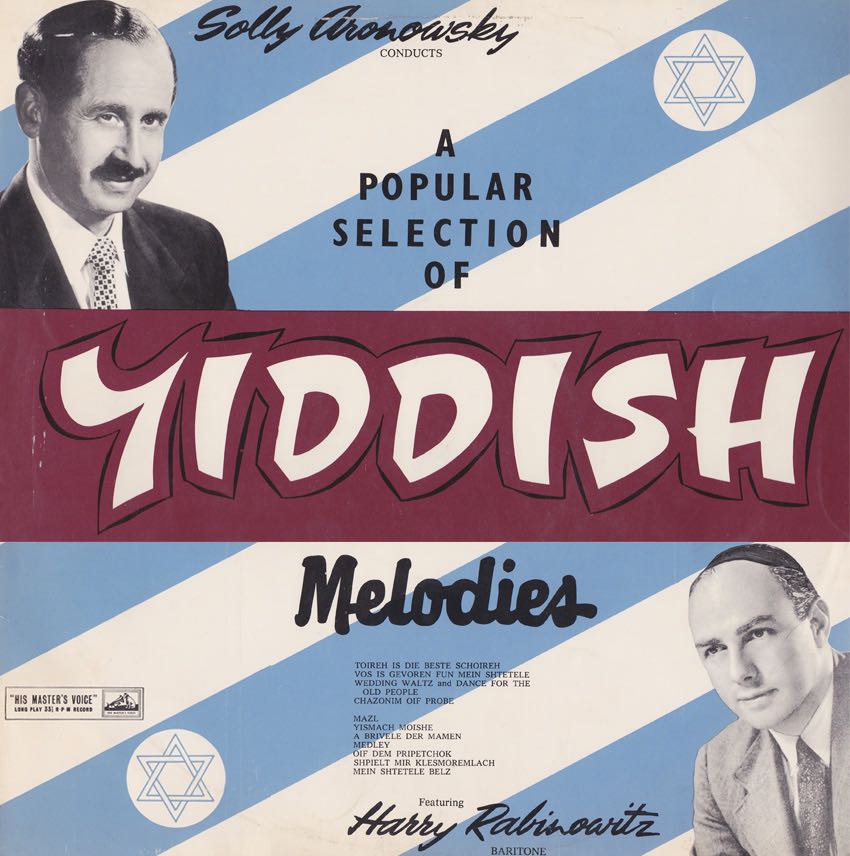
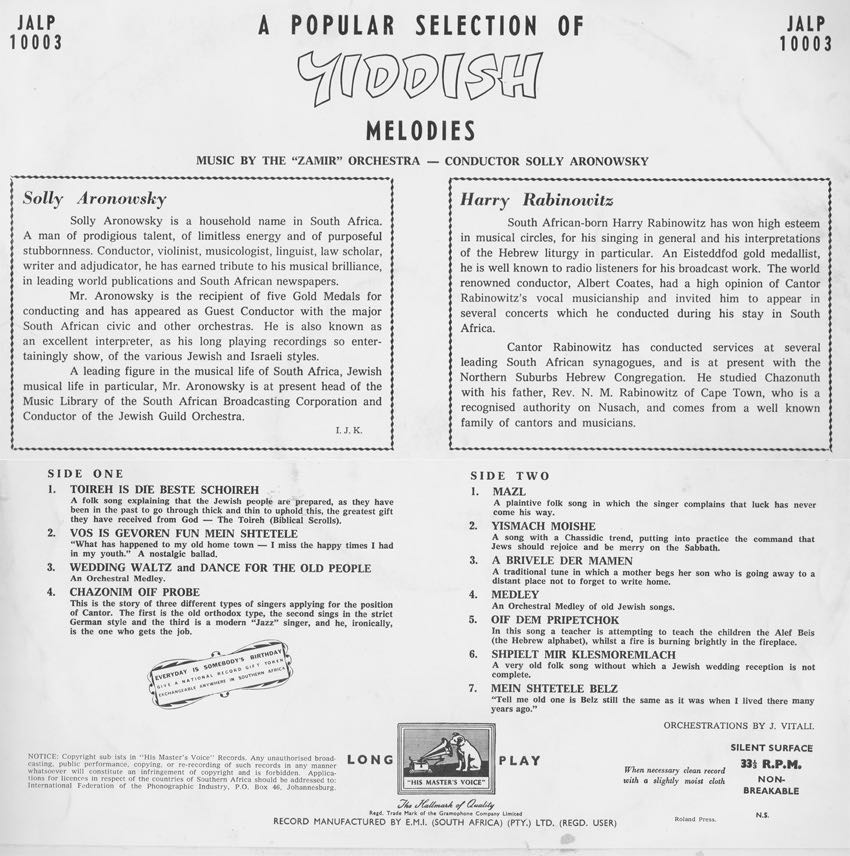
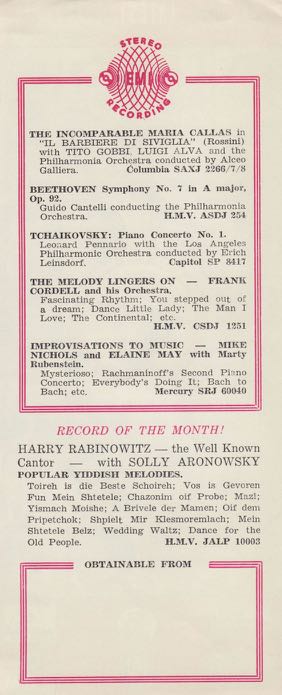
Here is the album cover:
I then asked the classical music reviewer for the West Australian Newspaper, Neville Cohn, an old friend of the family, if he would review the recording for me.
Review by Neville Cohn
Rachel Rabinowitz was at the forefront of those musicians who worked tirelessly to bring music by South African composers to a wide audience both in South Africa and abroad. In those mid-20th century days, there was too often an indifference to new music written by compatriots and it says a very great deal for Rachel and her fellow musicians in this arts arena. This recording of three pieces by Stefans Grove is a model of its kind, thoroughly worthwhile music that could so easily have slipped into oblivion without the pioneering attitude of these artists. In these pieces, we can hear the quality of Rachel’s artistry: impeccable memory, wondrous clarity of presentation and a faultless sense of style.
During my years as, firstly, official accompanist to the SABC and, later, music producer, I was present at just about every recording session by Rachel of programs intended for later broadcast. I noticed then a quality which placed her in a unique category. She would invariably play her recitals entirely from memory. I recall an occasion when she’d been contracted to record a particularly complex and demanding score. But although I suggested it might be less taxing to use the score during the recording session, she insisted, as ever, on committing the work to memory – and performed it faultlessly.
Rachel and my teacher Anne Sher (who was also my aunt) had been fellow students at the College of Music. They would occasionally play piano duets which, as a child, I found a delightful entertainment.
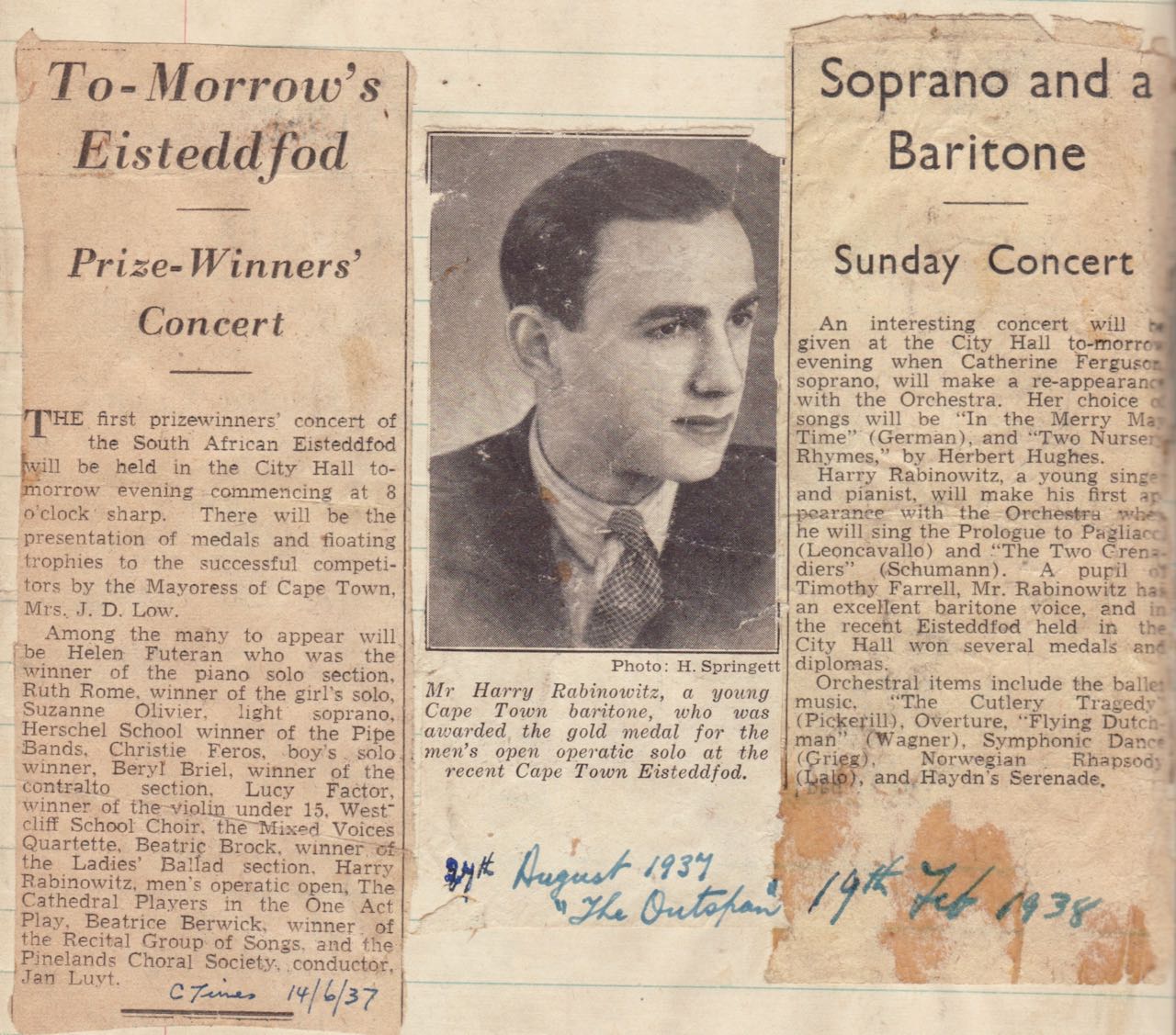
Rachel’s brother Leib and his family, lived across the road from us. Very occasionally, Leib would play the violin for us. I also recall vividly meeting, and listening for the first time to, Leib’s brother Harry. On this particular occasion, Leib had set up a tape recorder to record Harry’s singing. In those days, this was a VERY rare experience – and I listened in awe not only to Harry’s fine voice but the recording of it when played back. I would have had no idea then of how much recording of music would figure in my life during innumerable pre-recorded performances at the SABC studios in Sea Point years later. I’m also old enough to recall playing in a ‘live’ broadcast – in the Young South Africa series (I was 12 years old at the time) – in the original SABC premises squashed between the Del Monico restaurant and the old Royal cinema.
Neville Cohn
Some additional notes from Neville Cohn:
I could write a book about your family as neighbours.
Your uncle Leib had a movie projector and a number of movies from the silent era. We would watch them again and again and again – never got tired of them. We used to invent what we thought they were saying amid gales of laughter. Such delightful, innocent fun – now a vanished world.
Leib lived across the road from us – and I recall a session there with your Dad singing into a very early tape machine which was followed by you singing Tzena Tzena! very loudly. How’s that for a recollection? This might have been in the early 1950s,.
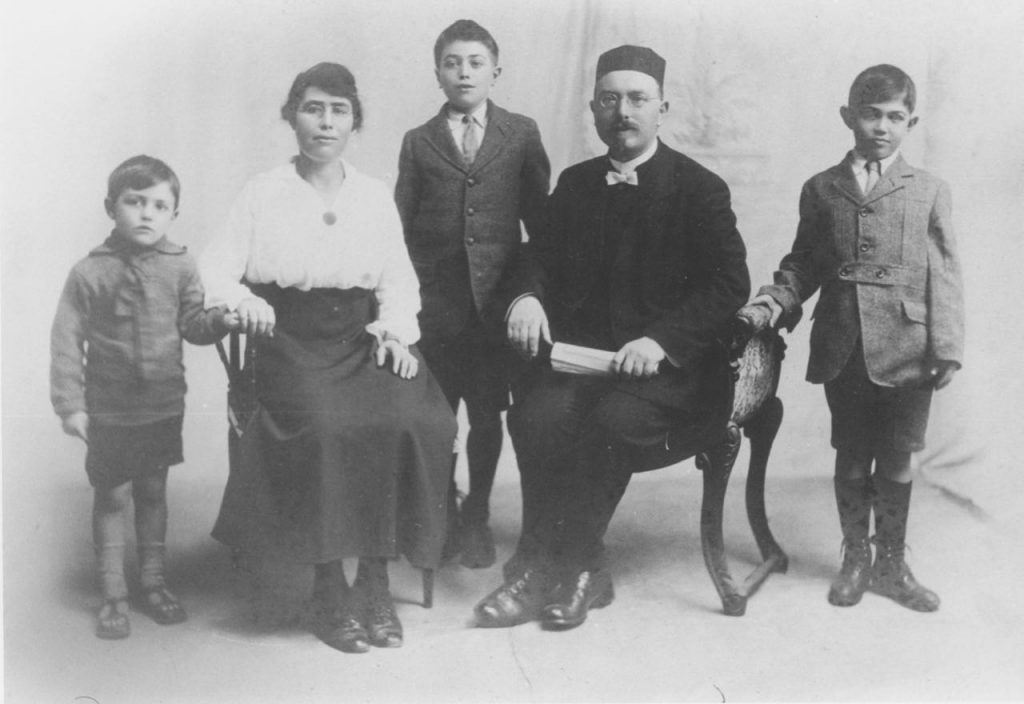
The Rabinowitzs were a musical family:
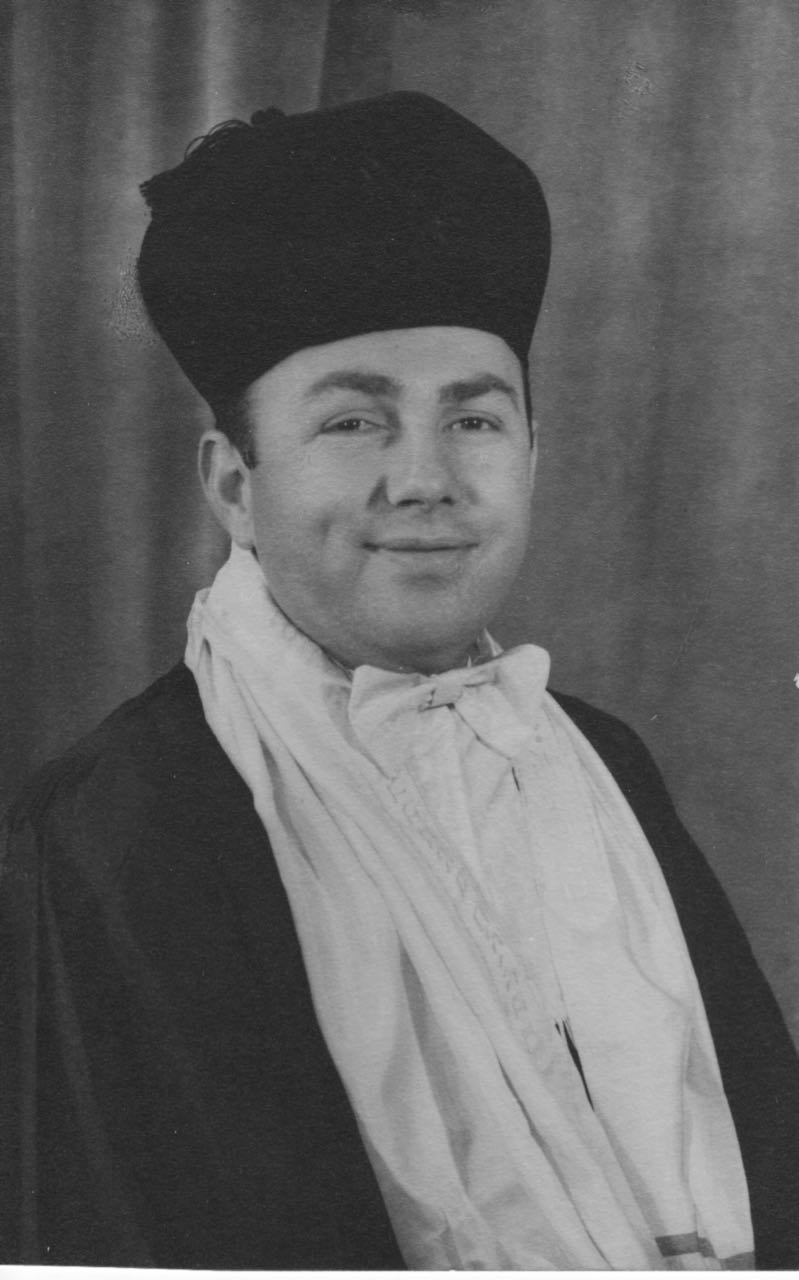
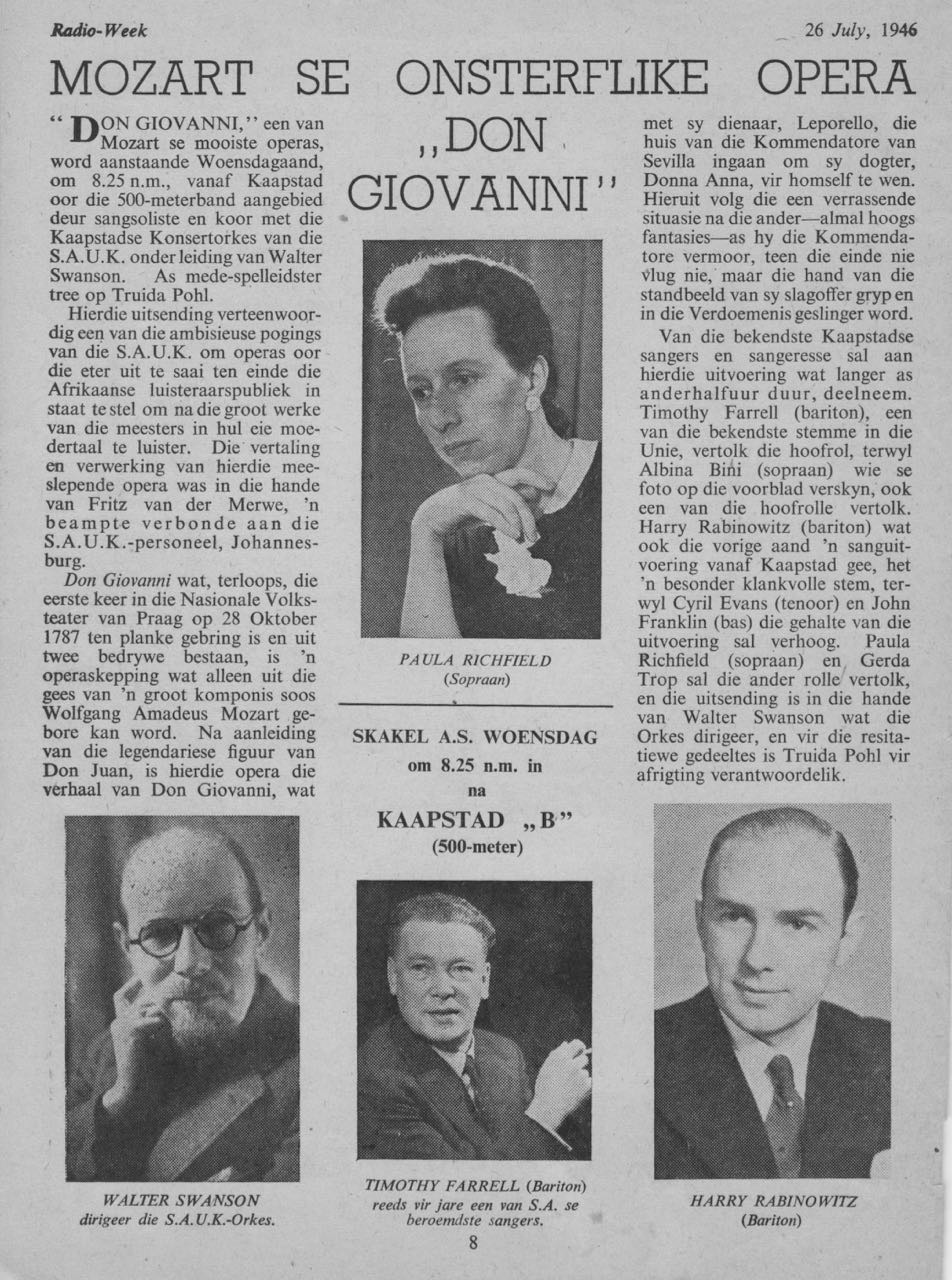
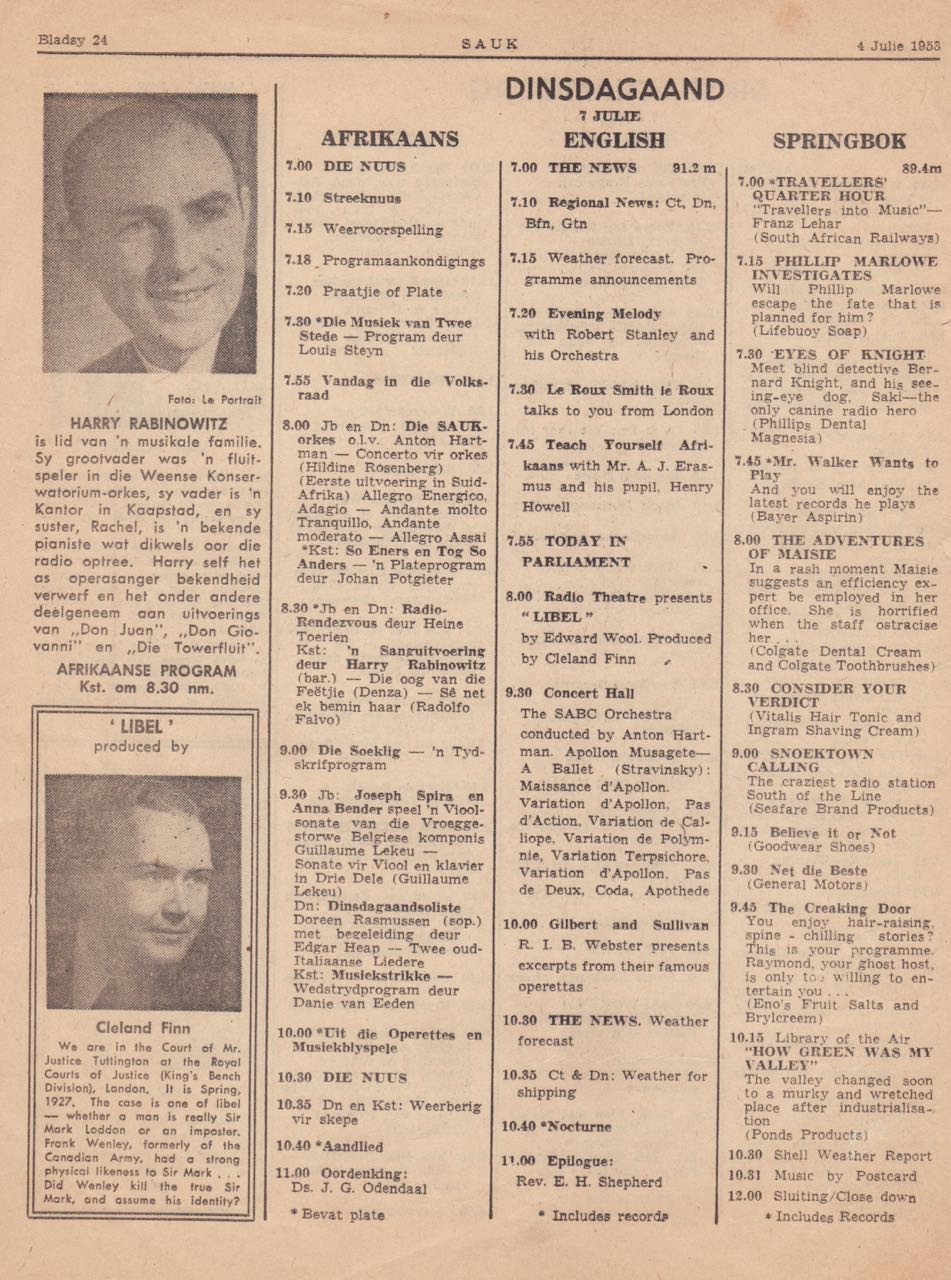
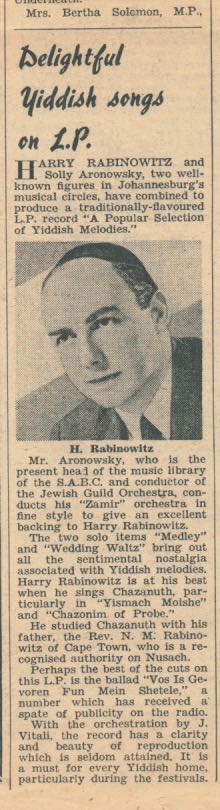
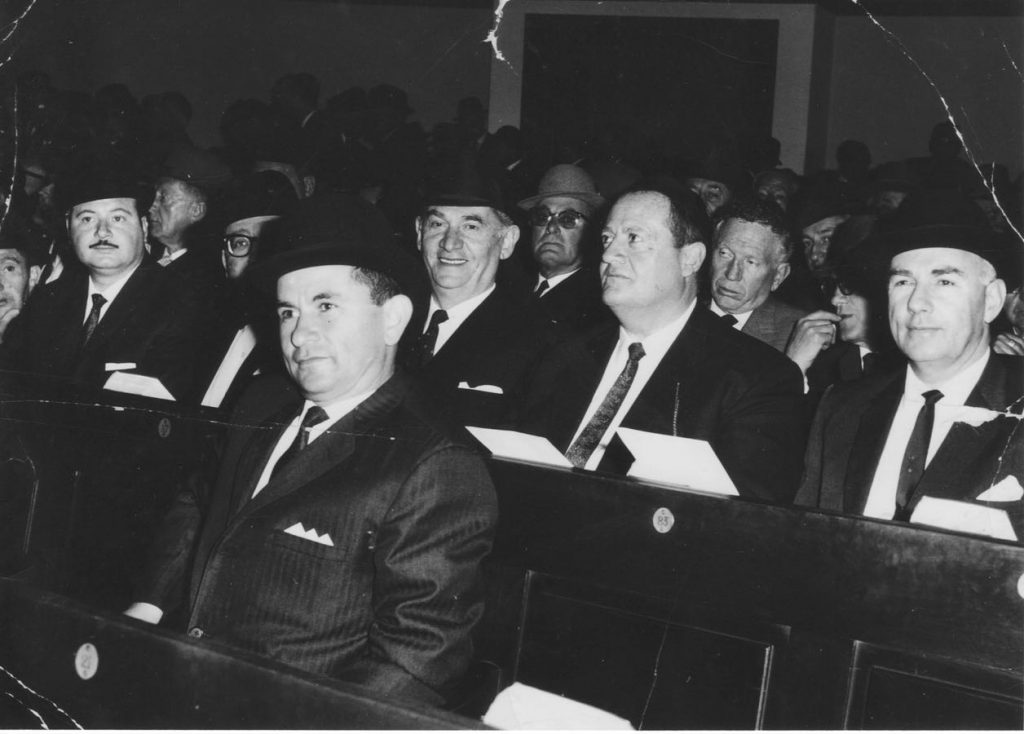
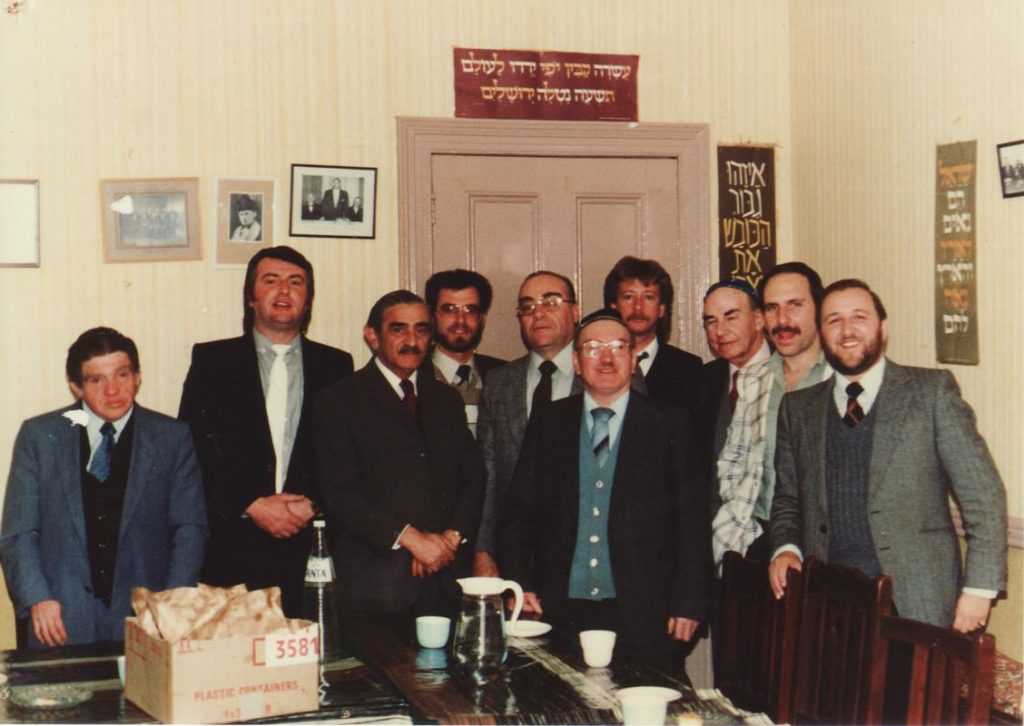
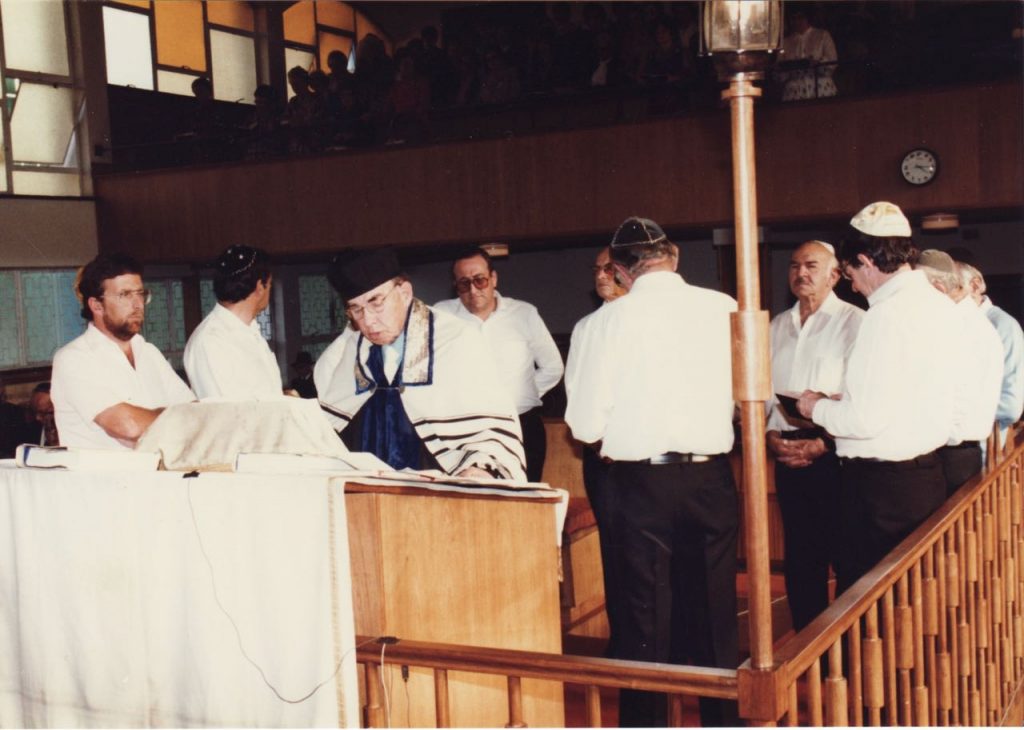
My zaida was a chazan, as were two of his three sons, Leib and Harry, my dad.
Isaac was a medical doctor.
The sisters Rachel and Sarah were both pianists – Rachel a concert pianist and Sarah a music and piano teacher.
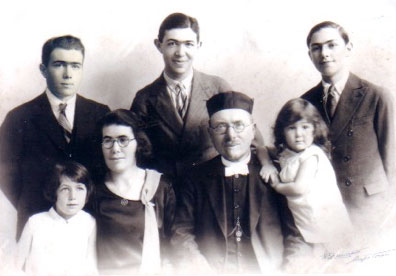
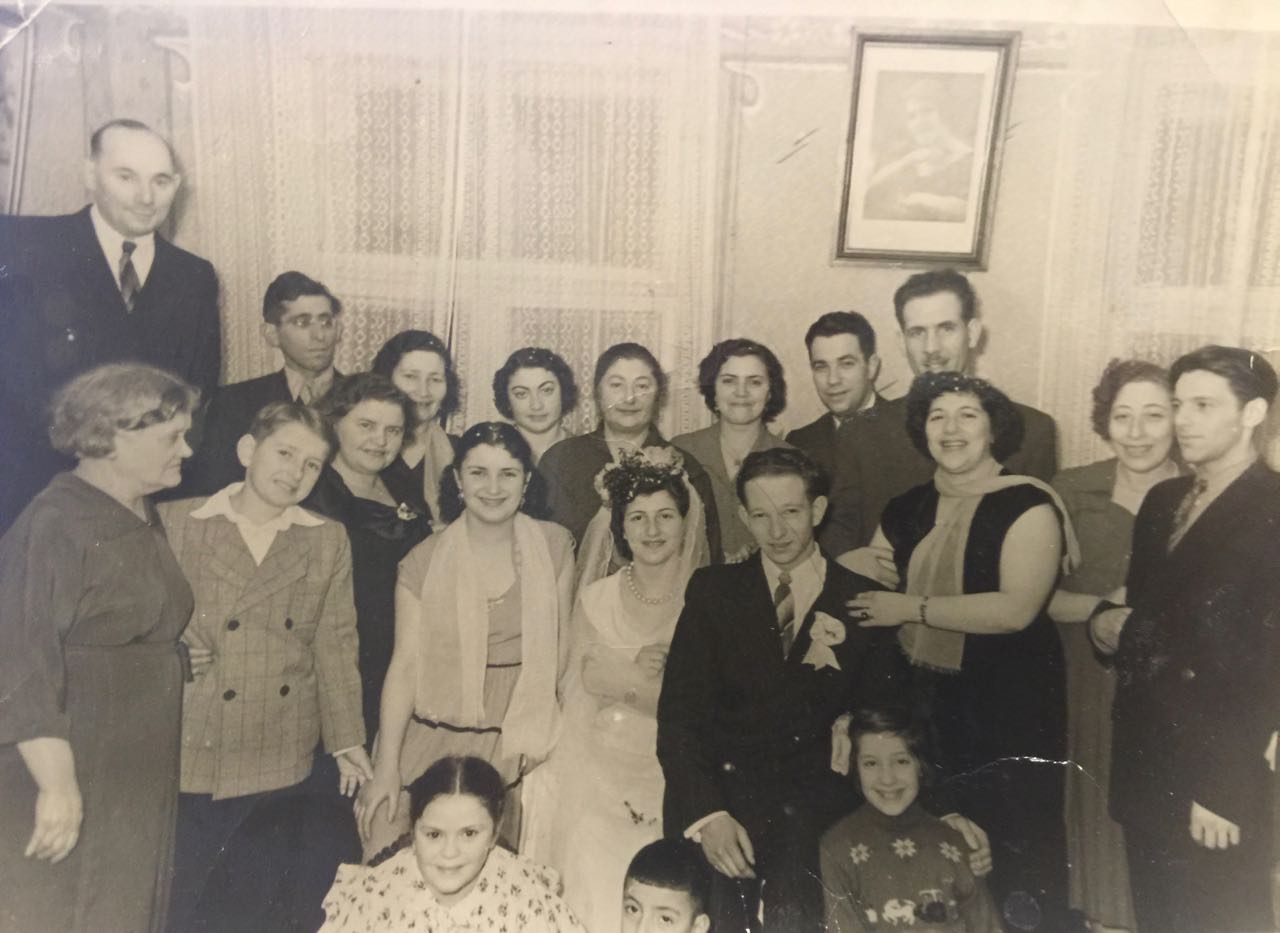
Back: Leib, Isaac & Harry
Front: Rachel, Chana Chesha Miriam, Nachum Mendel & Sarah
My dad Harry, me, my mother Rachel, my aunt Rachel and my bobba, Chana Chesha Miriam.
Here are a couple of pieces Rachel played when we visited her long after she retired.
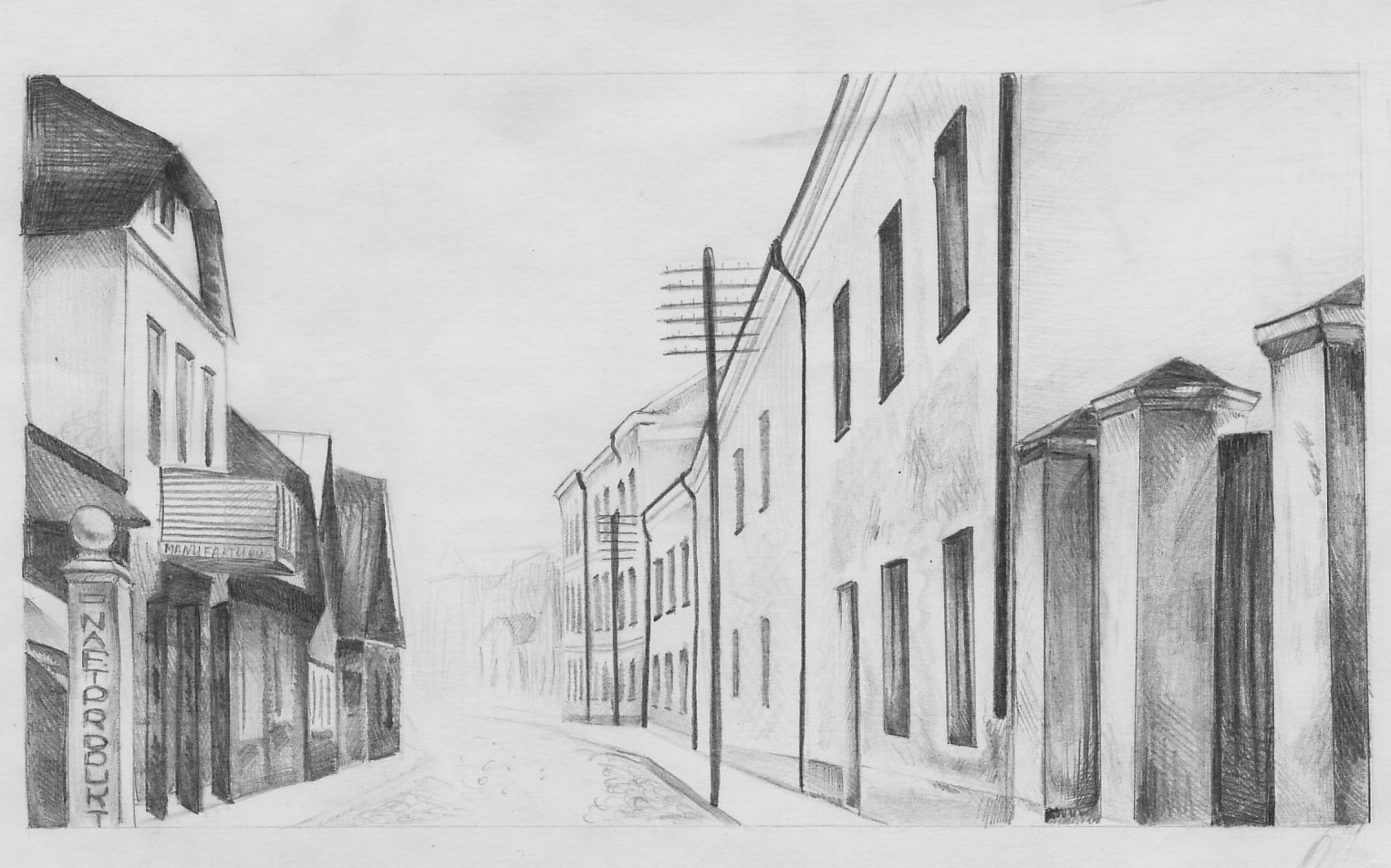
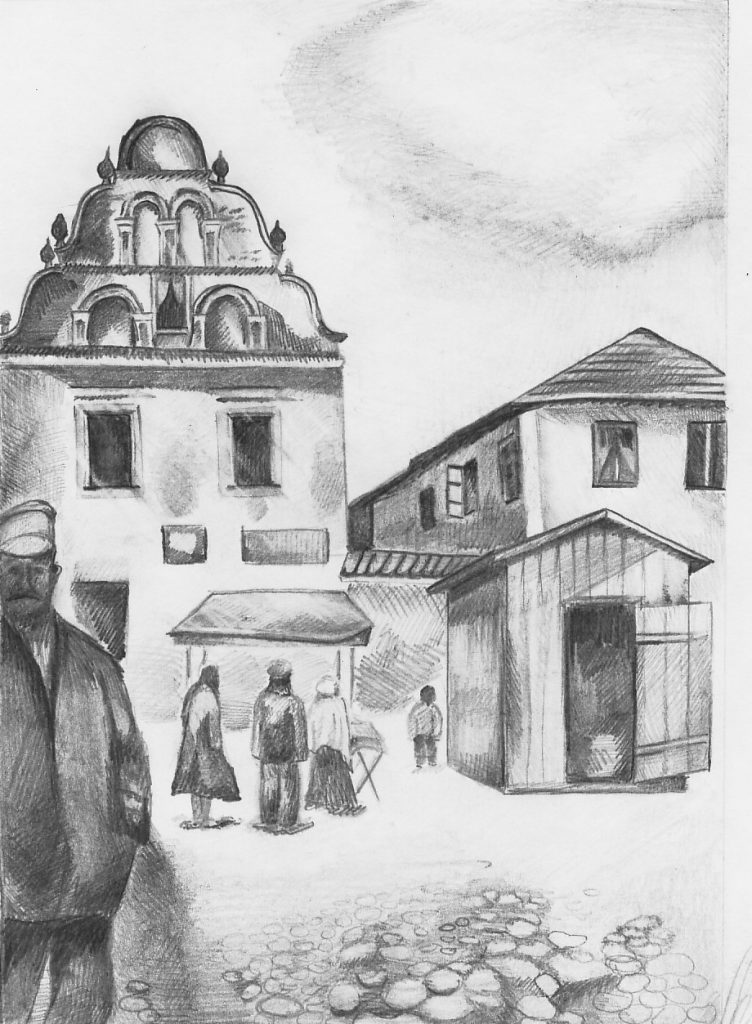
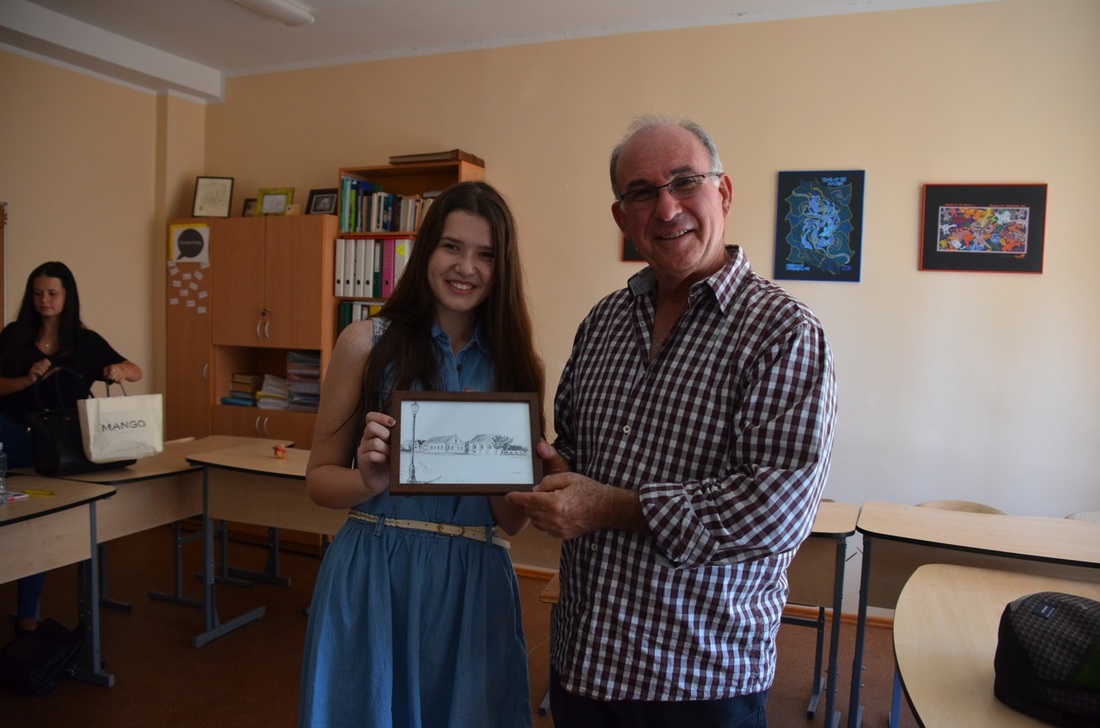
Drawings by Julija Chomenko featured in the video below.
Julio completed her schooling at Atzalyno High School last year.
From Laima Ardaviciene, teacher:
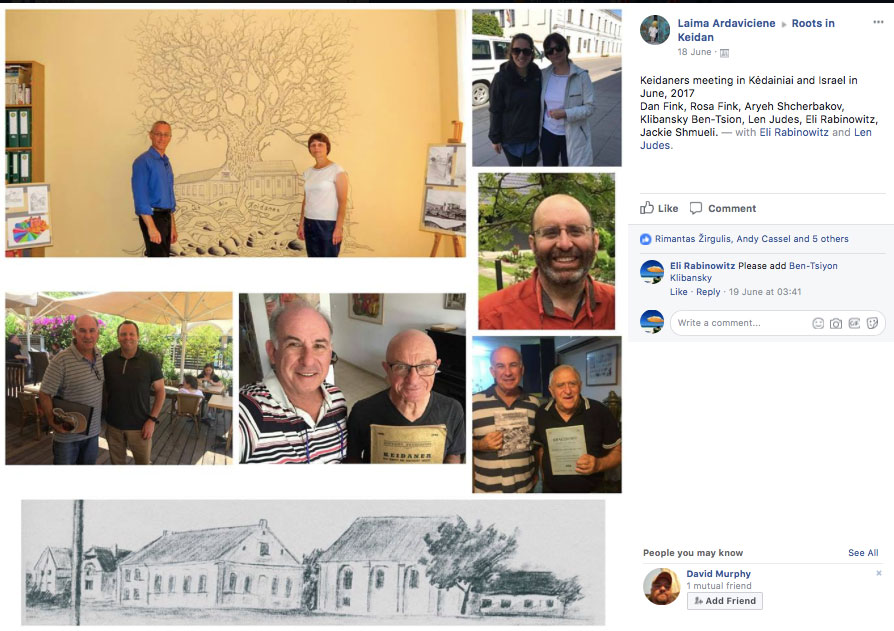
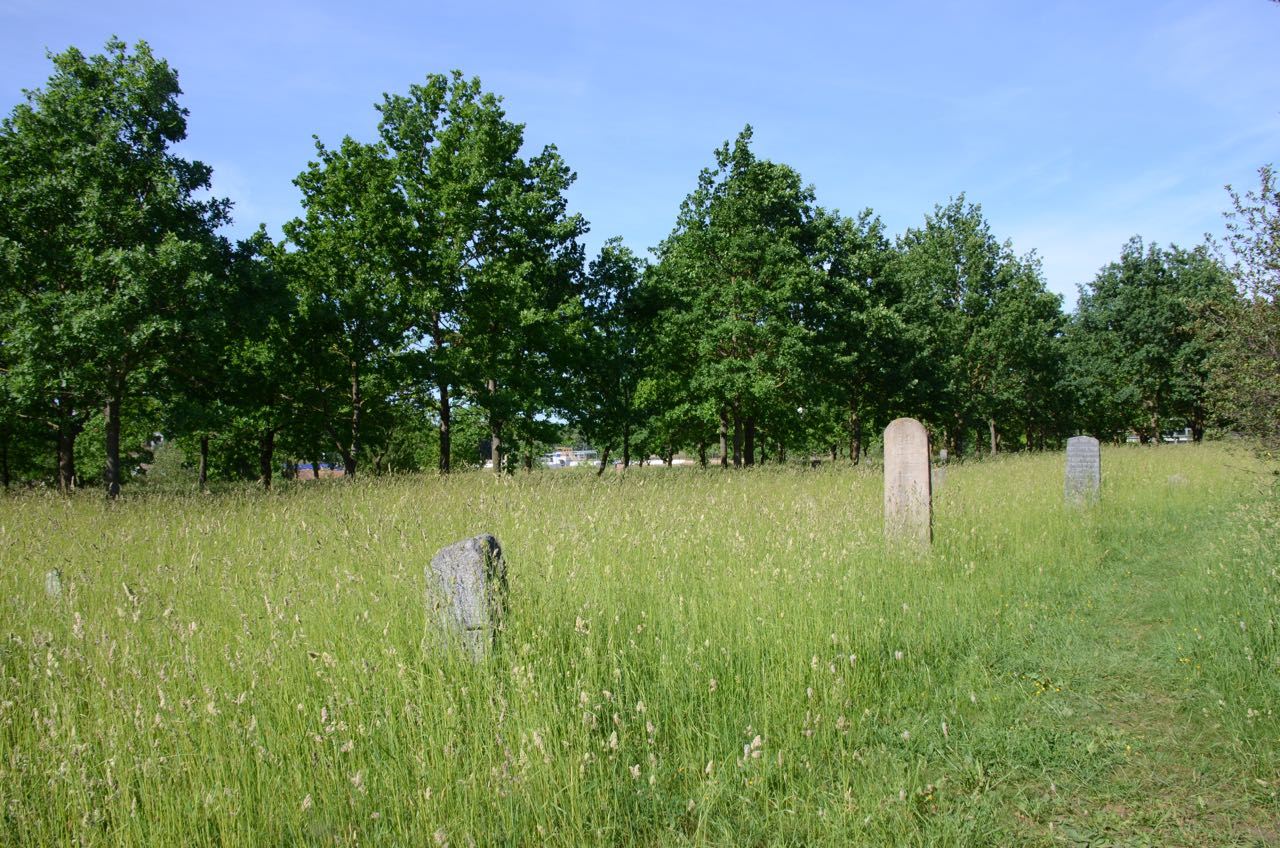
Kedainiai Atžalynas gymnasium students continue the Project: TILTAI-BRIDGES-בריקן . From the bottom of our heart we thank Valentinas Tamulis, the headman of Kedainiai, and Rimantas Žirgulis for organising cleaning activities in the old Jewish cemetery. Not a single tombstone is covered by a growing tree or a bush now. All the headstones remind us about the Jewish community that lived in Keidan. We are presenting the recent view of the Old Jewish Cemetery of Keidan.
The Keidaner Family tree on Laima’s classroom wall – an unique work of art! The complex of two synagogues and the tree featuring the names of Keidaners, including my 3rd great grandfat…
A family geneaology takes on a life of its own, a continuous evolving science, as new facts from new sources come to light and once verified, need to be documented. Added to this is as the geaneologist becomes more experienced in the science so he becomes more adept in moving forward at a faster rate, being better able to differentiate between the important information relating to his study and the vast amount of chaff existing on the periphery.
Since publishing the book in October 2016 I have made some major discoveries:
The discovery and confirmation of direct descendancy of the famous KALONYMOS family through Bunlin Günzburg, daughter of Rabbi Shimon Günzburg, and wife of Goan Eliyahu Oettingen. This family lived from the 8th century in Lucca, Tuscanny, and are known to be one of the first Jewish families to live in Germany. This virtually doubles the genealogical timeline I am researching and there is a lot more work I need to do on it
The discovery of more of our relatives who survived the Holocaust, the most prominent of which was the WIENER-COHN family living in Raanana, Israel. The story of how we met up is fully described in this edition.
The phenomenal discovery of the DUCKESZ REPORT ON THE WIENER-RIES-OETTINGEN LEVYTE FAMILY which was a direct result of meeting up with the COHN family mentioned above. This document proved that my research was highly accurate in essence but also disproved a hypothesis I made concerning 3 generations was incorrect, at the same time giving full information of the correct lineage. This to me is The Holy Grail of my research and I have appended it at the end of this book. This can also be read as either an alternative or supplemental addition to my research – it certainly details a lot more family information than what I originally had.
The above report also includes new and different branches in my family lineage – including the well-known SPANIER and WARISCH families. These will also need further investigation.
Updated information in research relating to the Levite R1a1a research.
Discovery of many more family graves in the Konigstrasse Jewish Cemetery in Hamburg including inscriptions and date of deaths.
Various other bits of information regarding the family.
You can download this book, free of charge, from Dennis’s website:
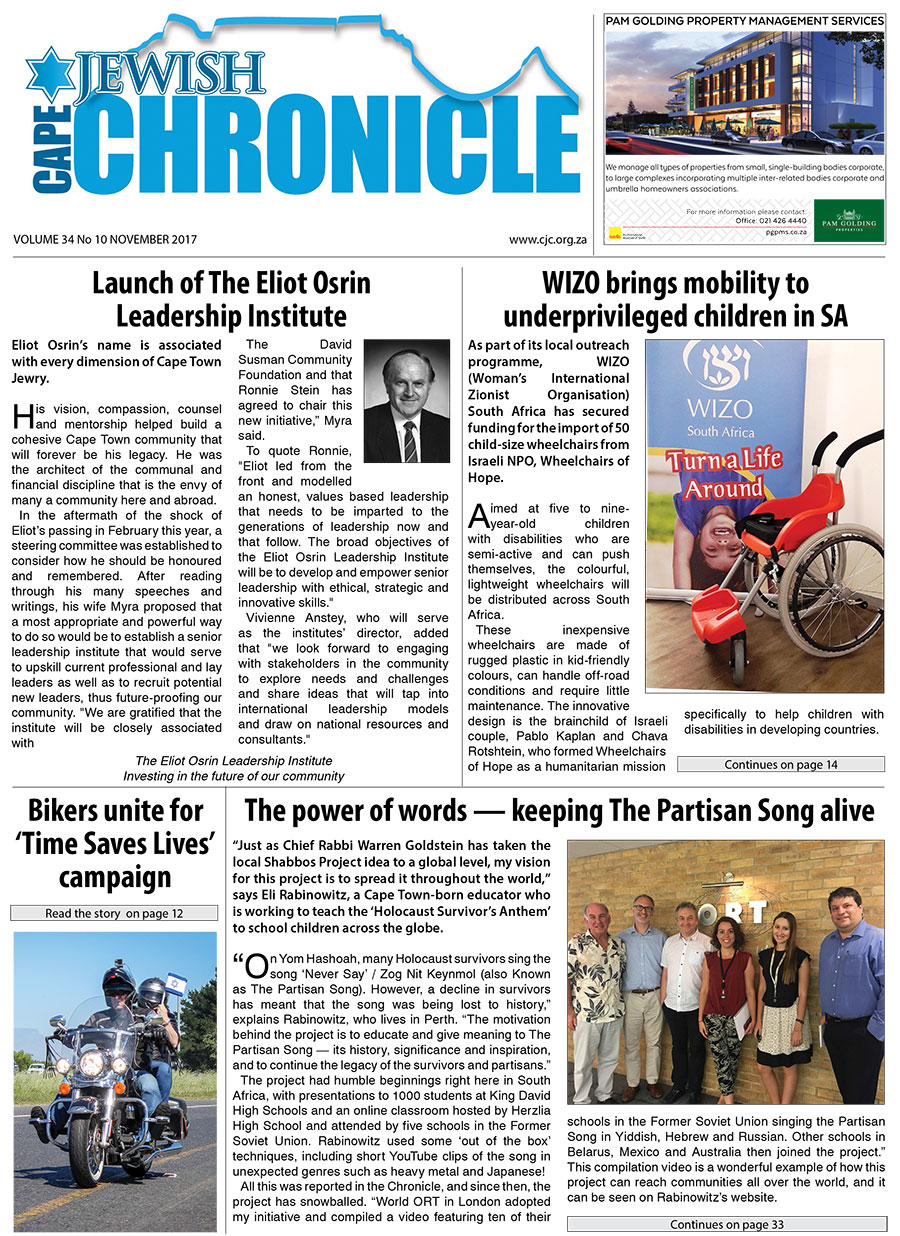
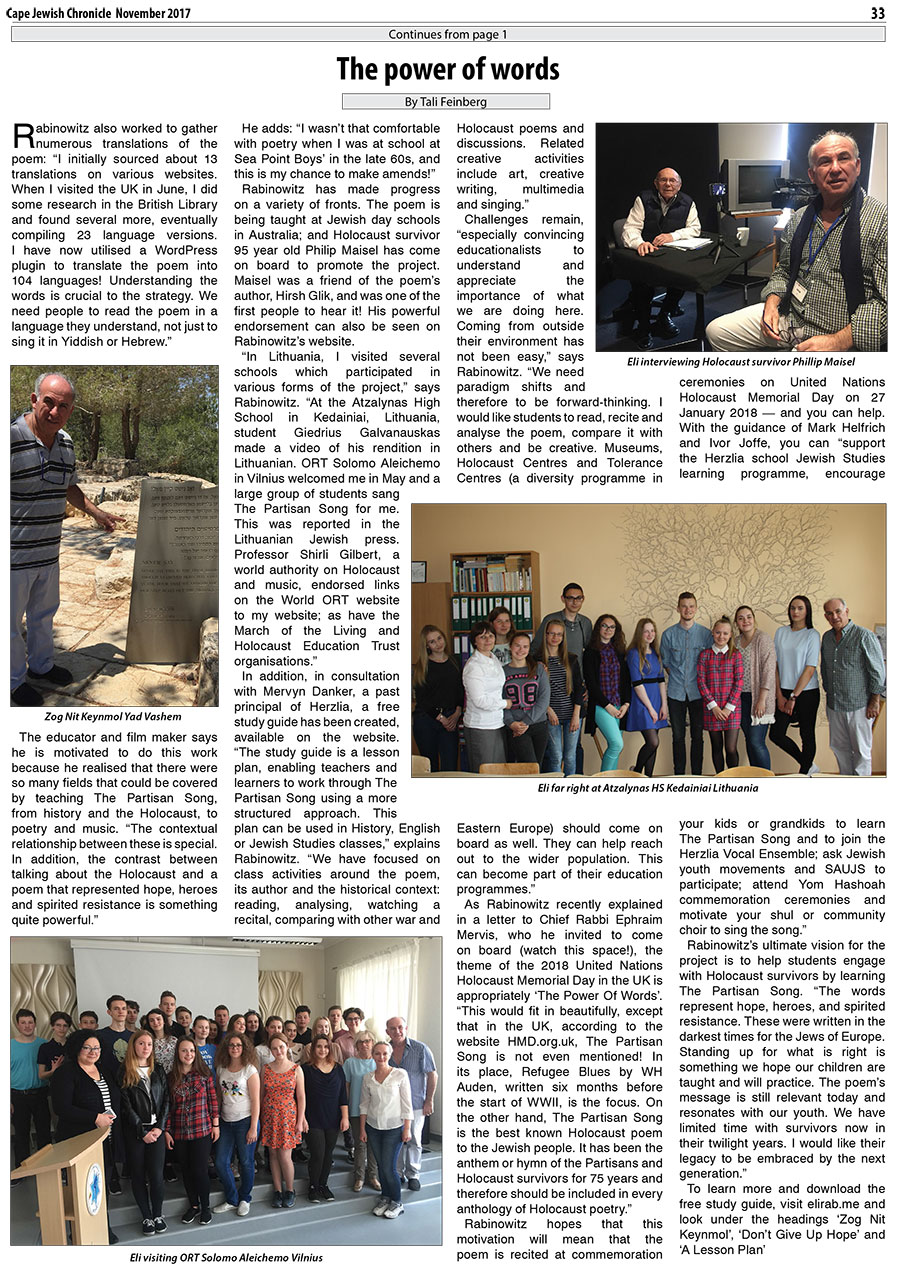
Teaching The Holocaust Through Poetry Lesson Plan Grades 9-12 Subjects: History, Language/Arts, Media, Social Studies. This website is translatable into 103 languages…..
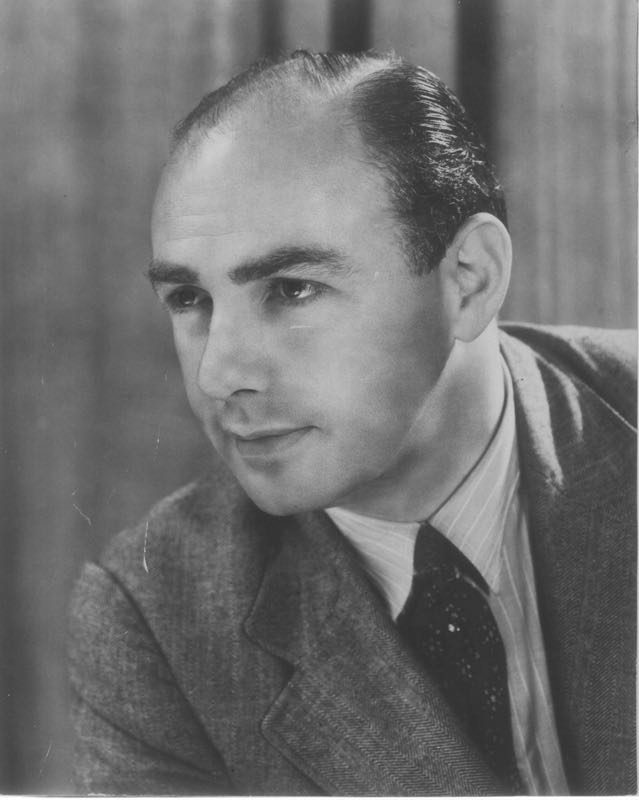
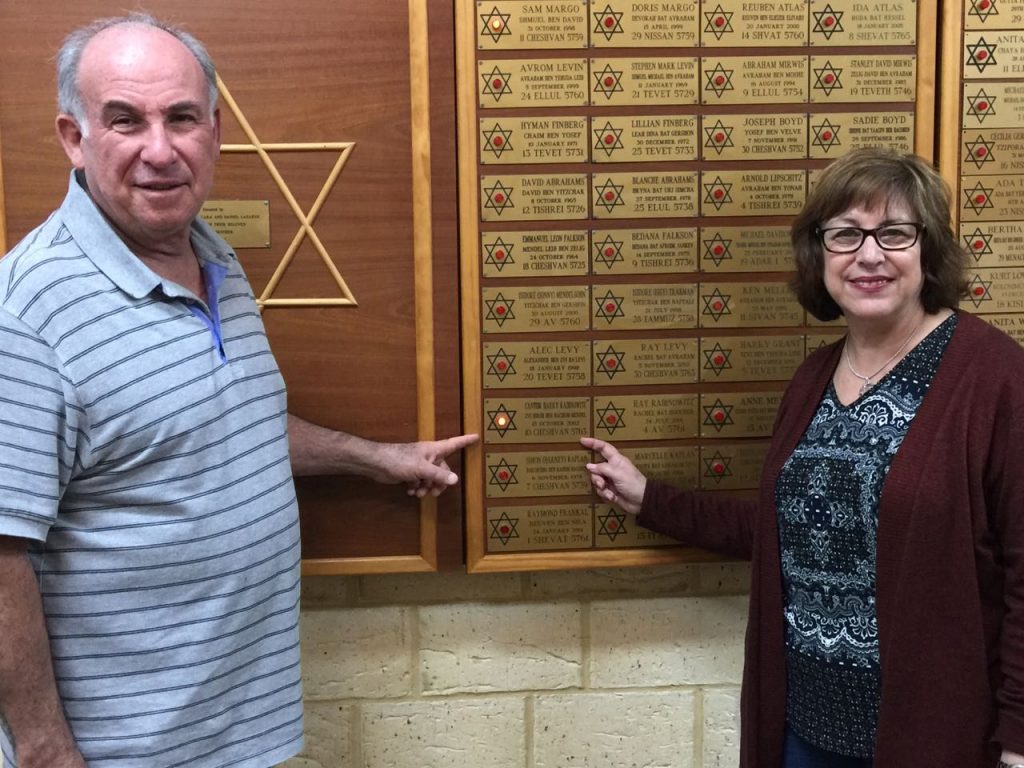
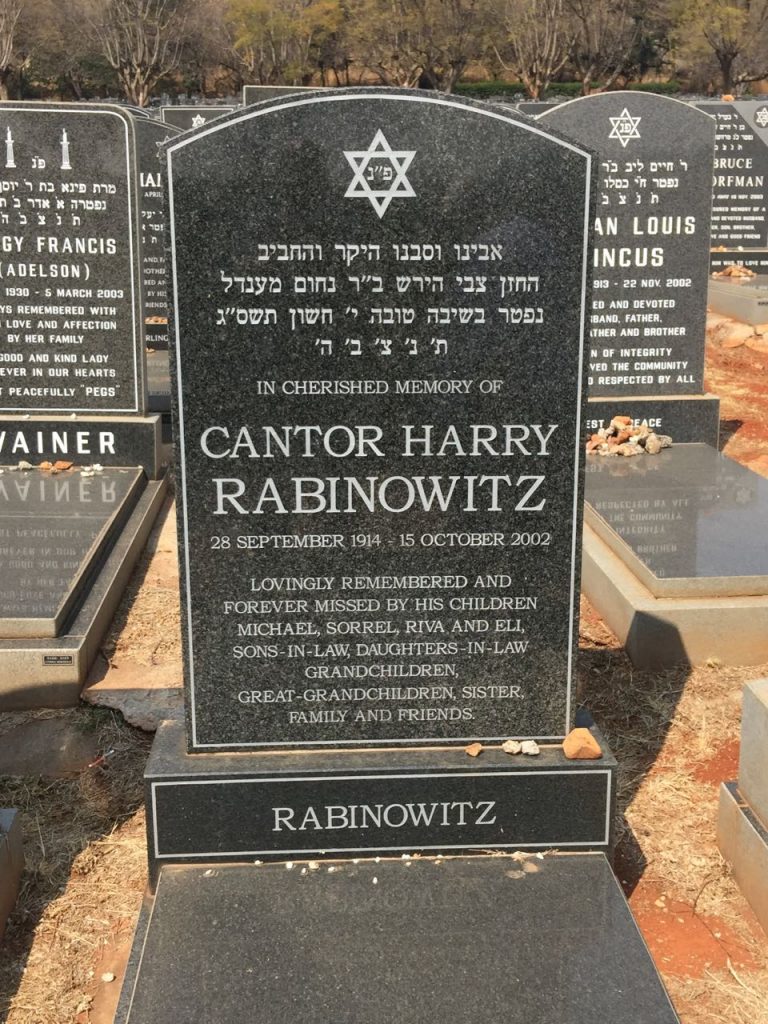
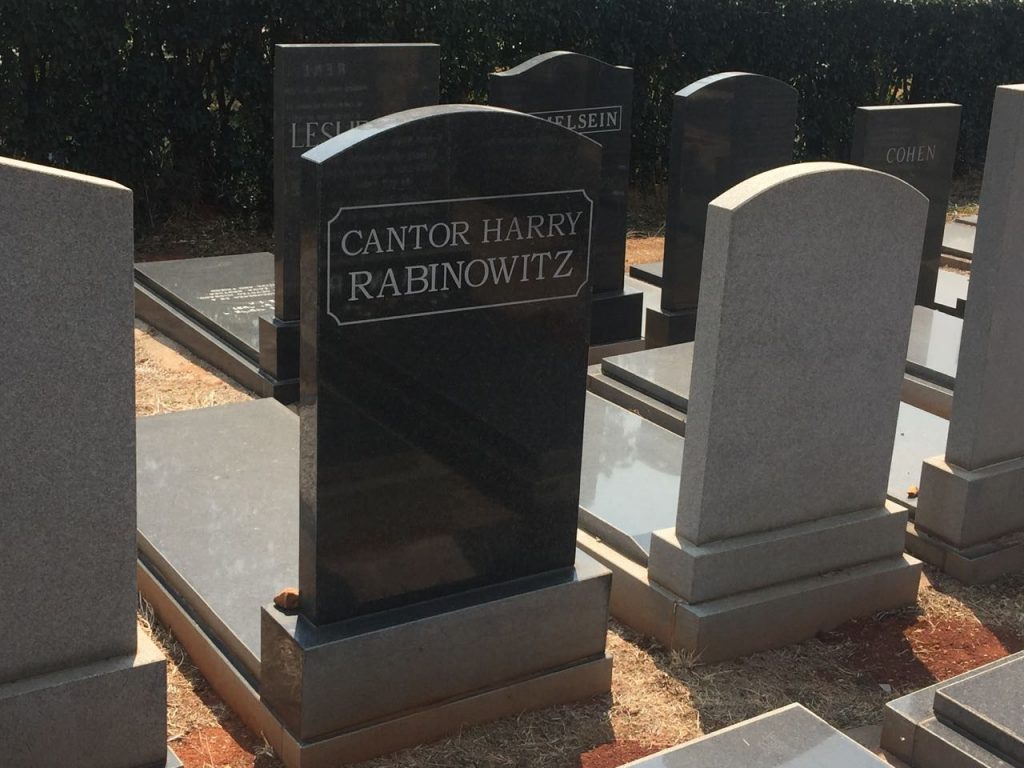
Tonight is the 15th yahrzeit of my dad, Cantor Hirsh Zvi (Harry) Rabinowitz
With Jill in shul tonight
Maariv Service at CHABAD Noranda
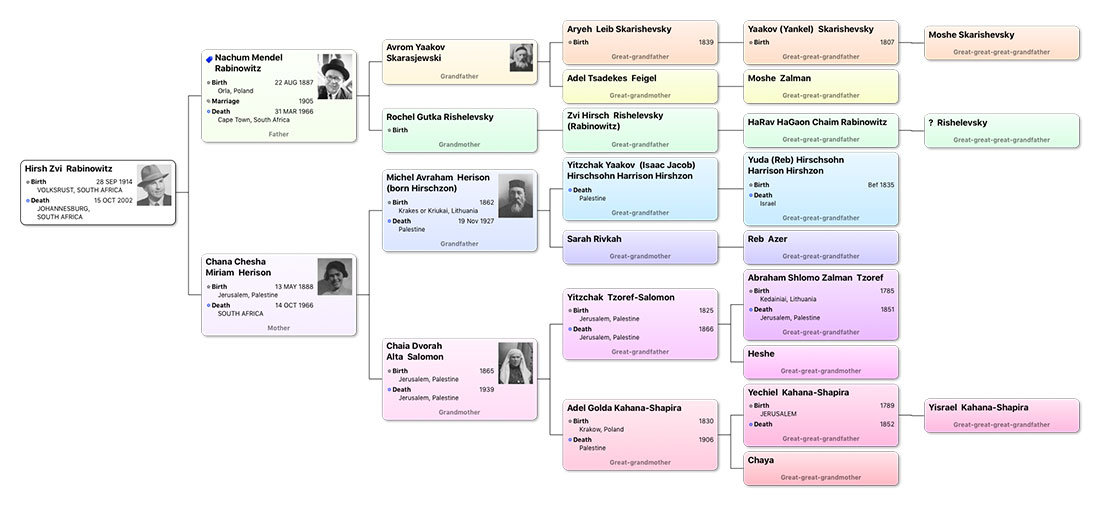
Harry’s abridged ancestral family tree (extends to over 20 generations)
Harry was born in Volksrust, Transvaal, South Africa on 28 September 1914.
Volksrust – Wikipedia
Volksrust is a town in the Mpumalanga province of South Africa near the KwaZulu-Natal provincial border, some 240 km southeast of Johannesburg, 53 km north of Newcastle and 80 km southeast of Standerton.
This is my best – meeting people and taking lots of photos of things I see.
Enjoy!
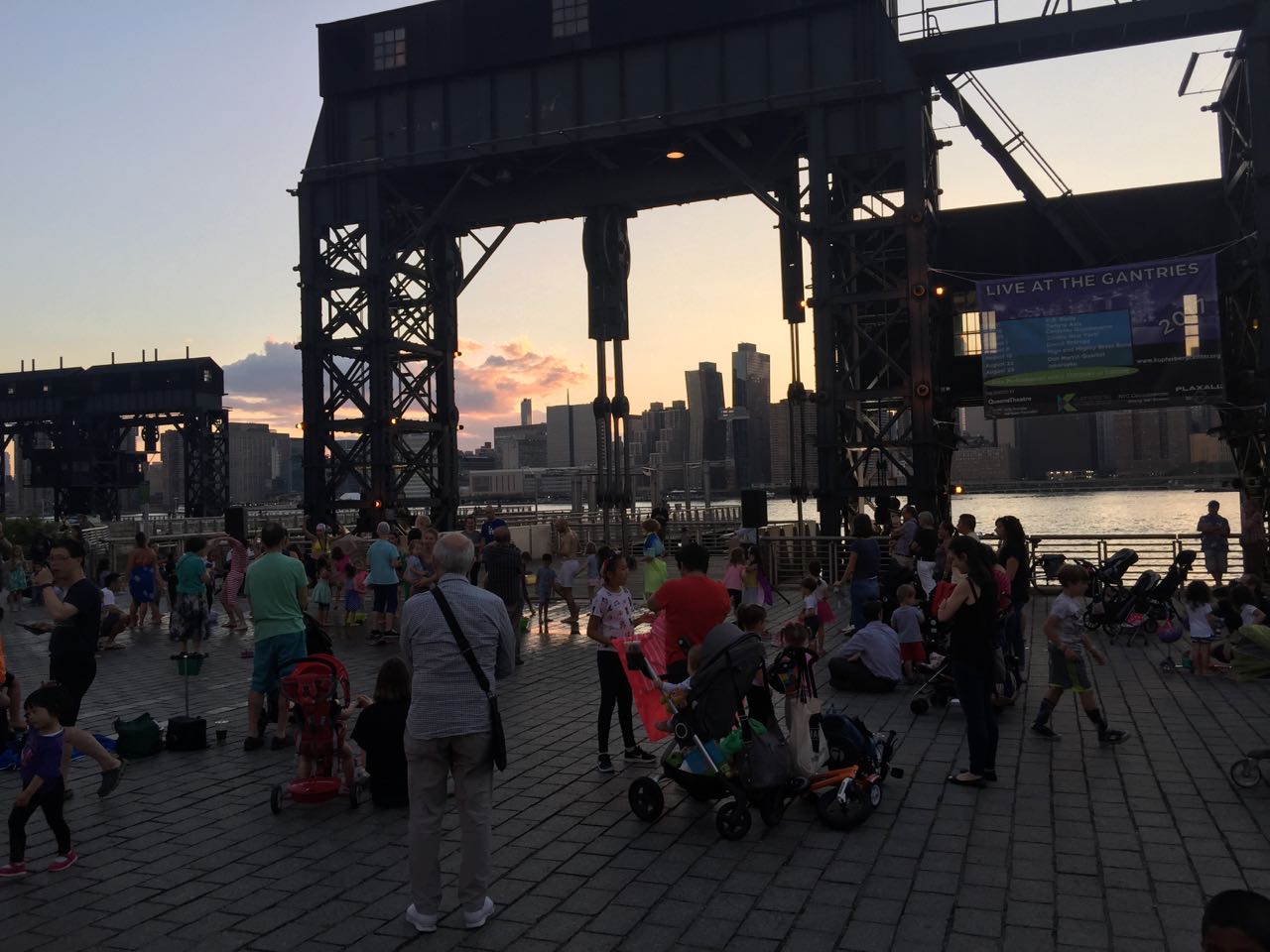
The skyline and the people of LIC
<
►
>
<
►
>
Long Island City
Long Island City – Wikipedia
Long Island City (LIC) is the westernmost residential and commercial neighborhood of the New York City borough of Queens. LIC is noted for its rapid and ongoing residential growth and gentrification, its waterfront parks, and its thriving arts community.[1] LIC has among the highest concentration of art galleries, art institutions, and studio space of any neighborhood in New York City.[2] It is bordered by Astoria to the north; the East River to the west; Hazen Street, 49th Street, and New Calvary Cemetery in Sunnyside to the east; and Newtown Creek—which separates Queens from Greenpoint, Brooklyn—to the south. It originally was the seat of government of the Town of Newtown, and remains the largest neighborhood in Queens. The area is part of Queens Community Board 1, located north of the Queensboro Bridge and Queens Plaza; it is also of Queens Community Board 2 to the south.
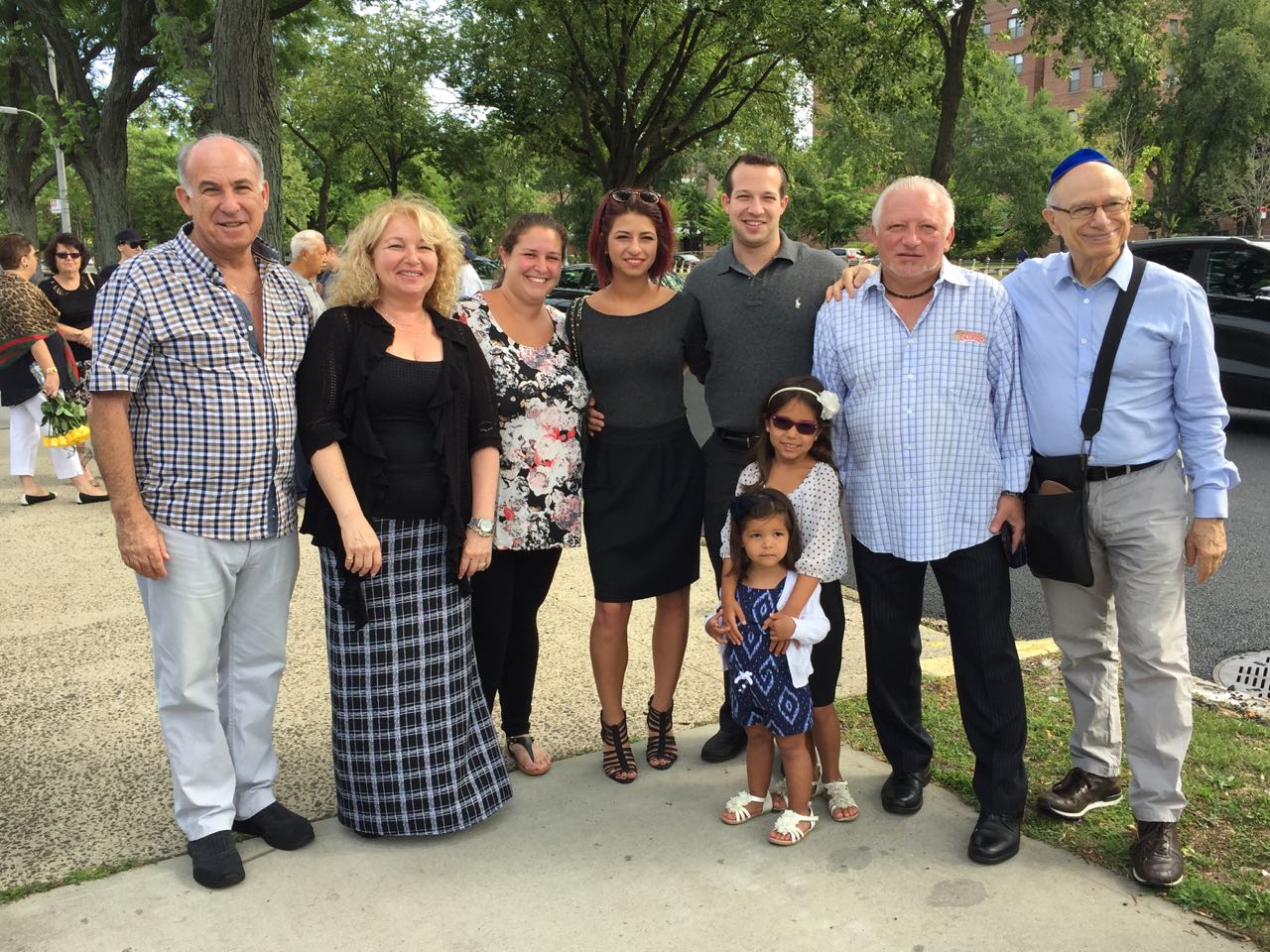
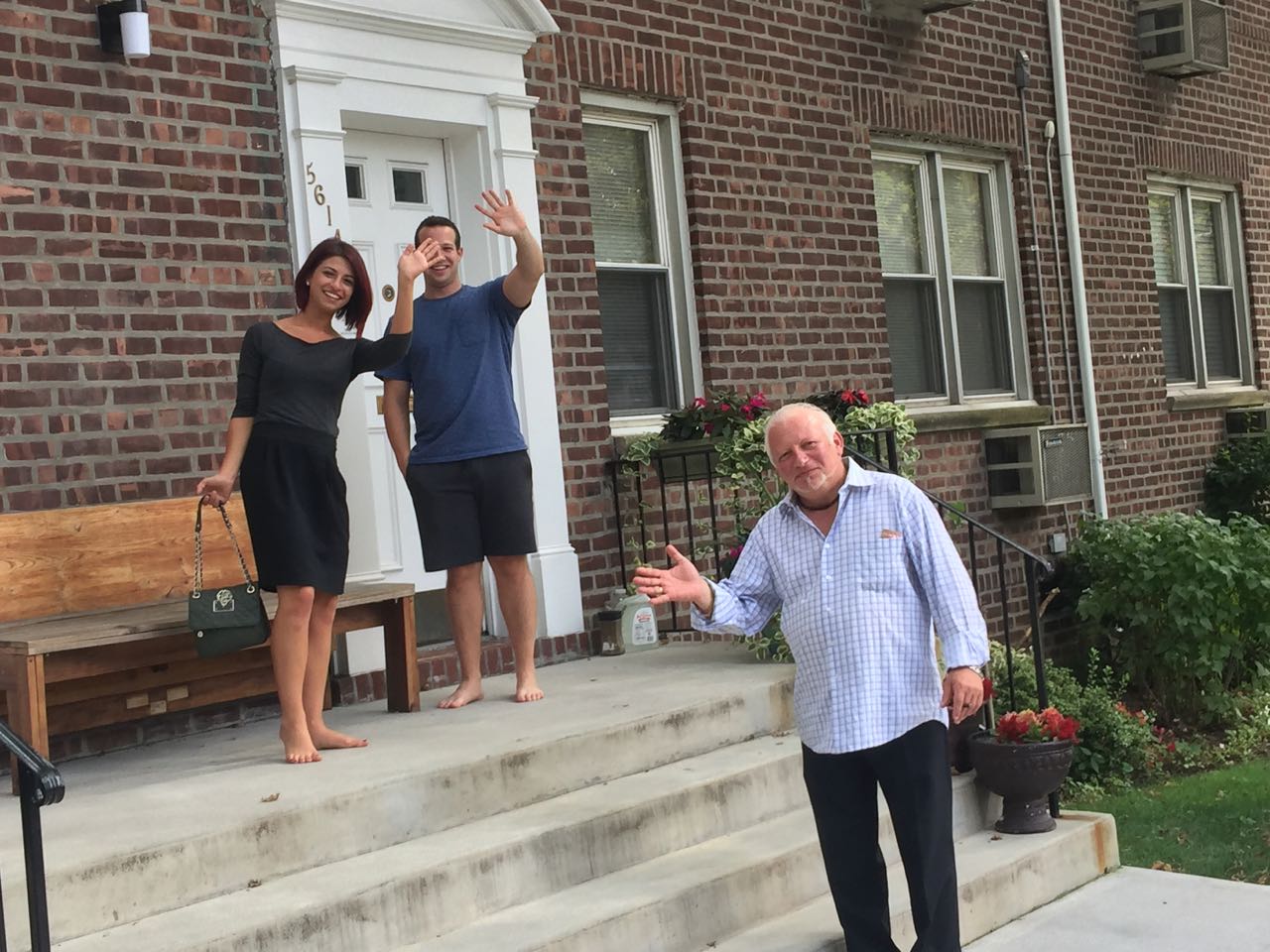
On August 6, I made a presentation on Avraham Shlomo Zalman Tzoref to six of his descendants at Dara Reid’s apartment. This was organised by Wilma Solomon.
With the Solomon family also descendants of TzorefThe Solomon family, also descendants of Tzoref
Manhattan Scenes
<
►
>
Buildings
<
►
>
<
►
>
Synagogues
<
►
>
<
►
>
Fire destroyed this old synagogue
<
►
>
Fire Damages New York Beth Hamedrash Hagodol Synagogue
Fire Damages New Yorkâs Beth Hamedrash Hagodol Synagogue
The abandoned building on the Lower East Side, built in 1850, once housed the city âs oldest Jewish Orthodox congregation. No injuries were reported in the blaze.
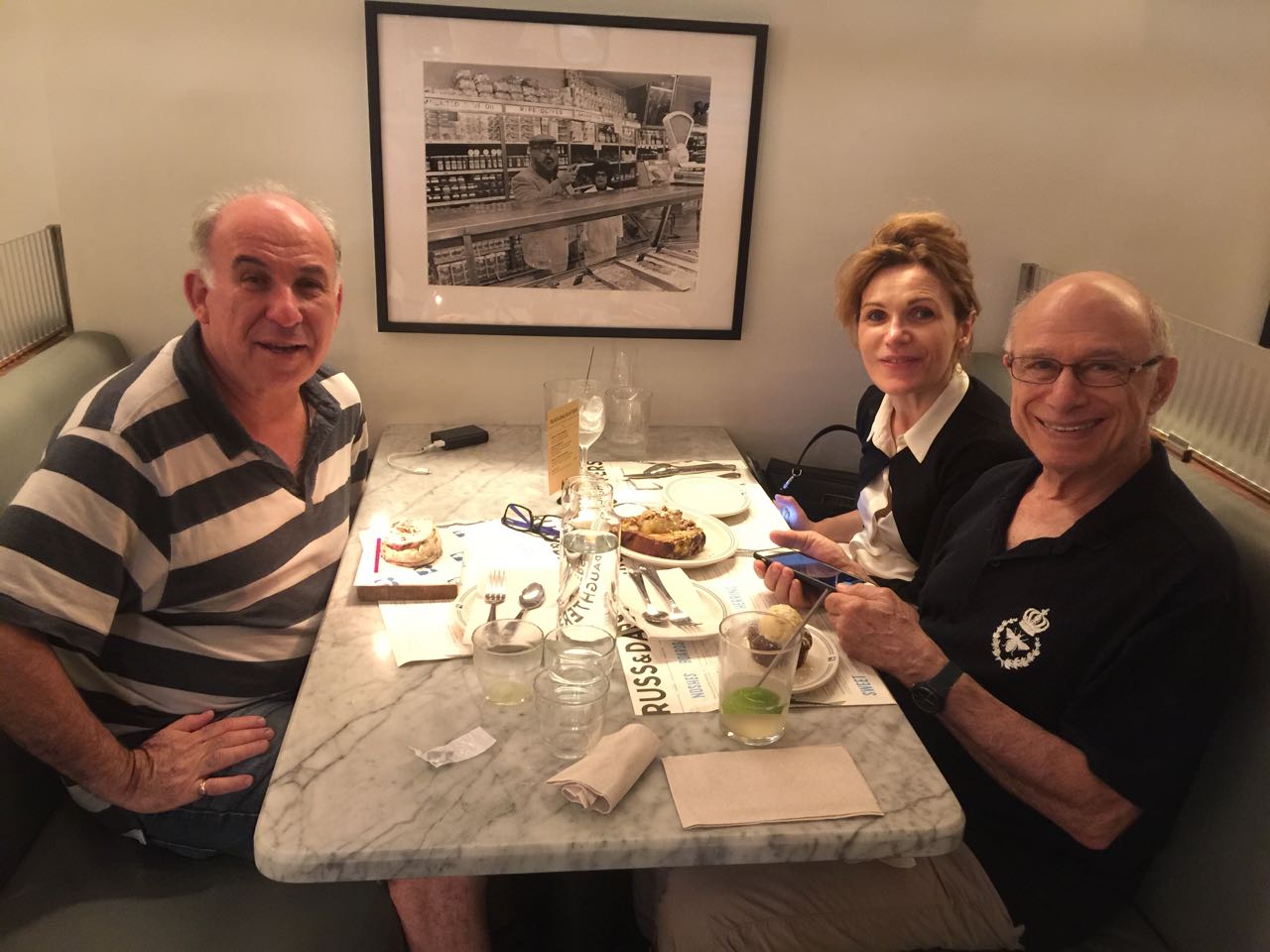
Russ & Daughters is an appetizing store[1] opened in 1914. It is located at 179 East Houston Street, on the Lower East Side of Manhattan, New York City. A family-operated store, it has been at the same location since 1914.
Our first meeting ever took place at the Washington Cemetery, Brooklyn New York on Sunday 6 August 2017 at 9:30am
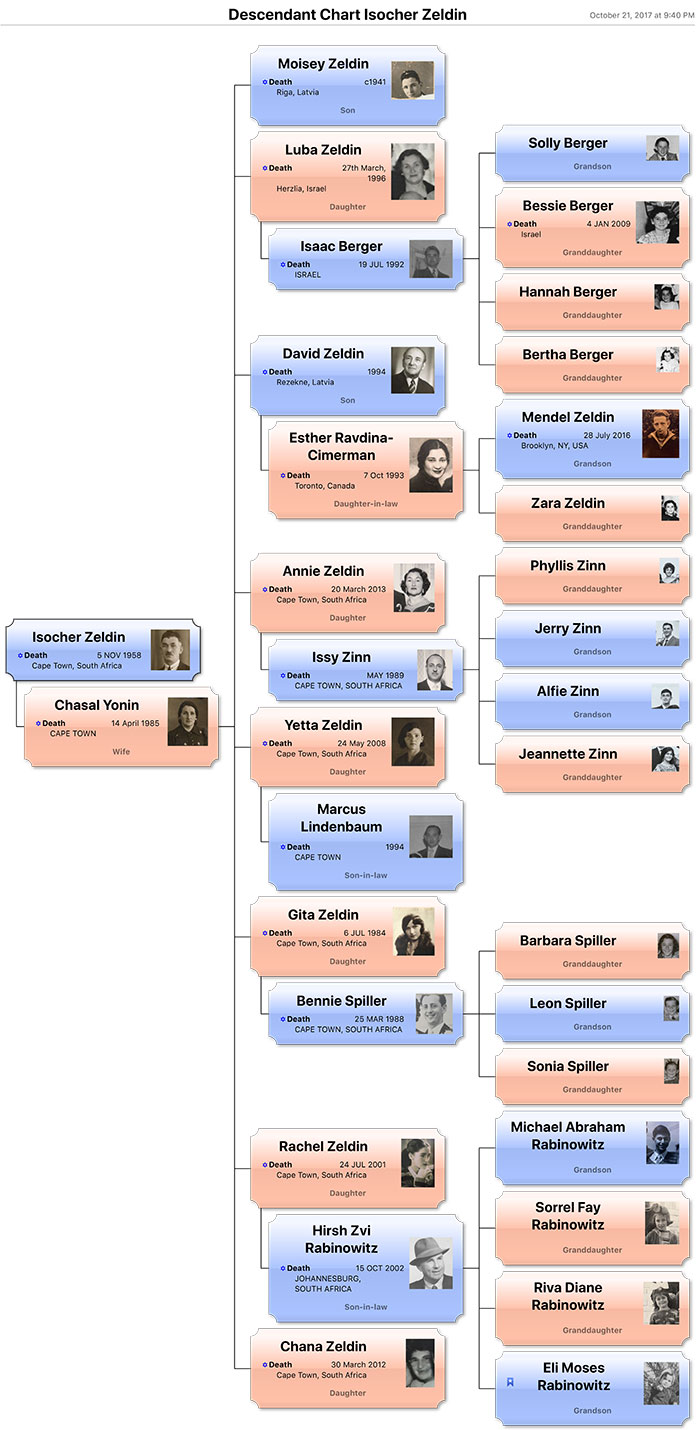
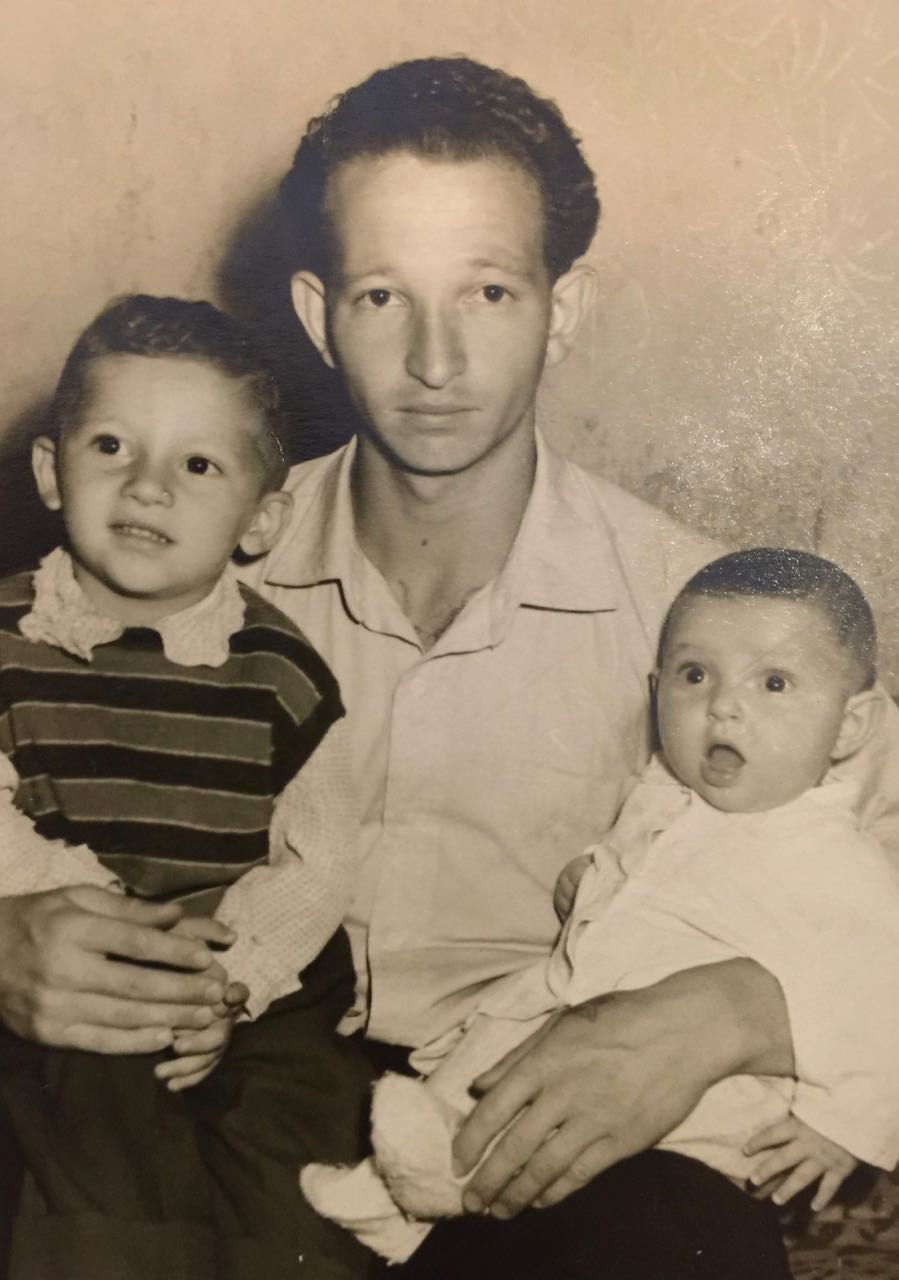
After finding the whereabouts of my cousin Zara Smushkovich in September 2016 in Toronto, I sadly discovered that her brother Mendel had passed away less than two months before in Brooklyn NY. Mendel, originally from Riga, Latvia, had only ever met one of his Zeldin first cousins, the late Phyllis Jowell in Riga in 1960.
Chassia & Isadore Zeldin, my maternal grandparents
Here are the children and grandchildren of Isocher and Chassia Zeldin
Isadore and Chassia with 11 of their 17 grandchildren c1953
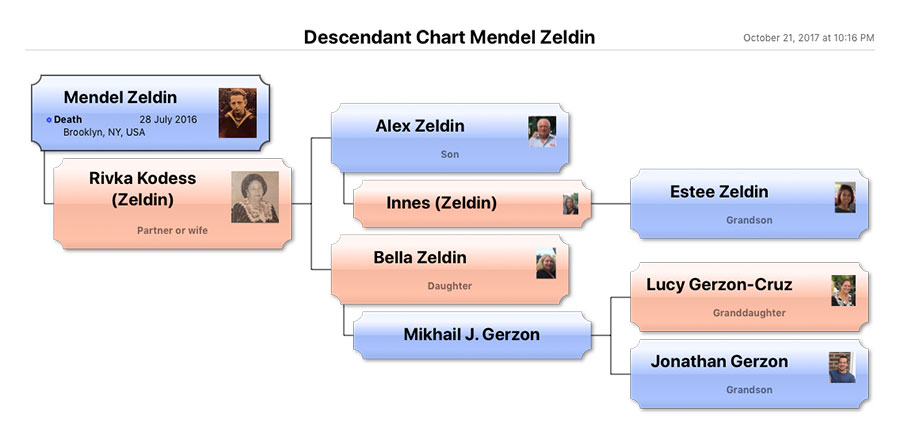
The children and grandchildren of Mendel Zeldin. There are also a couple of great grandchildren not listed here.
Meeting My Cousin Zara Smushkovich
Meeting My Cousin Zara Smushkovich
Toronto, Canada 30 July 2017 I meet my first cousin Zara Zeldin Smushkovich again after 42 years. It is a delightful reunion at a restaurant and then at her condo. The only other time we met was in…
The early August morning view from my room in my brother, Michael’s apartment in LIC, NY.
When I arrived in New York, I called Mendel’s daughter Bella. She invited my brother Michael and me to meet her, her brother Alex and their families at the Washington Cemetery in Brooklyn on the Sunday morning.
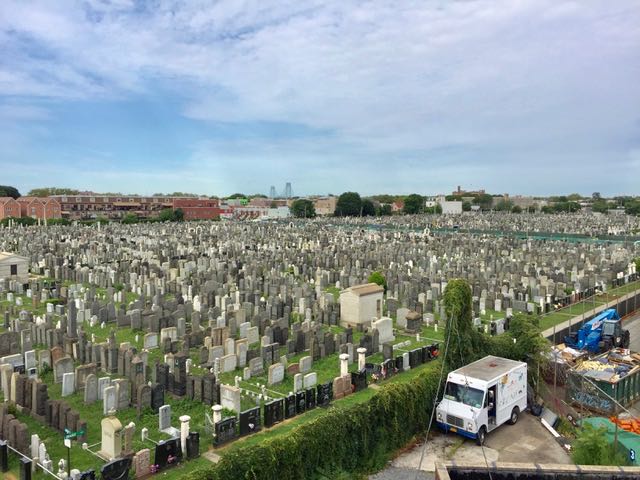
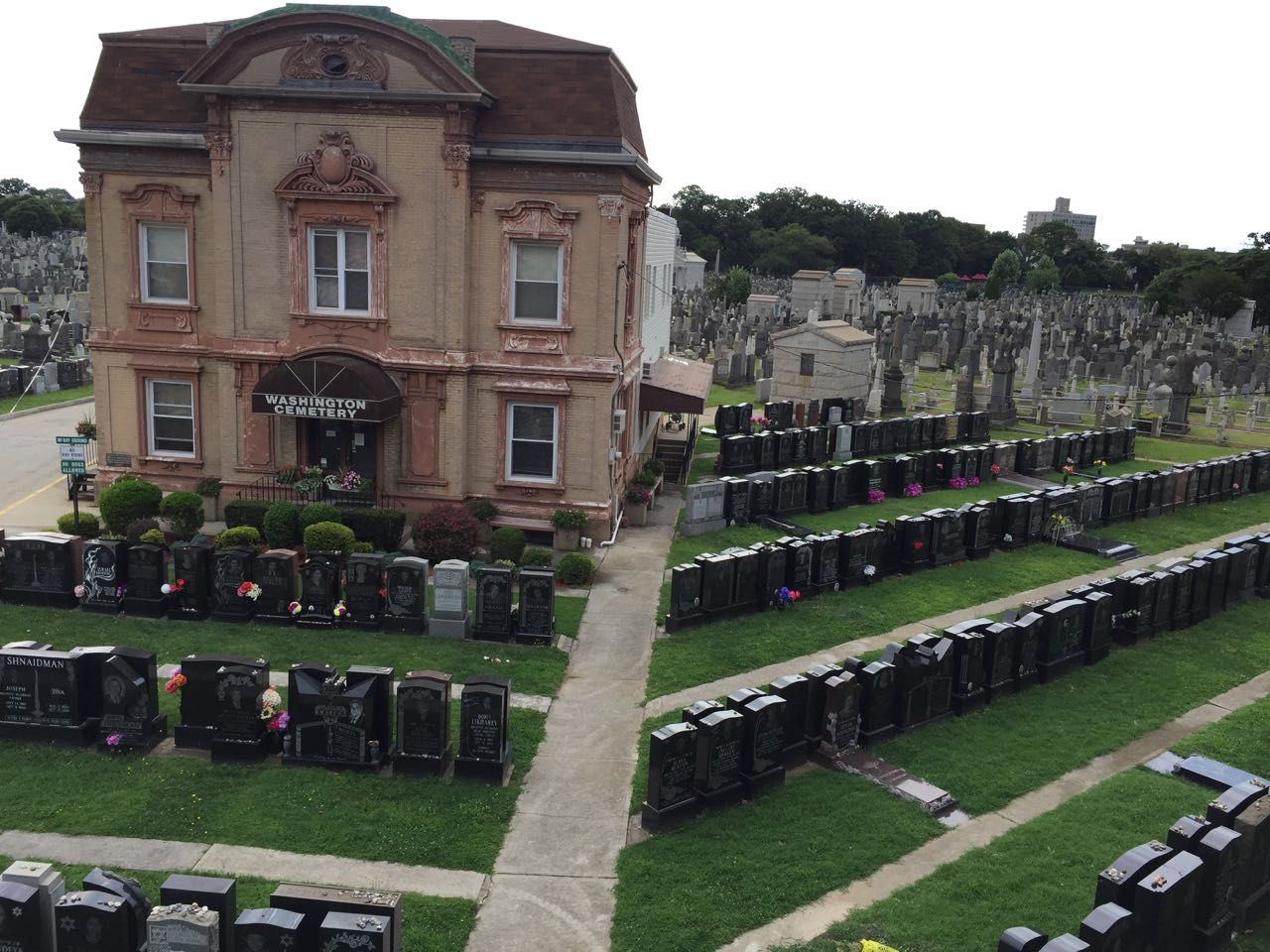
Washington Cemetery, Brooklyn NY
Washington Cemetery is an old, historical, and predominantly Jewish burial ground located at 5400 Bay Parkway in Mapleton, Brooklyn, New York, United States.
It was our first cousin Mendel’s unveiling! Strange “meeting” my cousin for the first time at his unveiling.
With my brother MichaelWith Bella. Lucy, Estee, Jonathan, Alex and Michael and Lucy’s daughters – all descendants of Isadore and Chassia Zeldin, my grand parentsWith late Mendel’s carer, Estee, Bella and Innes
We then had lunch at a Russian Jewish restaurant in Flatbush. After many vodkas and a few speeches in honour of our departed cousin, it was off to Bella’s house for tea and more reminiscing!
<
►
>
<
►
>
With Mendel's children, Bella & Alex
Riva, Mendel’s wife
<
►
>
My cousin, Zara & Meir Shmushkovich wedding
<
►
>
Zara & her mother, Esther
With Michael, Estee and JonathanSaying goodbye – Estee, Jonathan & Alex
A memorial sign to all the Jewish children from Novogrudok who perished during the Holocaust was unveiled at the Jewish Resistance Museum in Novogrudok on September 26, 2017. The monument was sponsored by Sergei Koval, a local Jew, who according to his own words ‘fulfilled the wish of the girl’.
Michle Sosnowski whose picture is in the exhibition of the Museum served as a prototype for the monument. The picture was provided by Jeannette Josse from London who visited Novogrudok in 2005 searching for her roots. Two years later Jeannette sent a book to the Museum in which she incorporated old pictures into the new ones made during her trip.
Michle happened to be in her family album because she was her mother’s friend. Together with Sheindel Sukharski they tried to escape from the labour camp in Novogrudok but were recognized in the street, denounced, arrested and taken to prison from which they never came out.
It’s a monument to the child whose greatest wish was to live. Dressed up for Purim she will dance forever next to the Tree of Life which incorporates the Star of David from the Novogrudok synagogue.
The ceremony was followed by a panel discussion on Remembrance and Commemoration dedicated to the blessed memory of Jack Kagan, a survivor from Novogrudok and a Bielski partisan, whose efforts to preserve the history of Novogrudok Jews and their unprecedented resistance to the Nazis were recognized by awarding him a title of the Honorary Citizen of Novogrudok in 2011.
Tamara Vershitskaya, the Director of the History Museum in Novogrudok and I leave early at 7:30am for Grodno, a couple of hours by car from Novogrudok. This is the countryside. A well known glass f…
In 2016 I travelled with my friend, Laima Ardaviciene, the English teacher at Kedainiai High School, to Jonava
Jonava
Quick facts
Jonava is the ninth largest city in Lithuania with a population of ca 30,000. It is located in Kaunas County in central Lithuania, 30 km north east of Kaunas, the second-largest city in Lithuania. It is served by Kaunas International Airport.Wikipedia
Municipality:
Jonava District Municipality
Area:
13.67 km²
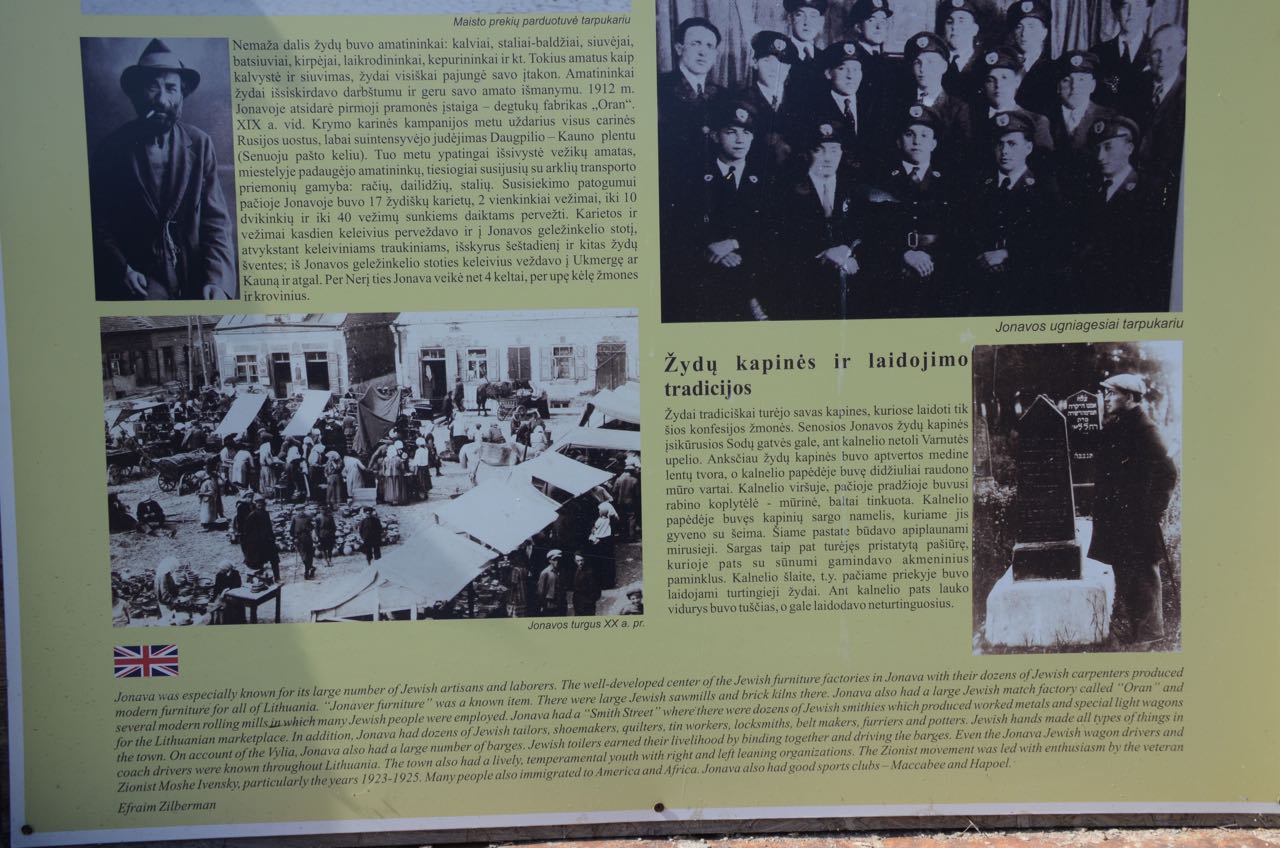
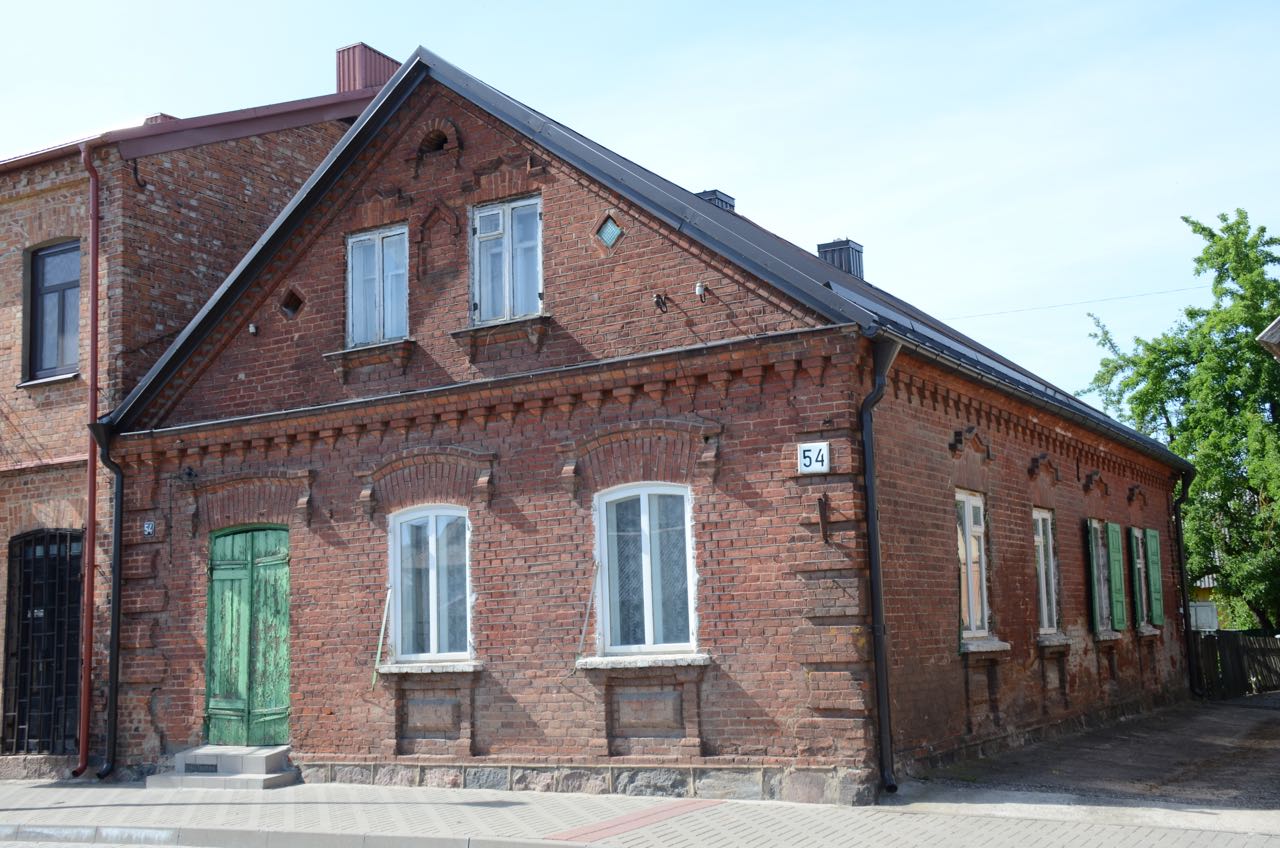
Jewish buildings, including the former synagogue.
Information posters on the buildings.
<
►
>
Former synagogue Former synagogue
The Jewish Cemetery
<
►
>
The amphitheatre and holiday entertainment
<
►
>
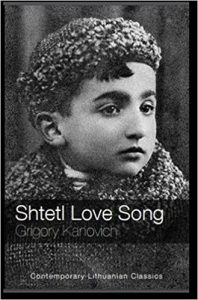
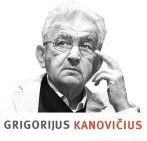
More about Grigory Kanovich’s book – Shtetl Love Song
From Amazon:
Winner the Liudo Dovydeno Prize awarded by the Lithuanian Writers’ Union In Shtetl Love Song Grigory Kanovich writes about his mother and in doing so peels back the surface of the rich community that lived in pre-war Lithuania. It is a requiem for the pre-war Jewish shtetl, for a people and a way of life that was destroyed. Shtetl Love Song won the Liudas Dovydenas Prize awarded by the Lithuanian Writers’ Union. About the author Grigory Kanovich is one of the most prominent Lithuanian writers and winner of the Lithuanian National Prize for Culture and Arts for 2014. Kanovich was born into a traditional Jewish family in the Lithuanian town of Jonava in 1929. Since 1993 the writer has lived in Israel. He is a member of the PEN club in both Israel and Russia. He is also a renowned playwright. About the translator Yisrael Elliot Cohen, B.A. Harvard College, Ph.D. Yale University, taught Russian literature and humanities at the University of Illinois. He settled in Israel in 1979, working as a professional translator from Russian into English and as an English-language editor. At Hebrew University he was co-editor of Jews in Russia and Eastern Europe' and worked on a bibliography project for the Centre for the Study of Anti-Semitism. Currently at Yad Vashem, he is working onTh e Untold Stories: Holocaust Murder Sites in the Soviet Union’. Dr. Cohen has translated several books. His non-academic interests are his grandchildren and attempting to apply the teachings of the Biblical prophets to the contemporary social and political situation. Praise for the novel Set in the rural Lithuanian landscape on the eve of World War II,Shtetl Love Song’ is full of tender affection, soft irony, and sharp observations. Guided by the memory of his beloved mother, the masterful narrator takes us into the very midst of his enchanted family world, recreating the past that is irrevocably destroyed and yet fully alive in his memory. Kanovich, himself a child of a Lithuanian shtetl who survived the Holocaust almost by a miracle, made it his mission to serve, against all odds, as a custodian of the collective memory of generations of Litvaks, Lithuanian Jews.’ – Mikhail Krutikov, Professor of Slavic and Judaic Studies, University of Michigan, Ann Arbor