TILTAI-BRIDGES-בריקן

A ceremony was held on Wednesday to thank those in Kedainiai, Lithuania who organised the recent cleaning of the Jewish cemetery and the matsevot.

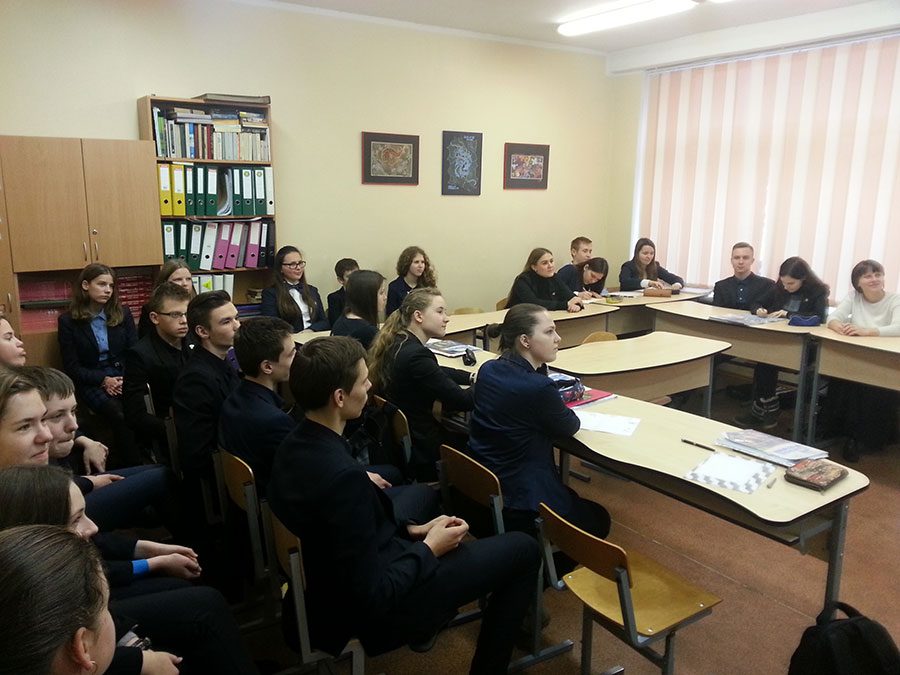
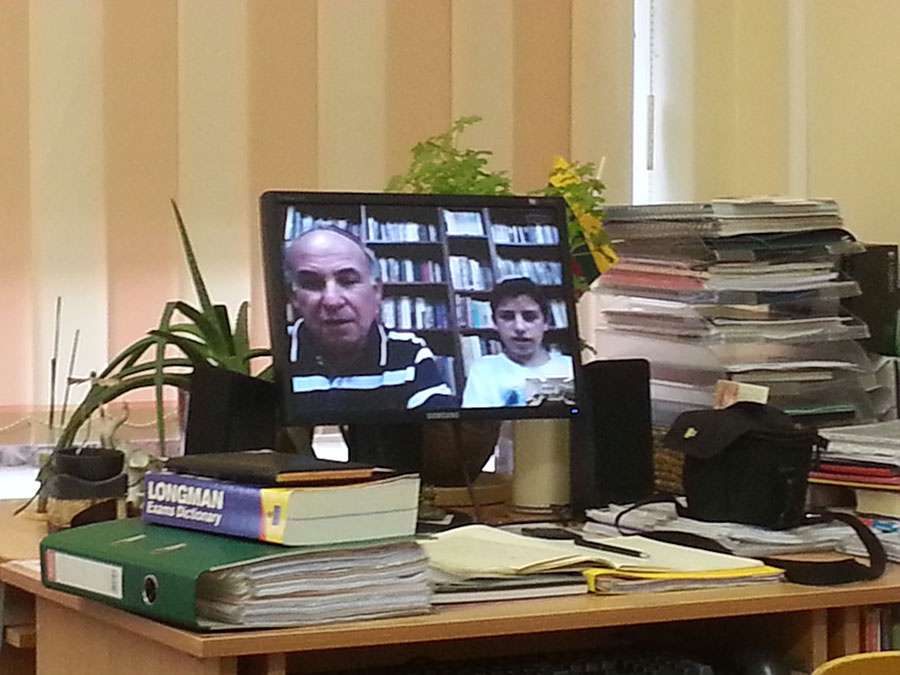
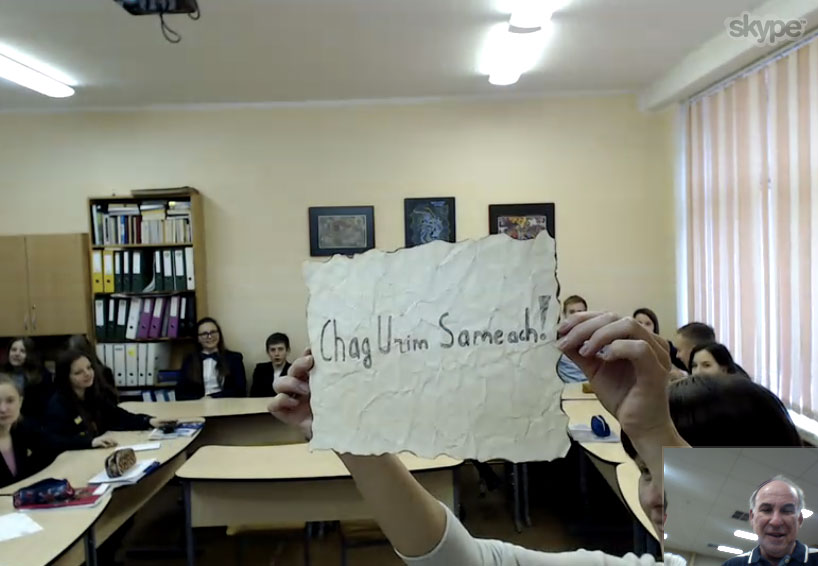
Tzvi Friedl, Natan Katzel, Jill Rabinowitz and I  joined those at the meeting at the Atzalynas School in Kedainiai  just after 8pm Perth time. We joined online from CHABAD Perth, Australia. We thanked those involved in undertaking this huge mitzvah. There are no Jews living in Kedainiai today.
Here is the report from teacher Laima Ardaviciene in Kedainiai – translated from the Lithuanian below:

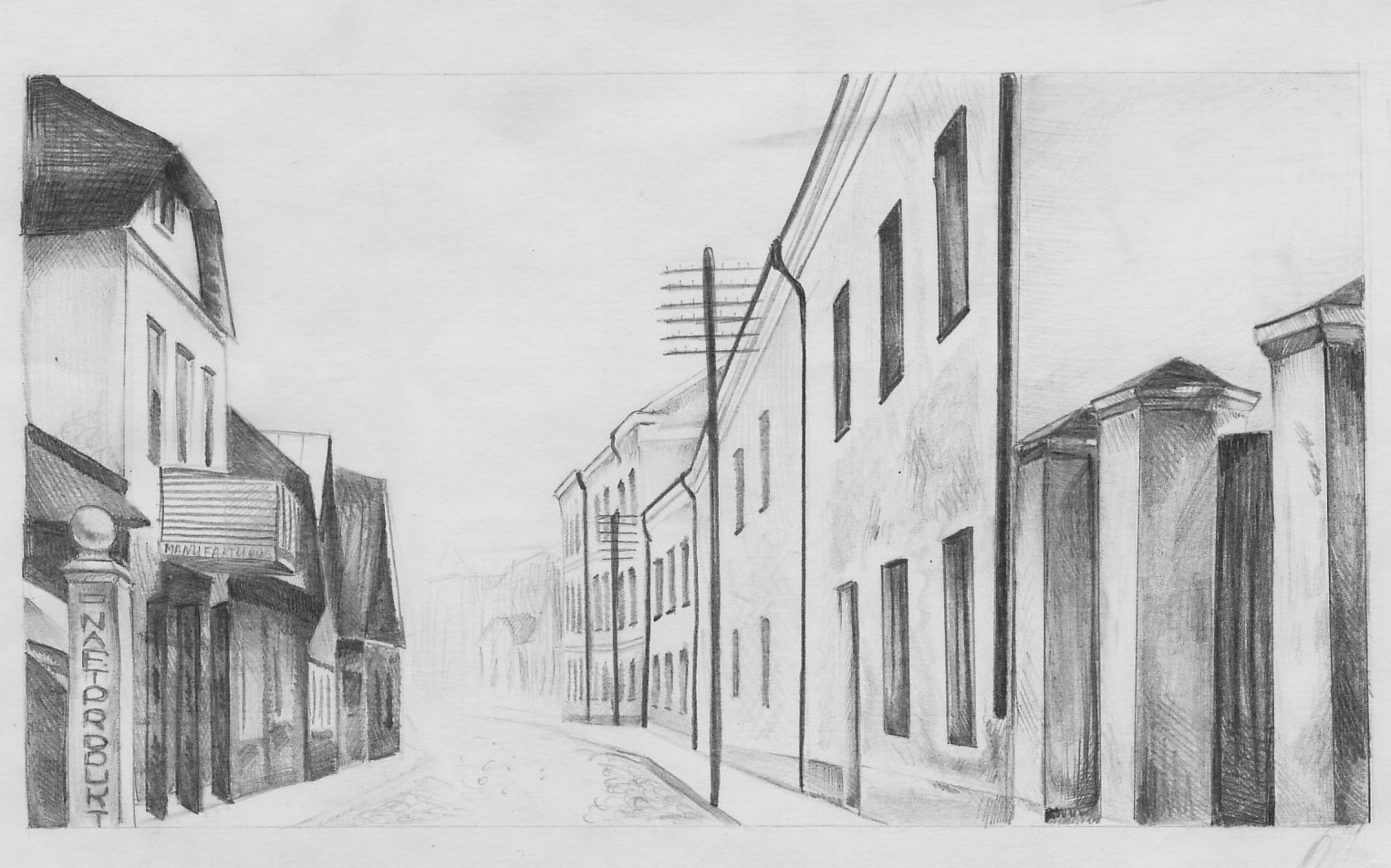
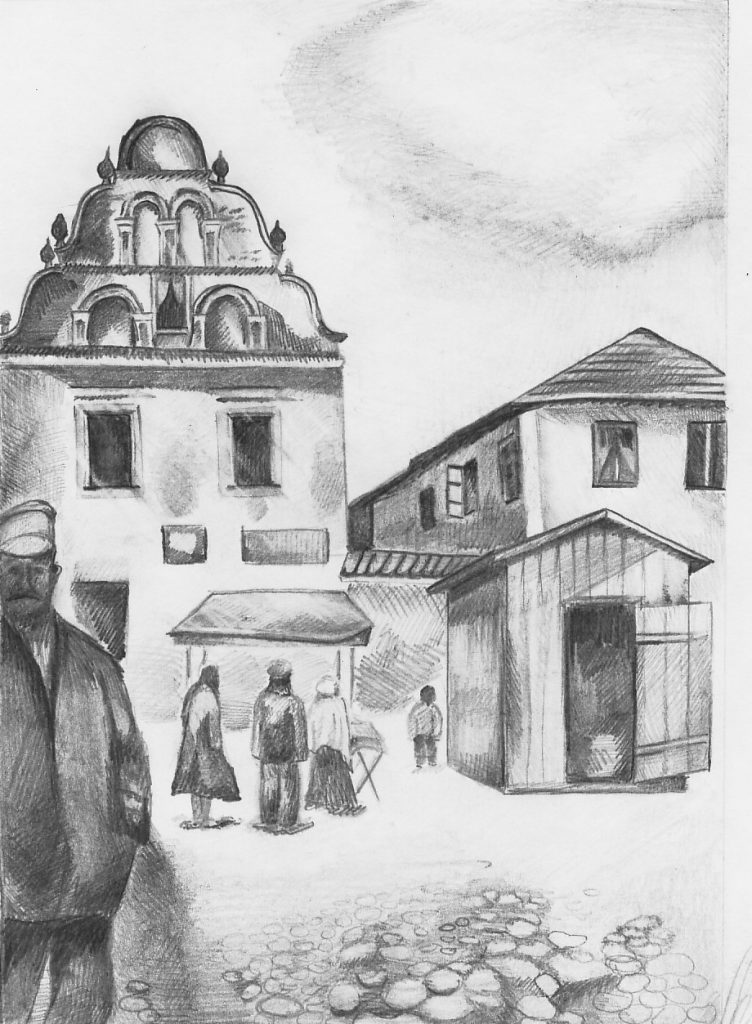
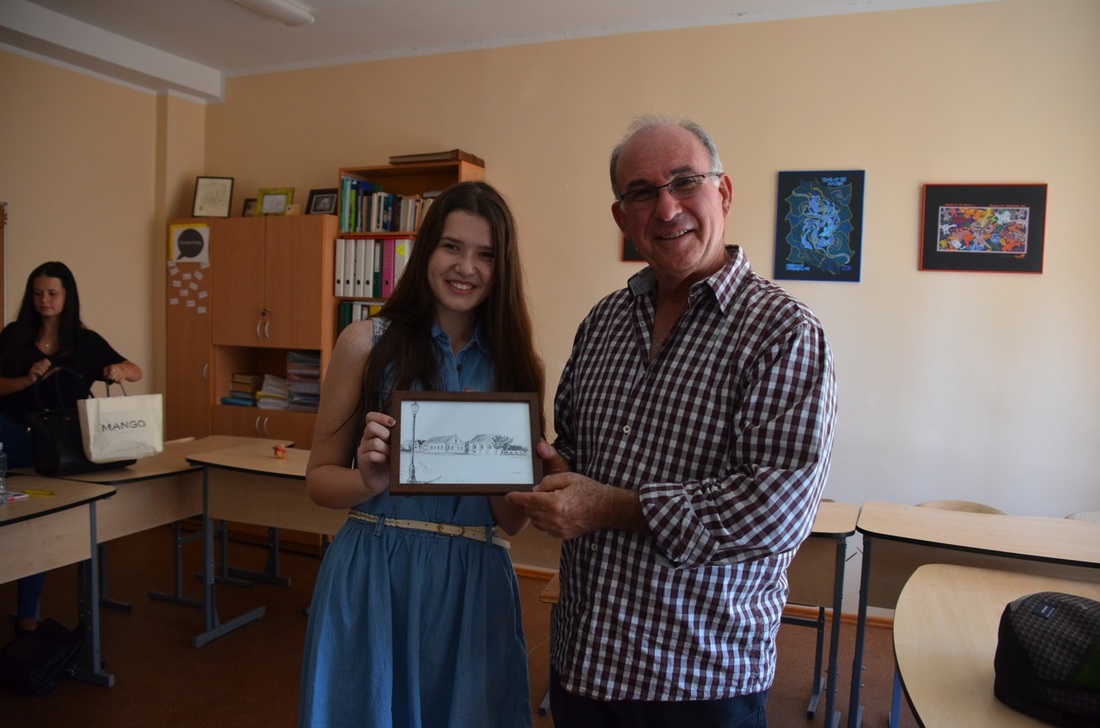
Valentinas Tamulis, governor of the town of Kėdainiai and Rimantas Žirgulis, director of the Kedainiai Regional Museum, visited Kėdainiai Atzalynas gymnasium. During the meeting the members of the gymnasium community thanked them for their cooperation in carrying out project TILTAI-BRIDGES-בריקן activities related to the Jewish community in Kedainiai. The students shared a recent presentation about the old Kedainiai Jewish Cemetery. Eli Rabinowitz (Australia), rooted in Kedainiai, and Rabbi Natan Katzel joined the meeting virtually and thanked the headman of Kėdainiai for his contribution to the old Kedainiai Jewish cemetery in honor of the Kedainiai Jewish people, Jewish music was played by Tzvi Friedl. Further cooperation activities were discussed during the meeting. The guests were presented with the Kedainiai drawings.

Atžalyno gimnazijoje lankėsi Kėdainių miesto seniūnas Valentinas Tamulis ir Kėdainių krašto muziejaus direktorius Rimantas Žirgulis. Susitikimo metu gimnazijos bendruomenės nariai padėkojo už bendradarbiavimą vykdant projektą TILTAI-BRIDGES-בריקן apie Kėdainiuose buvusią žydų bendruomenę. Gimnazistai pasidalino pastaruoju metu sukurtu pristatymu apie senąsias Kėdainių žydų kapines. Susitikimo metu prisijungė Eli Rabinowitz (Australija), kuris kėdainiečių žydų vardu padėkojo miesto seniūnui už jo indėlį tvarkant senąsias Kėdainių žydų kapines, padėkos žodį tarė ir rabinas Natan Katzel, o muzikiniu kūriniu pasidalino Tzvi Friedl. Susitikimo metu buvo aptarta tolimesnė bendradarbiavimo veikla. Svečiams buvo padovanoti gimnazijos mokinių piešti Kėdainių miestą vaizduojantys piešiniai.

We made three videos:

Participants in Kedainiai:

Valentinas Tamulis, the headman of Kėdainiai                    
Rimantas Žirgulis, the director of the Kėdainiai Regional History Museum
Gintaras Petrulis, the director of Kėdainiai Atžalynas gymnasium
Rasa Cicėnienė, the assistant of Kėdainiai Atžalynas gymnasium
Lina Blinstrubienė, the assistant of Kėdainiai Atžalynas gymnasium
Giedrius Galvanauskas, a student
Aistė Vosilytė, a student
Šarūnė Makaraitytė, a student

More about the project – Building Bridges In Kedainiai

Building Bridges In Kedainiai

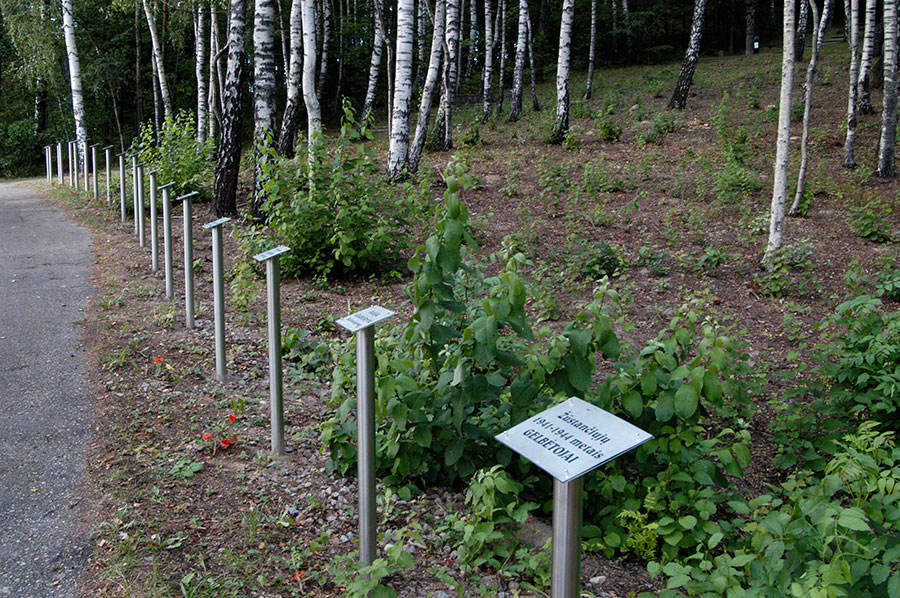
Kedainiai Atžalynas gymnasium students continue the Project: TILTAI-BRIDGES-בריקן . We thank Valentinas Tamulis, the mayor of Kedainiai, and Rimantas Žirgulis for organising cleaning activities in the old Jewish cemetery. Not a single tombstone is covered by a growing tree or a bush now. All the matsevot remind us about the Jewish community that lived in Keidan. We are presenting the recent view of the Old Jewish Cemetery of Keidan.

Source: elirab.me/bridges/

The video of the cemetery

Building Bridges In Kedainiai

Atzalynas High School, Kedainiai

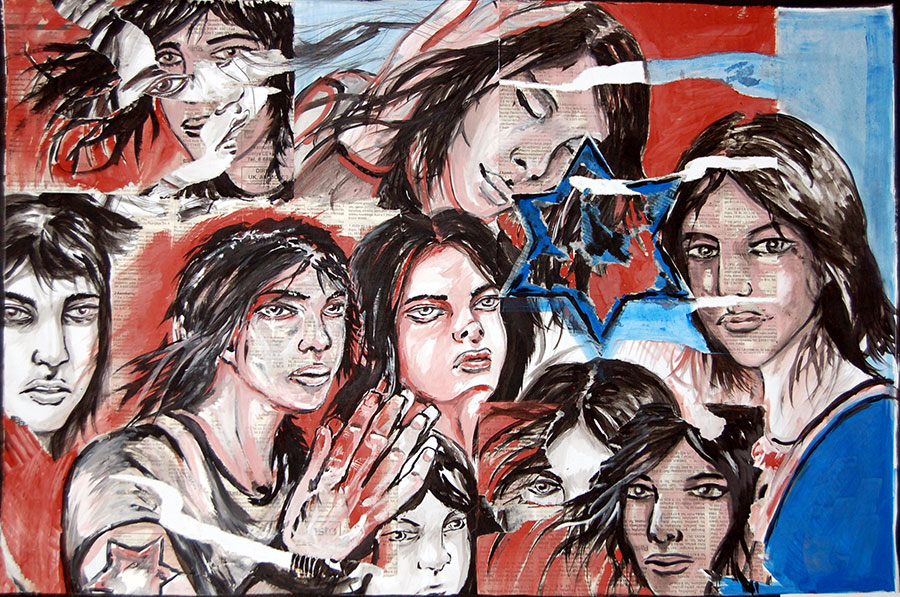
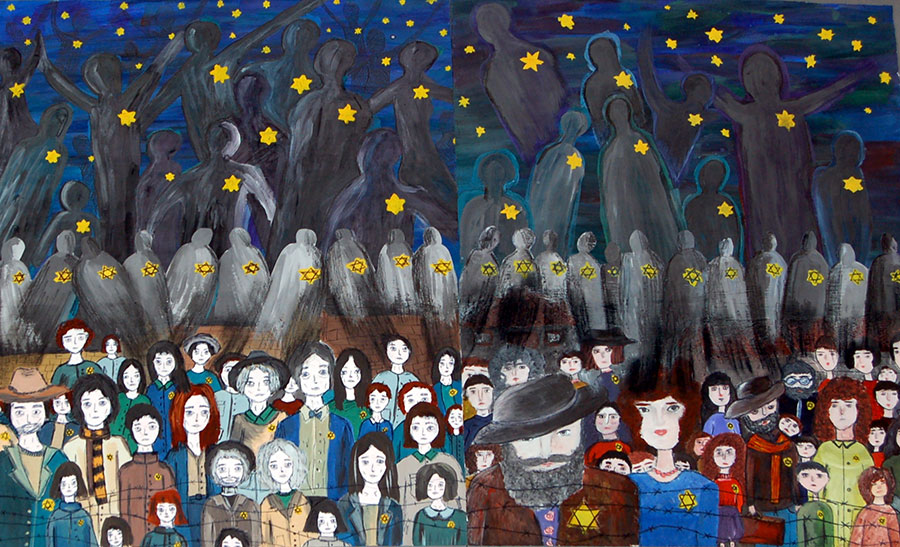
Drawings by Julija Chomenko featured in the video below.

Julio completed her schooling  at Atzalyno High School last year.

From Laima Ardaviciene, teacher:

Kedainiai Atžalynas gymnasium students continue the Project: TILTAI-BRIDGES-בריקן . From the bottom of our heart we thank Valentinas Tamulis, the headman of Kedainiai, and Rimantas Žirgulis for organising cleaning activities in the old Jewish cemetery. Not a single tombstone is covered by a growing tree or a bush now. All the headstones remind us about the Jewish community that lived in Keidan. We are presenting the recent view of the Old Jewish Cemetery of Keidan.

Why BRIDGES?

Tiltai-Bridges-בריקן
​      Kedainiai Atzalynas gymnasium

Source: bridges2015.weebly.com/why-bridges.html

Keidaners in Israel

Atzalynas Gimnazija Kedainiai Visit 2017

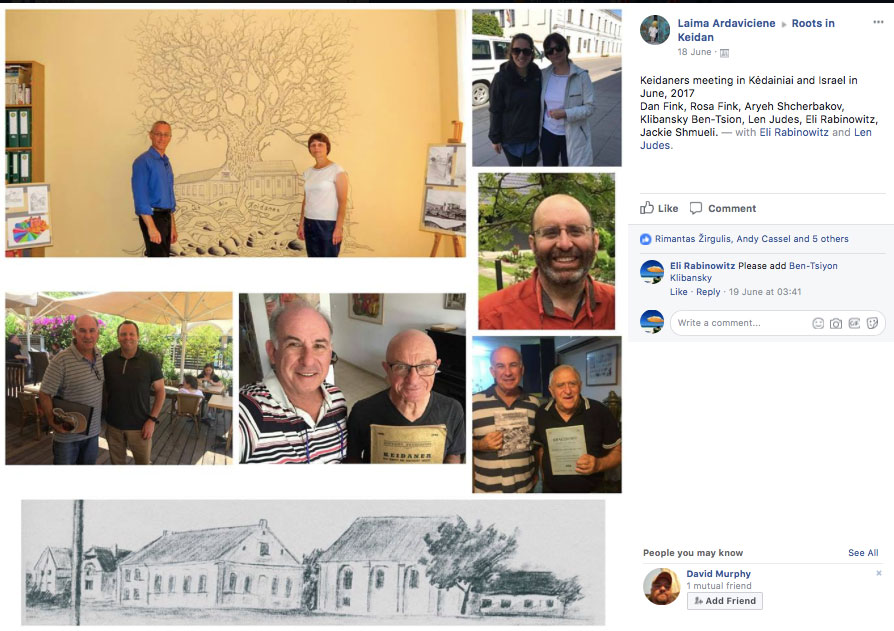
The Keidaner Family tree on Laima’s classroom wall – an unique work of art! The complex of two synagogues and the tree featuring the names of Keidaners, including  my 3rd great grandfat…

Source: elirab.me/atzalynas-gimnazija-kedainiai-visit-2017/

 With Viktorija Orlovaite in 2014
Her sketch of the two synagogue complex

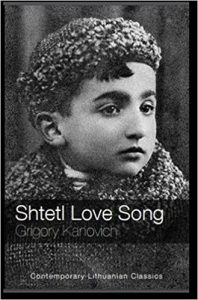
Shtetl Love Song

Shtetl Love Song

A new book by Grigory Kanovich

Source: www.amazon.com/Shtetl-Love-Song-Grigory-Kanovich/dp/0995560021/ref=sr_1_1?s=books

Grigory Kanovich was born in Jonava, Lithuania

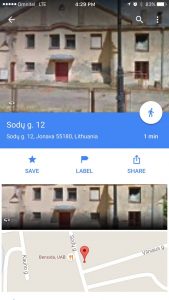
In 2016 I travelled with my friend, Laima Ardaviciene, the English teacher at Kedainiai High School, to Jonava

Jonava

Quick facts
Jonava is the ninth largest city in Lithuania with a population of ca 30,000. It is located in Kaunas County in central Lithuania, 30 km north east of Kaunas, the second-largest city in Lithuania. It is served by Kaunas International Airport.Wikipedia
  • Municipality:
    • Jonava District Municipality
  • Area:
    • 13.67 km²

IMG_7211

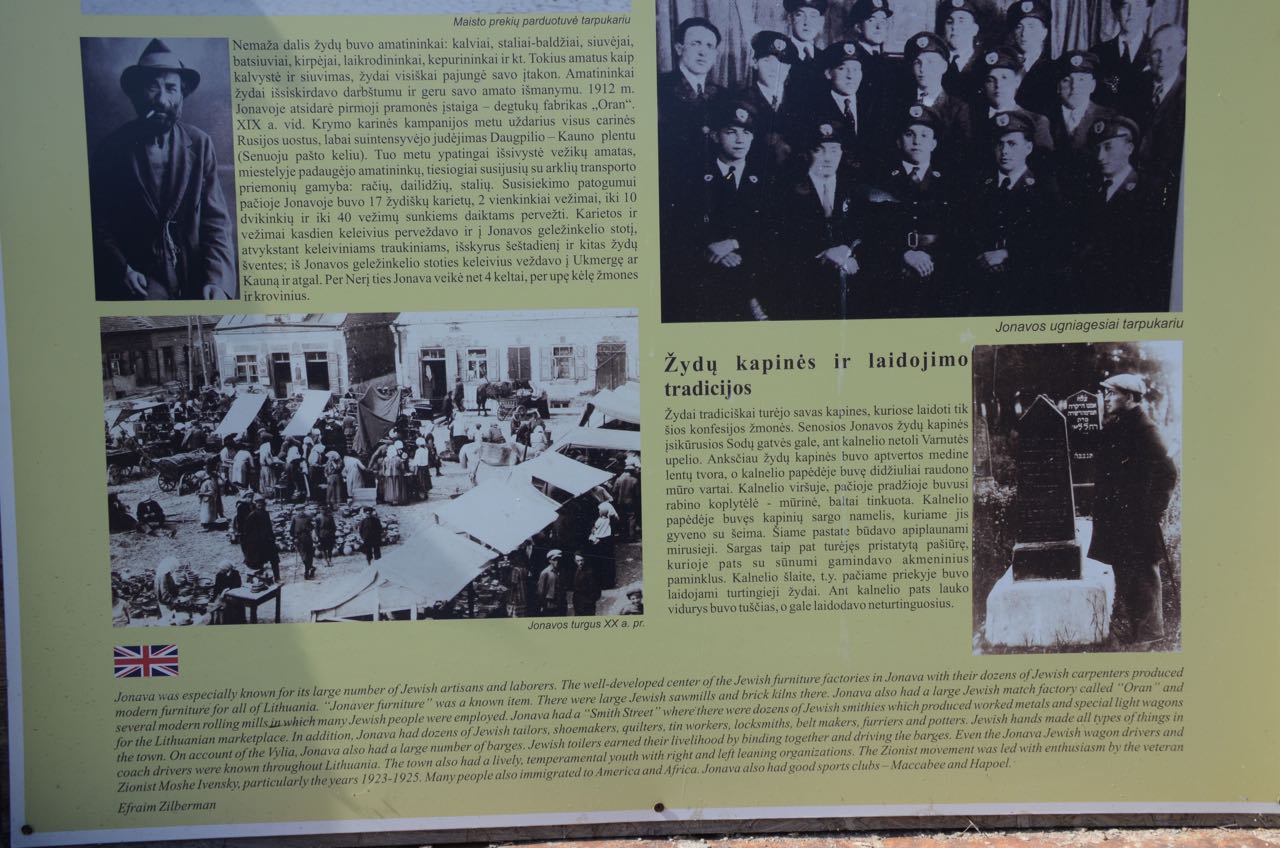
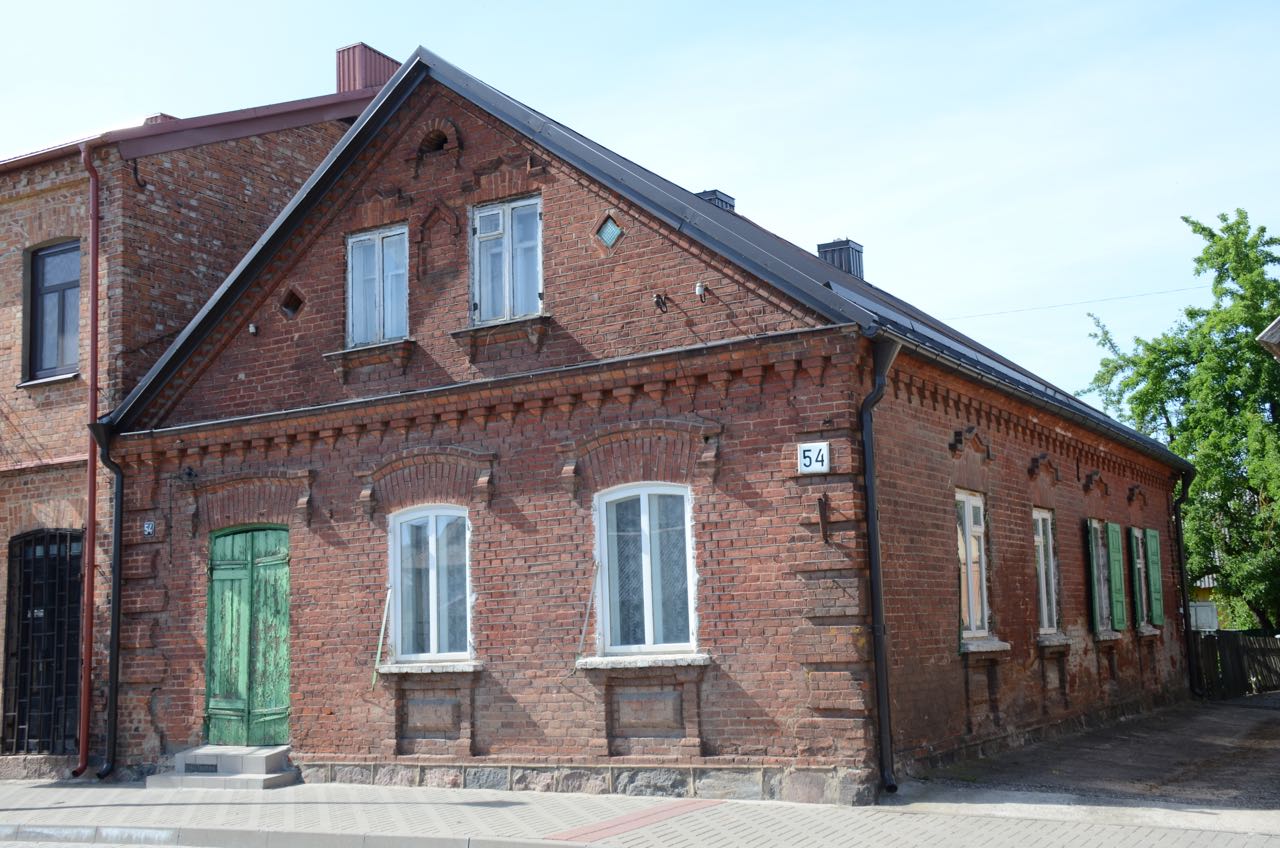
Jewish buildings, including the former synagogue.

Information posters on the buildings.

IMG_7213

DSC_5274 DSC_5275 DSC_5282 DSC_5280 DSC_5299 DSC_5296 DSC_5295 DSC_5294 DSC_5293 DSC_5292 DSC_5291 DSC_5290 DSC_5289 DSC_5288 DSC_5287 DSC_5286 DSC_5285 DSC_5284
<
>
Former synagogue Former synagogue

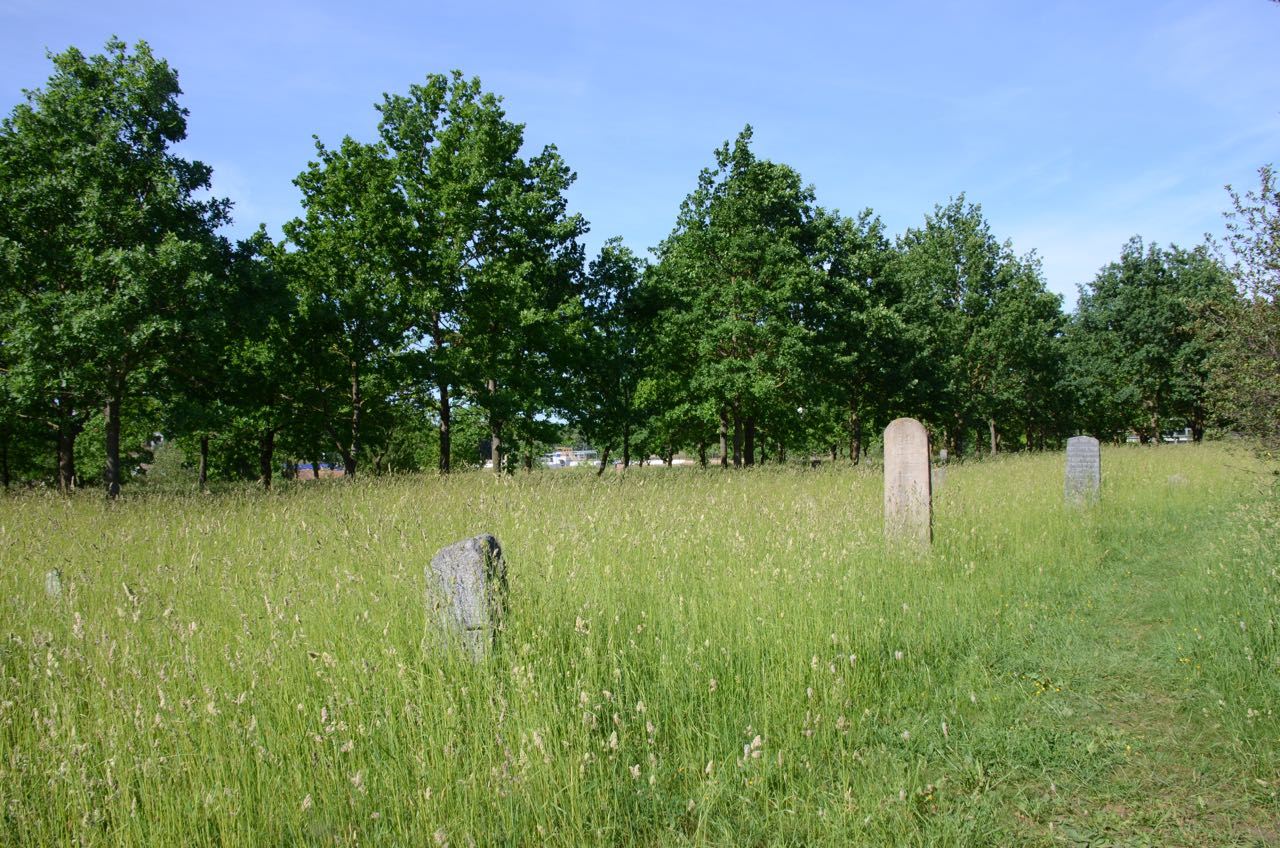
The Jewish Cemetery

IMG_7218 DSC_5319 DSC_5304 DSC_5305 DSC_5317 DSC_5316 DSC_5314 DSC_5312 DSC_5311 DSC_5310 DSC_5309 DSC_5307 DSC_5306
<
>

The amphitheatre and holiday entertainment

DSC_5320 DSC_5336 DSC_5335 DSC_5332 DSC_5331 DSC_5330 DSC_5327 DSC_5324 DSC_5323 DSC_5322 DSC_5321
<
>

More about Grigory Kanovich’s book – Shtetl Love Song

From Amazon:

Winner the Liudo Dovydeno Prize awarded by the Lithuanian Writers’ Union In Shtetl Love Song Grigory Kanovich writes about his mother and in doing so peels back the surface of the rich community that lived in pre-war Lithuania. It is a requiem for the pre-war Jewish shtetl, for a people and a way of life that was destroyed. Shtetl Love Song won the Liudas Dovydenas Prize awarded by the Lithuanian Writers’ Union. About the author Grigory Kanovich is one of the most prominent Lithuanian writers and winner of the Lithuanian National Prize for Culture and Arts for 2014. Kanovich was born into a traditional Jewish family in the Lithuanian town of Jonava in 1929. Since 1993 the writer has lived in Israel. He is a member of the PEN club in both Israel and Russia. He is also a renowned playwright. About the translator Yisrael Elliot Cohen, B.A. Harvard College, Ph.D. Yale University, taught Russian literature and humanities at the University of Illinois. He settled in Israel in 1979, working as a professional translator from Russian into English and as an English-language editor. At Hebrew University he was co-editor of Jews in Russia and Eastern Europe' and worked on a bibliography project for the Centre for the Study of Anti-Semitism. Currently at Yad Vashem, he is working onTh e Untold Stories: Holocaust Murder Sites in the Soviet Union’. Dr. Cohen has translated several books. His non-academic interests are his grandchildren and attempting to apply the teachings of the Biblical prophets to the contemporary social and political situation. Praise for the novel Set in the rural Lithuanian landscape on the eve of World War II,Shtetl Love Song’ is full of tender affection, soft irony, and sharp observations. Guided by the memory of his beloved mother, the masterful narrator takes us into the very midst of his enchanted family world, recreating the past that is irrevocably destroyed and yet fully alive in his memory. Kanovich, himself a child of a Lithuanian shtetl who survived the Holocaust almost by a miracle, made it his mission to serve, against all odds, as a custodian of the collective memory of generations of Litvaks, Lithuanian Jews.’ – Mikhail Krutikov, Professor of Slavic and Judaic Studies, University of Michigan, Ann Arbor


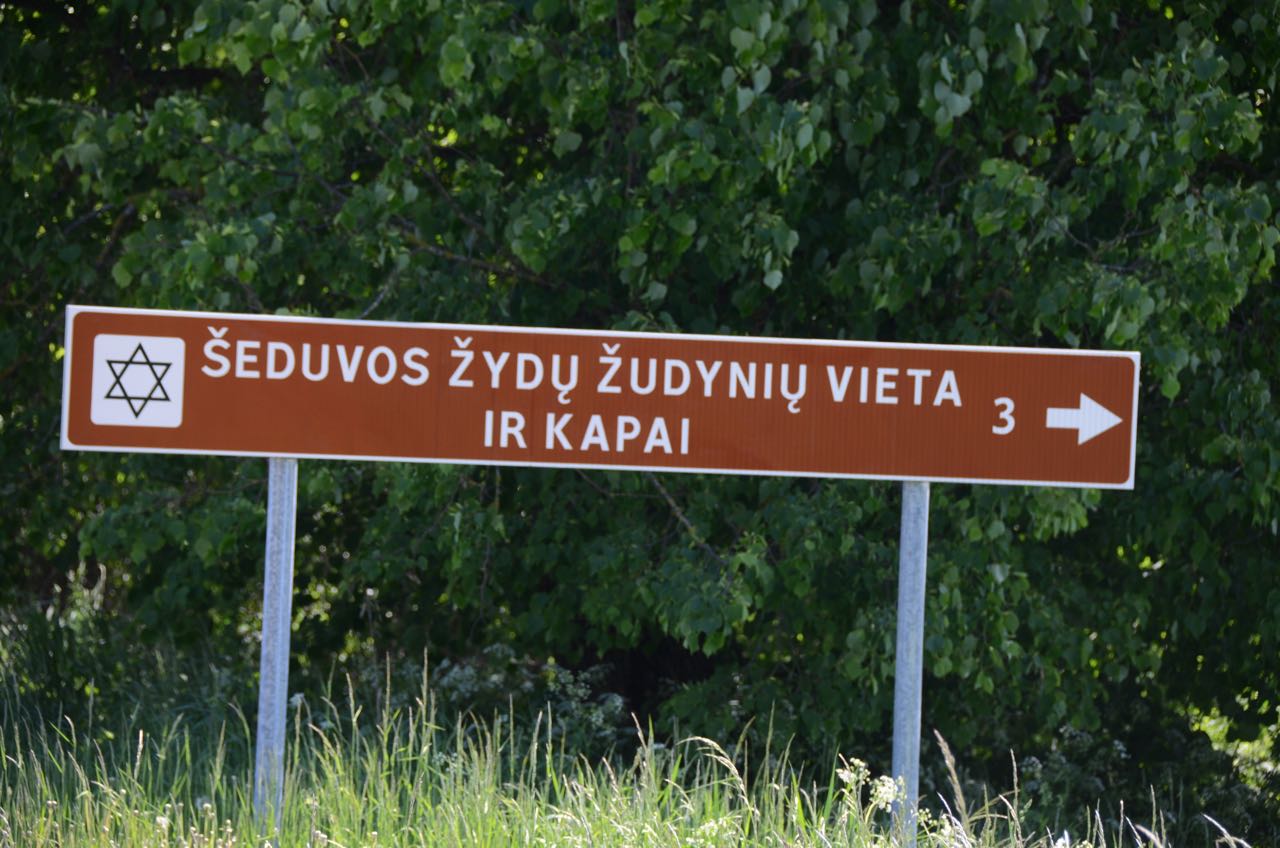
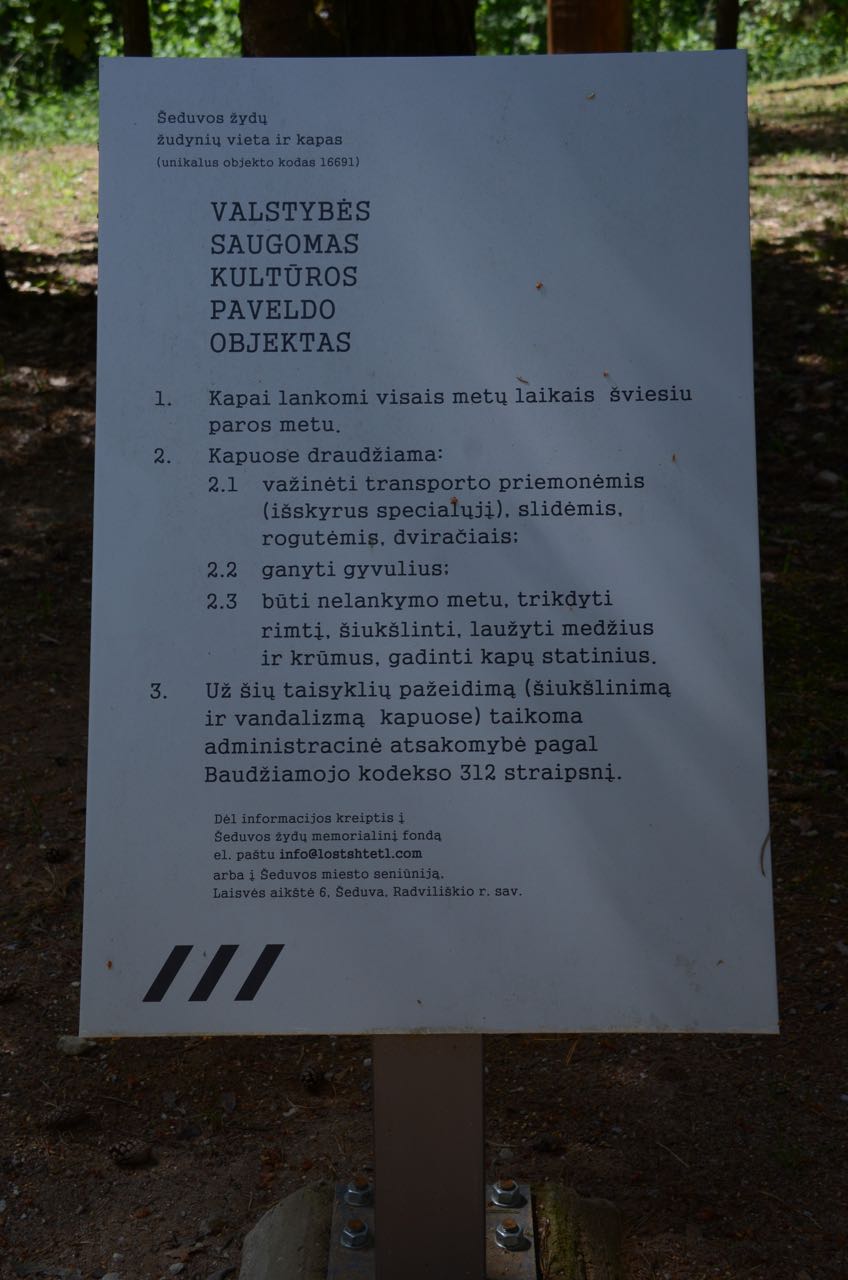
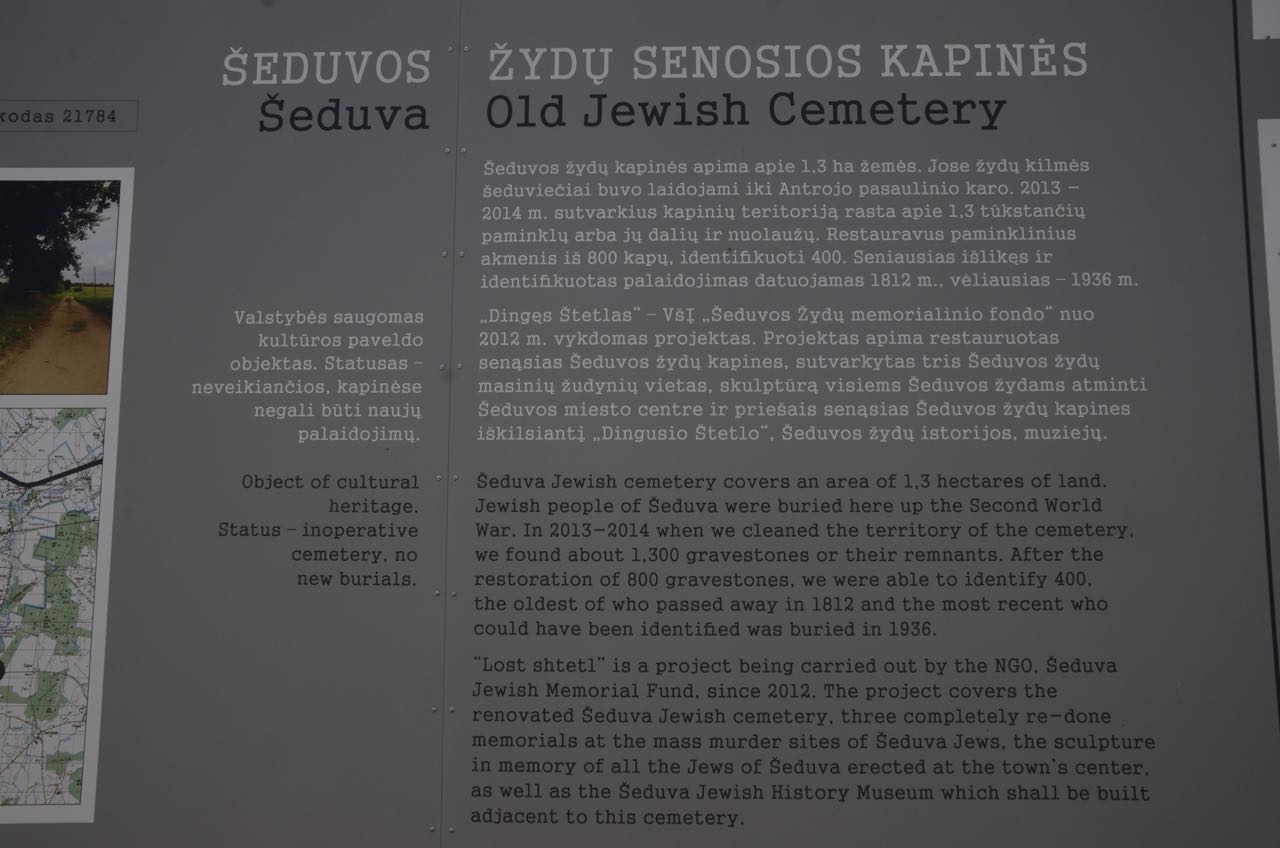
Seduva 17

My two previous visits were in 2015 and 2016

2015

Seduva Jewish Ceremonies

I was privileged to attend the Seduva Jewish Cemetery Restoration and the two Holocaust Memorial ceremonies. This is what Sergey Kanovich, who led the project, said at the first Holocaust Memorial …

Source: elirab.me/seduva-jewish-ceremonies/

2016

Seduva

My second visit to Seduva. The first was in May 2015 when the cemetery and two Holocaust memorials were dedicated and opened Click on the image to see the post:   The new Lost Shtetl memorial …

Source: elirab.me/seduva

 2017

The third Holocaust memorial site outside Seduva. I hadn’t previously visited this site.

DSC_3649 DSC_3652 DSC_3656 DSC_3658 DSC_3661 DSC_3663 DSC_3667 DSC_3680
<
>

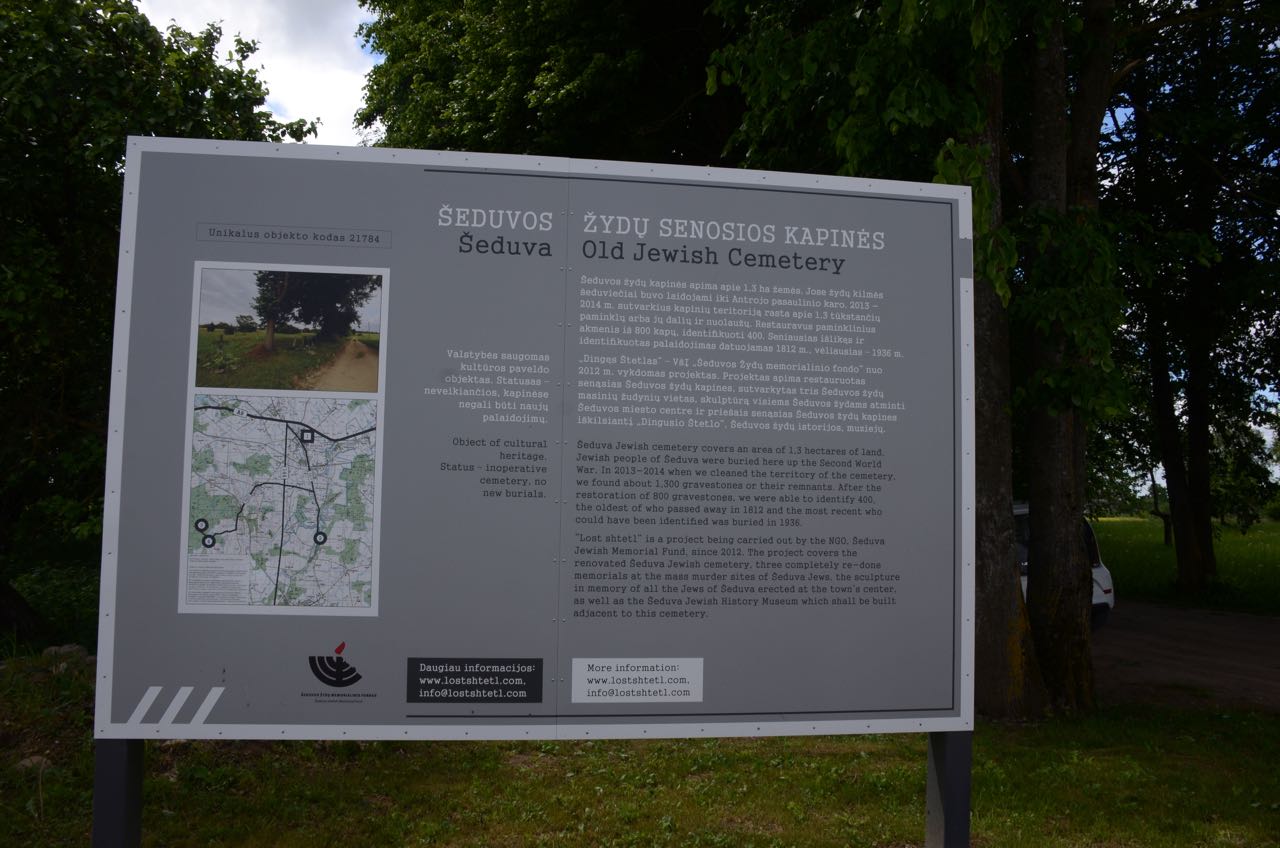
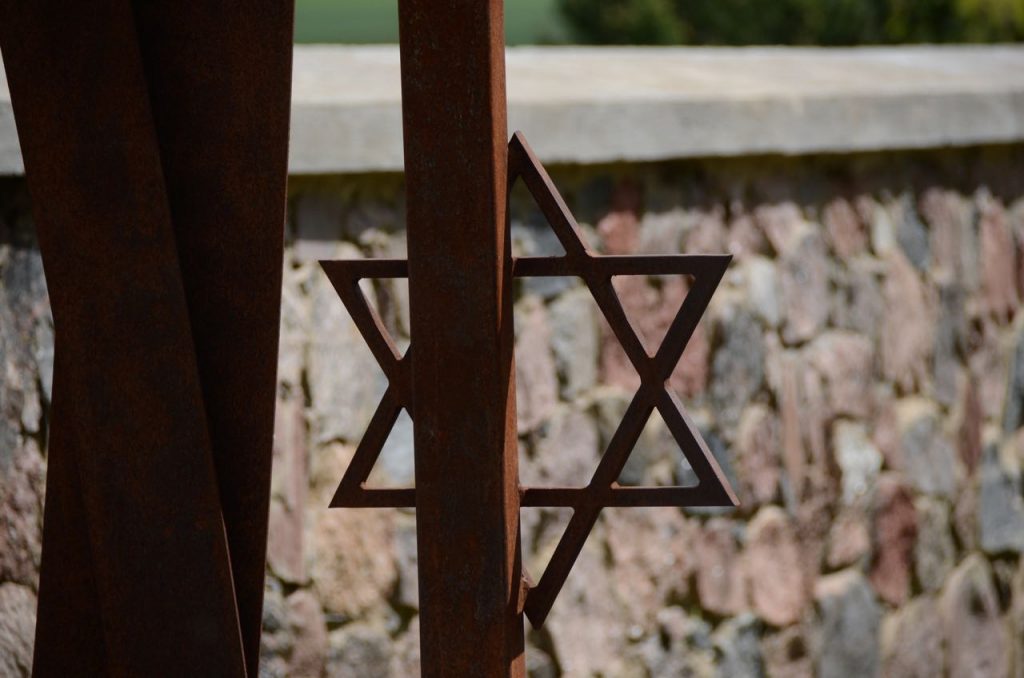
The cemetery

DSC_3701 DSC_3696 DSC_3688 DSC_3695 DSC_3694 DSC_3691 DSC_3689
<
>
DSC_3706 DSC_3702 DSC_3703
<
>

Šeduva – Wikipedia

Šeduva ( pronunciation (help·info)) is a city in the Radviliškis district municipality, Lithuania. It is located 18 km (11 mi) east of Radviliškis.

Source: en.wikipedia.org/wiki/Šeduva

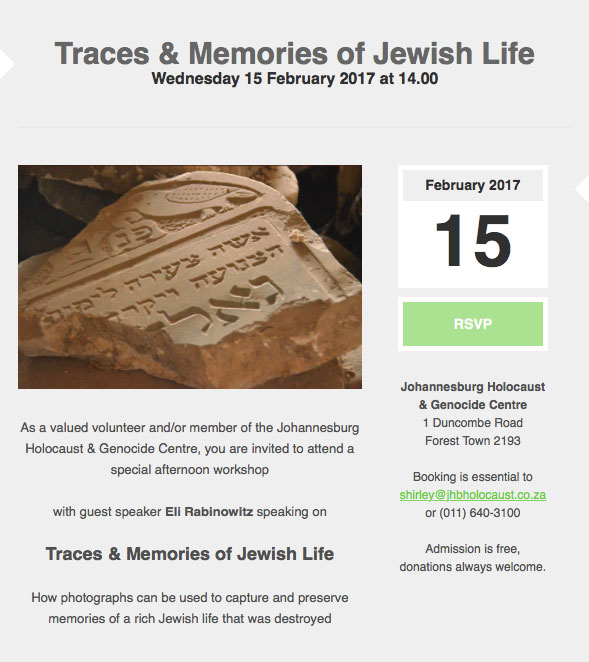
Workshop at the Holocaust & Genocide Centre

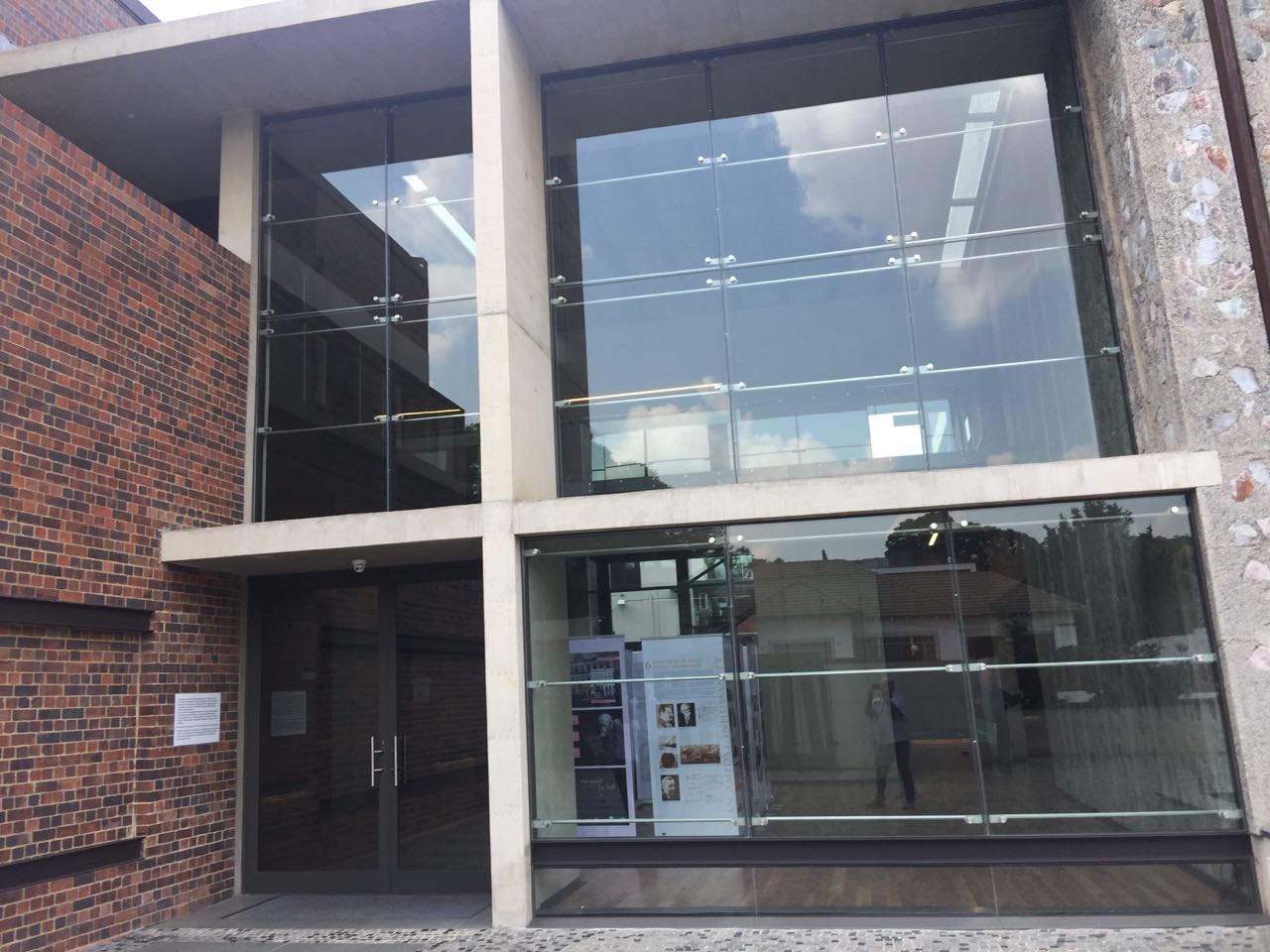
On 15 February I gave a couple of workshops at the Johannesburg Holocaust and Genocide Centre.

One session was for survivors and the other for staff and members.

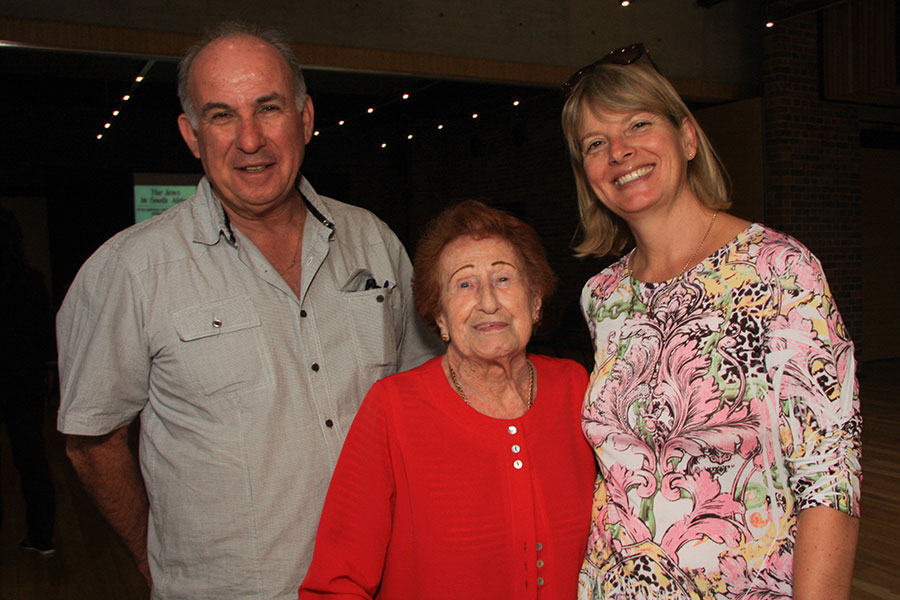
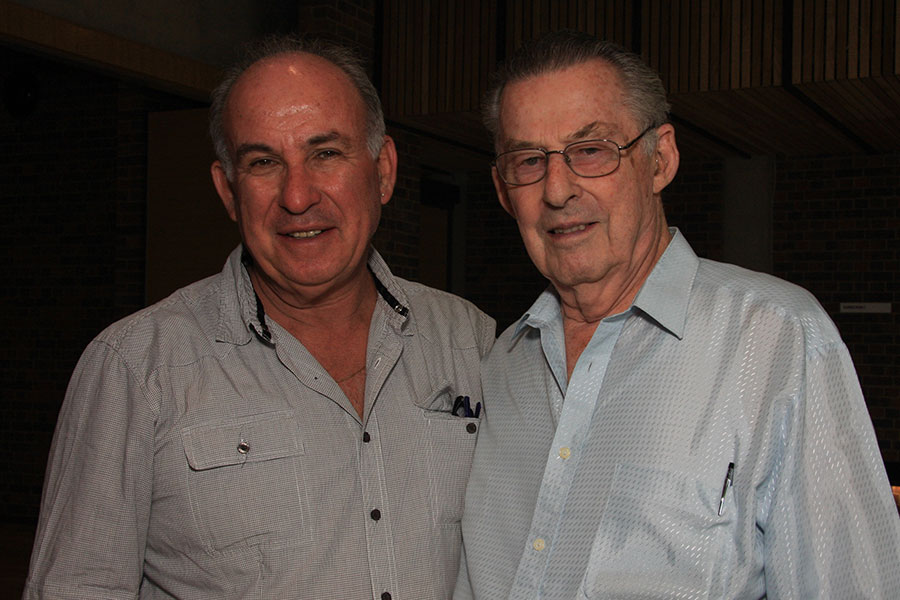
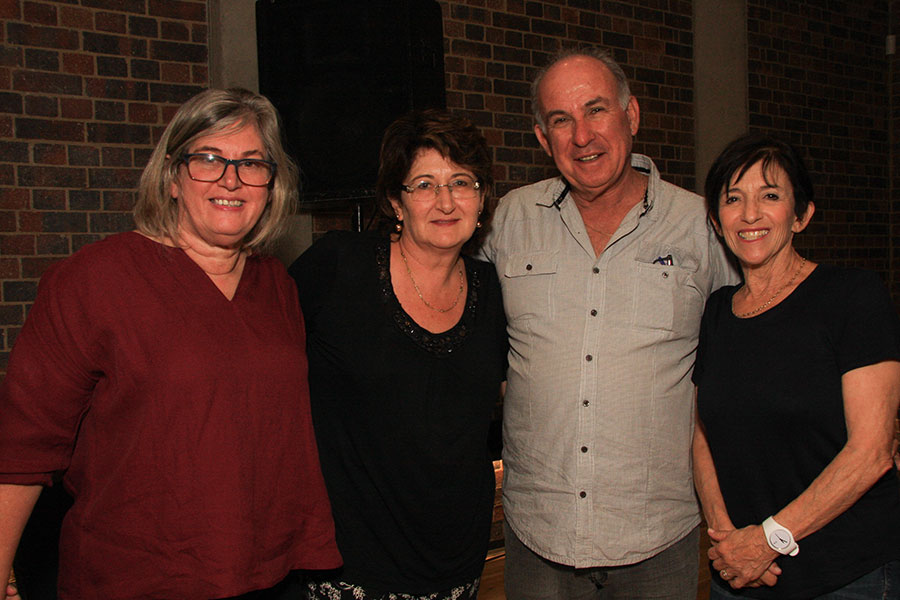
(L-R). Eli Rabinowitz & Don Krausz

This was the first time I had presented specifically to a group of survivors, although I had filmed several survivors’ testimonies in the past.

I showed photos from my trips to the Baltics & Eastern Europe as well as some videos from my Zog Nit Keynmol project for King David & Herzlia Schools.

The most noticeable outcome was the positive reaction to my initiative to get our youth learning and singing Zog Nit Keynmol, the Partisan Song.

(L-R). Eli, Veronica Phillips, Barbara Berman

For more details on Zog Nit Keynmol, please visit:

http://elirab.me

The two key videos to watch are:

the Phillip Maisel Interview

Herzlia’s Vocal Ensemble Sings:

Below is a video of Freidi Mrocki reciting the poem in English. Freidi is the teacher at Sholem Aleichem College in Melbourne, who recorded the interview with Phillip Maisel in 2015.

IMG_5500.MOV

(L-R). Shirley Sapire, Betty Slowatek, Eli, Margaret Hoffman

Slideshow:

IMG_5458 IMG_5450 IMG_5462 IMG_5463 IMG_5467 IMG_5468 IMG_5480 IMG_5481 IMG_5447 Holocaust Centre
<
>

Talks in South Africa

In Johannesburg

RCHCC
RABBI CYRIL HARRIS COMMUNITY CENTRE

Sunday 5 February at 7.30pm

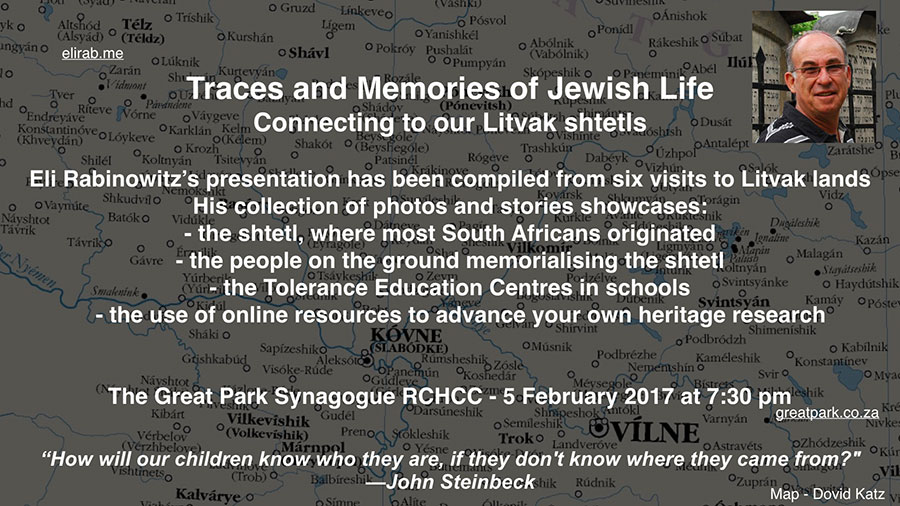
Please join us for a presentation by

ELI RABINOWITZ

Traces and Memories of Jewish Life
Connecting to our Litvak Shtetls

Eli Rabinowitz’s presentation has been compiled from six visits to Litvak lands.
His collection of photos and stories showcases:
– the shtetl, where most South Africans originated
– the people on the ground memorialising the shtetl
– the Tolerance Education Centres in schools
– the use of online resources to advance your own heritage research

“How will our children know who they are, if they don’t know where they came from?” —John Steinbeck

Eli Rabinowitz (ex- South Africa) is involved in Jewish community activities, filming events, photographing, researching, lecturing internationally and blogging on Jewish life and heritage. He presented at the IAJGS 2015 conference in Jerusalem. He manages 76 KehilaLinks websites for JewishGen. He led the first JewishGen Virtual Heritage Tour of Europe. Eli lives in Perth, Australia.

WHEN: Sunday 5 February at 7.30pm
DONATION: R90.00 (including refreshments)
VENUE: Clive M Beck Auditorium
               Rabbi Cyril Harris Community Centre (RCHCC)
               cnr Glenhove Rd & 4th Street Houghton, East of the M1 
BOOKING: Hazel or René (011 728 8088/8378) After Hours (011 728 8378)
email: rchcc@telkomsa.net or rene.s@telkomsa.net
www.greatpark.co.za

Bank details:
Nedbank Norwood      Code: 191905
Account name: RCHCC
Account number: 1920 116 699

Please put your name as reference

In Cape Town

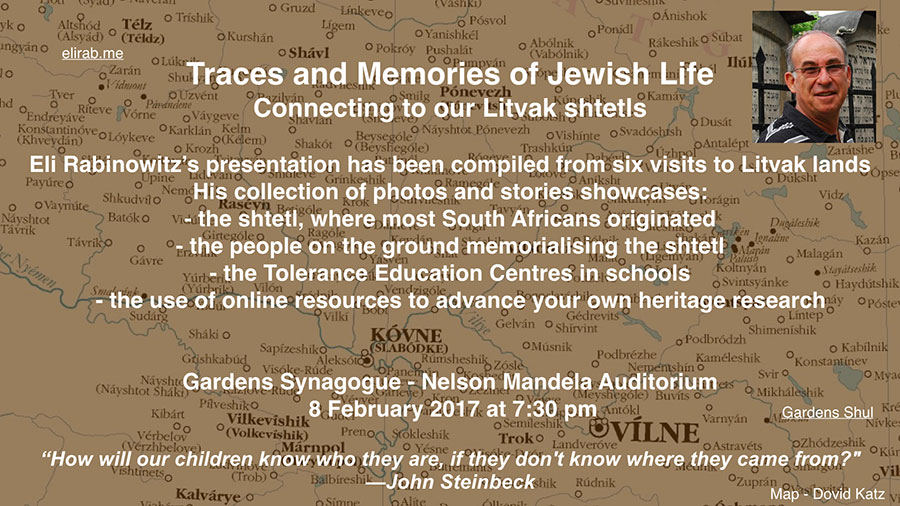
Traces and Memories of Jewish Life

Connecting to our Litvak shtetls

Eli Rabinowitz’s presentation has been compiled from six visits to Litvak lands

His collection of photos and stories showcases:

– the shtetl, where most South Africans originated 

– the people on the ground memorialising the shtetl

– the Tolerance Education Centres in schools 

– the use of online resources to advance your own heritage research

Gardens Synagogue – Nelson Mandela Auditorium

 8 February 2017 at 7:30 pm

My Upcoming Talks at the Great Park & Gardens Shuls

 Traces and Memories of Jewish Life  Connecting to our Litvak shtetls The Great Park Synagogue RCHCC, Johannesburg 5 February 2017 at 7:30pm and The Nelson Mandela Auditorium at the Gardens Shul, C…

Source: elirab.me/my-upcoming-talk-at-the-great-park/

Maoz Tzur Sung in Perth Heard in Keidan

Just think of this – when was the last time Maoz Tzur was heard in Keidan, Lithuania, sung by a Jewish kid? Maybe 75 years ago!

When Laima Ardaviciene, the English teacher at Atzalyno Gymnazija in Kedainiai Lithunia, asked whether I could give a talk on Chanukah via Skype to her students,  I would normally have sourced one of the many brilliant articles by Rabbi Jonathan Sacks and shared this with them, speaking from my home.

As I only live a minute’s drive from our CHABAD Shul in Noranda, I came up with the idea of enlisting the assistance of Rabbi Shalom White and doing it at the Shul. I also asked a young and talented friend,  Dylan Kotkis, to join us. Dylan has a friendly and outgoing personality together with a beautiful singing voice. He is a 15 year old student at Carmel School, Perth’s Jewish Day School.

Due to the 7 hour time difference between Perth and Kedainiai, 1pm (7pm here) was the best time for Laima and her students, so we held the meeting in the Shul’s library.  A minyan was taking place in the sanctuary at the same time.

Here are some photos and video clips taken  both from the Kedainiai and from the Perth ends.  I synchronised and edited the videos and combined the footage taken by Laima and myself.

Rabbi White, Dylan and I  spoke about the festival and Dylan took the Lithuanian students on a tour of the shul. Dylan sang Maoz Tzur for them.

Photos taken at Atzalyno Gimnazija

130320 130428 130433 130541 130514 130346 130331
<
>

Photos taken on the Perth side

IMG_3022 IMG_3025 IMG_3036 Clip #288 IMG_3041 IMG_3039 IMG_3037
<
>

Screenshots and photos of  the signs the Lithuanian students presented.

Laima-2s Laima-1s Laima-3s Laima-4s Laima-5s Laima-6s Laima-7s 134228 134220 134214 134203 134145
<
>

My bond with Atzalyno Gimnazija, a school in Kedainiai

The Internet by Dylan Kotkis

Commemoration in Lithuania

Five minute presentation at the conference organized by the Lithuanian Embassy in Tel Aviv at the Peres Centre in Jaffa, Tel Aviv

by Abel & Glenda Levitt

When we received an invitation to this conference and read that the first session was titled “What has been done in Lithuania regarding the commemoration of victims of the Holocaust?” I called the Lithuanian embassy to ask if we could have 5 or 6 minutes to describe our role, Glenda and Abel Levitt, in this important mission, Commemoration.

Since our first visit to Lithuania in 1998, to visit Plunge, the shtetl where my father had been born, from where he emigrated to South Africa in 1913, and where his mother, four brothers and sisters and their children were murdered in July 1941, we have visited many times, trying to go every year, sometimes more often.

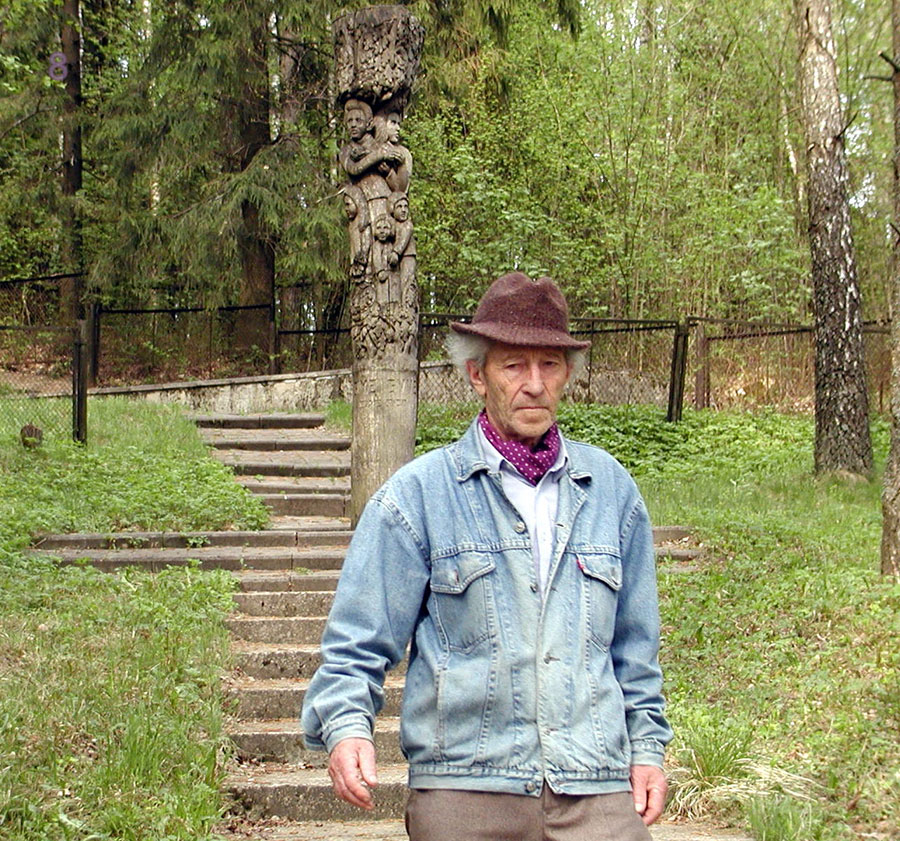
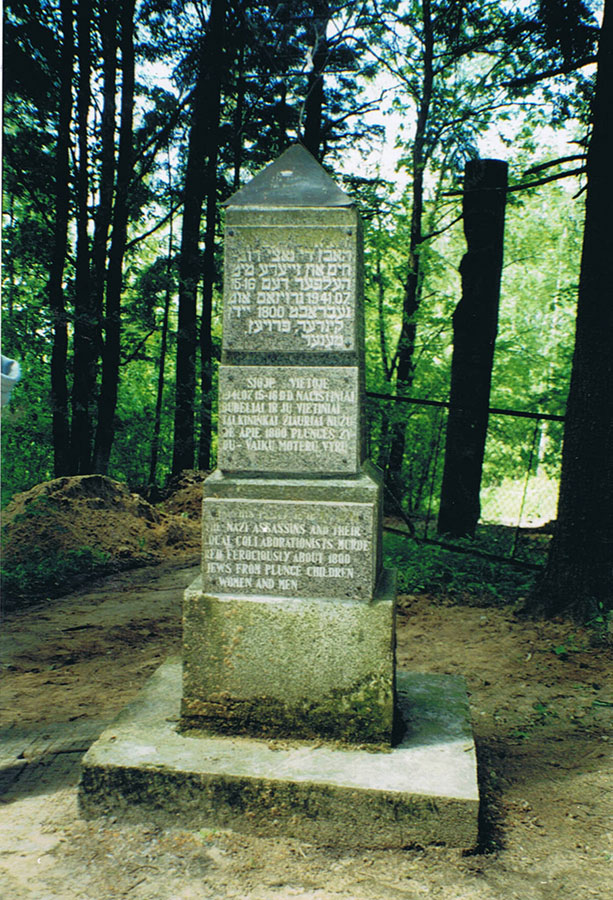
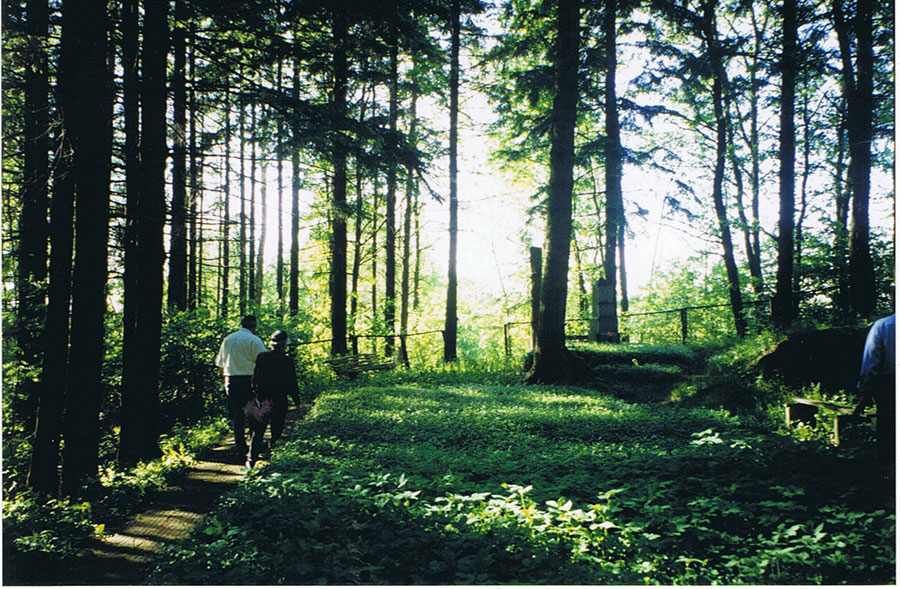
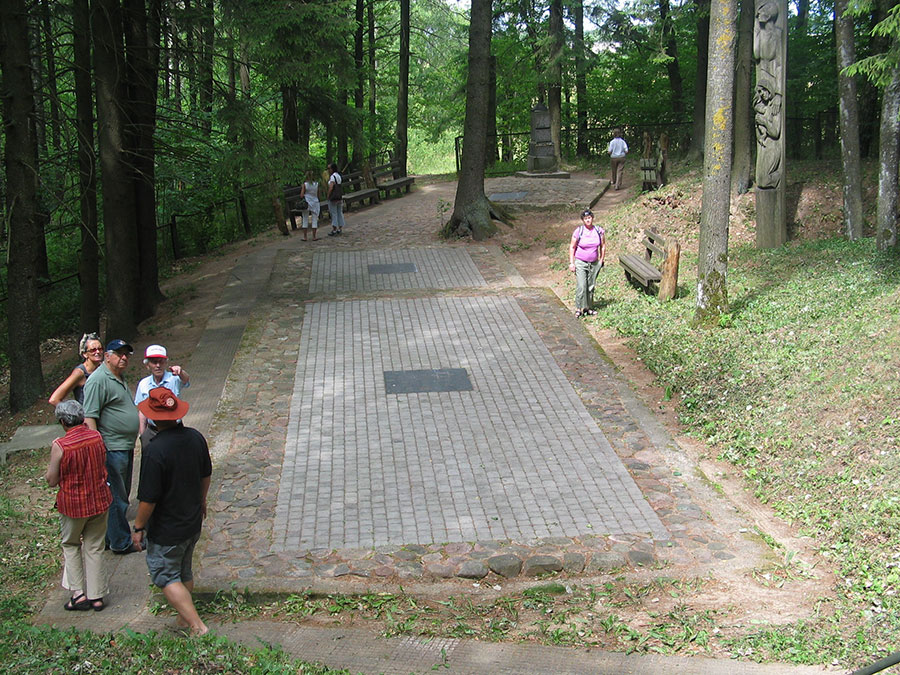
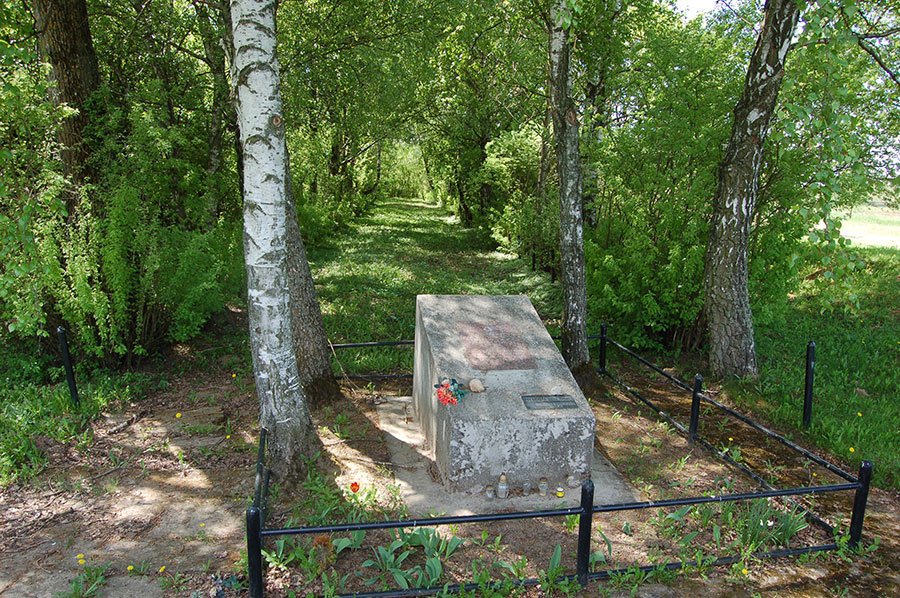
In Plunge we met Yacovas Bunka, the then 75 year old sculptor who took us to the Kausenai forest to visit the mass graves where on two bloody days 1,800 Jews, men women and children were shot and thrown into the graves, and covered by mounds of earth.

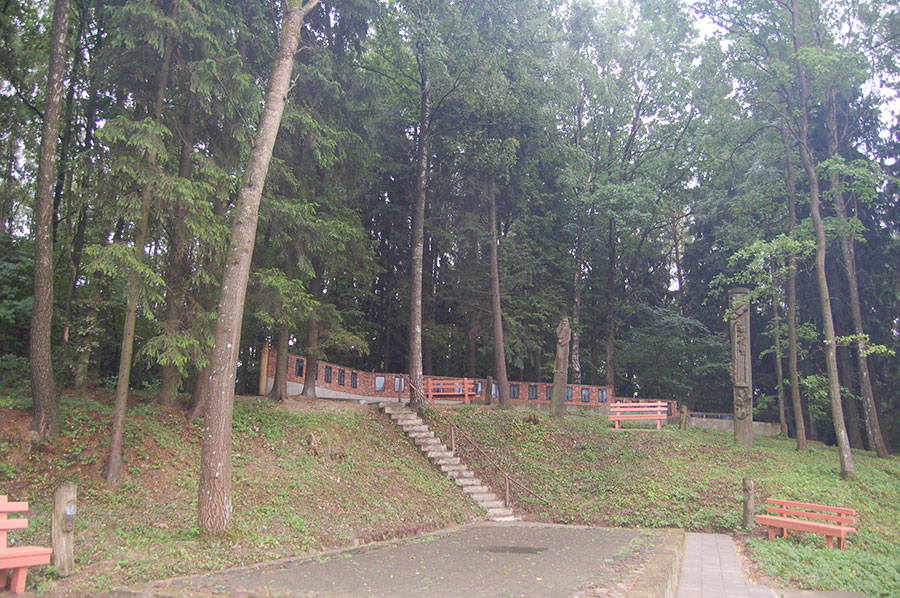
We saw for the first time the memorial, erected in Soviet times. As we left the site with the giant wooden sculptures made by Bunka and his artist friends, the old man took my hand and asked if we could raise the money needed to cover the graves with stone, as he feared the encroaching foliage of the forest would overrun the mass graves.

This we did and our family around the world responded to our request. We also wanted to acknowledge the work of brave Lithuanians, farmers and priests, and ordinary people, who had saved their Jewish citizens. These heroes had been awarded the Life Saving Cross by Lithuania’s presidents. To these noble people we created the Alley of the Savers.


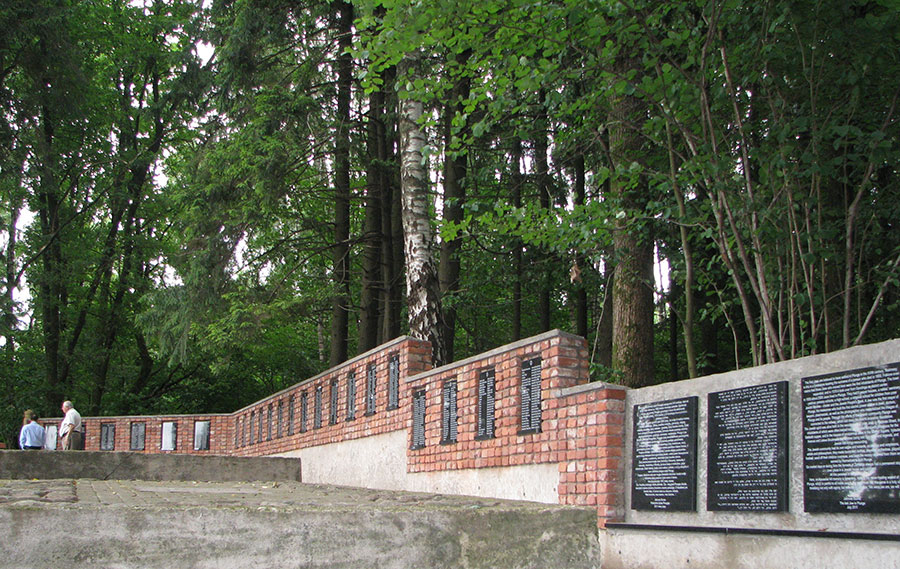
We had met via the internet an Israeli woman, Emma Karabelnik, born in Vilnius to parents who had lived in Plunge but who had managed to escape east to Russia days before the Germans arrived. Emma inspired by seeing the covered mass graves decided to make a contribution and so interviewed families and researched victims’ names to add to Bunka’s list of 700. Emma was interested in having these names somehow displayed. Shortly after our meeting Emma, we were in Plunge, a day before the old synagogue was to be demolished. We called Bunka’s son Eugenijus, and suggested to him that the bricks from the synagogue be saved and be used for building some sort of memorial, ideally at the mass grave.

And thus was born the Memorial Wall project, with 1,200 names of the 1,800 victims. The monument was unveiled in July 2011; 70 years after the murderous act had been perpetrated. Emmanuel Zingeris was present that day, as was Ronaldas Racinskas who is here today.

Speaker after speaker spoke of the need to build more memorials with names at the mass graves in Lithuania. Attending were government officials and ambassadors, and the representative of Yad Vashem. In my address, I too spoke of the importance of names, not only numbers, but names on memorials that would be the tombstones of the murdered Jews.

In May of 2011, two months before the unveiling we had visited Kedainiai and met the director of the museum, Rymantas Zirgulis.

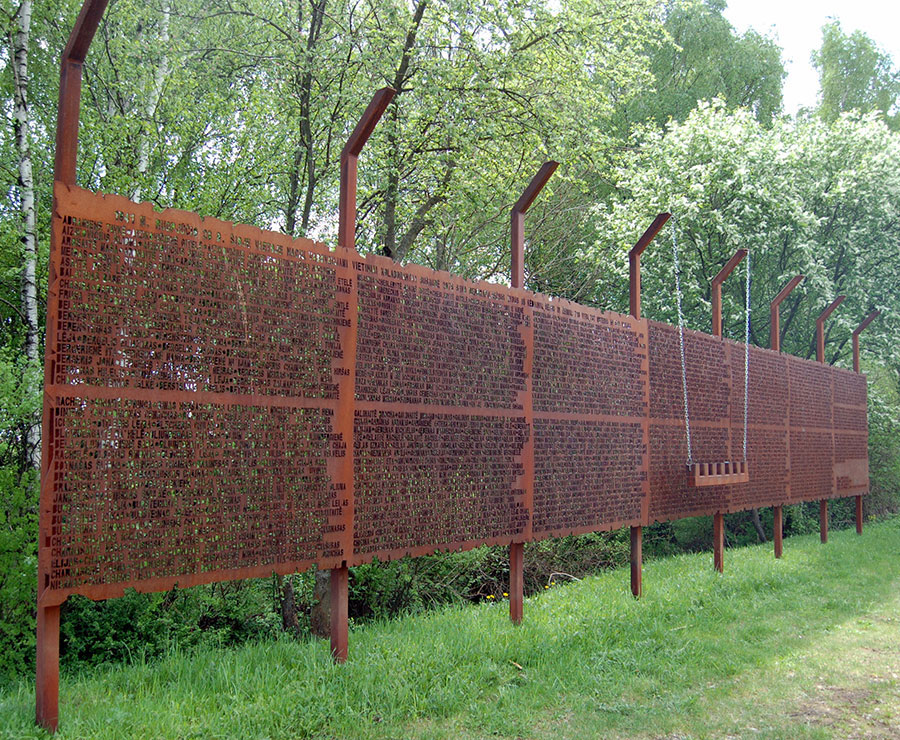
We showed him a photo of the wall being built, his reaction was immediate, “how can I do something like this in my town ? ” he asked showing us the existing memorial.

And so it was that he built a monument at the mass graves, an impressive steel structure with the names cut out.
You have heard from Ronaldas about Tolerance Centres in Lithuania. We have been personally involved in the one at the Saules Gymnasium in Plunge.

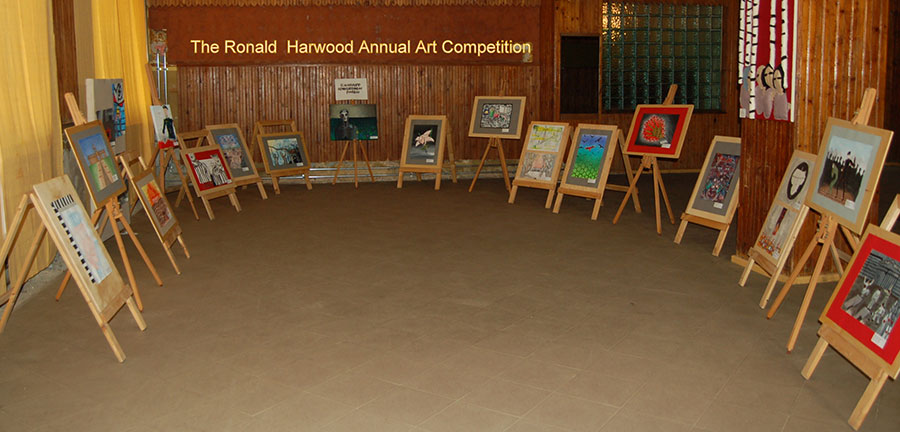
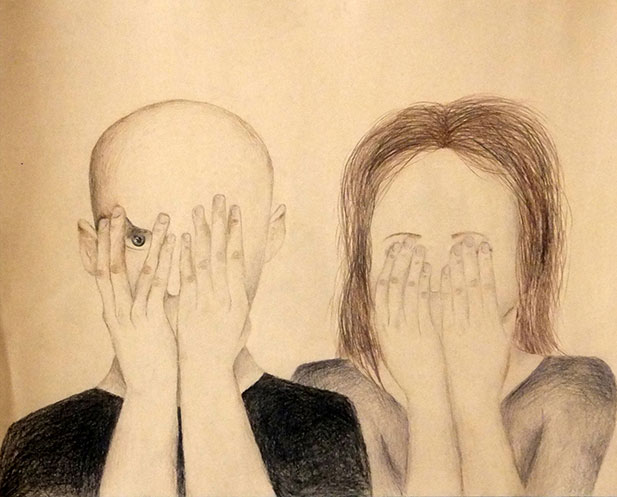
Here we have established an annual Holocaust art competition, inviting schools from around Lithuania to participate. We would like to show you a few examples of the innovative artwork that the talented Lithuanian students have produced in the Ronald Harwood Art Competition.

“Oblivion”
By Albertas, Plunge

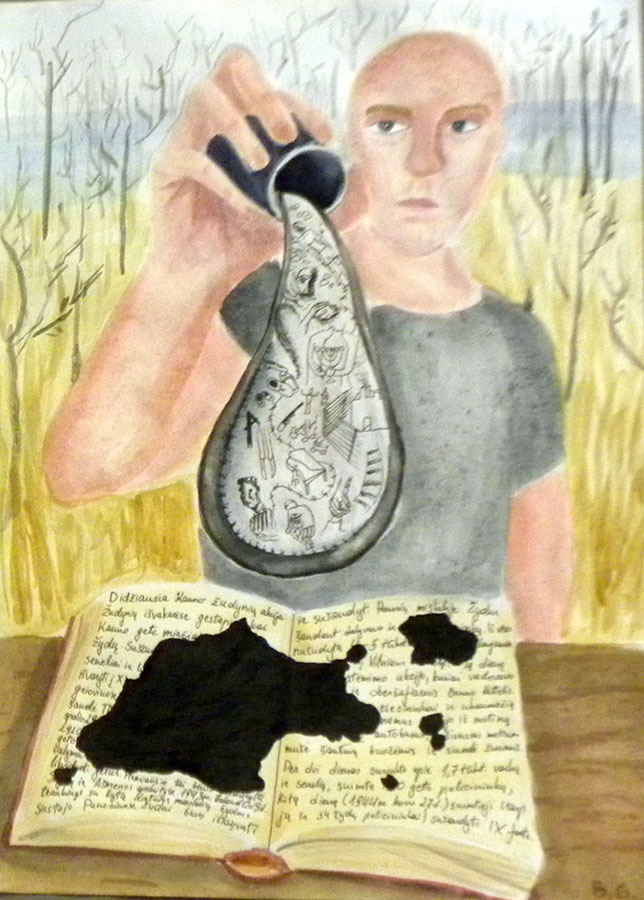
A Stain on History
By Bernadetta Plunge

Team project Birzai High School

Drawing by Karolina age 14

Panevezys

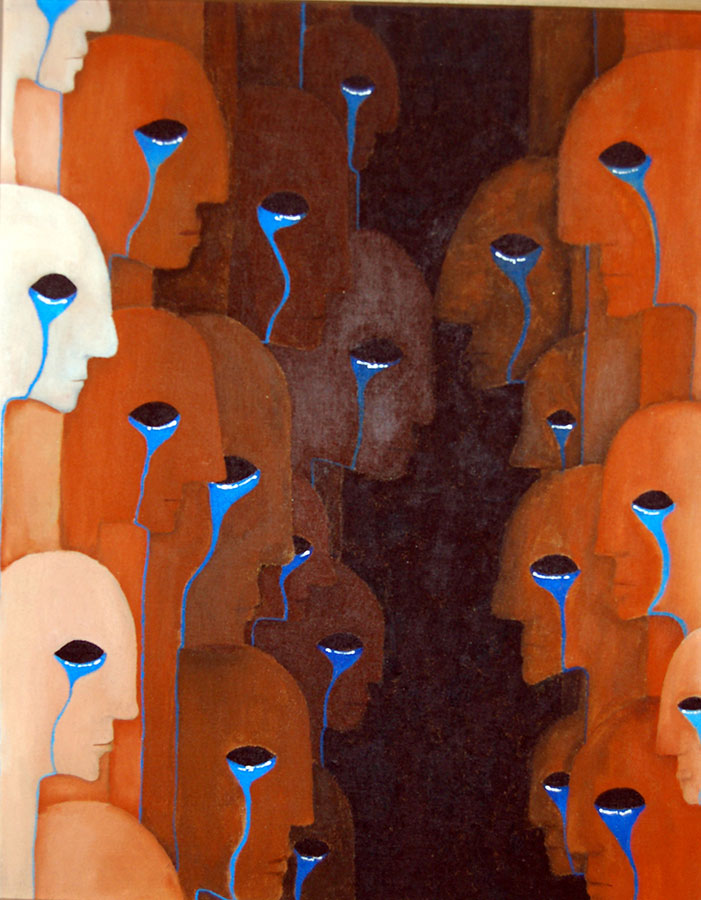
A Wall of Tears
By Christina Plunge

Glenda and I had been taken to the northern city of Birzai by Ronaldas’ deputy Ingrida Vilkiene, our first visit to the town where Glenda’s grandmother had been born. There we met the impressive couple Vidmantas Jukonis and his son Merunas who had been responsible for cleaning up the huge 500 year old Karaite and Jewish cemetery.

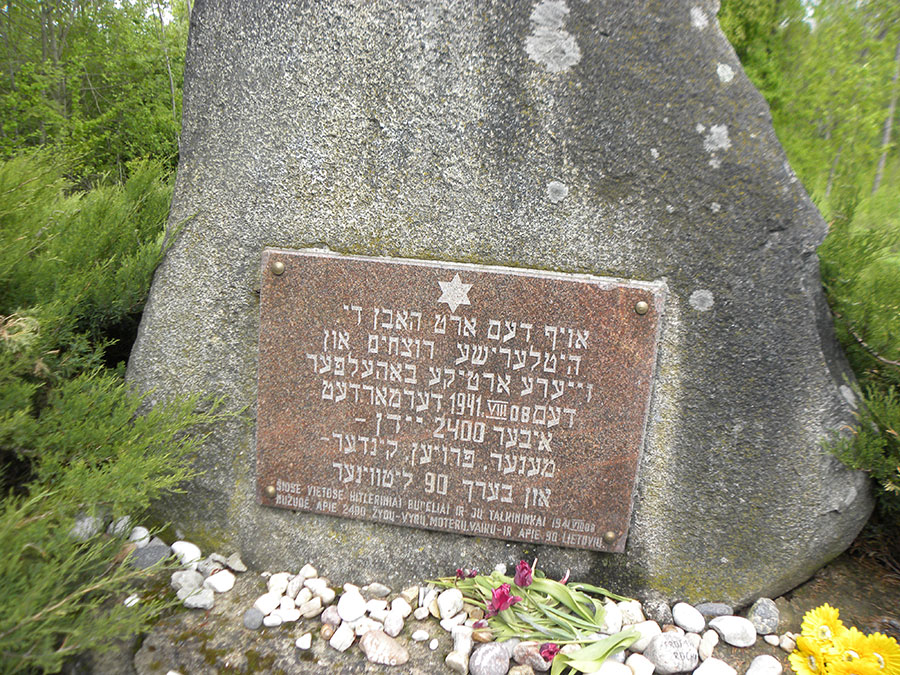
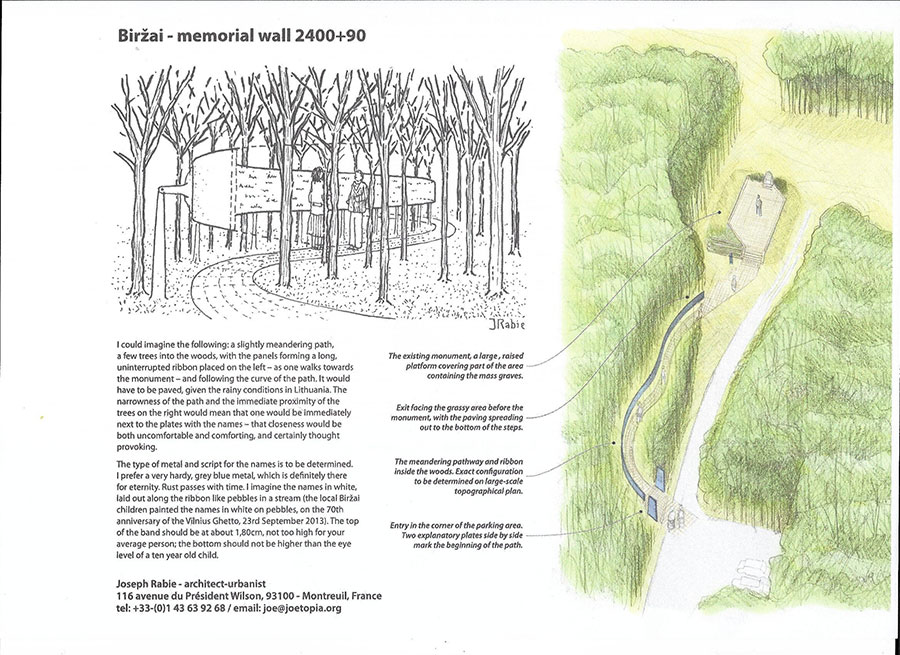
We were taken to the mass graves where on 8th August 1941, 2,300 Jews and 90 communist sympathizers were murdered in the forest of Pakamponys. By chance, 10 days later, in talking to a friend Bennie Rabinowitz in Cape Town South Africa, we mentioned our visit to Birzai. “Birzh” he called out, “the shtetl from where my grandfather emigrated to South Africa at the end of the 19th century”.

And so began the “Birzai/Birzh” project.

Here is the architect’s first plan for the monument with names that will be built at the mass graves and unveiled in August next year together with an acknowledgement of the Savers of Jews in Birzai.

This will be the 3rd such monument of names at the killing grounds in Lithuania. Not nearly enough you will all agree. The mass graves at Panerai where 100,000 people were murdered, 70,000 of them Jews, need a monument with names, not numbers. Lithuanian officials have said so. It is up to gatherings like this to push for tombstones to our people, with names, even if only some of the names are available, tombstones in the form of memorials such as we have shown you here today.

Abel and Glenda Levitt Kfar Sava , Israel

For the Plunge, Birzai & Kedainiai KehilaLinks, visit:

KehilaLinks

My Talks at the Great Park & Gardens Shuls

 Traces and Memories of Jewish Life 

Connecting to our Litvak shtetls
The Great Park Synagogue RCHCC, Johannesburg
5 February 2017 at 7:30pm

and

The Nelson Mandela Auditorium at the Gardens Shul, Cape Town


Chaim Bargman has been a beloved guide and genealogist for international Jewish-interest tourists in the Kaunas (Kovno) area for decades, and was immortalized in the late Dan Jacobson’s Heshel’s Kingdom (1998).

With a previous speaker, Dr Samuel Kassow in Seattle WA

With Professor Barbara Kirshenblatt-Gimblett, Program Director of Polin, Warsaw

[iframe src=”http://www.greatpark.co.za/rchcc” width=”100%” height=”500″]

[iframe src=”http://www.greatpark.co.za/about-us-1″ width=”100%” height=”500″]

Back