Talk in Israel & New KehilaLinks

If you are in the Herzlia, Israel area on Sunday night, 5 July, don’t miss this presentation at Beth Protea at 7:30pm:

Exploring our Roots: Back to the Shtetl

DSC_0686

A virtual heritage tour and contemporary photographic journey to unlock the mysteries of Jewish life in Lithuania, Latvia and Poland.

Discover how to share your family stories and cultural yiddishkeit.

For more details, visit:

http://www.telfed.org.il/elirab_bethProtea_2015

Telfed 1

Telfed 2


From JewishGen

Screen Shot 2015-06-18 at 1.12.15 pm

We are pleased to welcome the following webpages to JewishGen KehilaLinks

We thank the owners and webmasters of these webpages for creating fitting
memorials to these Kehilot (Jewish Communities) and for providing a
valuable resource for future generations of their descendants:

Druskininkai (Drosknik, Druskiniki), Lithuania
Created by Eli Rabinowitz
http://kehilalinks.jewishgen.org/druskininkai
~~~

GOOD NEWS!  The following webpages were adopted:

Created by Joseph Rosin z”l (webmaster: Joel Alpert)
Adopted by Eli Rabinowitz

I have updated Birzh

Birzai (Birzh)
http://kehilalinks.jewishgen.org/birzai/Home.html

The others will follow:

Alytus (Olita)
http://kehilalinks.jewishgen.org/Alytus/alite.html

Kaisiadorys (Koshedar)
http://kehilalinks.jewishgen.org/Koshedar/Koshedar.html

Kapciamiestis (Kopcheve)
http://kehilalinks.jewishgen.org/Kopcheve/kopcheve.html

Klaipeda (Memel)
http://kehilalinks.jewishgen.org/memel/Home.html

Kybartai (Kibart)
http://kehilalinks.jewishgen.org/kibart/Kibart.html

Marijampole (Mariampol)
http://kehilalinks.jewishgen.org/mariampol/mariampol.html

Kudirkos Naumiestis (Naishtot)
http://kehilalinks.jewishgen.org/Naishtot/naishtot.html

Panevezys (Ponavesh)
http://kehilalinks.jewishgen.org/Panevezys/ponievez.html

Varena (Aran)
http://kehilalinks.jewishgen.org/aran/aran.html

This is the full list of the 25 sites adopted:

Alytus
Arad
Aran
Birzh
Kibart
Kopcheve
Koshedar
Mariampol
Memel
Meretch
Naishtot
Naumiestis
Pilvsk
Ponievez
Pen
Salant
Serey
Shaki
Stokishok
Sudarg
Tavrig
Telz
Utena
Vikovishk
Virbain
Vishey

Habonim Dror Southern Africa History Project

From Keren Setton

The HDSA Habonim Dror Southern African History Project aims to collect, archive and honour the history of Habonim Dror in Southern Africa since 1930.

hevet Salk at National Machane Somerset West 1957-8

The project has exciting  goals, including:

  •  a multi-media exhibition that will be permanently installed on the HDSA Onrus campsite, telling the history of HDSA and serving as an educational tool for the chanichim;
  • an online platform that will digitize and archive the history of HDSA, and connect ex-members from around the world; and
  • a coffee table book which will be published for HDSA’s 90th anniversary in 2020.

The organisers are appealling to ex-members of Habonim Dror Southern Africa to donate or loan precious memorabilia to the project so that they can digitize, index and protect HDSA’s history forever. These mementos will be stored on an online database in an easily accessible format, enabling members from all over the world to share and enjoy, as well as possibly being included in the coffee table book and permanent exhibition.

If you have photographs, vdeos, stories, articles, uniforms, t-shirts, interviews, publications or any other memorabilia related to HDSA that you would like to add to the History Project collection,  please contact Keren Setton at  hdsahistory@habo.org.za or hdsahistory@ctjc.co.za .

Add your experiences of the movement to ensure that the richest version of the history of Habonim Dror Southern Africa is remembered.

Maddies on mifkad Alan, Ian, Mike, Denis, Jill, Alan D, Johnny I, Hilary, Jeff , Terry Machaneh 2000 Machaneh 1982 Machaneh 93 - 36 Machaneh 82 - 122 Machaneh 82 - 109 Machaneh 82 - 105  Machaneh 82 - 048 Machaneh 82 - 001  Habonim 1982 Habonim 1940's Habonim 1940's girls gedud Habonim 1930's Gedud photo  002 1st Hachsharah Balfouria '45 (Dot Sadowsky)
Machaneh 82 - 073
1968 ONRUS  Selwyn Cokes Galleid, Dave Kaplan, Mike Witkin, Step

[contact-form][contact-field label=’Name’ type=’name’ required=’1’/][contact-field label=’Email’ type=’email’ required=’1’/][contact-field label=’Website’ type=’url’/][contact-field label=’Comment’ type=’textarea’ required=’1’/][/contact-form]

Pockets of Hope – A New Documentary

I would like to introduce you to  “Pockets of Hope”…
a documentary of hope beyond hate, music beyond tears…

View Mini Trailer:

http://youtu.be/1z5Wh1kDdMY

From the press release:

“Everything I believe in life is about looking ahead; but without looking back, sometimes you can’t appreciate the beauty of looking forwards.” – Fay Sussman, introducing her performance of the Yiddish song “Makh Tsu Di Eygelekh” on the site of the Warsaw Ghetto… which she dedicated to the memory of 1.5 million Jewish children murdered in the Holocaust.

Even three generations after the Holocaust, many Jews have a deeply conflicted, even suspicious view of the Polish people… perhaps even more than towards the people of Germany itself.
The sheer scale of the murder that took place on Polish soil – with the active and undeniable collaboration of many Poles – speaks for itself. Auschwitz-Birkenau, Majdanek, Treblinka… just some the infamous death camps where 3 million Polish Jews met their deaths.

The tiniest remnants of that community survived and Australia has the largest population of such survivors, after Israel. Many of them – and their children – hold painful memories and still harbour anger toward Poland.

Against these stark facts – and the alarming current resurgence of European anti-Semitism – is the surprising discovery that Poland is one of the few countries in Europe now trying to reconcile with the history of horror on its home soil.

What then does one make of a tour of Jewish Australian musicians playing klezmer music in small Polish towns where entire Jewish communities were wiped out?

Amazing, inspiringly, this is exactly what singer Fay Sussman and her band, Klezmer Divas, did last year. And an extraordinary documentary – currently in the making – is set to tell the story.

Fay Sussman was born in Poland in 1946 and – until recently – vowed never to return. But overcoming her fears – and the anger she inherited – Fay decided to make this surreal pilgrimage as a gesture of hope and love.

Filmmakers Judy Menczel and Paul Green accompanied Fay and her band; what they recorded is both stunning and moving. In each town the musicians were greeted warmly – with standing ovations – by people who didn’t even realise Jews had ever existed in their towns… and were hungry to know more. She met with young local people preserving Jewish graves which lay forgotten in peoples’ backyards or recovering broken gravestones being used as building materials; campaigns to save a synagogue being turned into a shopping centre; moves to remove a public toilet built over a Jewish gravesite.

It’s a story that will move you and restore your faith in the human spirit.

The team behind “Pockets of Hope” (working title) is now seeking support to fund the making of the full feature documentary.

The film looks at the issue of reconciliation between Jews and Poles through the 3rd generation of young people “on both sides of the fence” as they try to come to terms with the horrors of the Holocaust – and make genuine moves towards peace and understanding.

“The film we aspire to make looks at the attempts by individuals to respect each other’s pain, reach out and move forward towards tolerance and healing,” says Judy Menczel. “Fay and her music deeply touch the people leading this new movement for truth and reconciliation. It is a microcosm of what can be achieved by individuals to somehow move forward after genocide as well as a lesson in how the young can respectfully and honestly deal with the traumas of the past.”

Our Jewish faith tells us that we cannot hold the children responsible for the sins of the parents,” says one holocaust survivor in the film.

“I don’t hate,” adds Fay. “My vision is that we change the cycle of hate so that the children of tomorrow have hope.”

Short (3 minute) preview of Pockets of Hope here;

http://youtu.be/KGR5ztIYNis

Longer (6 minute) trailer here;

http://youtu.be/H-agiKSdc4U

SUPPORT FOR THE FILM

If you would like to help financially towards the completion of this film, please contact:
Judy Menczel, Producer: judy_menczel@hotmail.com

[contact-form][contact-field label=’Name’ type=’name’ required=’1’/][contact-field label=’Email’ type=’email’ required=’1’/][contact-field label=’Website’ type=’url’/][contact-field label=’Comment’ type=’textarea’ required=’1’/][/contact-form]

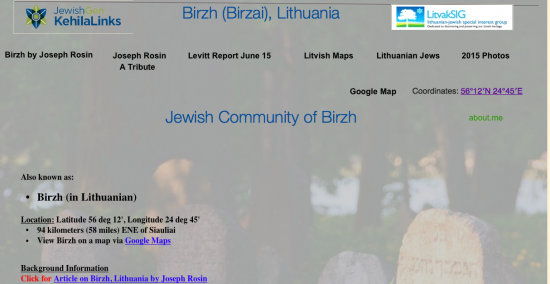
The New Birzh Kehilalink

The Birzh ShtetLink has been upgraded to a KehilaLink

Birzh front.12.15 pm

Visit: http://kehilalinks.jewishgen.org/birzai

Read:

  • the tribute to Joseph Rosin z”l by Joel Alpert
  • the report by Abel and Glenda Levitt on their recent visit
  • my photos from last month’s visit

I have four talks coming up:

Perth, Australia

Exploring our Roots

Beth Protea, Herzlia, Israel

Beit-Protea-Talk-Web

IAJGS International Jewish Genealogical Conference, Jerusalem, Israel

IMG_4545IMG_4518

Gitlin Library, Cape Town, South Africa

A TRAGIC ROMANCE AND ITS CONSEQUENCES  Eli copy

Limmud Oz Sydney has finished.

A most successful Festival of Jewish Ideas with 200 presenters over 2 ½ days.

[huge_it_slider id=”20″]


Limmud 15 1 Limmud 15 2

[contact-form][contact-field label=’Name’ type=’name’ required=’1’/][contact-field label=’Email’ type=’email’ required=’1’/][contact-field label=’Website’ type=’url’/][contact-field label=’Comment’ type=’textarea’ required=’1’/][/contact-form]

My bond with Atzalyno Gimnazija, a school in Kedainiai

pizap.com14326572232231

The students take me on a multicultural tour of Kedainai, the last stop being the two former synagogue complex, one of only a handful in Lithuania. The centre is run by Rimantas Zirgulis, director of the Museum and includes a permanent Jewish display, one of the first towns in Lithuania to do so.

The video report on a Lithuanian TV channel with a synopsis in English by two of the students: Juste & Julija

Kedainiu Zinios 7:21 – 9:55 – meeting at our school
The English teacher Laima Ardavičienė surprises her students every single lesson. She is diversifying her lessons with various tasks and even guests.
Laima says, „ Last year I was working on a project and the main idea was to introduce different cultures to students. I found a video of Jewish weddings which reflected Jewish traditions. After watching this video, I asked the author if I was able to use it and I got shocked when he replied „ Laima, you can use it. By the way, you can be really surprised, but I‘m rooted in Kėdainiai“. The author of the video was our guest Eli Rabinowitz. It‘s the second time Eli Rabinowitz is visiting our school. Last year he was a participant in our project too, while students were learning about different communities in Kėdainiai. Meetings like this never end. We keep in touch via skype and have skype meetings with students.

An article in the Lithuanian press:

Anglų kalbos pamokos kitaip
Iš arčiau 2015/05/29 by Vilija Mockuvienė
Vieni „Atžalyno“ gimnazijos mokiniai mokytojos Laimos Ardavičienės anglų kalbos pamokų laukia su baime, kiti – su džiaugsmu. Gimnazistai žino, kad šios patyrusios pedagogės pamokose nebus nei nuobodulio, nei tuščio laiko leidimo.
Paįvairindama pamokas „Atžalyno“ gimnazijos mokytoja Laima Ardavičienė į Kėdainius pakvietė Australijoje gyvenantį žydą E. Rabinovičių, kuris turi sąsajų su šiuo miestu ir mielai bendrauja su jaunimu.

For further see:
http://muge.eu/anglu-kalbos-pamokos-kitaip/

My images are supplemented with some provided by Vilius, a delightfully engaging student, who would like one day, to have sports photography business, possibly in South Africa!

IMG_3996 101_1714 101_1732 101_1754 101_1766 101_1777 atzalyno-zydukas_0590 DSC_0966 DSC_0995 DSC_0999 DSC_1010 DSC_1013 DSC_1014 DSC_1037 DSC_1045 DSC_1055 DSC_1072 DSC_1083 DSC_1085 DSC_1091 DSC_1096 DSC_1100 DSC_1112 DSC_1113 DSC_1119 DSC_1125 IMG_3927 IMG_3928
<
>

[contact-form][contact-field label=’Name’ type=’name’ required=’1’/][contact-field label=’Email’ type=’email’ required=’1’/][contact-field label=’Website’ type=’url’/][contact-field label=’Comment’ type=’textarea’ required=’1’/][/contact-form]

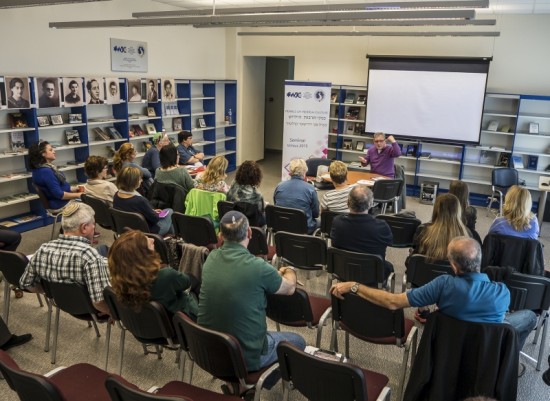
WJC Seminar at the Vilnius Jewish Public Library

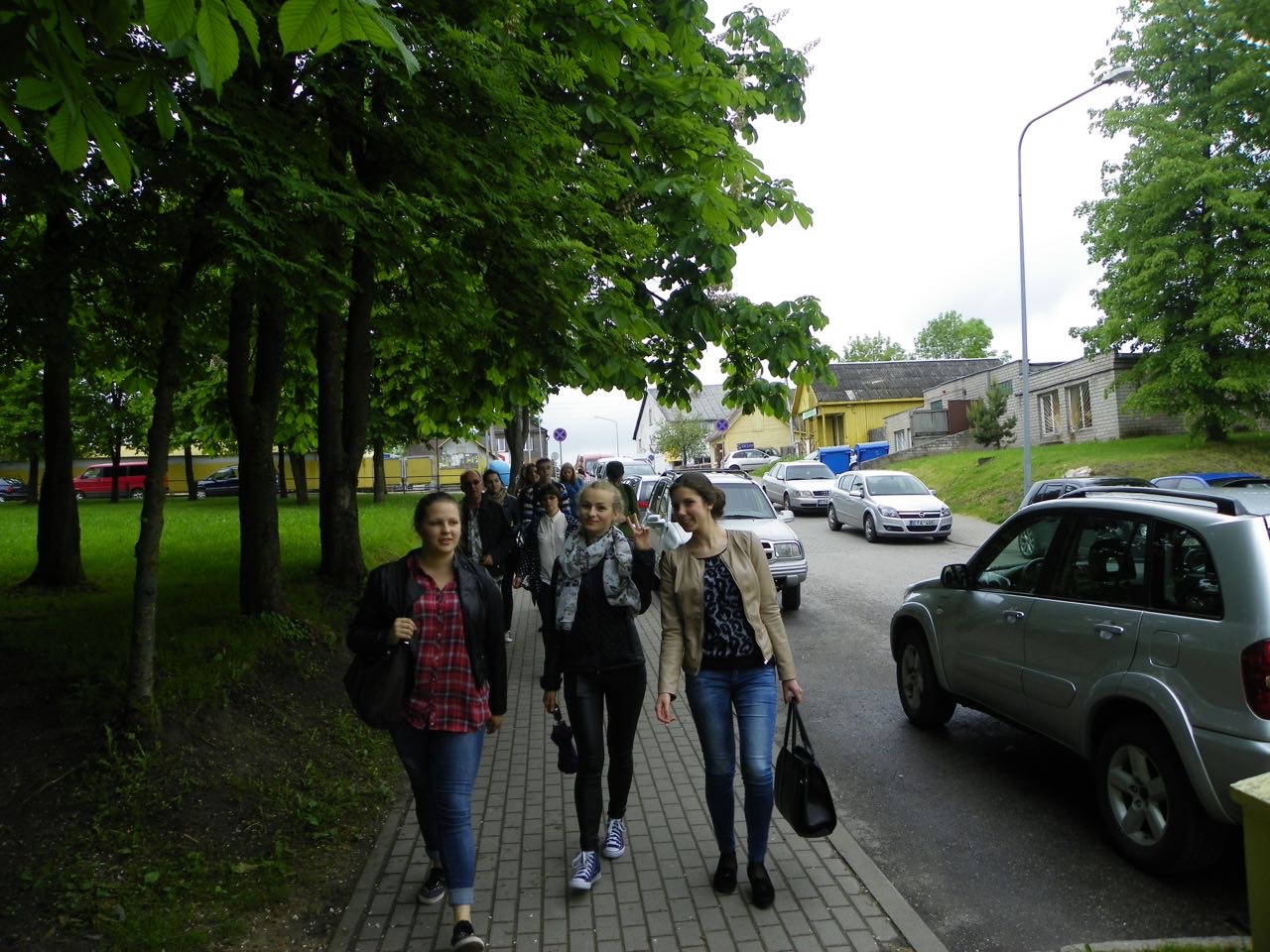
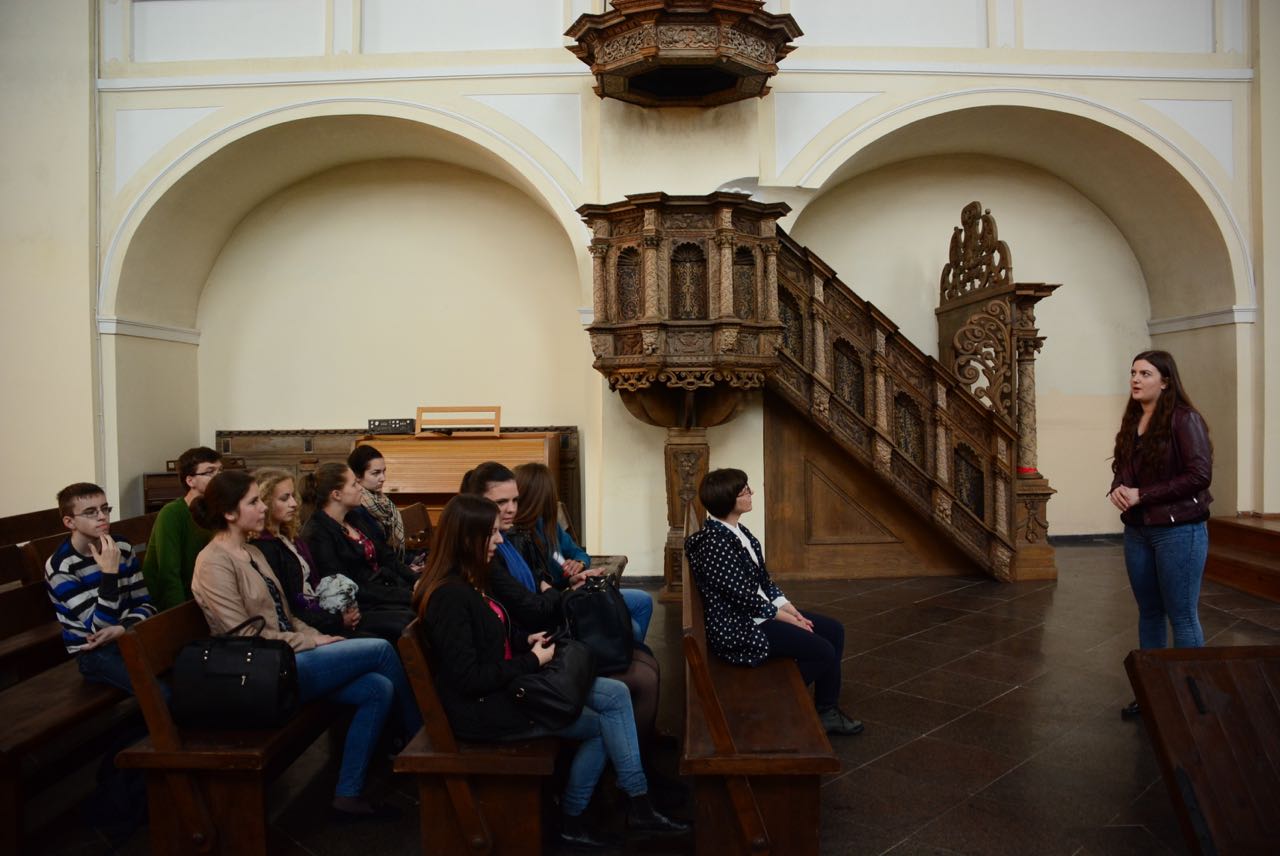
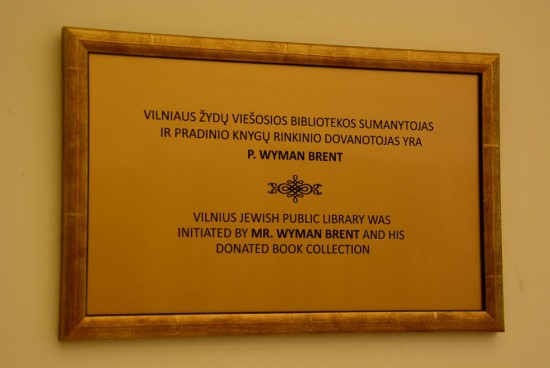
I visited the Vilnius Jewish Public Library where the WJC, the World Jewish Congress, were running a seminar “Pearls of Yiddish Culture” over three days. 26 top educators from Israeli schools, universities and other institutions came to study Yiddish culture, language and literature. Study tours of the Jewish sites of Vilnius were part of the program. This seminar was a result of the cooperation between the WJC and Shai Bar Ilan Jewish roots travel agency affiliated with Bar Ilan University (Israel).

DSC_7352

 1 whole group
2 lecture of Dr.M.Yushkovsky in the new premises
 
 
The same tour group were at the Choraline Synagogue in Kaunas on the previous day.
 
  DSC_1199 DSC_1194


[contact-form][contact-field label=’Name’ type=’name’ required=’1’/][contact-field label=’Email’ type=’email’ required=’1’/][contact-field label=’Website’ type=’url’/][contact-field label=’Comment’ type=’textarea’ required=’1’/][/contact-form]


Jewish Education In Vilnius

Screen Shot 2015-06-03 at 9.52.33 pm

Screen Shot 2015-06-03 at 9.53.14 pm

http://judaicvilnius.com

DSC_1726 DSC_1725 DSC_1722 DSC_1720 DSC_1727 DSC_1728 DSC_1735 DSC_1715


SOLOMO ALEICHEMO ORT SCHOOL in Vilnius
http://www.jewishschool.lt

From Wikipedia
Vilnius Sholom Aleichem ORT gymnasium – full-time secondary school in Vilnius, IT Kraševskio g. 5 engaged in primary, secondary and non-formal education programs in Hebrew, Lithuanian, Russian. Named after writer Sholom Aleichem.
Vilniaus Šolomo Aleichemo ORT gimnazija – dieninė bendrojo lavinimo mokykla Vilniuje, J. I. Kraševskio g. 5, vykdanti pradinio, pagrindinio, vidurinio ir neformaliojo ugdymo programas hebrajų kalba, lietuvių, rusų kalbomis. Pavadinta rašytojo Šolomo Aleichemo vardu.

I met with the Director Misha Jakobas, who kindly showed me around the new campus and its impressive facilities. The students appeared to be very well behaved and there was a lovely atmosphere in the building, which they moved into only 3 months ago.
Parents attended the year end concerts, including my friend, Daniel Gurevich. We were quite surprised to bump into each other!

[huge_it_slider id=”18″]
IMG_4208DSC_1612
On a related, but somewhat tangential subject:
Roman Vishniac Exhibition at Polin in Warsaw, Poland
Which includes a segment on ORT. Runs until 31 August 2015.
http://www.sztetl.org.pl/…/4632,roman-vishniac-at-polin-mu…/
JewishGen.org's photo.
IMG_4287
DSC_1977 DSC_1998 DSC_1999 DSC_2003 DSC_2004 DSC_2005 DSC_2006
DSC_2008
DSC_2009

From Wikipedia
Roman Vishniac (/ˈvɪʃni.æk/; Russian: Рома́н Соломо́нович Вишня́к; August 19, 1897 – January 22, 1990) was a Russian-American photographer, best known for capturing on film the culture of Jews in Central and Eastern Europe before the Holocaust

Vishniac was a versatile photographer, an accomplished biologist, an art collector and teacher of art history. He also made significant scientific contributions to photomicroscopy and time-lapse photography. Vishniac was very interested in history, especially that of his ancestors, and strongly attached to his Jewish roots; he was a Zionist later in life.[3]

Roman Vishniac won international acclaim for his photos of shtetlach and Jewish ghettos, celebrity portraits, and microscopic biology. His book A Vanished World, published in 1983, made him famous and is one of the most detailed pictorial documentations of Jewish culture in Eastern Europe in the 1930s.[2] Vishniac was also remembered for his humanism and respect for life, sentiments that can be seen in all aspects of his work.

In August 2014, the International Center for Photography in New York City announced that 9,000 of Vishniac’s photos, many never printed or published before, would be posted in an online database.[4]

[contact-form][contact-field label=’Name’ type=’name’ required=’1’/][contact-field label=’Email’ type=’email’ required=’1’/][contact-field label=’Website’ type=’url’/][contact-field label=’Comment’ type=’textarea’ required=’1’/][/contact-form]

Using Online Resources To Find Hidden Holocaust Sites

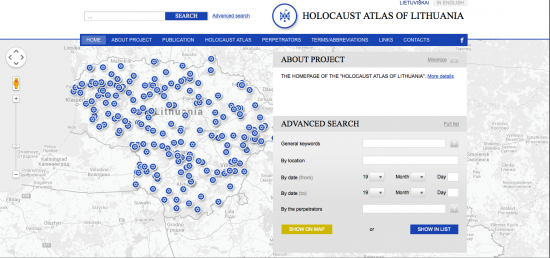
This post on Kelme’s two mass graves sites illustrates the importance of the website, Holocaust Atlas of Lithuania. Using the coordinates provided together with GPS, data roaming, and online maps such as Google Maps, it is an essential tool for finding well hidden Holocaust memorials.

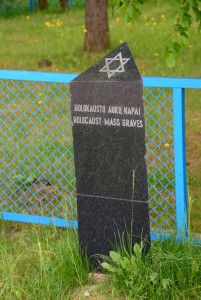
In addition, on the initiative of the British Jewry & Lord Janner, granite markers were placed at many of the 220 Holocaust mass murder sites in Lithuania. On the side looking towards the site, is information indicating the direction and distance to the site.

http://www.holocaustatlas.lt/EN/…

Holo Map


IMG_3902

IMG_3907

DSC_0859 DSC_0864  DSC_0866DSC_0867 DSC_0869 DSC_0870 DSC_0874 DSC_0875 DSC_0877 DSC_0882 DSC_0884 DSC_0885 DSC_0886 DSC_0887 DSC_0889 DSC_0892 DSC_0893 DSC_0897

Kelmė

From Wikipedia, the free encyclopedia
Kelmė
City
Church of Kelmė

Church of Kelmė
Flag of Kelmė
Flag
Coat of arms of Kelmė
Coat of arms

Location of Kelmė

Coordinates: 55°38′0″N 22°56′0″ECoordinates55°38′0″N 22°56′0″E
Country  Lithuania
Ethnographic region Samogitia
County Šiauliai County
Municipality Kelmė district municipality
Eldership Kelmė eldership
Capital of Kelmė district municipality
Kelmė eldership
First mentioned 1484
Granted city rights 1947
Government
 • Mayor Vaclovas Andrulis
Area
 • Total 7.85 km2 (3.03 sq mi)
Elevation 128 m (420 ft)
Population (2011)
 • Total 9,150
 • Density 1,200/km2(3,000/sq mi)
Time zone EET (UTC+2)
 • Summer (DST) EEST (UTC+3)
Website Official website

Kelmė (About this sound pronunciation ) is a city in central Lithuania. It has a population of 9,150 and is the administrative center of the Kelmė district municipality.

History

Kelmė’s name may come from the Lithuanian “Kelmynės“, literally “the stubby place” because of the forests that were there at the time of its founding.[1]

Kelmė was first mentioned in 1416, the year that Kelmė’s first church was built.[1]

Prior to World War II, Kelmė (YiddishKelm‎) was home to a famous Rabbinical College, the Kelm Talmud Torah.

According to an 1897 census, 2,710 of Kelme’s 3,914 inhabitants were members of the town’s Jewish population, the vast majority of whom were merchants and traders and lived in the town.

People


Kelm Talmud Torah

From Wikipedia, the free encyclopedia

The Kelm Talmud Torah was a famous yeshiva in pre-holocaust KelmėLithuania. Unlike other yeshivas, the Talmud Torah focused primarily on the study of Musar (“Jewish ethics”) and self-improvement.

Under the Leadership of Simcha Zissel Ziv

The Talmud Torah was founded in the 1860s by Rabbi Simcha Zissel Ziv, known as the Alter of Kelm (the Elder of Kelm), to strengthen the study of Musar in Lithuania.

In 1872, Rabbi Ziv purchased a plot of land and erected a building for the Talmud Torah, which began as a primary school and soon became a secondary school.

In 1876, the Talmud Torah was denounced to the authorities, who began to watch it closely and to hound it. Many traditional Jews in Kelm saw Rabbi Ziv as a “reformer,” as his school supported unconventional prayer practices and an unconventional, musar-focused curriculum.[1]

The curriculum of the original Talmud Torah under Rabbi Ziv’s leadership was fairly unique for a nineteenth-century Lithuanian yeshiva in two respects:

1. Significant time was devoted to Musar, work on the improvement of character traits. In most Lithuanian yeshivas, nearly the entire day was spent studying Talmud. By contrast, at the Talmud Torah, according to Menahem Glenn, “Musar was the chief study, while the study of Talmud was only of minor importance and little time was devoted to it.”[1]

2. In addition to Jewish subjects, students studied general subjects such as geography, mathematics, and Russian language and literature for three hours a day. The Kelm Talmud Torah was the first traditional yeshiva in the Russian empire to give such a focus to general studies.[2]

Under pressure from the Jews of Kelm, Rabbi Ziv decided to open his school elsewhere: he re-established it in Grobin, in the Courland province.

In 1881, Rabbi Ziv returned to Kelm, where the Talmud Torah became an advanced academy for the study of Torah and Musar. Most of the students who came to study at the Talmud Torah were married. Entry to the Talmud Torah was difficult and restricted to select students from other yeshivas, who had to bring letters of recommendation from their Rosh Yeshiva. Students were chosen after they passed rigorous examinations on Musar. At its peak, the Talmud Torah had a student body of between 30 and 35 members.[citation needed]

Rabbi Ziv established a group that was known as “Devek Tov,” comprising his foremost students. He shared a special relationship with the group’s members and he worked on writing out his discourses for them.

The Talmud Torah after Ziv’s death

Simcha Zissel Ziv died in 1898. Upon his death, his brother Rabbi Aryeh Leib Broida became the new director of the Talmud Torah. Aryeh Leib moved to the land of Israel in 1903, and his son Rabbi Tzvi Hirsch Broida (also Simcha Zissel Ziv’s son-in-law) became the new director of the Talmud Torah.

After Tzvi Hirsch Broida’s death in 1913, Simcha Zissel’s son Rabbi Nahum Ze’ev Ziv became the new director of the Talmud Torah.

After Nahum Ze’ev Ziv’s death in 1916, Simcha Zissel’s student Rabbi Reuven Dov Dessler became the new director. He was succeeded by Simcha Zissel’s sons-in-law, Rabbi Daniel Movshovitz and Rabbi Gershon Miadnik.

On June 23rd, 1941, Nazi forces entered Kelm. Shortly after, the faculty and students of the Talmud Torah were murdered by the Nazis and their collaborators and are buried in a mass grave in the fields of the Grozhebiski farm.

Famous students

The Mashgichim in many of the yeshivas in Poland and Lithuania were students of the Talmud Torah of Kelm. Some were:

Seduva Jewish Ceremonies

IMG_3874

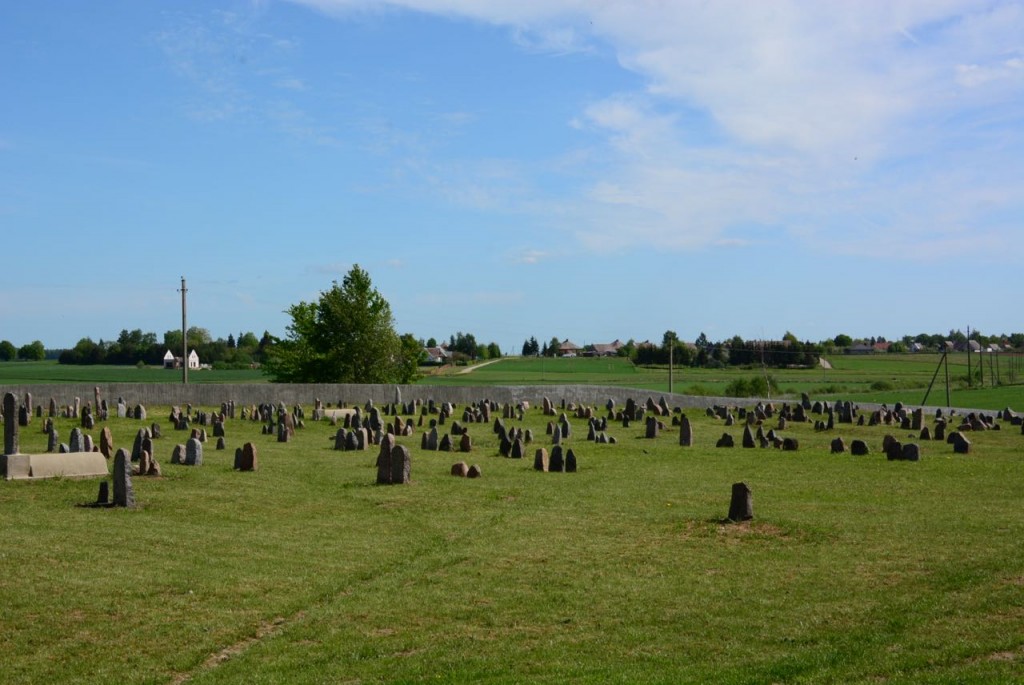
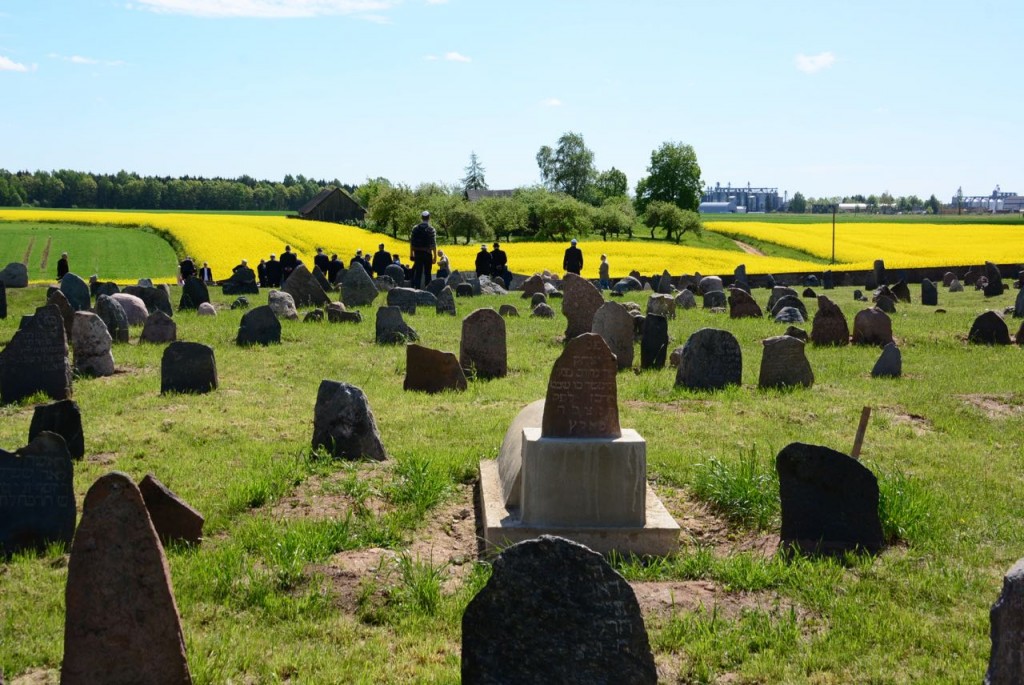
I was privileged to attend the Seduva Jewish Cemetery Restoration and the two Holocaust Memorial ceremonies.

DSC_0638 DSC_0669 DSC_0674 DSC_0675 DSC_0679 DSC_0680 DSC_0684 DSC_0685 DSC_0686 DSC_0693 DSC_0696 DSC_0707 DSC_0708 DSC_0713 DSC_0721 DSC_0729 DSC_0730 DSC_0734 DSC_0744 DSC_0750 DSC_0759 DSC_0762 DSC_0766 DSC_0772 DSC_0776 DSC_0781 DSC_0796 DSC_0799 DSC_0802 DSC_0804 DSC_0810 DSC_0811 DSC_0814 DSC_0816 IMG_3874
<
>

This is what Sergey Kanovich, who led the project, said at the first Holocaust Memorial ceremony:

Most probably it was a sunny and bright morning of August 25th 1941. That was the last morning that Seduva Jews gazed at the Lithuanian sky and seen the sun. Supervised by German nazi officers local neighbours of Seduva Jews became their executioners here and in other places.

Seventy years, even more needed in order to become a witness of little miracle of the victory of the humanity. We are here because we will never forget our sisters and brothers. We will never forget nor the way how they lived neither the way they were brutally murdered. It is the duty of all of us – of Jews and Lithuanians alike – to remember and respect the memory in order to avoid the catastrophe which Lithuanian Jews went through would never come back. To remember and respect – it is our common duty. No matter where litvaks would live – in Australia or South Africa, Israel or Switzerland, Belgium or Canada – we always remember where we came from, we remember our forefathers and we will never forget or allow to forget them. Murderers could not kill our memory. We are back, because our memory is stronger than their bullets. And memory will always prevail.

We wish to thank everyone who made this project a reality

We wish to extend our gratituted to every worker who makes these stones become a memory.

We are here in order to remember the life and death of those innocent who have been murdered. God bless their memory. Yhie zichram Baruch.Amen

Today is a second day of Jewish Holiday Shavuot. Since there are more than ten Jewish men we are obliged to say Kaddish for those who perished. I kindly ask Mr. Simas Levinas to start the prayer..

The photos before and at the cemetery:

DSC_0693 DSC_0708


Video:

Rute Anu

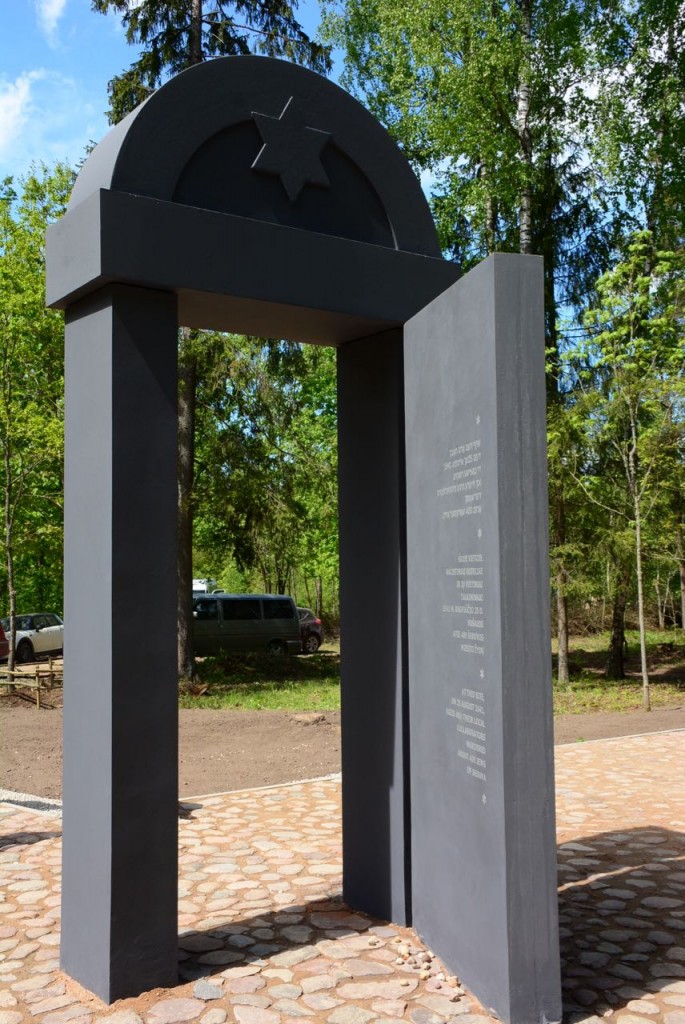
The two Holocaust Memorials

DSC_0772 DSC_0762 DSC_0811 DSC_0816

Video:

Part of Ed Glasenberg’s Address

Video:

Kaddish – Sung By Rafailas Karpis

Kaddish – Continued

Lost-Shtetl

Lost_Shtetl Brochure


Šeduva

From Wikipedia, the free encyclopedia
Šeduva
Coat of arms of Šeduva
Coat of arms

Location of Šeduva

Coordinates: 55°46′0″N 23°45′0″ECoordinates55°46′0″N 23°45′0″E
Country  Lithuania
Ethnographic region Aukštaitija
County Šiauliai County
Municipality Radviliškis district municipality
Eldership Šeduva eldership
Capital of Šeduva eldership
First mentioned 1539
Granted city rights 1654
Population (2005)
 • Total 3,270
Time zone EET (UTC+2)
 • Summer (DST) EEST (UTC+3)

Šeduva (About this sound pronunciation ) is a city in the Radviliškis district municipalityLithuania. It is located 18 km (11 mi) east of Radviliškis.

Shadova-Šeduva was an agricultural town dealing in cereals, flax and linseed, pigs and geese and horses, at the site of a royal estate and beside a road from Kaunas to Riga. The population from the fifteenth century was Catholic and Jewish. Until then, Lithuania had been the last pagan kingdom in Europe and allowed freedom of worship and toleration of Jews and other religions.[1] The first Catholic shrine of Šeduva, the Church of the Invention of the Holy Cross, was built and the parish founded between 1512 and 1529. The present brick church Cross was built in Šeduva in 1643 with a donation from Bishop Jerzy Tyszkiewicz of Vilnius. During the 18th century the bell tower was added to the structure, with further renovations and extensions in 1905. Baroque and renaissance architectural styles characterise both the exterior and interior of the church. It has a cruciform plan with an apse, low sacristy and five altars.

During the 15th century the region was redefined as the Voivodeship of Trakai and Vilnius. Later it became part of the Grand Duchy of Lithuania until the Union of Lublin in 1569 created the Polish-Lithuanian Commonwealth.

The Seduva coat of arms were granted on June 25, 1654 by John II Casimir Vasa, King of Poland and Grand Duke of Lithuania and at the same time the city was granted burger rights at the request of Maria Ludvika, Queen of Poland. She descended from the Princes of Gonzaga, from Mantua in Italy. The arms of the family showed a black eagle. The small breastshield shows the French fleur-de-lis, because the Gonzaga family was related to the French Royal family. The eagle was made white in reference to the white eagle of Poland.

Evil mill

1792 Stanislaw II August Poniatowski, the last royal proprietor of Šeduva, concluded an agreement with the town’s citizens, giving them rights to be excused from labour on the estate for a fee. In 1795, the year of a terrible fire in Seduva, Lithuania became part of Russia when Poland was partitioned. From 1798, Baron Theodore von Ropp did not acknowledge the rights of Seduva citizens and required of the citizens to perform labour in the town’s manor. The citizens petitioned for their rights to the Russian Senate. In 1812, the Senate passed the decision to recognise the former charters of Šeduva.

Between 1696 to1762, a Jesuit mission, connected with their college at Pasiause, was active in the town, operating a lower school with 96 pupils up until 1828. After an insurrection in 1863 (the January Uprising), all parish schools in Seduva were closed and replaced by public Russian language schools. In the same year a Russian Orthodox Church, designed by the architect Ustinas Golinevicius, was built and in 1866 a wooden Synagogue was added near the central market square.

The Molotov-Ribbentrop Pact between Nazi Germany and Communist Russia in August 1939 and the German-Soviet Boundary and Friendship Treaty a month later placed Lithuania under Soviet control. By June 1940 the Soviets had set up a pro-Soviet government and stationed many Red Army troops in Lithuania as part of the Mutual Assistance Pact between the countries. President Antanas Smetona was forced to leave as 15 Red Army divisions came in.

The pro-Soviet puppet government was controlled by Vladimir Dekanozov and Justas Paleckis, and Lithuania was made part of the Soviet Union. A Sovietisation programme began immediately. Land, banks and large businesses were nationalised. All religious, cultural, and political organizations were abolished except the Communist party. 17000 people were deported to Siberia, where many would perish.

The German army invaded Lithuania on 22 June 1941, taking Shadova – Šeduva a few days later as part of Operation Barbarossa. At first the Lithuanian population considered the Nazis to be liberators saving them from the Red Army. The new pro-German Government organized a Lithuanian militia which then became the Nazi’s manpower for genocide. Five hundred years of Jewish life in Shadova – Šeduva ended in just two days of slaughter. Shadova’s Jews attempted to flee east to Russia but were badly treated by Lithuanian nationalists and most returned to their homes. The German forces entered Shadova – Šeduva on 25 June 1941 and were received with flowers by many locals. By the beginning of July, Jews had to wear the yellow Star of David. Jews who had participated in the Soviet rule were immediately arrested and executed. Jews were taken to dismantle the remnants of the munitions factory in Linkaičiai, and were then accused of stealing and executed. Others were forced into labour gangs. They were set to work cleaning the streets and at the warehouses of the rail station. All the work was guarded by armed Lithuanian militi . Next all the Jews of Shadova – Šeduva had to gather in the market place with no more than a small package each, and to hand over the keys to their houses to the police. Under guard. they were escorted at night to the village of Pavartyčiai, five kilometres north-west of Shadova – Šeduva, where they were crowded into two unfinished Soviet barracks surrounded with barbed wire. The Jews were ordered to hand over all their valuables and cash. Some were shot in the next few days.

On 25 August 1941 the remaining Jews of Shadova – Šeduva were loaded on trucks and taken to Liaudiškiai, ten kilometres south-west of the town where the Rollcommando Hamann of Einsatzcommando 3 and Lithuanian collaborators of the 3rd company of the Tautinio Darbo Apsaugos Batalionas were waiting for them. Over the coming two days the entire Jewish community of Shadova was shot and buried in two pre-prepared mass graves. One site was located 400 meters north of the Shadova – Šeduva road and a second 900 meters north west of the same road, close to a path in the forest. The local killers of their Jewish neighbours from Shadova – Šeduva were Ramnauskes, Valavičius, Jonas Tomkus and Klemensas Rožėnas. The lists of mass graves in the book The Popular Massacres of Lithuania, Part II, include the following: Liaudiskiai forest about 10 km southwest of Seduva, one site 400 meters north of the Seduva road and a second site 900 meters northwest of the same road, close to a path in the forest.[2] The Jäger report concludes that Einsatzcommando 3 registered the murder in Šeduva on the 25 and 26 August 1941 of 230 Jews, 275 Jewesses and 159 Jewish children, a total of 664 people.


Back