My article – Finding Mr Katz has just been published on Avotaynu Online.
This is a sequel to my article: From One Photograph to Journeys of Research and Discovery
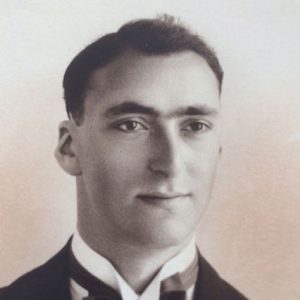
Personal Journeys: From One Photograph to Journeys of Research and Discovery

and Jewish Life

My article – Finding Mr Katz has just been published on Avotaynu Online.
This is a sequel to my article: From One Photograph to Journeys of Research and Discovery
Personal Journeys: From One Photograph to Journeys of Research and Discovery


Just think of this – when was the last time Maoz Tzur was heard in Keidan, Lithuania, sung by a Jewish kid? Maybe 75 years ago!
When Laima Ardaviciene, the English teacher at Atzalyno Gymnazija in Kedainiai Lithunia, asked whether I could give a talk on Chanukah via Skype to her students, I would normally have sourced one of the many brilliant articles by Rabbi Jonathan Sacks and shared this with them, speaking from my home.
As I only live a minute’s drive from our CHABAD Shul in Noranda, I came up with the idea of enlisting the assistance of Rabbi Shalom White and doing it at the Shul. I also asked a young and talented friend, Dylan Kotkis, to join us. Dylan has a friendly and outgoing personality together with a beautiful singing voice. He is a 15 year old student at Carmel School, Perth’s Jewish Day School.
Due to the 7 hour time difference between Perth and Kedainiai, 1pm (7pm here) was the best time for Laima and her students, so we held the meeting in the Shul’s library. A minyan was taking place in the sanctuary at the same time.
Here are some photos and video clips taken both from the Kedainiai and from the Perth ends. I synchronised and edited the videos and combined the footage taken by Laima and myself.
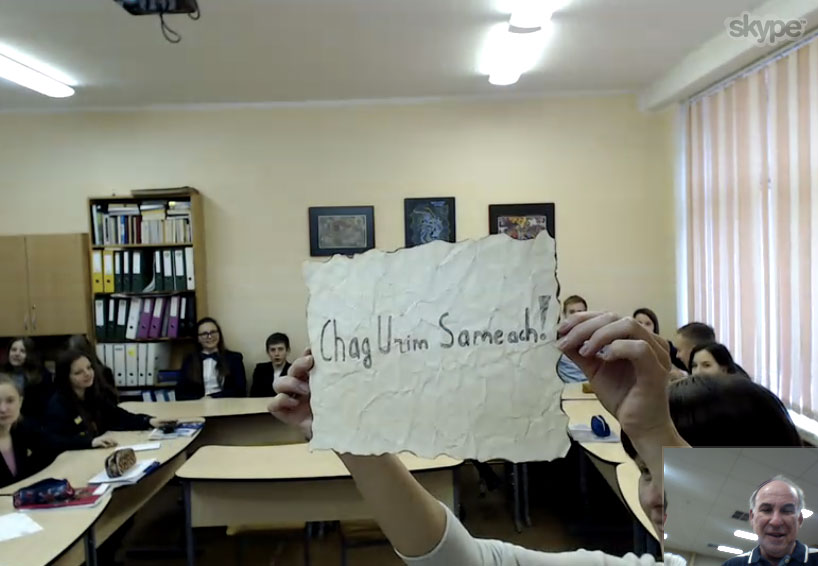
Rabbi White, Dylan and I spoke about the festival and Dylan took the Lithuanian students on a tour of the shul. Dylan sang Maoz Tzur for them.
Photos taken at Atzalyno Gimnazija


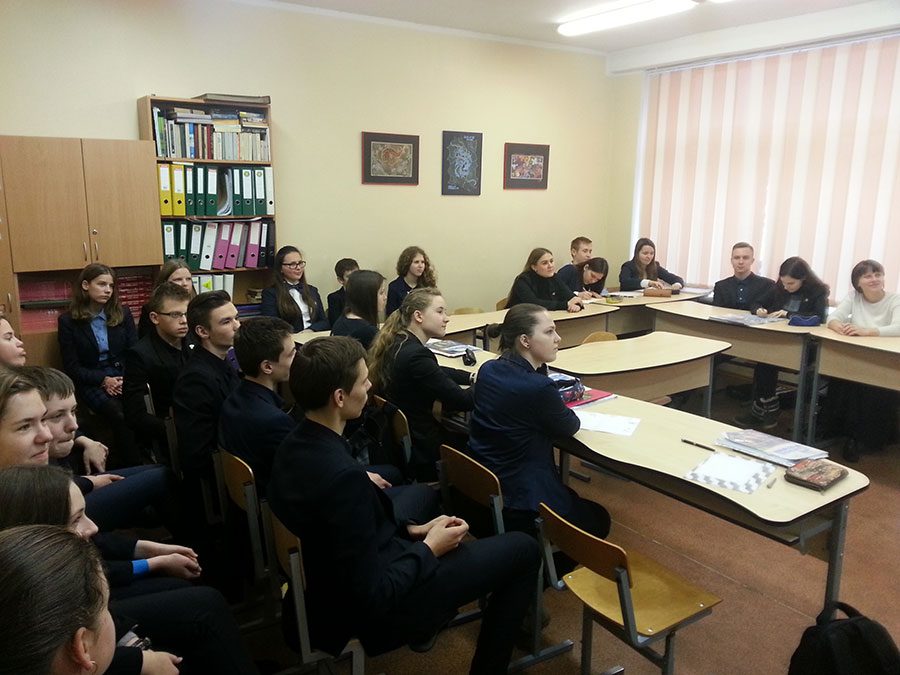
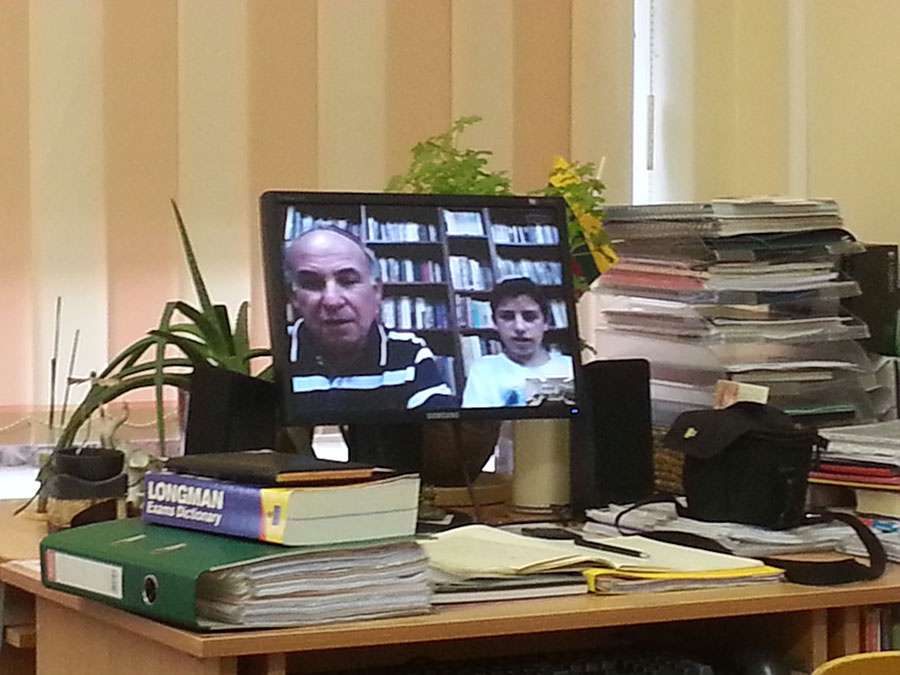
Photos taken on the Perth side


Screenshots and photos of the signs the Lithuanian students presented.




by Abel & Glenda Levitt
When we received an invitation to this conference and read that the first session was titled “What has been done in Lithuania regarding the commemoration of victims of the Holocaust?” I called the Lithuanian embassy to ask if we could have 5 or 6 minutes to describe our role, Glenda and Abel Levitt, in this important mission, Commemoration.
Since our first visit to Lithuania in 1998, to visit Plunge, the shtetl where my father had been born, from where he emigrated to South Africa in 1913, and where his mother, four brothers and sisters and their children were murdered in July 1941, we have visited many times, trying to go every year, sometimes more often.
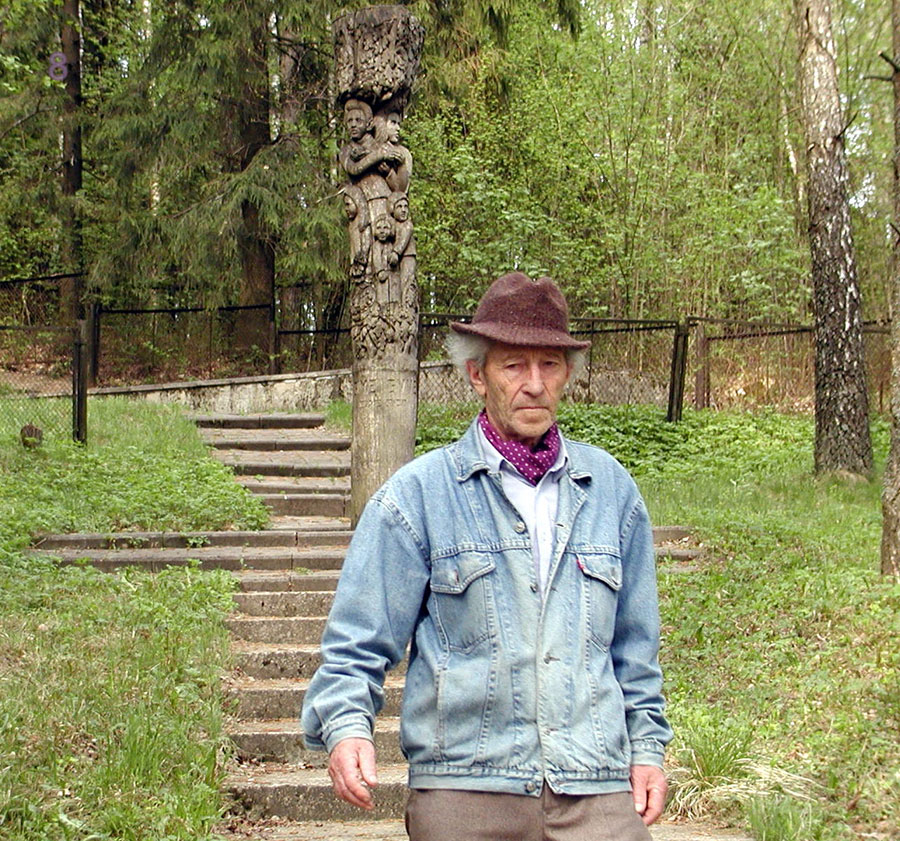
In Plunge we met Yacovas Bunka, the then 75 year old sculptor who took us to the Kausenai forest to visit the mass graves where on two bloody days 1,800 Jews, men women and children were shot and thrown into the graves, and covered by mounds of earth.
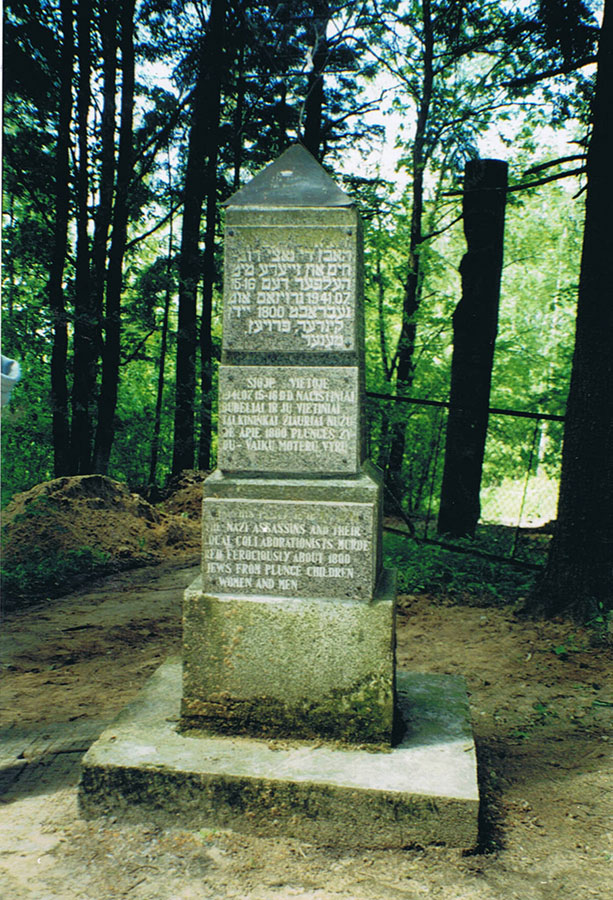
We saw for the first time the memorial, erected in Soviet times. As we left the site with the giant wooden sculptures made by Bunka and his artist friends, the old man took my hand and asked if we could raise the money needed to cover the graves with stone, as he feared the encroaching foliage of the forest would overrun the mass graves.
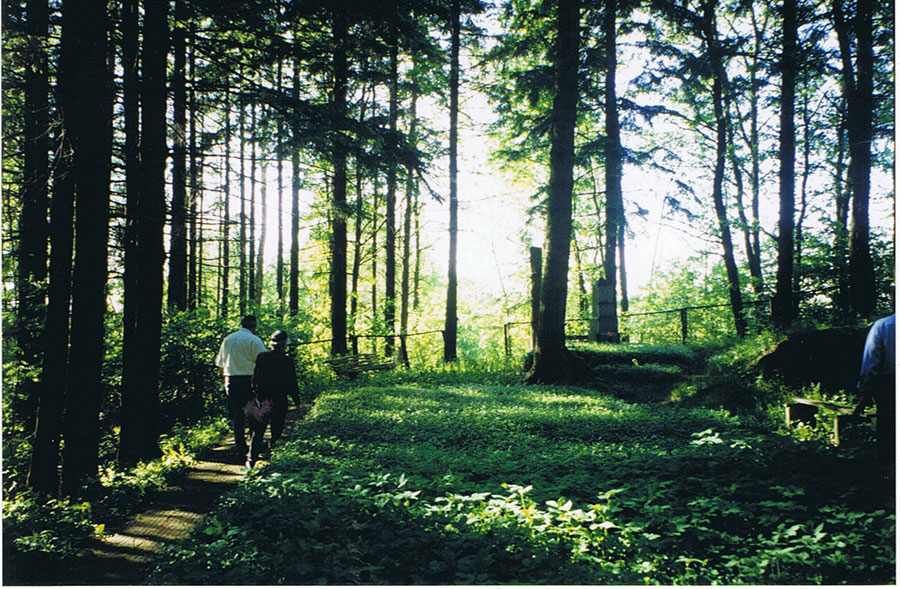
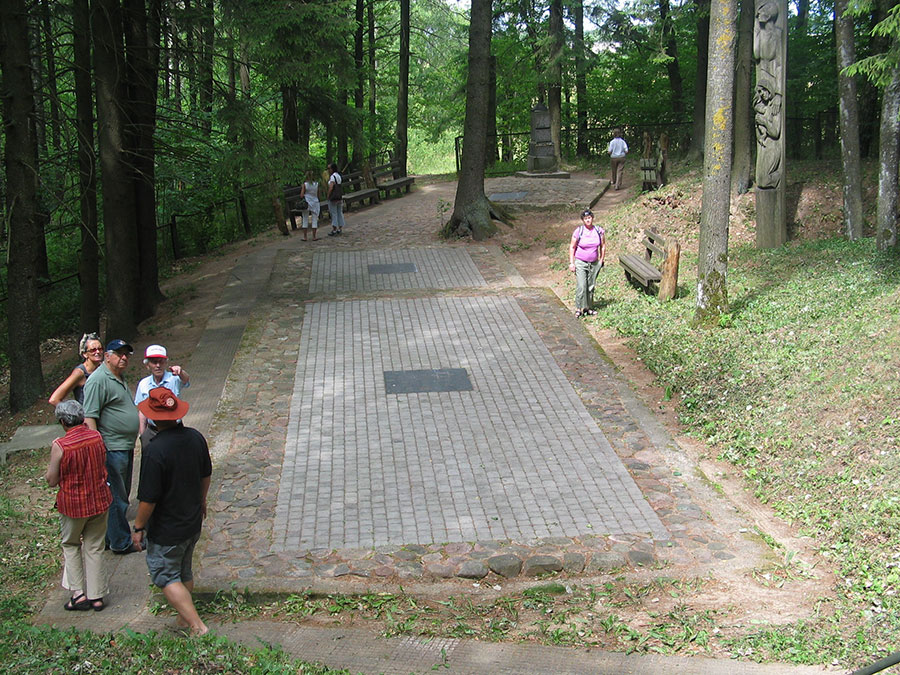
This we did and our family around the world responded to our request. We also wanted to acknowledge the work of brave Lithuanians, farmers and priests, and ordinary people, who had saved their Jewish citizens. These heroes had been awarded the Life Saving Cross by Lithuania’s presidents. To these noble people we created the Alley of the Savers.
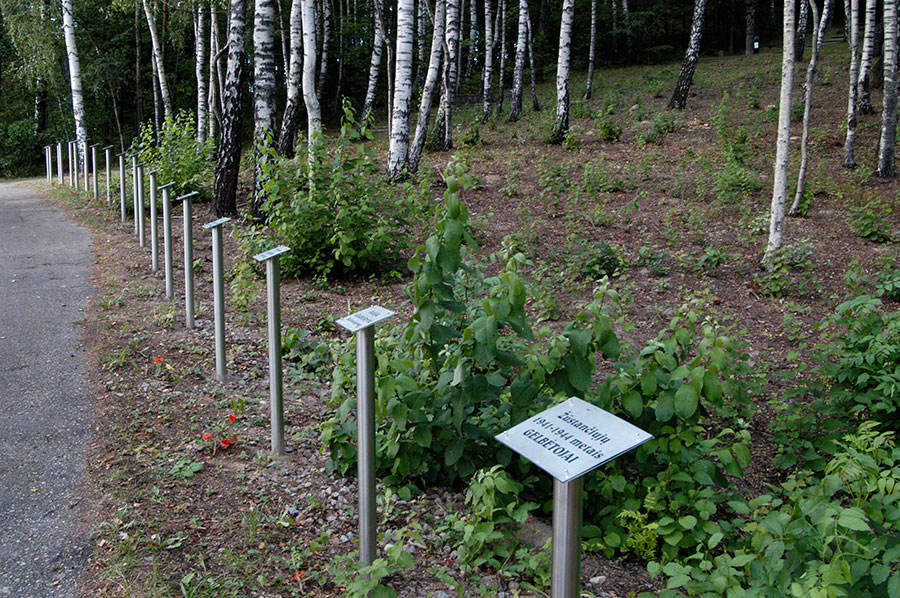
We had met via the internet an Israeli woman, Emma Karabelnik, born in Vilnius to parents who had lived in Plunge but who had managed to escape east to Russia days before the Germans arrived. Emma inspired by seeing the covered mass graves decided to make a contribution and so interviewed families and researched victims’ names to add to Bunka’s list of 700. Emma was interested in having these names somehow displayed. Shortly after our meeting Emma, we were in Plunge, a day before the old synagogue was to be demolished. We called Bunka’s son Eugenijus, and suggested to him that the bricks from the synagogue be saved and be used for building some sort of memorial, ideally at the mass grave.
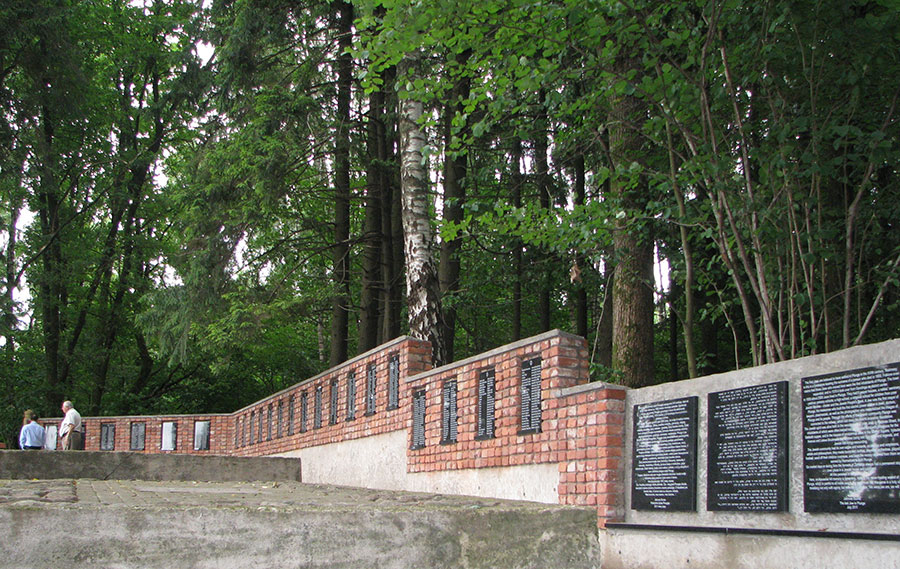
And thus was born the Memorial Wall project, with 1,200 names of the 1,800 victims. The monument was unveiled in July 2011; 70 years after the murderous act had been perpetrated. Emmanuel Zingeris was present that day, as was Ronaldas Racinskas who is here today.
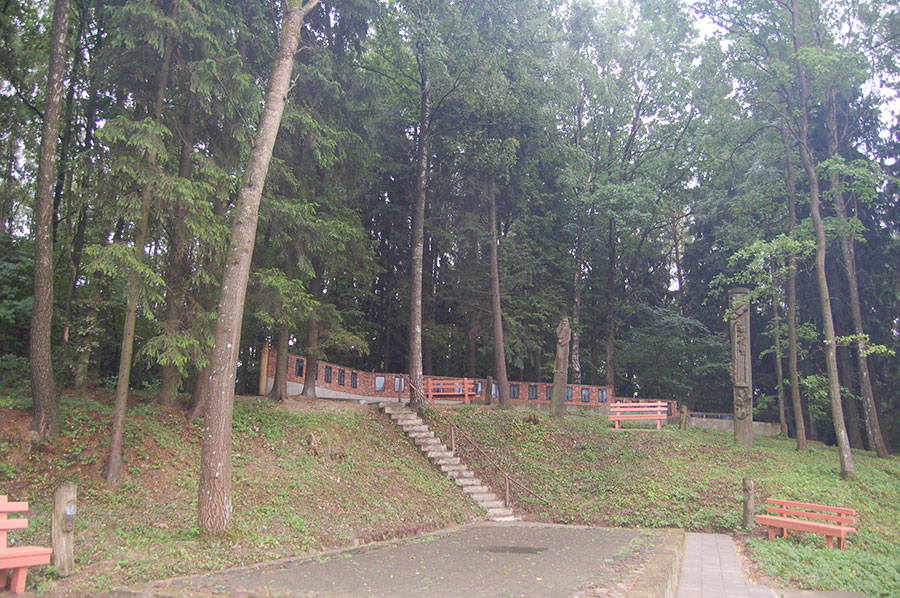
Speaker after speaker spoke of the need to build more memorials with names at the mass graves in Lithuania. Attending were government officials and ambassadors, and the representative of Yad Vashem. In my address, I too spoke of the importance of names, not only numbers, but names on memorials that would be the tombstones of the murdered Jews.
In May of 2011, two months before the unveiling we had visited Kedainiai and met the director of the museum, Rymantas Zirgulis.
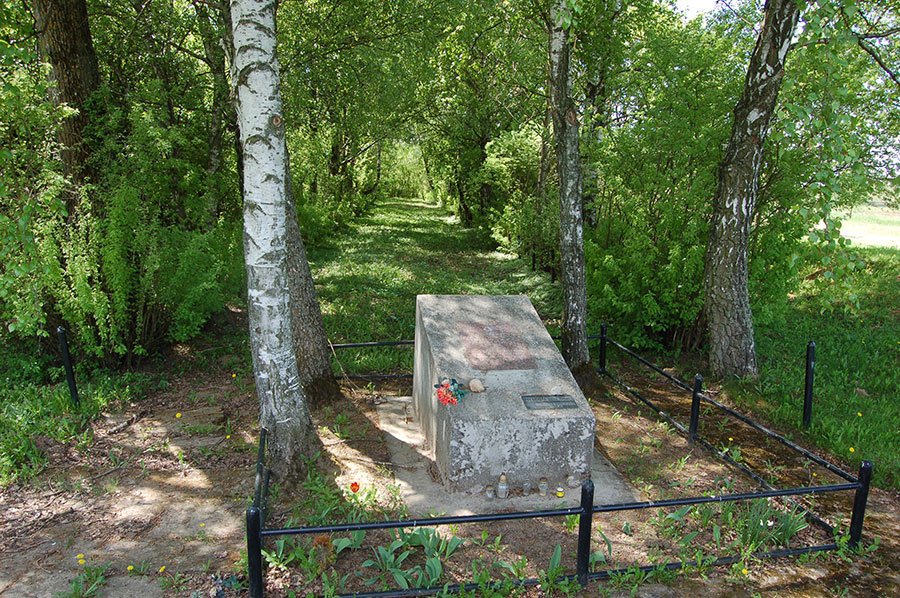
We showed him a photo of the wall being built, his reaction was immediate, “how can I do something like this in my town ? ” he asked showing us the existing memorial.
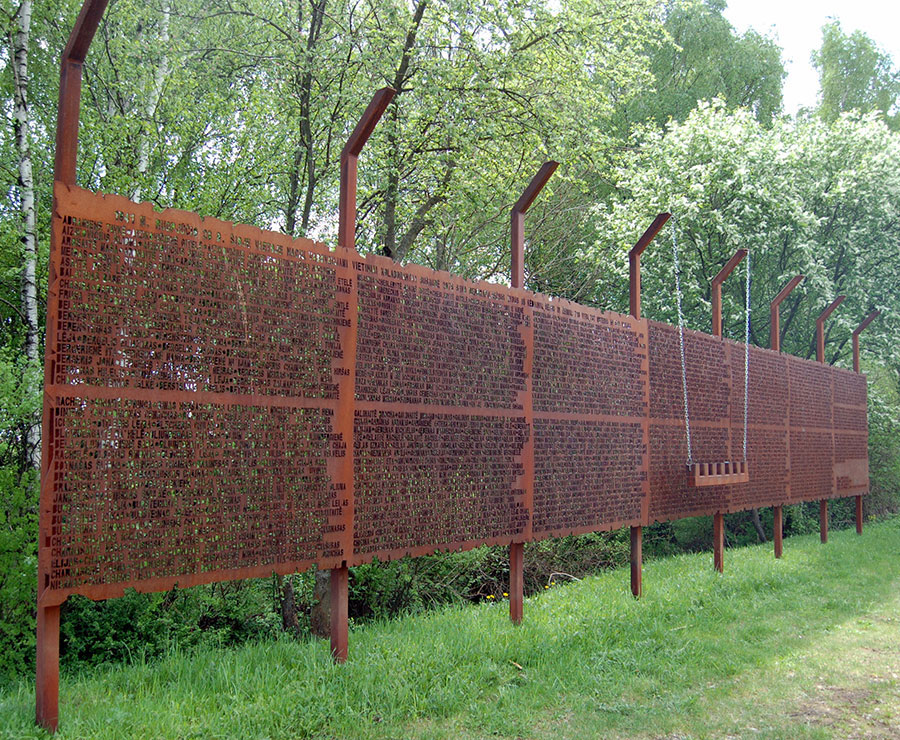
And so it was that he built a monument at the mass graves, an impressive steel structure with the names cut out.
You have heard from Ronaldas about Tolerance Centres in Lithuania. We have been personally involved in the one at the Saules Gymnasium in Plunge.
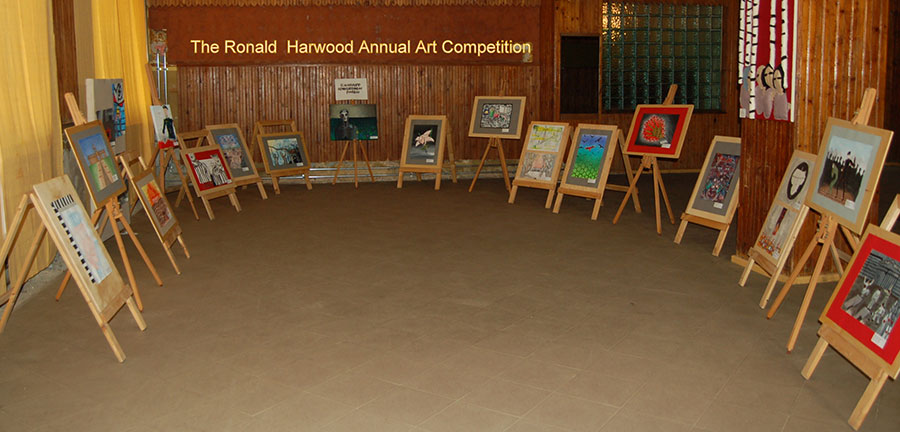
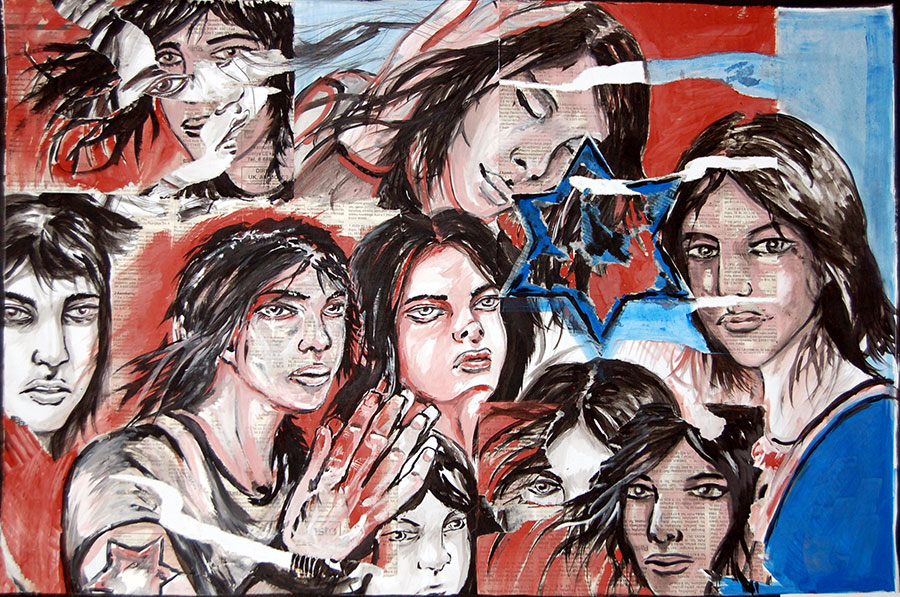
Here we have established an annual Holocaust art competition, inviting schools from around Lithuania to participate. We would like to show you a few examples of the innovative artwork that the talented Lithuanian students have produced in the Ronald Harwood Art Competition.
“Oblivion”
By Albertas, Plunge
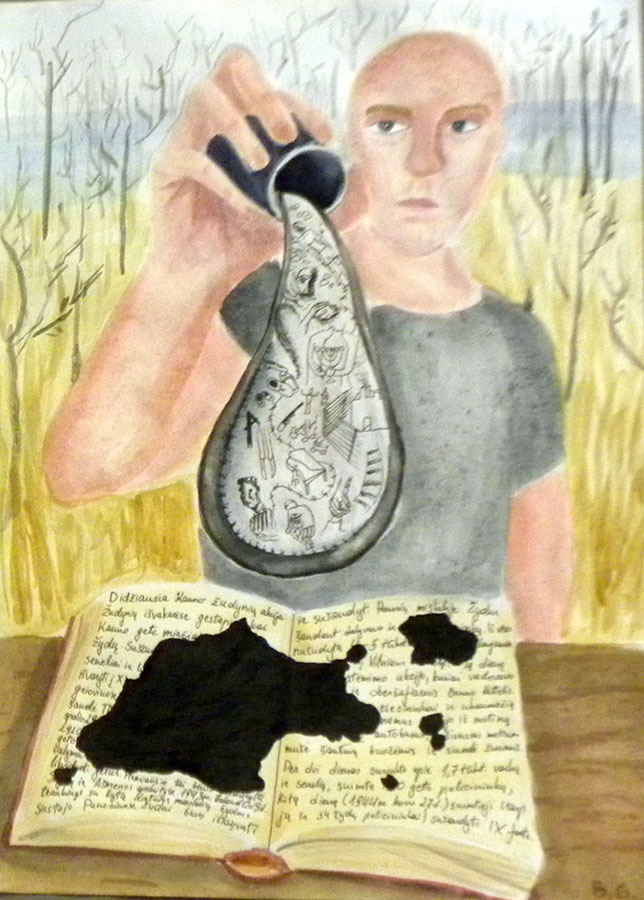
A Stain on History
By Bernadetta Plunge
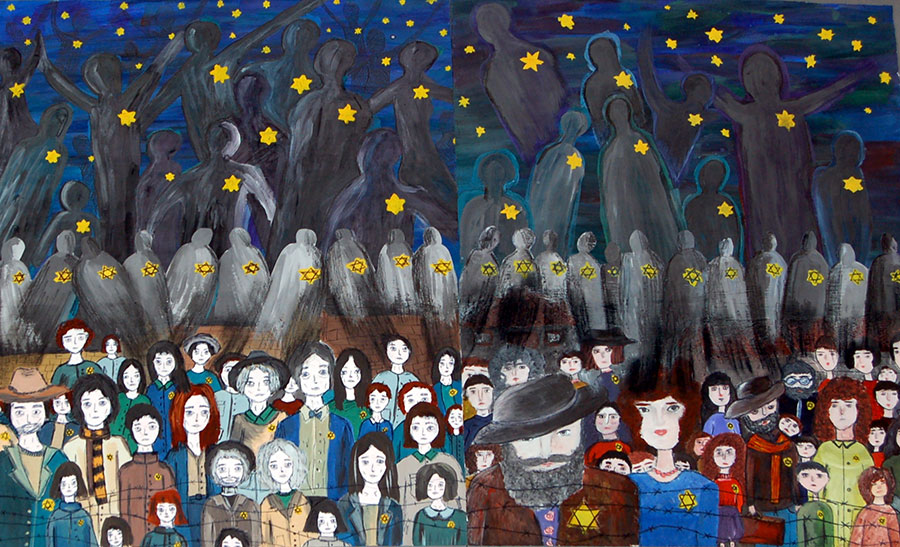
Team project Birzai High School
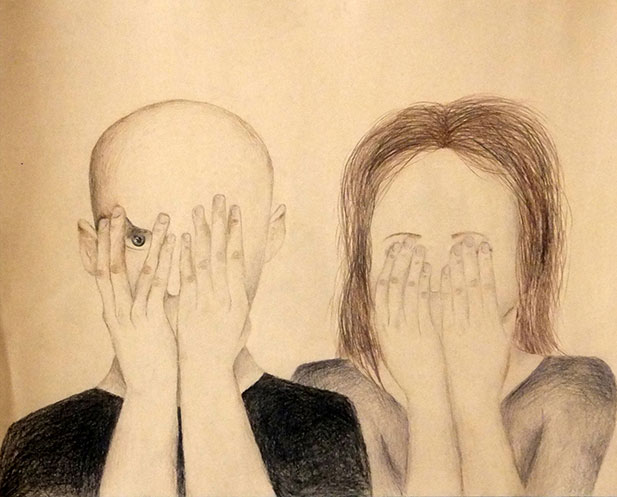
Drawing by Karolina age 14
Panevezys
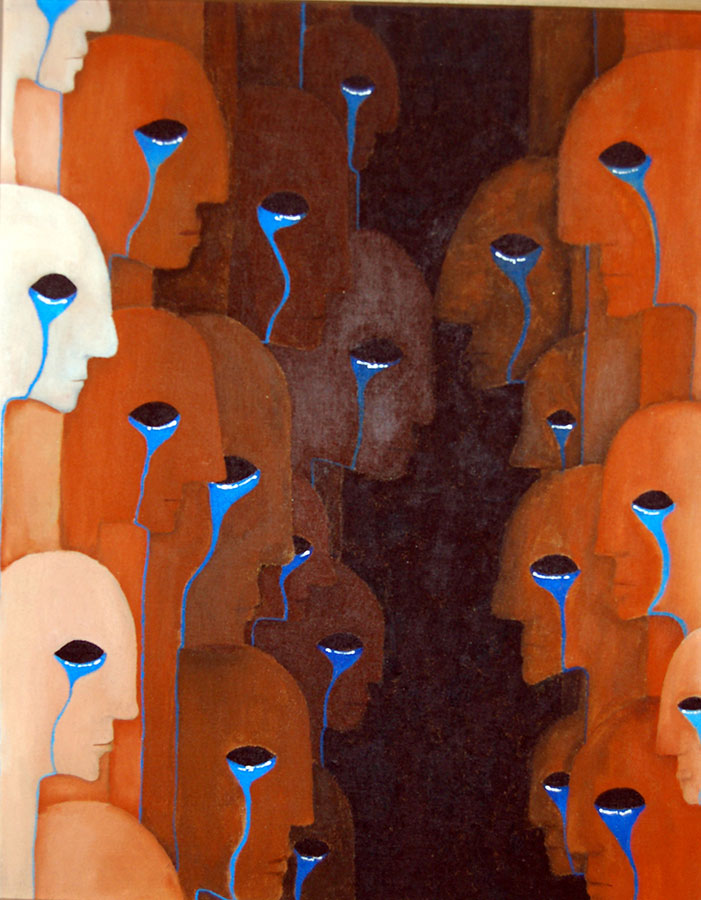
A Wall of Tears
By Christina Plunge
Glenda and I had been taken to the northern city of Birzai by Ronaldas’ deputy Ingrida Vilkiene, our first visit to the town where Glenda’s grandmother had been born. There we met the impressive couple Vidmantas Jukonis and his son Merunas who had been responsible for cleaning up the huge 500 year old Karaite and Jewish cemetery.
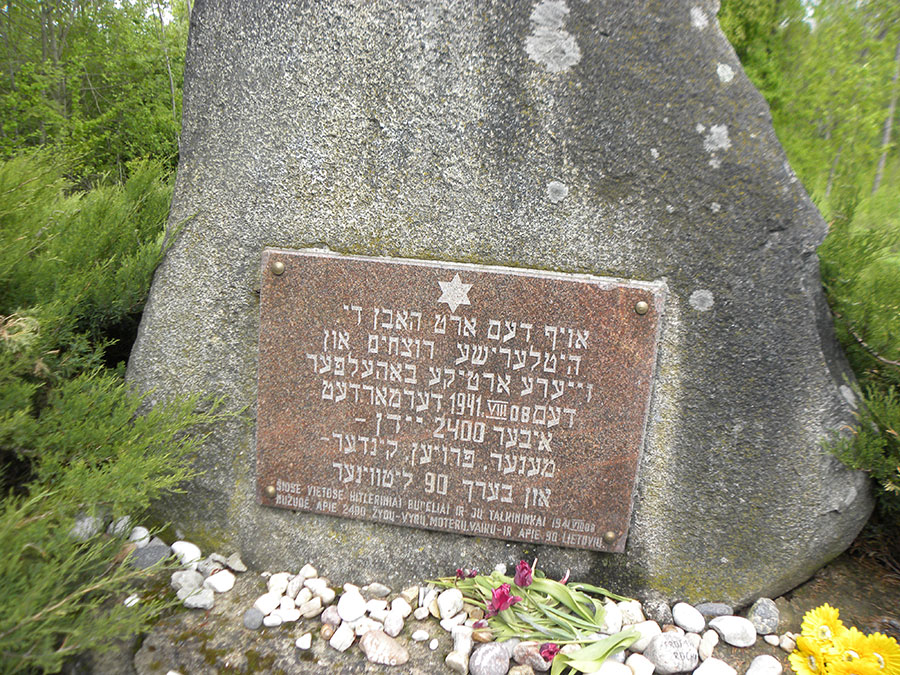
We were taken to the mass graves where on 8th August 1941, 2,300 Jews and 90 communist sympathizers were murdered in the forest of Pakamponys. By chance, 10 days later, in talking to a friend Bennie Rabinowitz in Cape Town South Africa, we mentioned our visit to Birzai. “Birzh” he called out, “the shtetl from where my grandfather emigrated to South Africa at the end of the 19th century”.
And so began the “Birzai/Birzh” project.
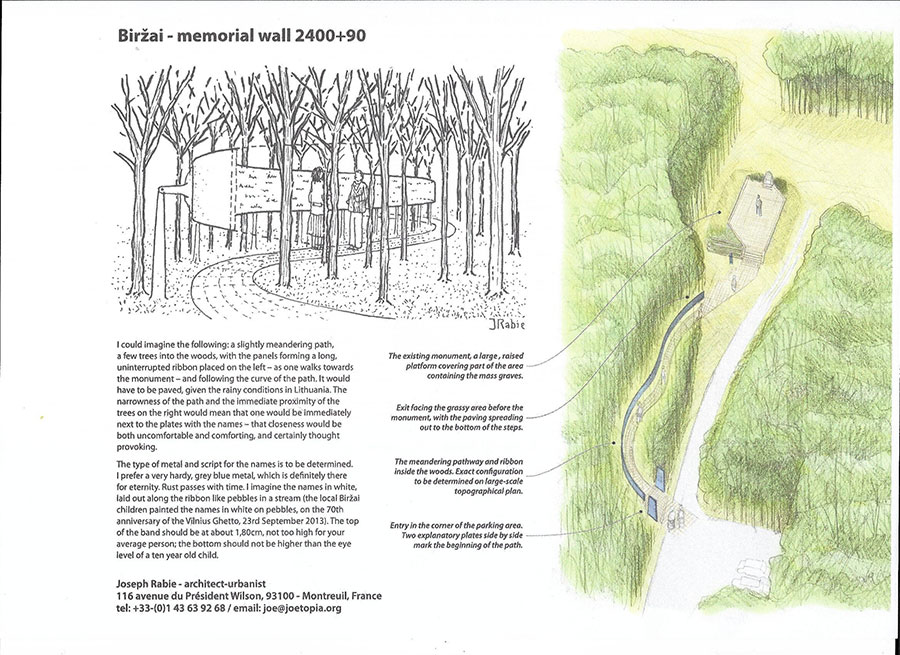
Here is the architect’s first plan for the monument with names that will be built at the mass graves and unveiled in August next year together with an acknowledgement of the Savers of Jews in Birzai.
This will be the 3rd such monument of names at the killing grounds in Lithuania. Not nearly enough you will all agree. The mass graves at Panerai where 100,000 people were murdered, 70,000 of them Jews, need a monument with names, not numbers. Lithuanian officials have said so. It is up to gatherings like this to push for tombstones to our people, with names, even if only some of the names are available, tombstones in the form of memorials such as we have shown you here today.
Abel and Glenda Levitt Kfar Sava , Israel
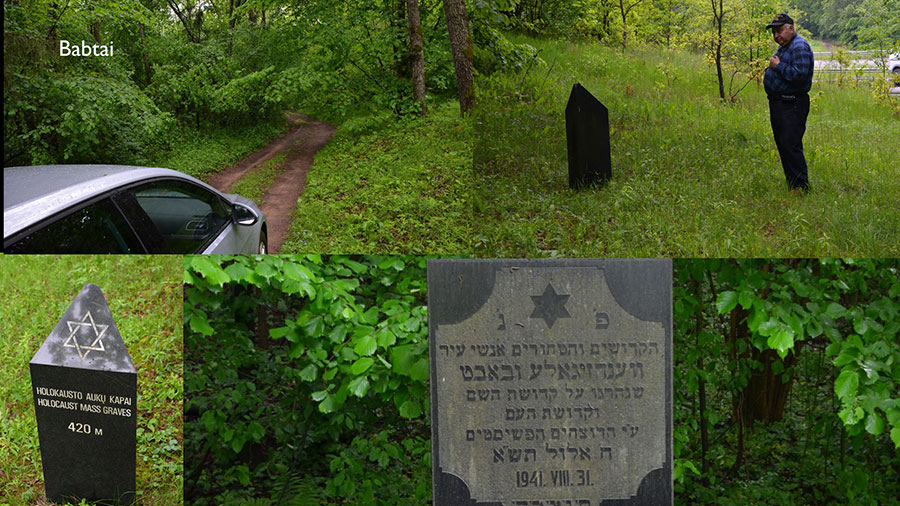
For the Plunge, Birzai & Kedainiai KehilaLinks, visit:
and
Chaim Bargman has been a beloved guide and genealogist for international Jewish-interest tourists in the Kaunas (Kovno) area for decades, and was immortalized in the late Dan Jacobson’s Heshel’s Kingdom (1998).
With a previous speaker, Dr Samuel Kassow in Seattle WA

With Professor Barbara Kirshenblatt-Gimblett, Program Director of Polin, Warsaw
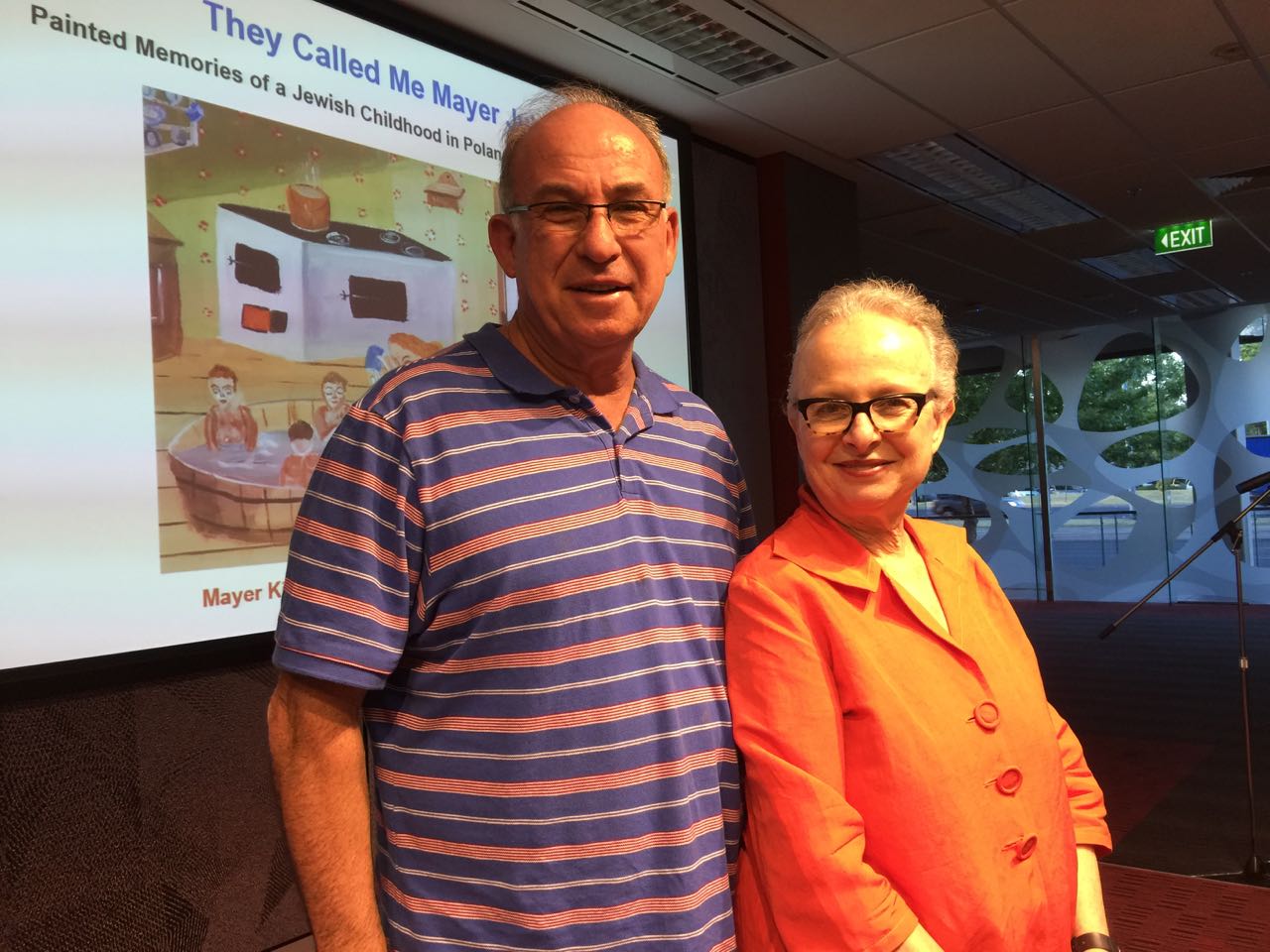
[iframe src=”http://www.greatpark.co.za/rchcc” width=”100%” height=”500″]
[iframe src=”http://www.greatpark.co.za/about-us-1″ width=”100%” height=”500″]

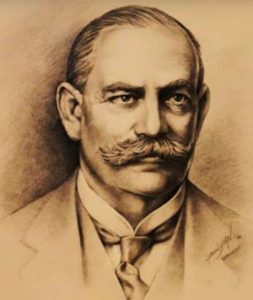
Monash is widely acknowledged, even by British military historians, as being the outstanding allied commander of WWI.
This was achieved despite the considerable discrimination that existed because of his Jewish and German heritage.
There is now a push to get the Australian government to grant him posthumously, the title of Field Marshal.
To watch the video on YouTube, go to https://youtu.be/6vYQBX6xF3o
[iframe src=”http://www.salutingmonash.org.au” width=”100%” height=”500″]

Pnina Berkman’s matseva at Karrakatta Cemetery in Perth

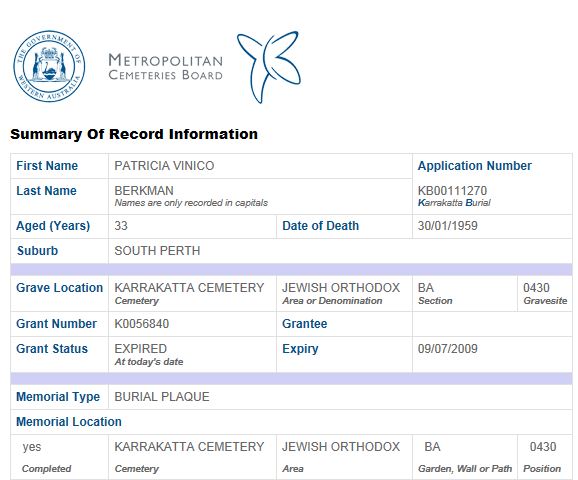


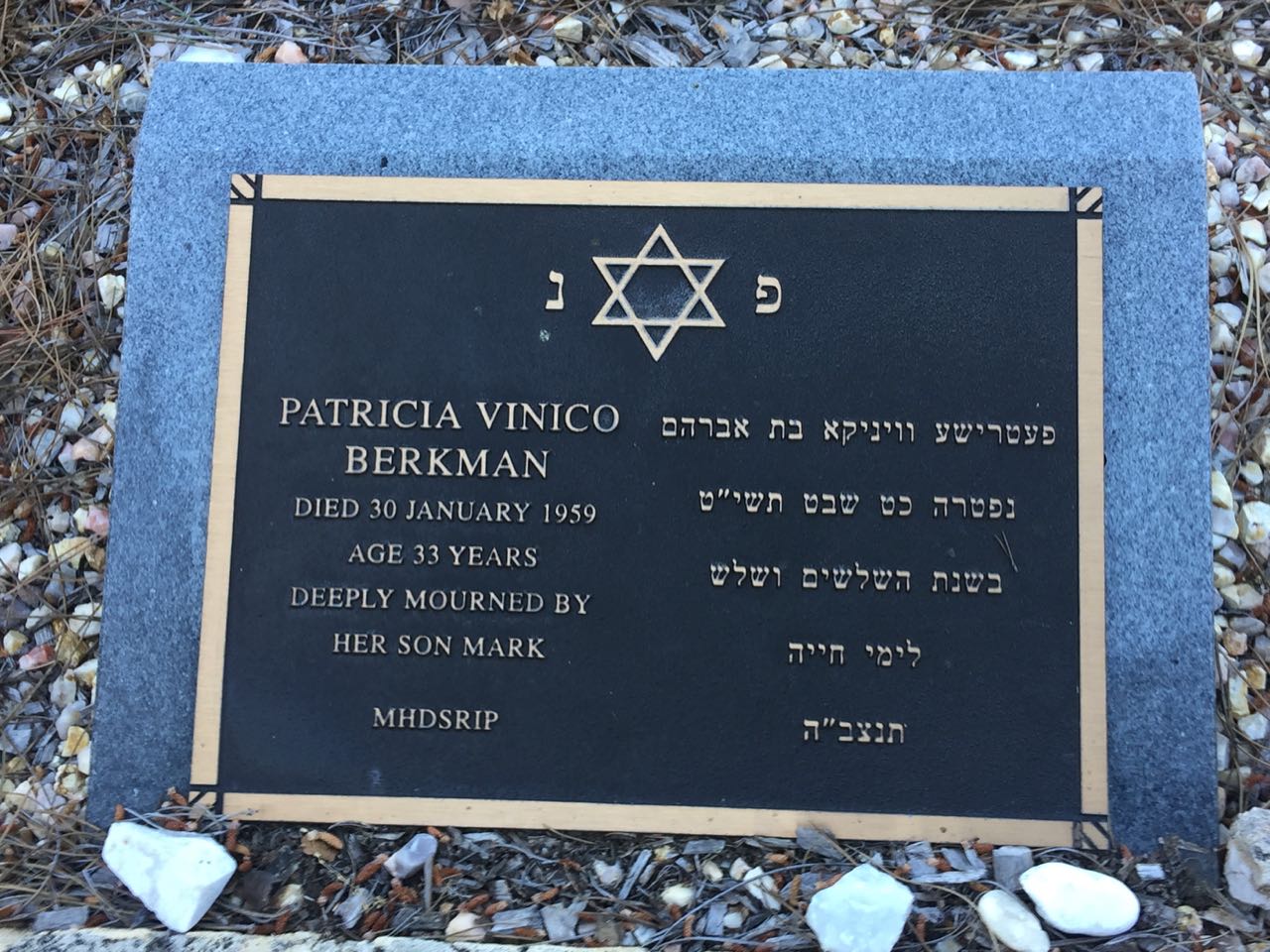
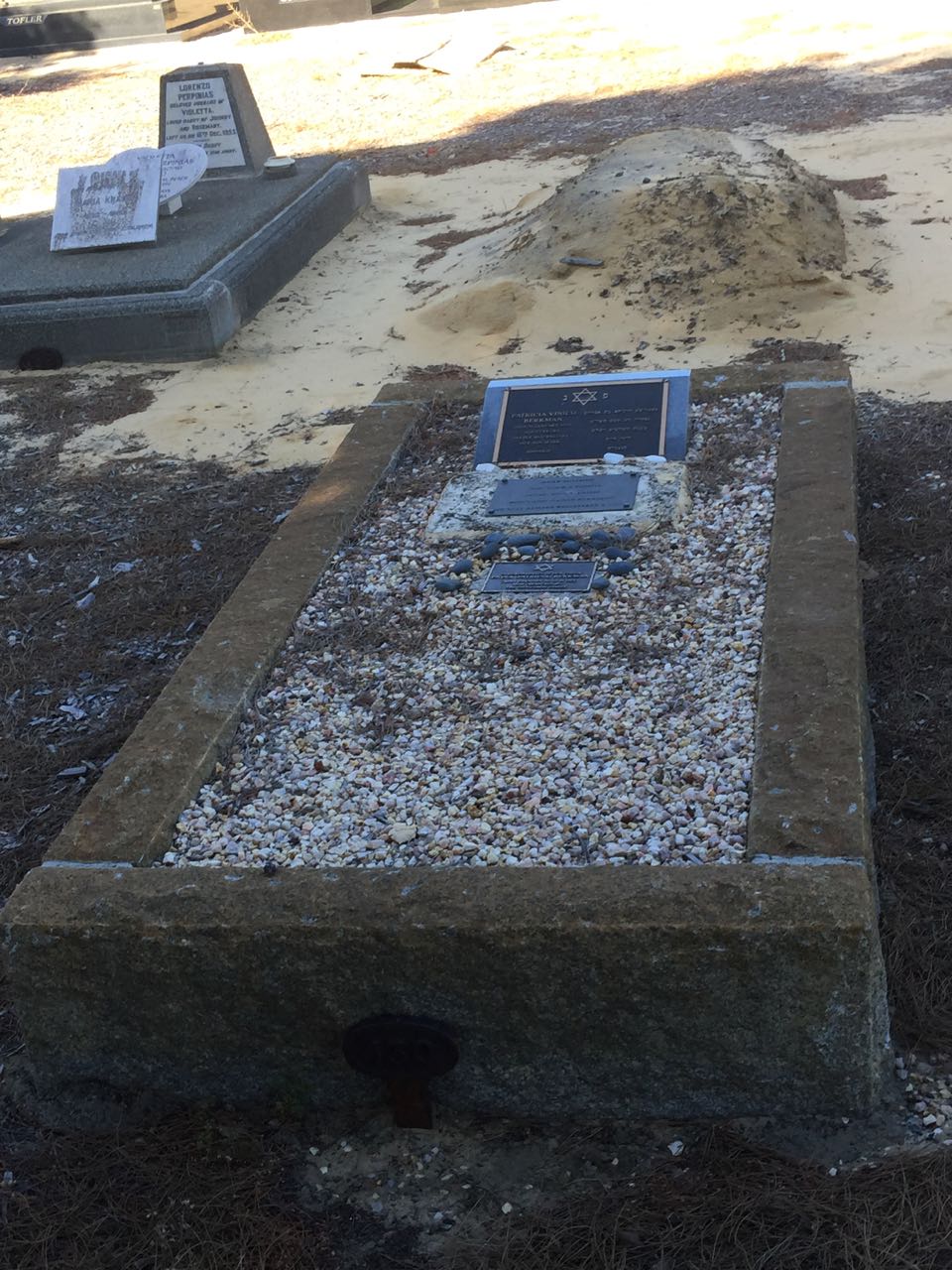


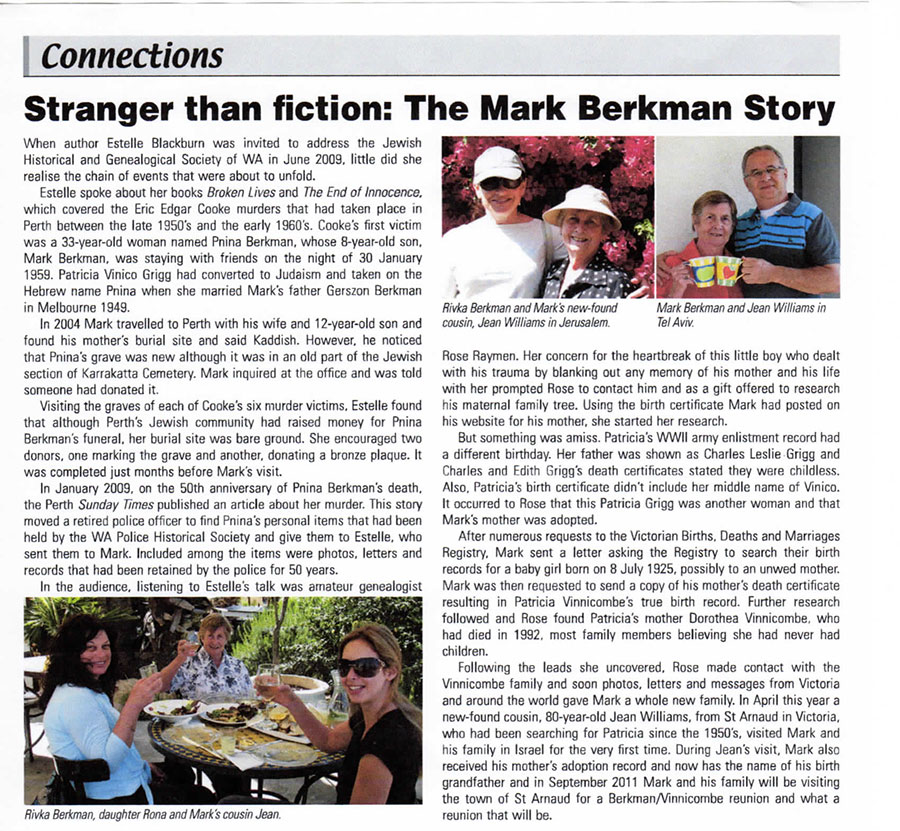
The story about Pnina, her son Mark and his re-connection to his family, appeared in The West Australian on 24 January 2013
Read here
Thanks to the researcher, Rose Raymen, for sharing this story with me, and Estelle Blackburn for writing it.

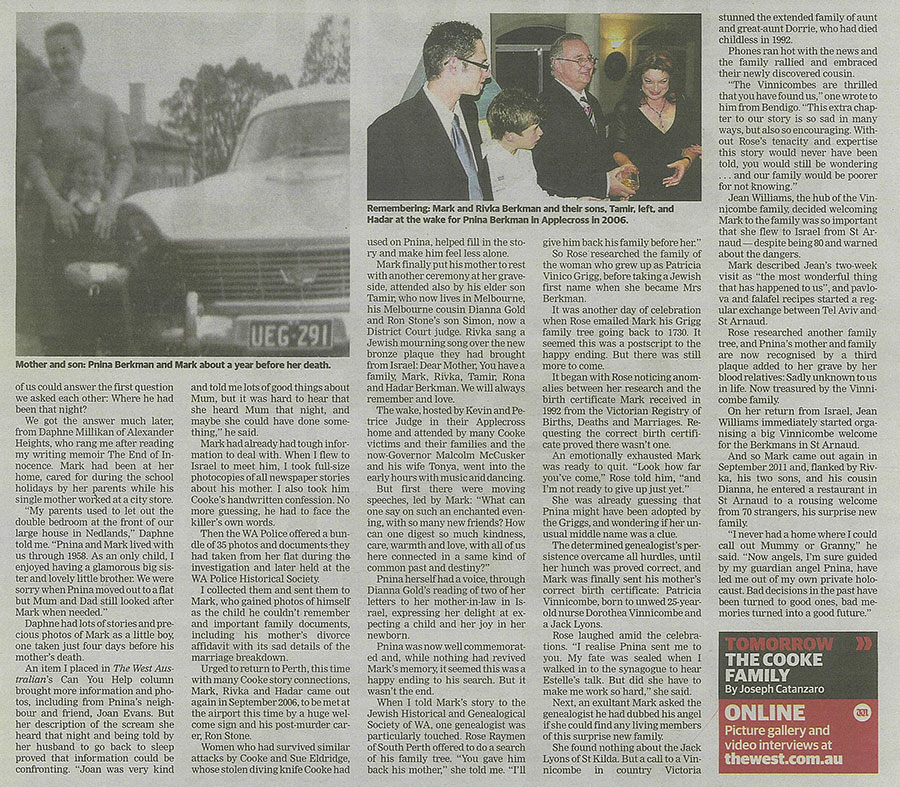
Estelle Blackburn: The-making-of-a-serial-killer
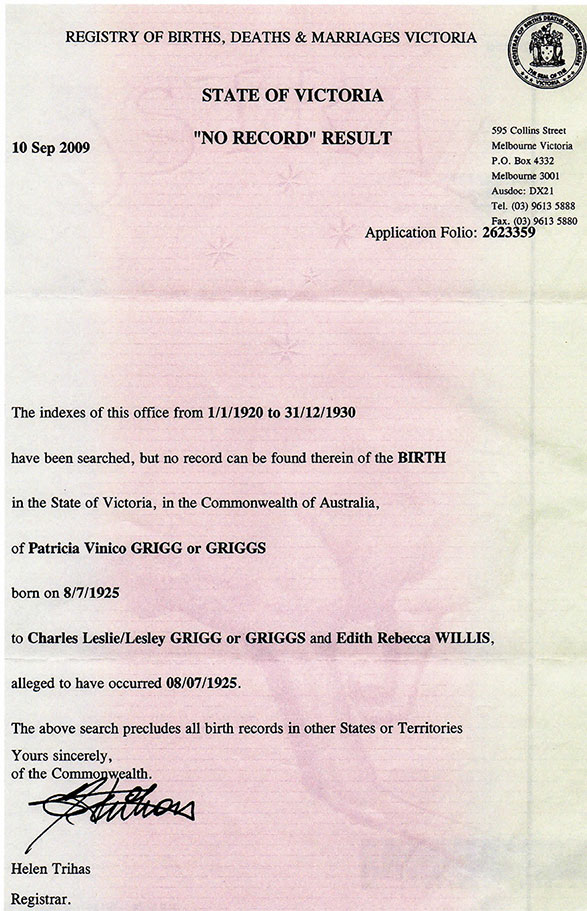
“NO RECORD” RESULT letter from the Victorian BDM Registry in response to Mark Berkman’s request

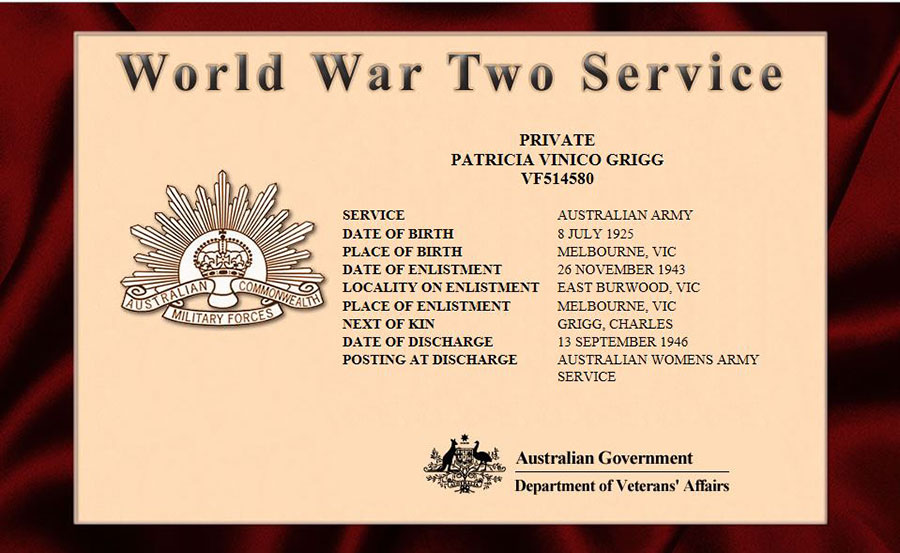
Private Patricia Vinico Grigg in the Australian Women’s Army

Her WW2 service certificate.
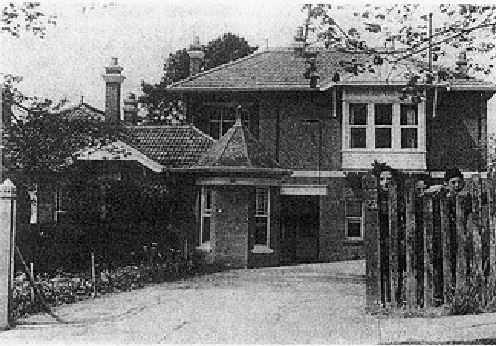
The Frances Barkman House in Balwyn Victoria where Mark Berkman stayed after his mother’s death
One can see the faces of the children looking out from the fence.
Patricia Grigg with adoptive father Charles Leslie Grigg

Pnina’s mother Dorothea Vinnicombe

Mark Berkman

Mark Berkman taken shortly before the death of his mother

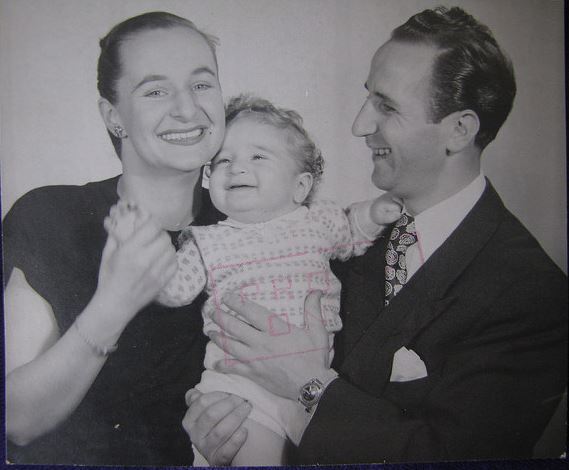
Pnina and Gerszon (Gary) Berkman with son Mark Melbourne 1950
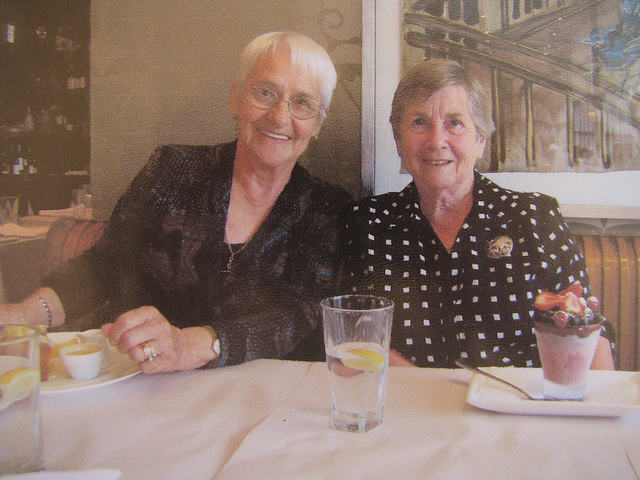
Mark’s new-found cousins from left to right: Lois Langdon and Jean Williams
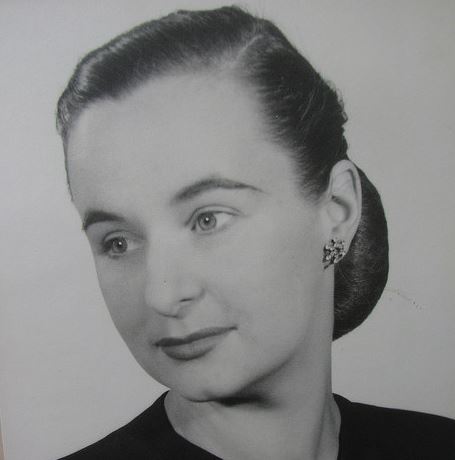
Pnina Berkman
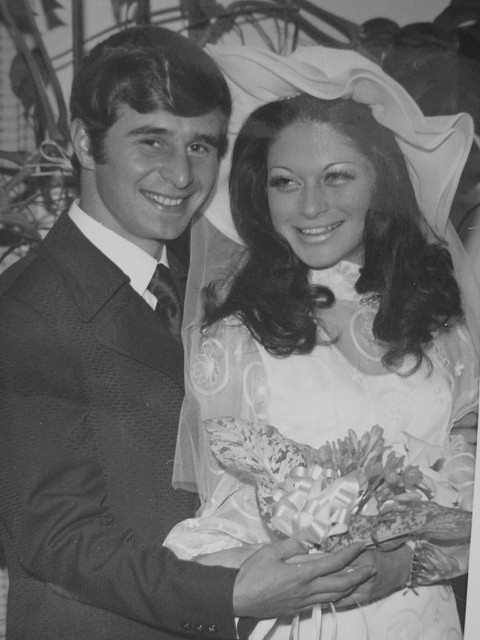
Mark and Rivka Berkman’s wedding day
Mark and Rivka Berkman’s children from left to right: Son-in-law Shlomi Weizmann, son Hadar Berkman, granddaughter Bar Weizmann, daughter-in-law Tahel Berkman, son Tamir Berkman, daughter Rona Weizmann and granddaughter Mia Weizmann

Mark and Rivka Berkman, Melbourne, Victoria, Australia 2016
Maccabean article 16 July 2010:
More about:
Rose Raymen
http://kehilalinks.jewishgen.org/gdansk/Zylberstein.html
Estelle Blackburn
https://en.wikipedia.org/wiki/Estelle_Blackburn
Eric Cooke
https://en.wikipedia.org/wiki/Eric_Edgar_Cooke
Perth KehilaLink
http://kehilalinks.jewishgen.org/perth

Video of the opening statement in an online YIVO course run by Professor Samuel Kassow, world authority on Ashkenazi Jews.
Dr. Samuel D. Kassow (born 1946) is an American historian of the history of Ashkenazi Jewry. He was born in a displaced persons‘ camp in Stuttgart, Germany. His mother survived because a classmate hid her and her sister in a dug-out underneath the barn on his family’s farm, whilst his father was arrested by the Russians and spent the duration of the war in a Soviet prison camp.[1][2] He grew up in New Haven, Connecticut.[3] Kassow earned his B.A. from Trinity College, Hartford, Connecticut, in 1966, his M.Sc. from the London School of Economics in 1968, and his Ph.D. from Princeton University in 1976. He is married to Lisa Kassow, director of the Zachs Hillel House at Trinity College. He has two daughters named Miri and Serena.[4] Kassow was the Charles Northam Professor at Trinity College for many years.
Kassow was a consultant to the Museum of History of the Polish Jews, which opened on the site of the Warsaw Ghetto, and was responsible for two of the eight core exhibitions. [5]
In his books, Who Will Write Our History? Rediscovering a Hidden Archive From the Warsaw Ghetto and Who Will Write Our History? Emanuel Ringelblum, the Warsaw Ghetto, and the Oyneg Shabes Archive, Kassow speaks about the importance of preserving historical documents and the past. He describes the historical events going on during World War Two in the 1940s that affected and eventually eliminated the Warsaw Ghetto. His main focus is the three archives created in absolute secrecy by a small group of people that lived in the Warsaw Ghetto which were uncovered and studied about ten years later.[6]
His 2007 book Who Will Write Our History is currently being adapted to a documentary film of the same title, directed by Roberta Grossman and produced by Nancy Spielberg. It is set to be released in 2017.
*************************************
 |
|
| Established | 1925 |
|---|---|
| Location | 15 West 16th Street, Manhattan, New York, US |
| Coordinates | 40.738047°N 73.993821°WCoordinates: 40.738047°N 73.993821°W |
| Director | Jonathan Brent |
| Public transit access | Subway: 14th Street – Union Square |
| Website | YIVO |
YIVO (Yiddish: ייִוואָ), established in 1925 in Wilno, Poland (now Vilnius, Lithuania) as the Yidisher Visnshaftlekher Institut (Yiddish: ייִדישער װיסנשאַפֿטלעכער אינסטיטוט, Yiddish Scientific Institute[1]), is an organization that preserves, studies, and teaches the cultural history of Jewish life throughout Eastern Europe, Germany and Russia, as well as orthography, lexicography, and other studies related to the Yiddish language. (The word yidisher means both “Yiddish” and “Jewish”.) The English name of the organization was changed to the Institute for Jewish Research subsequent to its relocation to New York City, although it is still primarily known by its Yiddish acronym. YIVO is now a member of the Center for Jewish History.
YIVO preserves manuscripts, rare books, and diaries, and other Yiddish sources. The YIVO Library in New York contains over 385,000 volumes[1] dating from as early as the 16th century.[2][3] The YIVO Archives holds over 24,000,000 documents, photographs, recordings, posters, films, and other artifacts.[1] Together, they comprise the world’s largest collection of materials related to the history and culture of Central and East European Jewry and the American Jewish immigrant experience.[1] The Archives and Library collections also hold many works in twelve major languages,[4] including English, French, German, Hebrew, Russian, Polish, and Ladino .[4]
YIVO also functions as a publisher of Yiddish-language books and of periodicals including YIVO Bleter[5] (founded 1931), Yedies Fun YIVO (founded 1929), and Yidishe Shprakh(founded 1941). It is also responsible for such English-language publications as the YIVO Annual of Jewish Social Studies (founded 1946).
YIVO was initially proposed by Yiddish linguist and writer Nochum Shtif (1879–1933). He characterized his advocacy of Yiddish as “realistic” Jewishnationalism, contrasted to the “visionary” Hebraists and the “self-hating” assimilationists who adopted Russian or Polish. Other key founders included philologist and theater director Max Weinreich (1894–1969) and historian Elias Tcherikover (1881–1943).[6]
Founded at a Berlin conference in 1925, but headquartered in Wilno – a city then in Eastern Poland with a large Jewish population – the early YIVO also had branches in Berlin, Warsaw and New York City. Over the next decade, smaller groups arose in many of the other countries with Ashkenazic Jewish populations.
In YIVO’s first decades, Tcherikover headed the historical research section, which also included Shimon Dubnow, Saul M. Ginsburg, Abraham Menes, and Jacob Shatzky; Leibush Lehrer (1887–1964) headed a section including psychologists and educators Abraham Golomb, H. S. Kasdan, and A. A. Roback; Jacob Lestschinsky (1876–1966) headed a section of economists and demographers Ben-Adir, Liebman Hersh, and Moshe Shalit. Weinreich’s language and literature section included Judah Leib (“J.L.”) Cahan, Alexander Harkavy, Judah A. Joffe, Selig Kalmanovitch, Shmuel Niger, Noah Prilutzky, and Zalman Reisen.[7] YIVO also collected and preserved ethnographic materials under the direction of its Ethnographic Committee.[8] In 1925, YIVO’s honorary board of trustees or “Curatorium” consisted of Simon Dubnow, Albert Einstein, Sigmund Freud, Moses Gaster, Edward Sapirand Chaim Zhitlowsky.
From 1934–1940, YIVO operated a graduate training program known as the Aspirantur. Named after Zemach Shabad, YIVO’s chairman, the program held classes and guided students in conducting original research in the field of Jewish studies. Many of the students’ projects were sociological in nature (reflecting the involvement of Max Weinreich) and gathered information on contemporary Jewish life in the Vilna region.[9]
The Nazi advance into Eastern Europe caused YIVO to move its operations to New York. A second important center established as the Fundacion IWO in Buenos Aires, Argentina.[10] All four directors of YIVO’s research sections were already in the Americas when the war broke out or were able to make their way there.[11] For their own reasons, the Nazis carried the bulk of YIVO’s archives to Berlin, where the papers survived the war intact, and eventually were moved to YIVO in New York
The Chicago YIVO Society is a third active center today .[12]
YIVO has undertaken many major scholarly publication projects, the most recent being The YIVO Encyclopedia of Jews in Eastern Europe, published in March 2008 in cooperation with Yale University Press.[13] Under the leadership of editor-in-chief Gershon David Hundert, professor of history and of Jewish Studies at McGill University in Montreal, this unprecedented reference work systematically represents the history and culture of Eastern European Jews from their first settlement in the region to the present day. More than 1,800 alphabetical entries encompass a vast range of topics including religion, folklore, politics, art, music, theater, language and literature, places, organizations, intellectual movements, and important figures. The two-volume set also features more than 1,000 illustrations and 55 maps. With original contributions from an international team of 450 distinguished scholars, the encyclopedia covers the region between Germany and the Ural Mountains, from which more than 2.5 million Jews emigrated to the United States between 1870 and 1920.
The first complete English-language edition of Max Weinreich’s classic book History of the Yiddish Language,[14] edited by Dr. Paul (Hershl) Glasser, was published in two volumes in 2008.

The Sydney Jewish Museum is looking for people who have an interest in history, to join them as volunteers to guide school students through the Museum on school excursions. Before they can apply to be a guide, they need to complete the attached course.
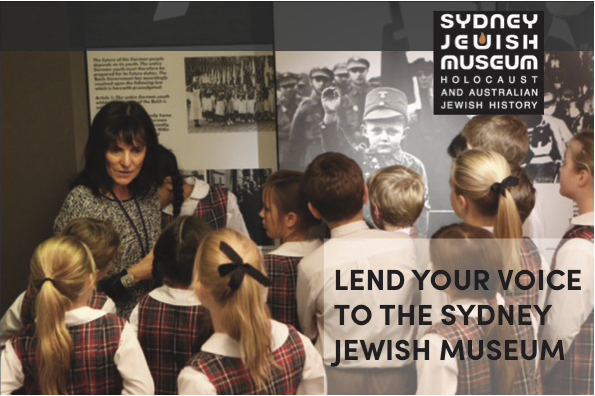
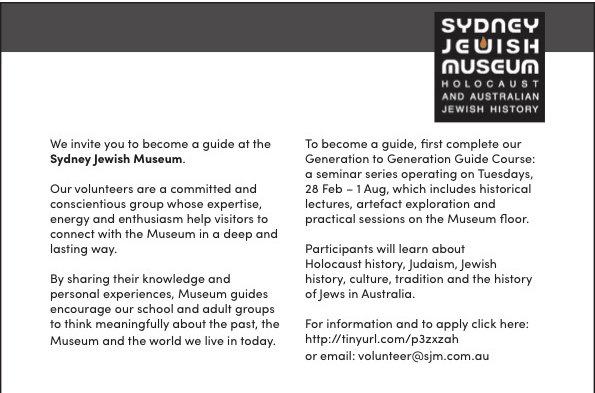
For more info: http://tinyurl.com/p3zxzah
email: volunteer@sjm.com.au

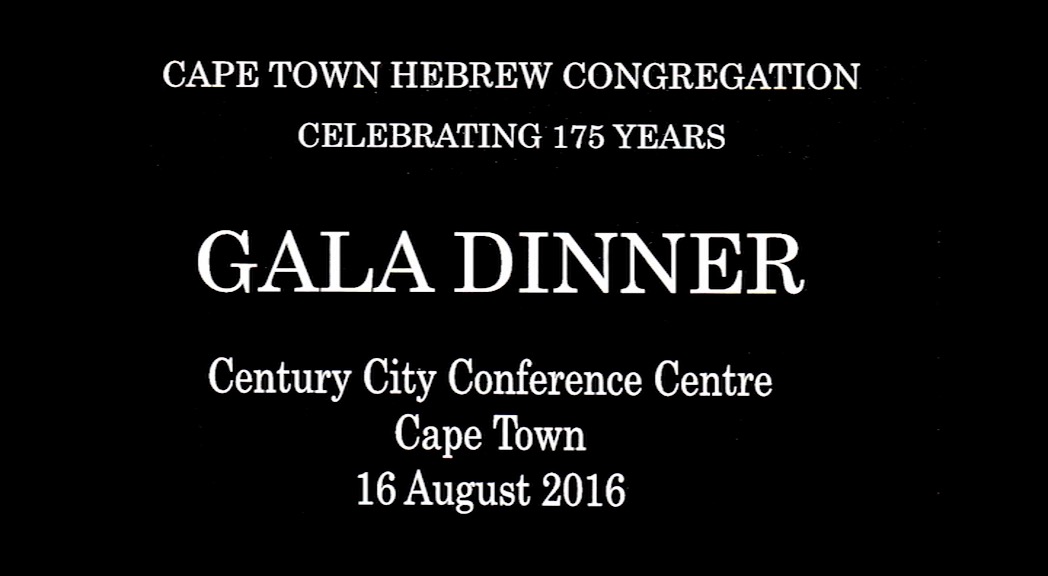
Emdon Video Productions filmed the evening’s celebrations which included:
the hilarious MC, Nik Rabinowitz, no relation;
the Gardens’ chairman Solly Berger, who is my cousin;
Chief Rabbi of the UK & the Commonwealth, Ephraim Mirvis;
Chief Rabbi of South Africa, Warren Goldstein;
Rabbi Yossi Goldman of Sydenham Highlands North Shul;
Rabbi Pinchus Feldman of Sydney;
Rabbi Osher & Sarah Feldman of the Gardens Shul;
and South African music icon, Johnny Clegg.
Thanks to Emdon Video Productions for allowing me to extract some footage from their video.

That’s Jill and me on the top right of the display. We were married at the Gardens Shul on 31 July 1977

Rabbi Osher & Sarah Feldman of the Gardens Shul

Here are selected clips from the video. This video clip is for South African Jews, especially Boerejode. It is hilarious.

My Other KehilaLinks

Some of the crowd

The three videos
Thursday 10 November 2016
Perth’s Jewish community kicked off its third annual Shabbat Project with a well attended Great Challah Bake at The Jewish Centre.
200 women attended.
Bianca Singer’s instructions, drosha and great Jewish music were heard via headphones on a silent disco – a world first!
A special challah cover was given as a home gift to all who attended.
Video: elirab.digital (me)
Music: Yaakov Shwekey
http://www.theshabbosproject.org
More videos to follow after Shabbat!
The Perth KehilaLink: