Lita Shtetl Visits – 2018

Siauliai with Sania Kerbilis & Antonina Gainulina

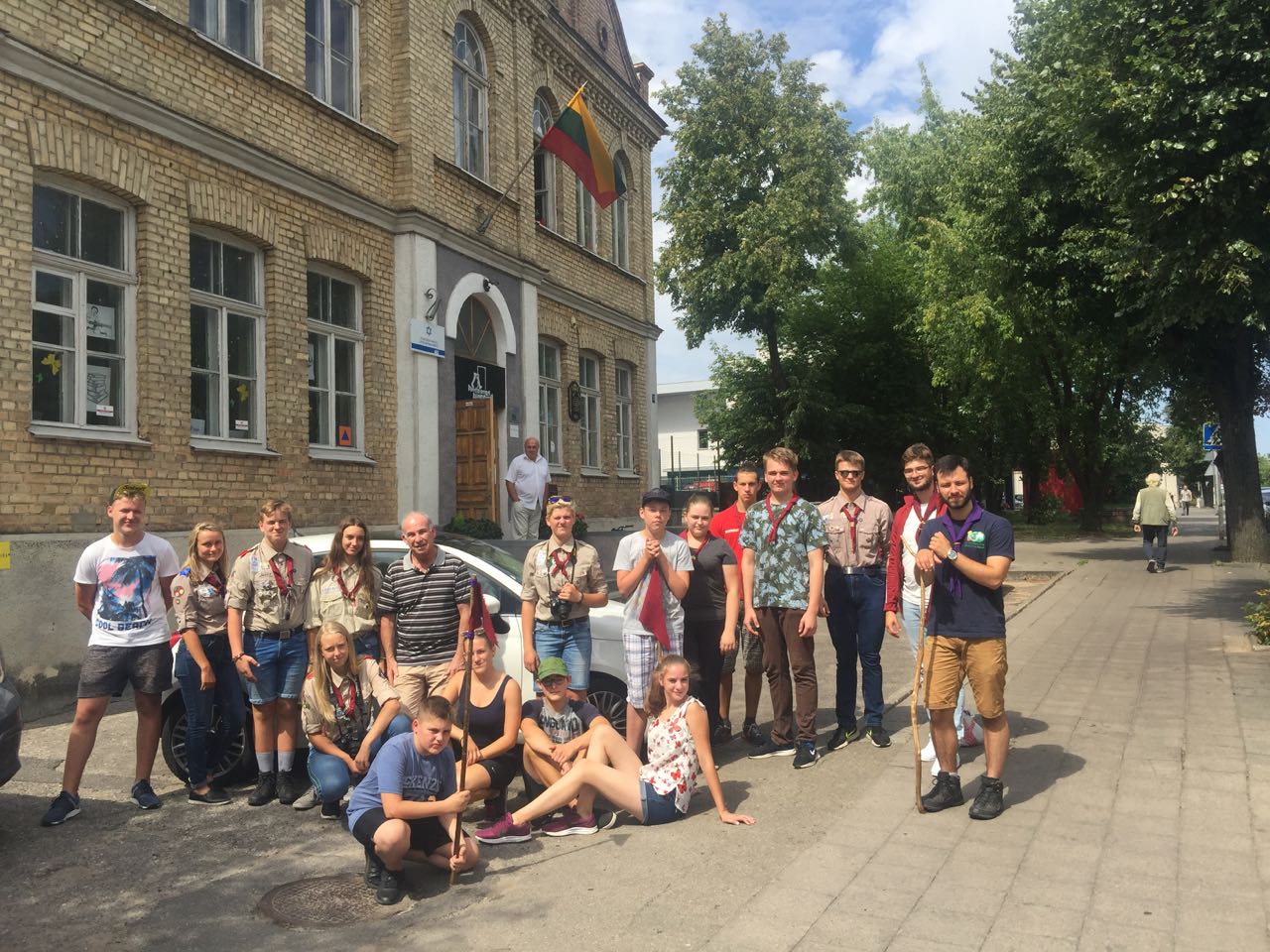
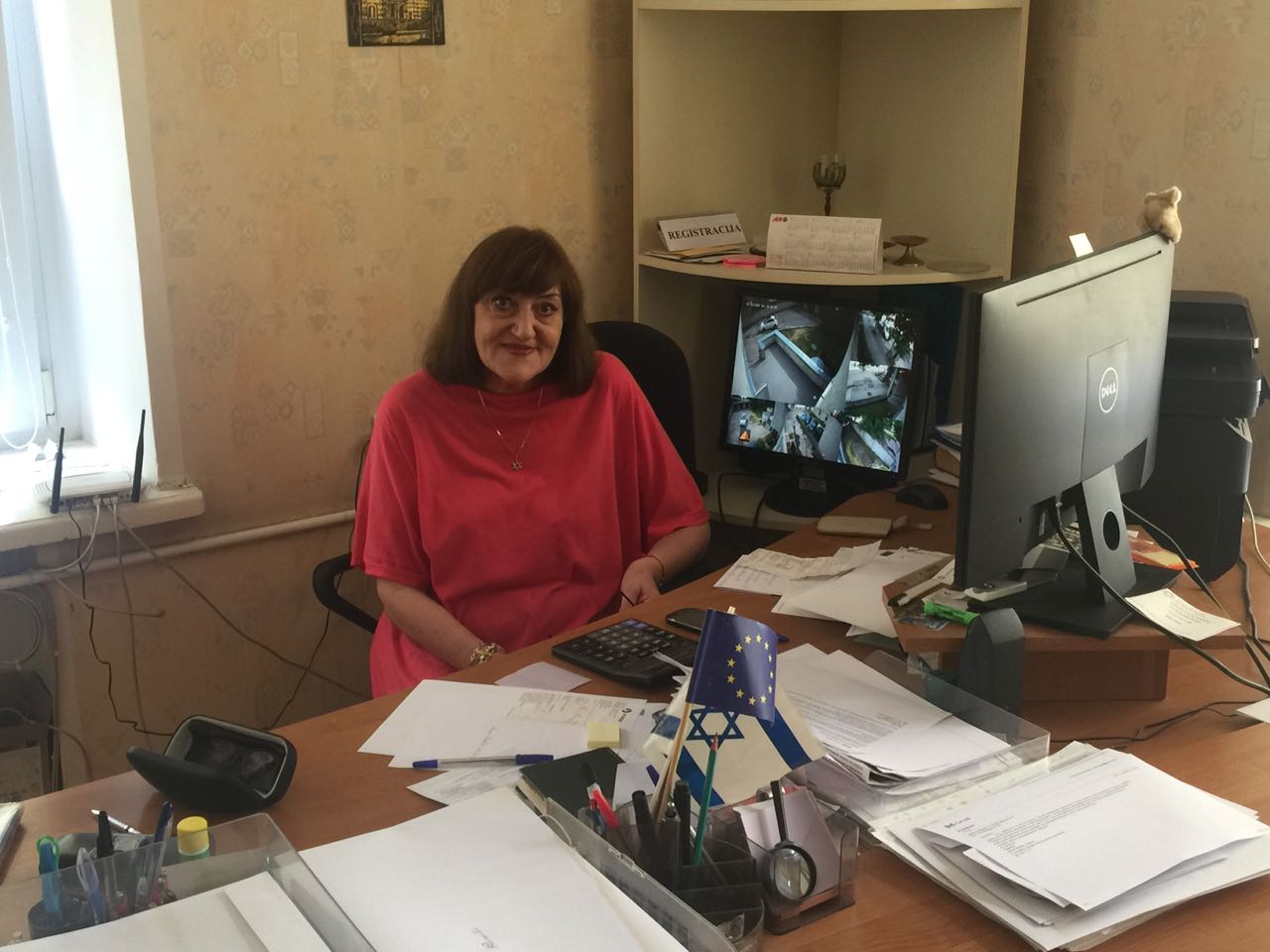
 Panevezys with Gennady Kofman

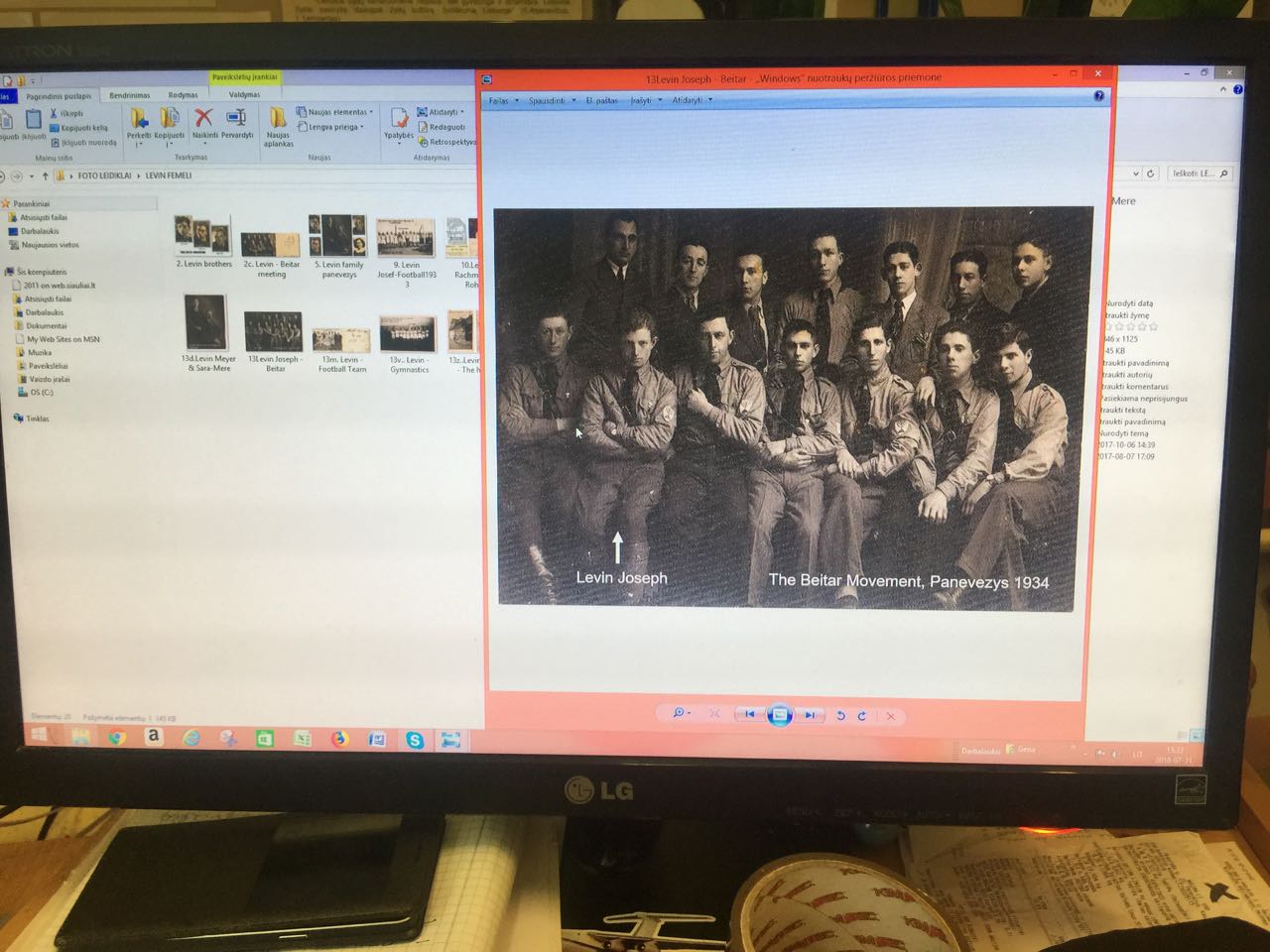
Master Yuter Family Tree

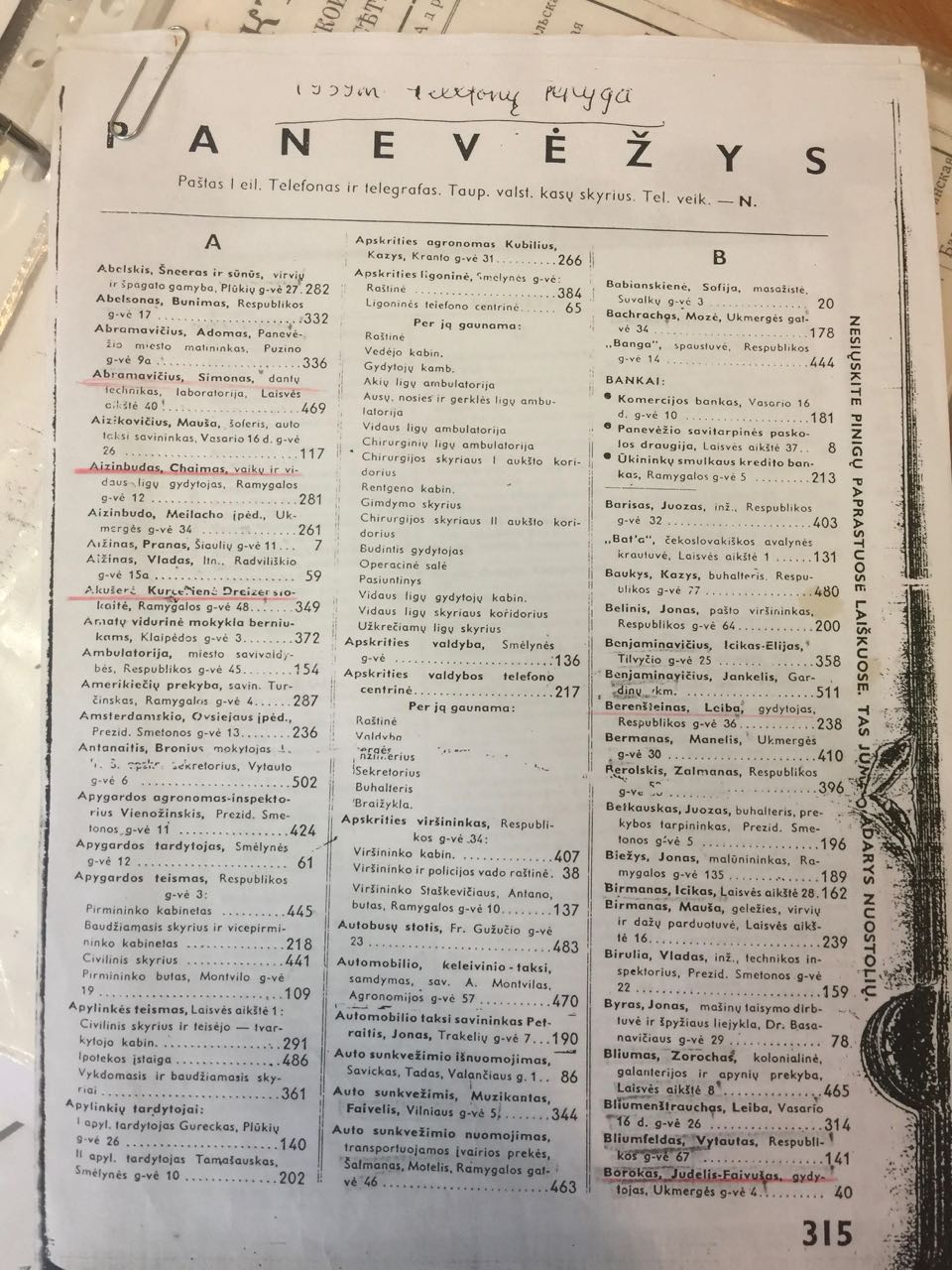
Panevezys Telephone Directory

Visitors Book

With Gennady Kofman &  a scout group

Panevezys Lithuania

Source: kehilalinks.jewishgen.org/panevezys/Home.html

Josvainiai with Laima Ardaviciene and Harry Gorfine (Australia)

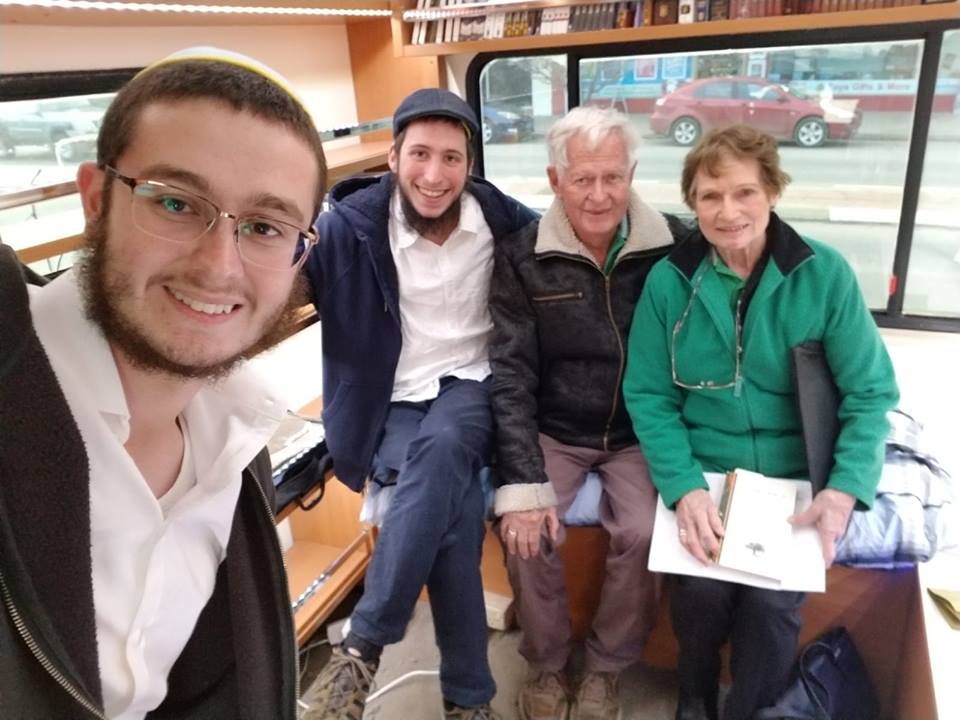
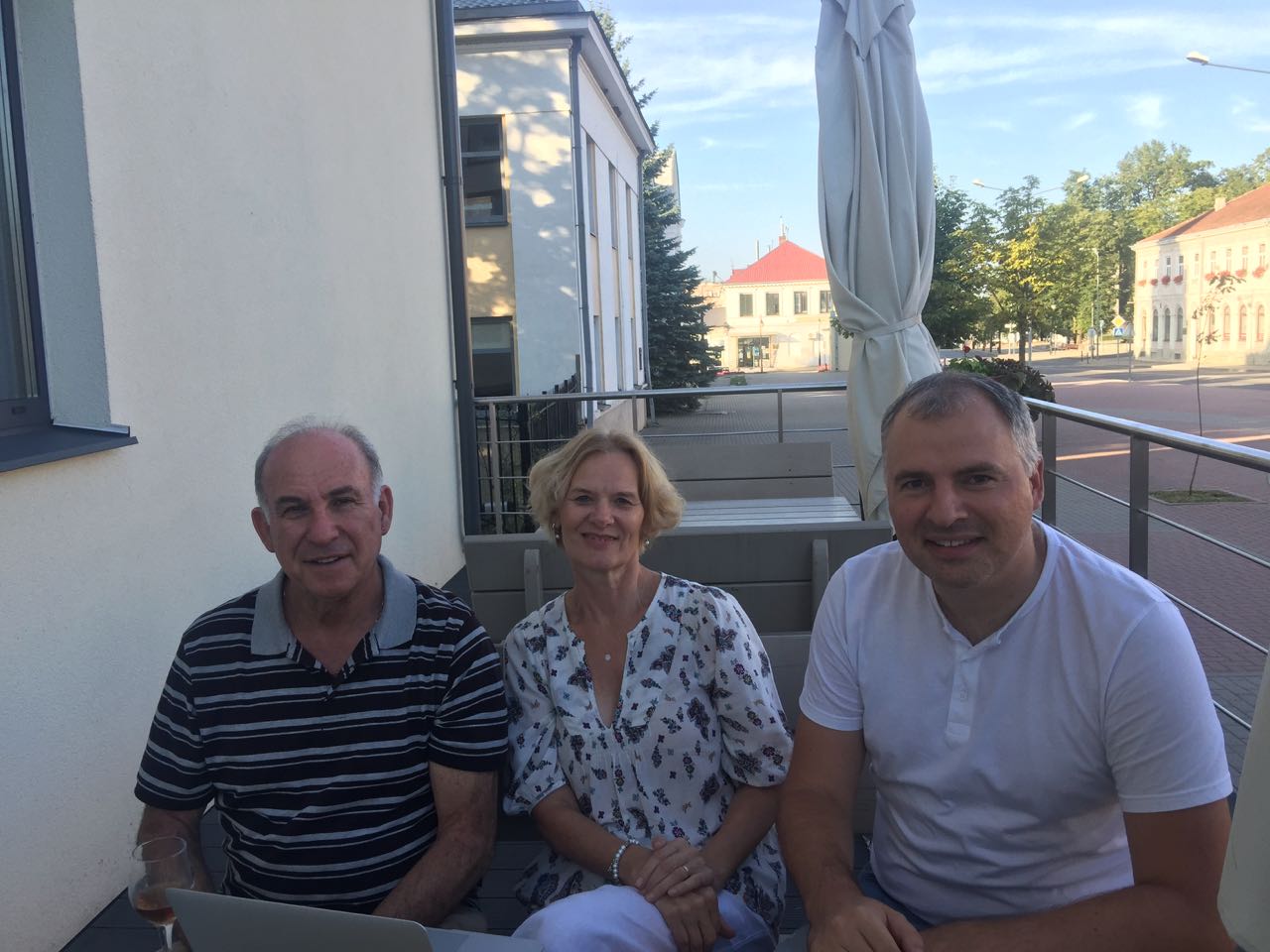
Ukmerge with Vida Pulkaunkiene & Arturas Taicos

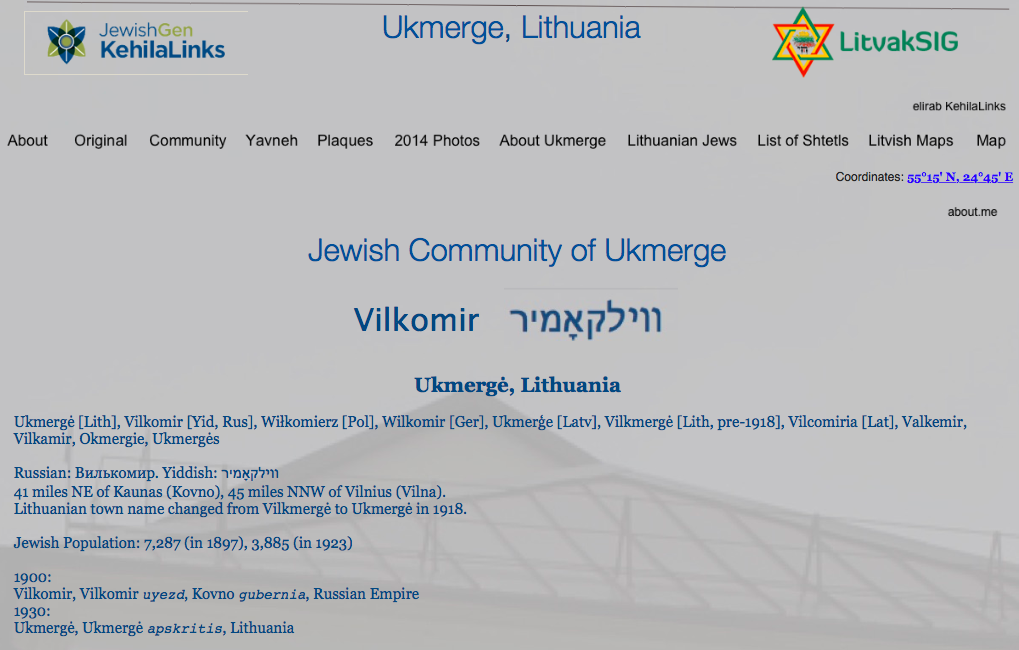
Ukmerge, Lithuania

Plateliai – 2018

With Eugenijus Bunka

Litvak Land – Plateliai, Lithuania

Jakovas Bunka Charity and Sponsorship Fund 

Jakovas Bunka Charity and Sponsorship Fund |

Dear friends, Jakovas Bunka Charity and Sponsorship fund has bought a piece of land about 1 km north from Plateliai. Close to the main road we created a

Source: jbfund.lt/our-plans/

Moze being restored

Before restoration!

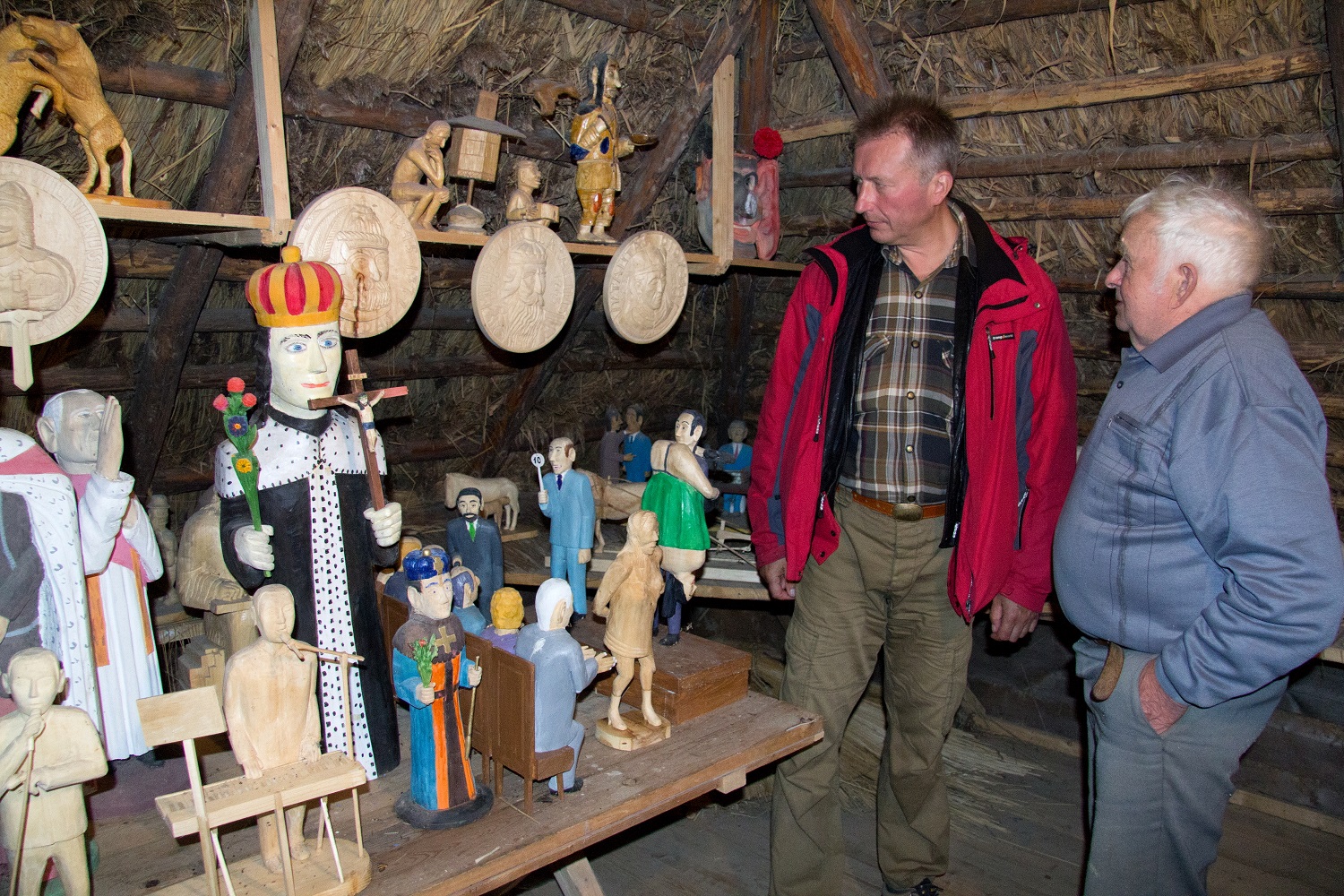
Kazys Striaupa wood carving
Kazys Striaupa wood carving – Žemaitijos parkas

Kazys Striaupa wood carving – Žemaitijos parkas

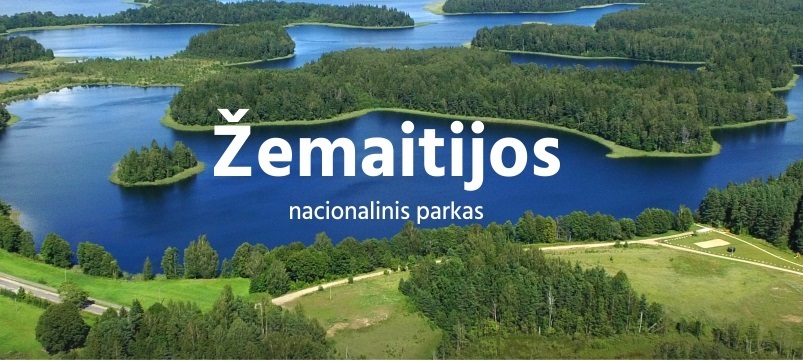
Kazys Striaupa wood carving – Žemaitijos nacionaliniame parke gausu lankytinų objektų, gamtos paminklų, ir pėsčiųjų takų, ekskursijų ir edukacinių užsiėmimų.

Source: zemaitijosnp.lt/en/veikla/products-of-trademark/medzio-meistro-k-striaupos-darbai/

Žemaitijos nacionalinis parkas

Žemaitijos nacionalinis parkas

Žemaitijos nacionalinis parkas – tai gausybė lankytinų objektų, išsidėsčiusių aplink Platelių ežerą, gamtos paminklai, kultūriniai draustiniai ir vertybės.

Source: zemaitijosnp.lt/en/

Plateliai KehilaLink, Lithuania

Source: kehilalinks.jewishgen.org/plateliai/Home.html

Kuliai 2018

Kuliai – images from Eugenijus Bunkas’ collection

Holocaust sites near the town

The town

Kuliai – Wikipedia

Kuliai – Wikipedia

Kuliai (Polish: Kule) is a town in Telšiai County, Lithuania. According to the 2011 census, the town has a population of 625 people.[1]

Source: en.wikipedia.org/wiki/Kuliai

Virtual Tour of Kuliai, Lithuania

Virtualus Kulių turas / Virtual Tour of Kuliai, Lithuania

Source: www.youtube.com/watch?v=owgE6ZgoHY4

Yosef Shlomo Kahaneman – Wikipedia

Yosef Shlomo Kahaneman – Wikipedia

Yosef Shlomo Kahaneman (1886–1969), יוסף שלמה כהנמן‬, was an Orthodox rabbi and rosh yeshiva of the Ponevezh Yeshiva. He was a renowned Torah and Talmudic scholar, a distinguished member of the Council of Torah Sages of Agudath Israel.

Source: en.wikipedia.org/wiki/Yosef_Shlomo_Kahaneman

Nosson Meir Wachtfogel – Wikipedia

Nosson Meir Wachtfogel – Wikipedia

Nosson Meir Wachtfogel (Hebrew: נתן מאיר וכטפוגל‎) (18 February 1910 in Kuliai, Lithuania – 21 November 1998 in Lakewood, New Jersey, USA), known as the Lakewood Mashgiach, was an Orthodox rabbi and long-time mashgiach ruchani (spiritual supervisor) of Beth Medrash Govoha (the Lakewood Yeshiva) in Lakewood, New Jersey. He was one of the primary builders of that yeshiva into a world-class institution,[1] enacting the goals and direction set forth by its founding rosh yeshiva, Rabbi Aharon Kotler. He also helped establish “branches” of the Lakewood Yeshiva in dozens of cities, and pioneered the community kollel concept with the opening of combination Torah learning/outreach centers in the United States and other countries. A revered mentor and guide to thousands of students over a career that spanned more than 50 years, he was a strong advocate and prime example of musar study and working on one’s spiritual self-development.

Source: en.wikipedia.org/wiki/Nosson_Meir_Wachtfogel

Keidan Yizkor Book

From David Solly Sandler

KEIDAN MEMORIAL (YIZKOR) BOOK

There are three Yizkor books originating in South Africa. Two Yizkor books, Keidan and Rakishok, commemorate Lithuanian towns while the third remembers Chelm in Poland.  In my humble opinion the articles, stories and memories in the Keidan and Rakishokbooks, more than any other books I have read, tells us about Jewish life in Lithuania as it approached its destruction.

The Keidan Memorial (Yizkor) Book (see full details below) has now been translated into English. Bella Golubchick translated many of the articles into English and all the translations were reviewed and edited by Aryeh Leonard Shcherbakov and Andrew Cassel of the Keidan Associations of Israel and the US. I compiled and published the book.

This is now the second yizkor book originating in South Africa that has been translated into English. The first was the Rakishok Yizkor book published in September 2017 where I assisted with coordinating the translations for Jewish Gen. the publisher.

For more information or to obtain a book please contact

David Solly Sandler. sedsand@iinet.net.au


Keidan Memorial (Yizkor) Book 

The Keidan Memorial (Yizkor) Book, was first compiled in 1977 mainly in Hebrew by the Keidan Associations and Keidaners living in Israel, The US and South Africa to commemorate the 500 years of Jewish life in Keidan that was abruptly ended in July 1941 by the Germans helped enthusiastically by the local Lithuanians.

The book offers a multi-faceted historical view of Jewish life in Keidan – its 500-year history, its religious, educational, social and cultural institutions, youth organizations, portraits of its prominent people, memoirs of witnesses and survivors, the stories of exiles and wars and the Holocaust.

The publication of this Memorial Book in 1977 was the most important contribution of the Keinaner Associations to future generations of Keidaners. Originally released mostly in Hebrew (with smaller Yiddish and English sections), it has now been fully translated into English.

At first glance this book is like all the other hundreds of books published since the end of World War II in memory of the Jewish shtetl in Eastern Europe that had been and is no more. Keidan itself was one of those thousands of towns in the old Pale. Small towns with all their lights and shadows, their geographical and human landscape, their spiritual climate, the Jewish people who worked and toiled all week like busy ants in order to bring food to the family. With its odd and strange figures, whose daily life and golden dreams of the redemption of the nation and salvation of the world. In short, a shtetl, like all shtetlech.

The birth pangs of this book were hard and prolonged. Yet it is natural, and it doesn’t lessen its importance, if we shall consider that the whole book is a product of the common effort of the town’s people who invested in it the most important element – love. Actually, no scientific research works have been included in this book, but memories which sometimes reach the height of true art, and – what is even more important – they distinguish themselves with a clean and refined truth, as it was seen with the eyes of the writers. They described all they had seen in a quiet, restrained way, without any trimmings, yet, for all that these memories speak to the reader with an unusual strength of expression.

One of the main goals of the book is the commemoration of the period of the Holocaust. Very few people have remained from that terrible period. Very few of those who had seen the terror from close up saved themselves by a miracle, and it is their duty to tell about their personal experiences. There are others who succeeded to escape from the Holocaust and to spend the war in wanderings in distant places or in fighting the cruel enemy. Each one told, in his own language, the facts as he knew them. More than once the book contains different versions of the same events. This fact, which can happen in historical scientific works too, will no doubt be forgiven in a book which was written not by historians, but by men who drew their descriptions not from documents in an ivory tower of a library, but from their own memories, that were tortured in the ghettos, concentration camps and forests. This is however the naked truth, rough and not polished, a truth solid like rock from which eternal monuments are shaped.

Still, this book is more than an eternal monument. It is an effort to return to the shtetl in its happy moments as well as in its last hours, to be together with the father and the mother, with the brothers and sisters, at the Shabbat table as well as at the mass grave on the fateful day, to isolate oneself within Keidan, one of the precious stones in the lost crown whose name was Eastern European Jewry.

There is no relief in this book for the wounded soul of a son of Keidan, but there is in it a eulogy and a kaddish which was not said on the grave of the martyrs, and which will be said now whenever we shall take this book in our hands.

For more information or to obtain a book please contact

David Solly Sandler. sedsand@iinet.net.au

Keidan Memorial (Yizkor) Book – the cover
Av Harachamim: Remembering Our Shtetls and Martyrs

Noranda CHABAD, Perth, Western Australia

July 2018

After the torah reading on shabbat, we recite Av Harachamim

Av HaRachamim

Av HaRachamim – Wikipedia

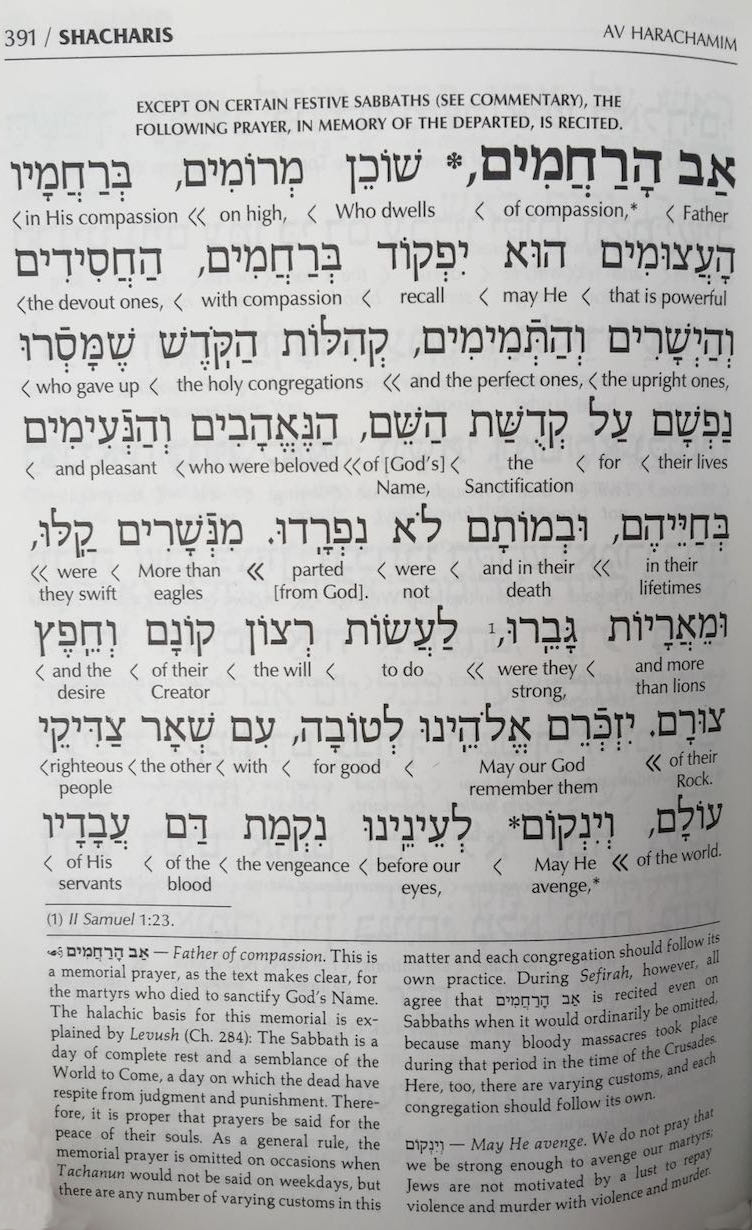
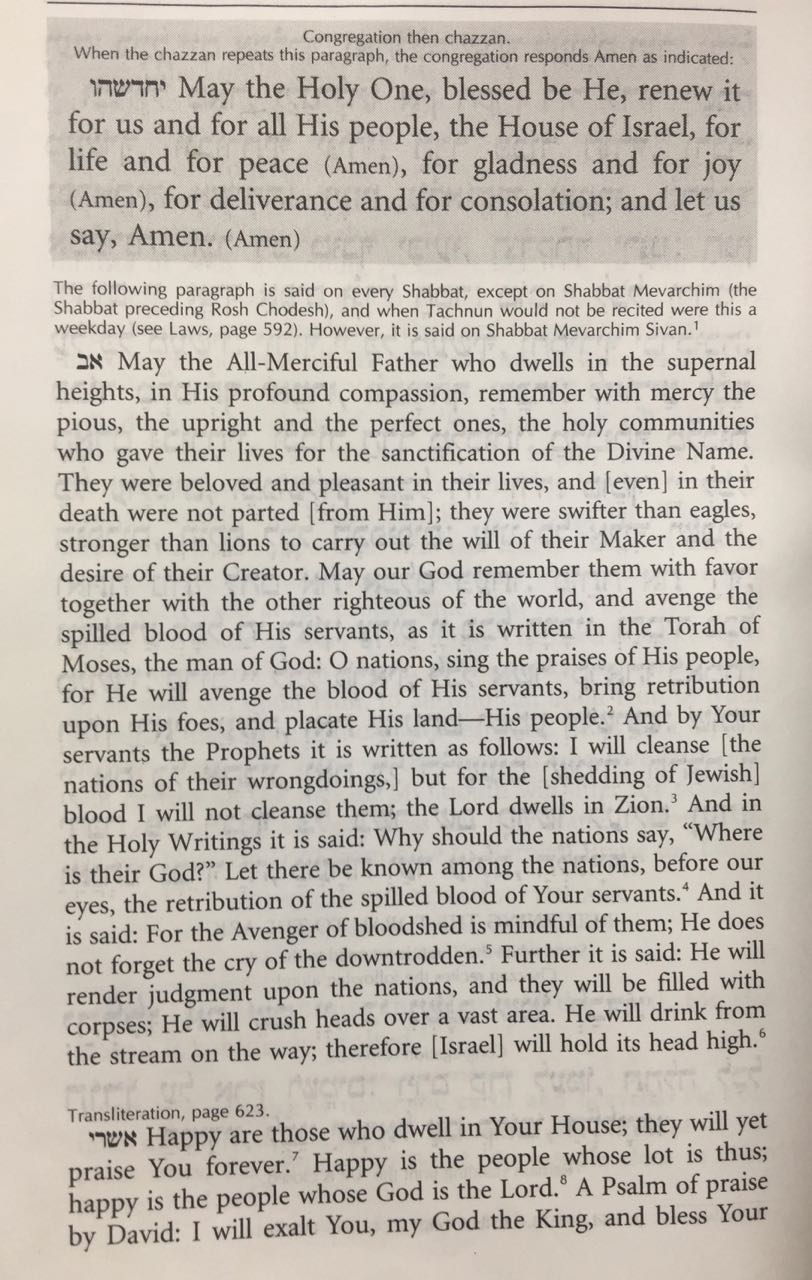
Av Harachamim or Abh Haraḥamim (אב הרחמים‬ “Father [of] mercy” or “Merciful Father”) is a Jewish memorial prayer which was written in the late eleventh or early twelfth century, after the destruction of the Ashkenazi communities around the Rhine River by Christian crusaders during the First Crusade.[1] First appearing in prayer books in 1290, it is printed in every Orthodox siddur in the European traditions of Nusach Sefarad and Nusach Ashkenaz and recited as part of the weekly Shabbat services, or in some communities on the Shabbat before Shavuot and Tisha B’Av.[2][3]

Source: en.wikipedia.org/wiki/Av_HaRachamim

in the ArtScroll 

ArtScroll – Wikipedia

Source: en.wikipedia.org/wiki/ArtScroll

in Tehillat Hashem

Tehillat Hashem – Wikipedia

Tehillat Hashem (תְּהִלַּת ה’‬, “praise of God” in Hebrew) is the name of a prayer-book (known as a siddur in Hebrew) used for Jewish services in synagogues and privately by Hasidic Jews, specifically in the Chabad-Lubavitch community. The name of the siddur is taken from Psalm 145, verse 21, “Praise of God shall my mouth speak, and all flesh shall bless His holy Name forever and ever.”

Source: en.wikipedia.org/wiki/Tehillat_Hashem

A noteworthy custom fitting the mood of the Sefira period deals with the prayer Av Harachamim. Av Harachamim, recited on Shabbat after the Torah reading was written in response to the Crusades. In it we memorialize the righteous martyrs and pray for retribution for their spilled blood. Av Harachamim is generally not recited on Shabbatot which have an added celebratory nature – such as Shabbat Mevarchim (the Shabbat in which we bless the new month). In many congregations during the Shabbatot of Sefirat Haomer, Av Harachamim is recited even on the Shabbatot in which we bless Iyar and Sivan. The Mishna Brura (284,18) adds, that even if there is a Brit Milah that Shabbat, giving us a second reason why Av Harachamim should not be recited, Av Harachamim is still said, since this was the season of the tragedies.

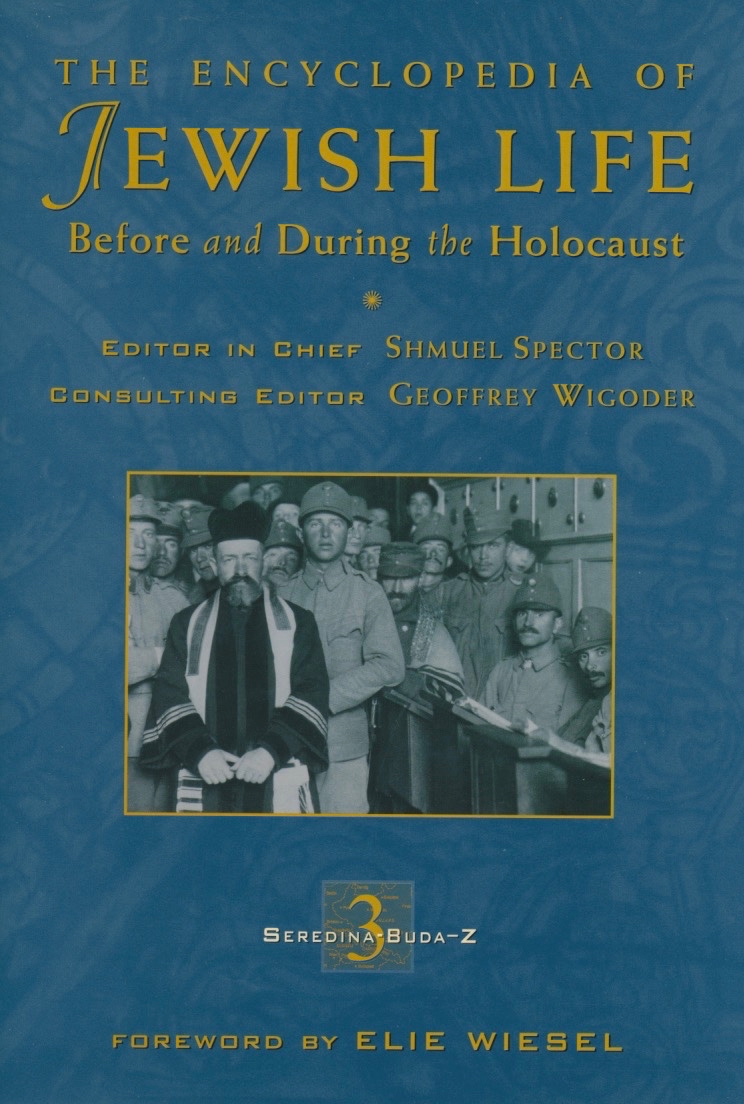
Before reading the Av Harachamim prayer,  we select one of the 6500 shtetls that existed before and during the Holocaust from this three volume set:

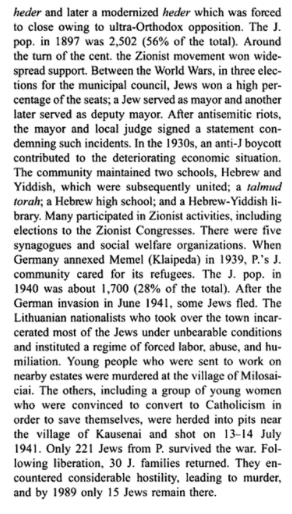
We then share the story of the particular shtetl to illustrate what we lost in Holocaust!

This week – Plunge / Plungyan


The encyclopedia of Jewish life before and during the Holocaust / editor in chief, Shmuel Spector ; consulting editor, Geoffrey Wigoder ; foreword by Elie Wiesel – Collections Search – United States Holocaust Memorial Museum

The encyclopedia of Jewish life before and during the Holocaust / editor in chief, Shmuel Spector ; consulting editor, Geoffrey Wigoder ; foreword by Elie Wiesel – Collections Search – United States Holocaust Memorial Museum

Source: collections.ushmm.org/search/catalog/bib63061

With thanks to Rabbi Marcus Solomon of Dianella Mizrachi Shule for sharing this idea with me.

Thanks to Michelle Urban and the Western Australian JHGS for allowing me to use these books from their excellent library housed at Noranda CHABAD.

For more on Plunge visit the KehilaLink:

Plunge Saule Gymnazyum Tolerance Centre

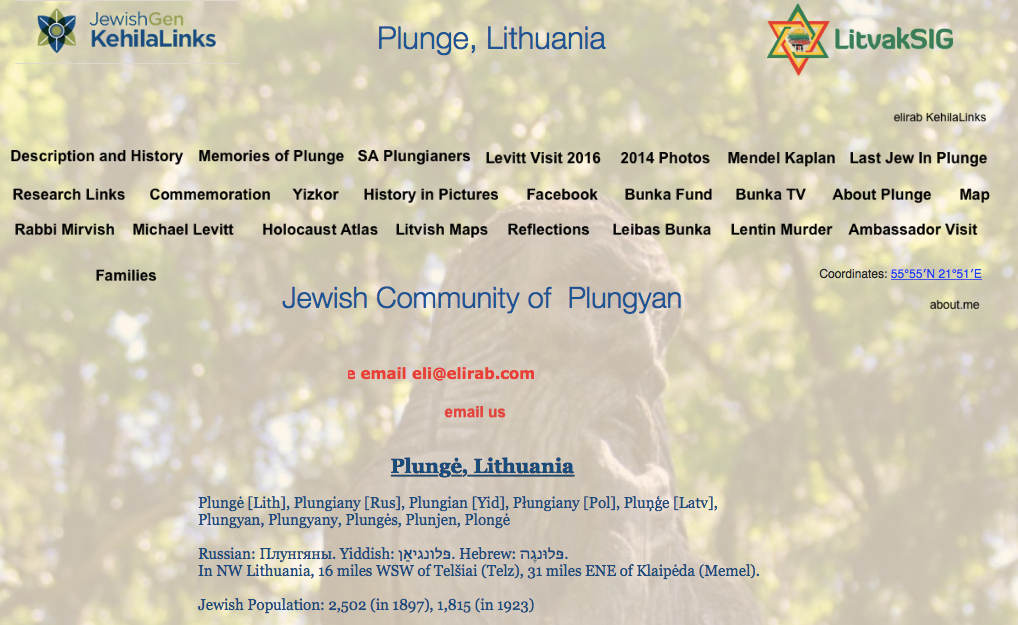
Plungyan KehilaLInk

Home

Plunge, Lithuania

Source: kehilalinks.jewishgen.org/plunge/Home.html

Plunge Saule Gymnazyum
With Gintautas Rimeikis, Yolanta Mazhukne and Danutė Serapinienė 

Tolerance Centre
The Ronald Harwood International Art Competition

Ronald Harwood 

Source: en.wikipedia.org/wiki/Ronald_Harwood

Sea Point High School 

Sea Point High School – Wikipedia

Sea Point High School, formerly Sea Point Boys High School, is a co-educational public high school in Main Road, Sea Point, Cape Town, South Africa. The school was established on 21 April 1884. In 1925, the senior grades were separated from the junior grades. In 1989, the school merged with Ellerslie Girls’ High School after becoming co-educational.

Sea Point Boys connected to Plunyan

  • Sir Ronald Harwood (Horwitz)
  • Sir Antony Sher
  • Abel Levitt
  • Eli Rabinowitz (KehilaLink manager)

Source: en.wikipedia.org/wiki/Sea_Point_High_School

The Last Jew in Plunge

Last Jew

Source: kehilalinks.jewishgen.org/plunge/Last_Jew.html


Gintautas Rimeikis and Yolanta Mazhukne


Yolanta Mazhukne, Gintautas Rimeikis and Danutė Serapinienė 


Building of Lost Shtetl Museum begins in Lithuania

SA Jewish Report

 
The construction of a new museum in Lithuania to commemorate Jewish life lost in the Holocaust began last week, after a ceremony attended by Lithuania’s top officials – including the country’s prime minister, Speaker of Parliament and foreign minister, as well as senior diplomats and Jewish leaders.
by TALI FEINBERG | Jul 05, 2018
 

Designed by the same Finnish company which designed the award-winning POLIN Museum of the History of Polish Jews in Warsaw, the state-of-the-art museum, located in Šeduva – 175km north-west of Vilnius – will open in 2020.

The museum complex will include a sprawling Jewish cemetery, which was completely restored and opened in 2015, monuments at three separate sites of Holocaust mass executions and burials, and a symbolic sculpture in the middle of the town.

“It will tell the story of the life of what was once the largest European Litvak Jewish population living in shtetls,” according to the museum’s website. “Lifestyle, customs, religion and the social, professional and family life of the Jews of Šeduva will serve as the centrepiece of the museum exhibition.

“Museum visitors will be taught the tragedy of Šeduva’s Jewish history, which ended in three pits near the shtetl in the early days of World War II, concluding five centuries of the history of the Jews of Šeduva.”

Ex-South African educator Eli Rabinowitz, who now lives in Perth, attended the ceremony and spoke on behalf of the Litvak Diaspora, especially South African Jews. “Many Litvaks migrated to South Africa, aptly named the ‘goldene medina’,” he said. “Jewish life in the small South African country towns often mirrored that of the Litvak shtetl. We often heard stories from ‘der heim’, describing the rich Jewish cultural life throughout Lithuania, which had existed over many centuries.

“Those Litvaks who left Lithuania before the Holocaust were indeed lucky. More than 95% of the Lithuanian Jews were murdered in the Holocaust, a greater percentage than any other country,” said Rabinowitz.

“In the future, when we visit this museum, we will be able to access the past with a better understanding of history. We will view the collection of objects and artifacts, giving us insight into how our ancestors lived their cultural, religious, work and home lives. We will learn about their values from their daily lives and from the items they kept and used.

“The museum will showcase the richness and the importance of Litvak shtetl life of years gone by. It will also reflect on the Jewish world that was destroyed by the Holocaust.

“The museum will educate Lithuanians and visitors to Lithuania, and so provide an opportunity to learn from our history and strive for a better world.”

Rabinowitz said he thinks the museum is being built now – before, as politicians and historians have realised, this past is lost to history.

He emphasises that the location is important, as “our Litvak heritage stems from the shtetls in this geographical region in Lithuania – not the bigger cities of Vilnius or Kaunas”.

Lithuania’s President Dalia Grybauskaitė said the laying of the cornerstone “heralds the reconstruction of an important part of Lithuanian history, closely interlinked with the history of Lithuania’s large Jewish community and its tragic fate”.

She added: “The Lost Shtetl Museum will bring back from oblivion the names and faces of many families, friends and neighbours, as well as their customs and traditions.”

Said Lithuania’s Foreign Minister Linas Linkevičius: “This unique museum will capture not only the memory of the Šeduva but also the Jewish communities of Lithuania as a whole.”

Source: www.sajr.co.za/news-and-articles/2018/07/05/building-of-lost-shtetl-museum-begins-in-lithuania


South African Landsmanshaften

From David Solly Sandler:

I am appealing for information, any publications or articles on SOUTH AFRICAN LANDSMANSHAFTEN  (ASSOCIATIONS)

(AKA  Sick and Benefit Societies/ Mutual Aid Societies)

In South Africa in the early 1900s in there were many Mutual Aid Societies/Associations/Landsmanshaften from mainly Lithuanian towns including: Aniksht, Birzh, Chelm ( Poland), Dvinsk (Latvia), Keidan, Kelme, Kovno, Krakinowo, Kroze, Kupishok, Kurland (Latvia), Lutzin, Malat, Minsk (Belarus), Ponevez, Poswohl, Plungyan, Rakishok, Riga (Latvia), Shavlan, Shavl, Shater, Tels, Utiyan, Vilna and Zhagar.

To help one another and the new immigrants arriving with virtually nothing, Landsleit (people from the same towns or districts) banded together to form Landsmanshaften (Mutual Aid Societies) that helped the sick and poor, buried the dead and provided interest free loans to help members start businesses. They also provided a place where the community of mainly men ‘greeners’ could gather and socialise.

My next compilation PG will be SOUTH AFRICAN LANDSMANSHAFTEN (Jewish Sick and Benefit Societies / Associations of the early 20th century).

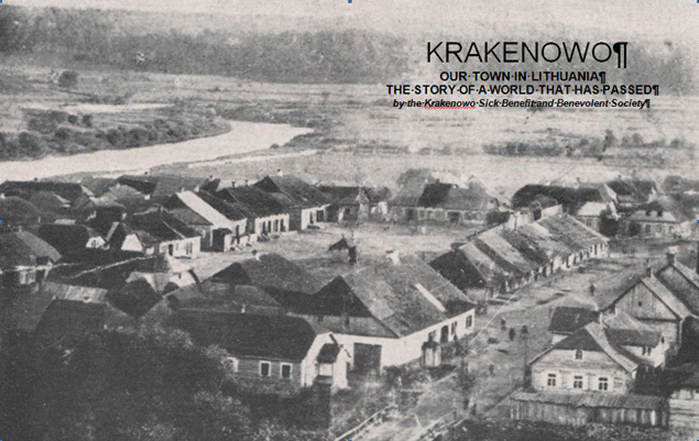
While I have published booklets on Keidan and Krakenowo and have booklets on Ponevez and Malat, I am appealing for information and any other publications of these Landsleit or any others from South Africa.  Also, I am seeking publications of any Jewish Communities in Johannesburg.

If anyone can help, please contact me: David Solly Sandler sedsand@iinet.net.au

With David Solly Sandler


Our Special Connection With The Stropkover Rebbe
Noranda CHABAD, Perth, Western Australia, 30 June 2018

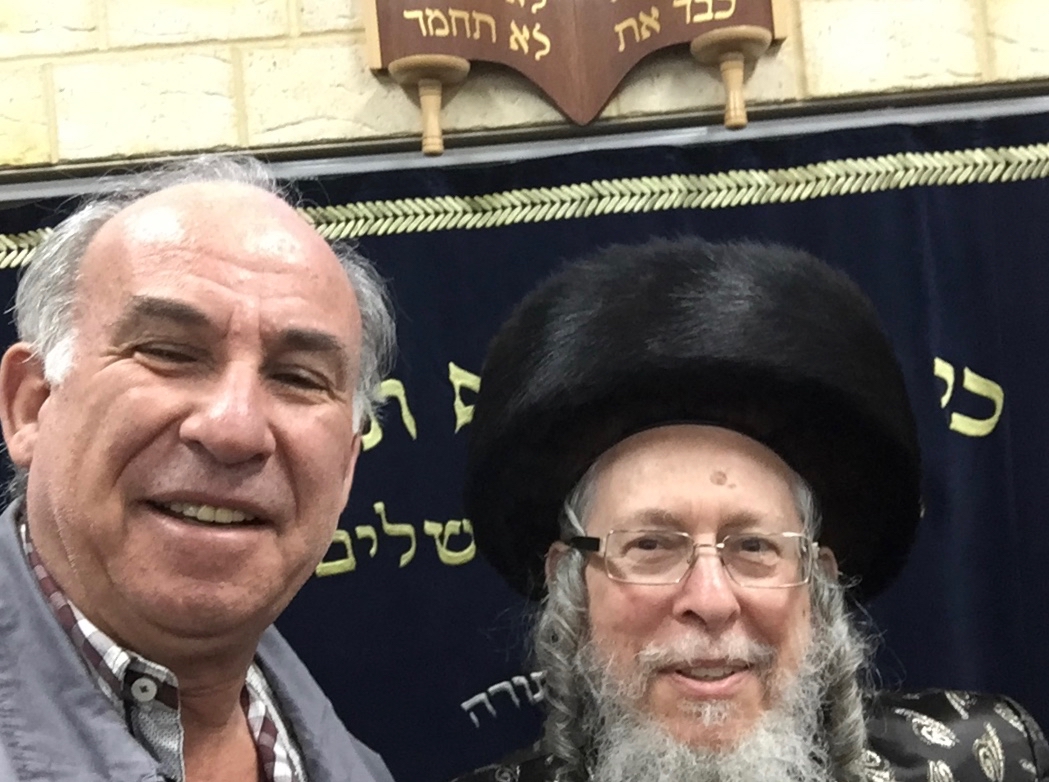
Avraham Shalom Halberstam spends Shabbat Balak with us. I had discovered on his previous visit to Perth in July 2016 that we were 8th cousins. Researching using Geni.com, I discovered that we both are members of the Katzenellenbogen Rabbinic Family Tree.

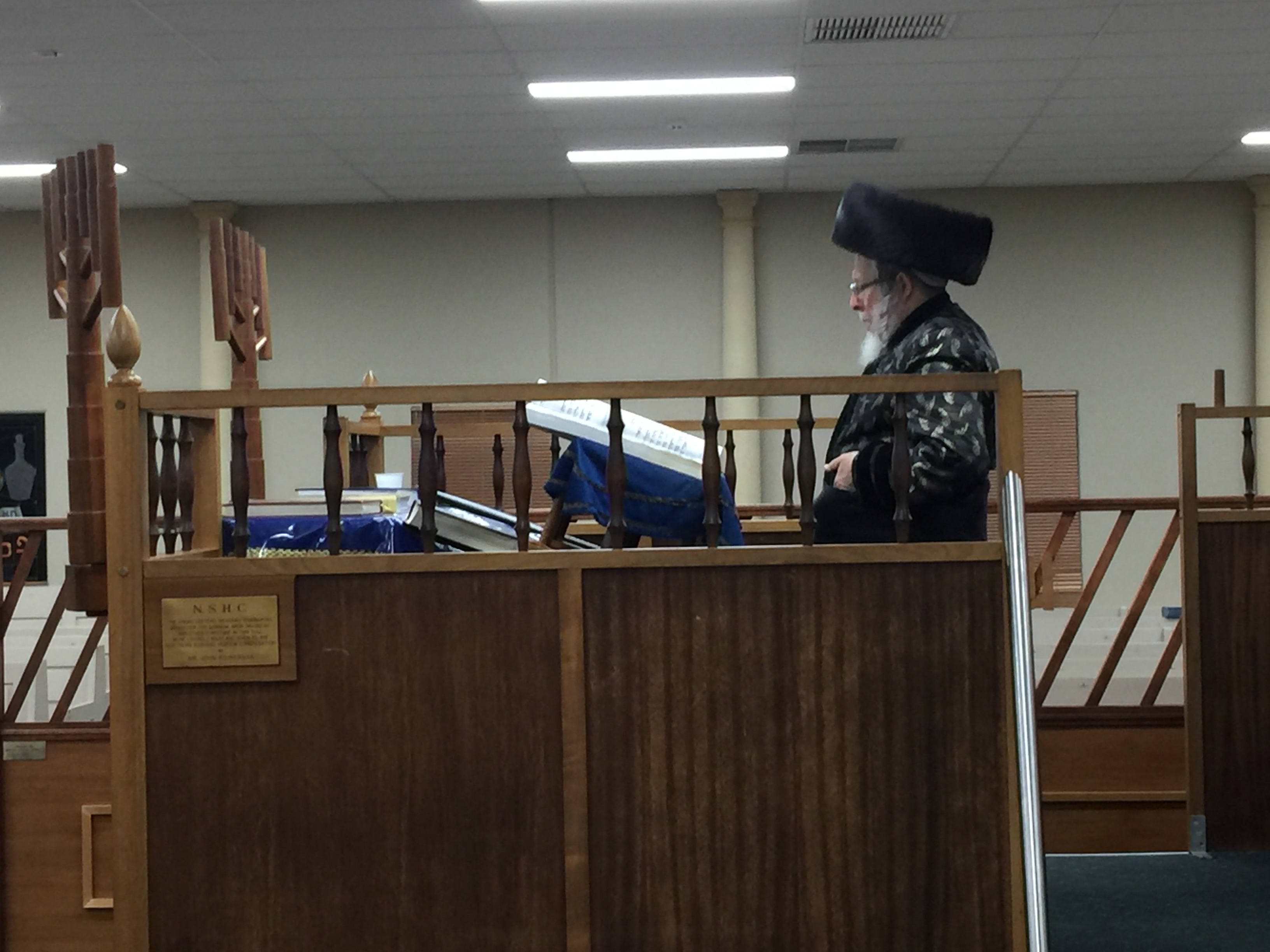
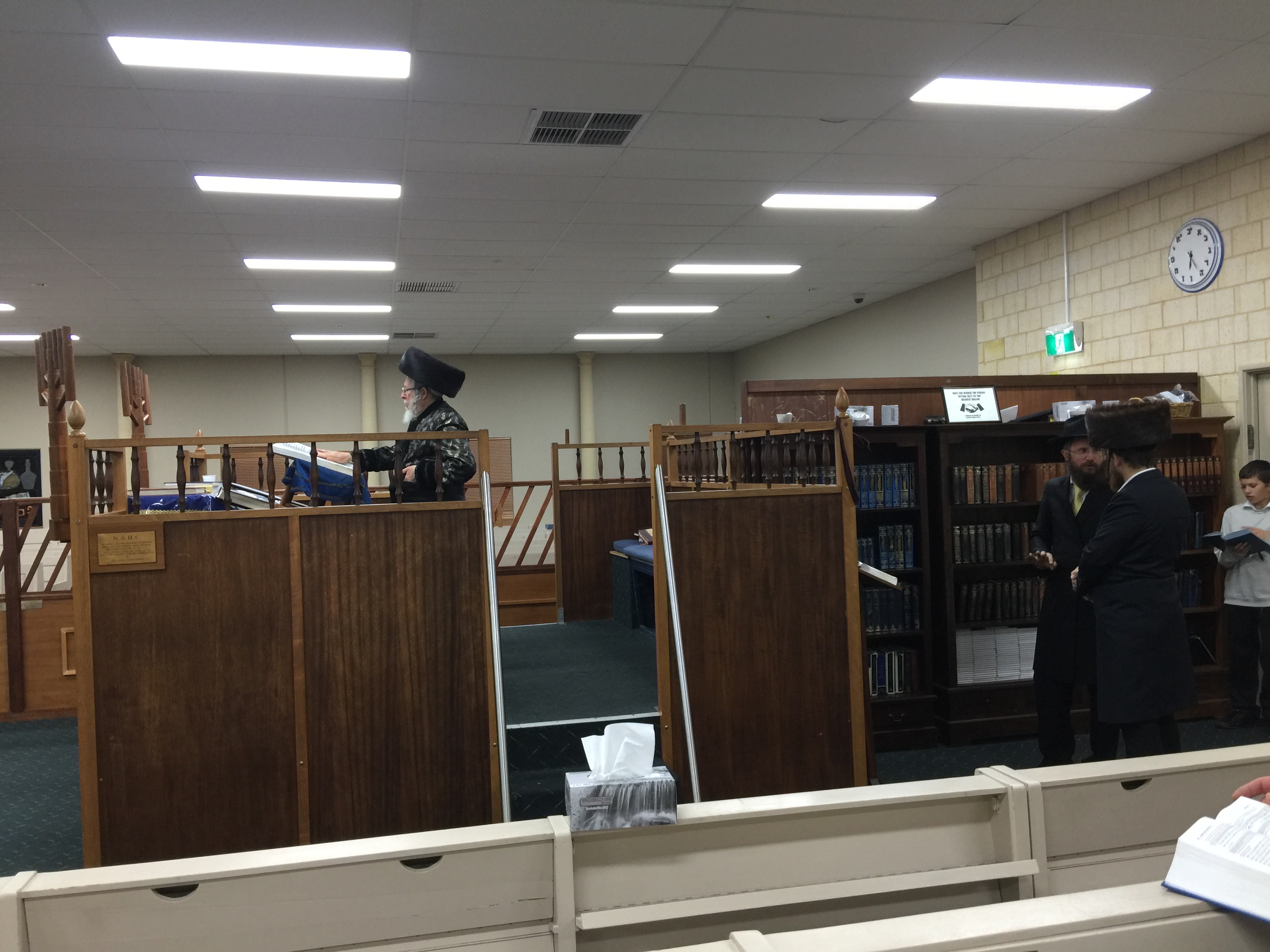
Earlier the day on Shabbat,  we did something during Shacharit that brought the Rebbe and our community together as never before – read below.
Please note: no photos were taken during shabbat!

My 8th Cousin  – The Stropkover Rebbe – The Admor of Stropkov

Stropkover-3

Davening Maariv
Havdalah at Noranda CHABAD

Video

Havdalah at Noranda CHABAD

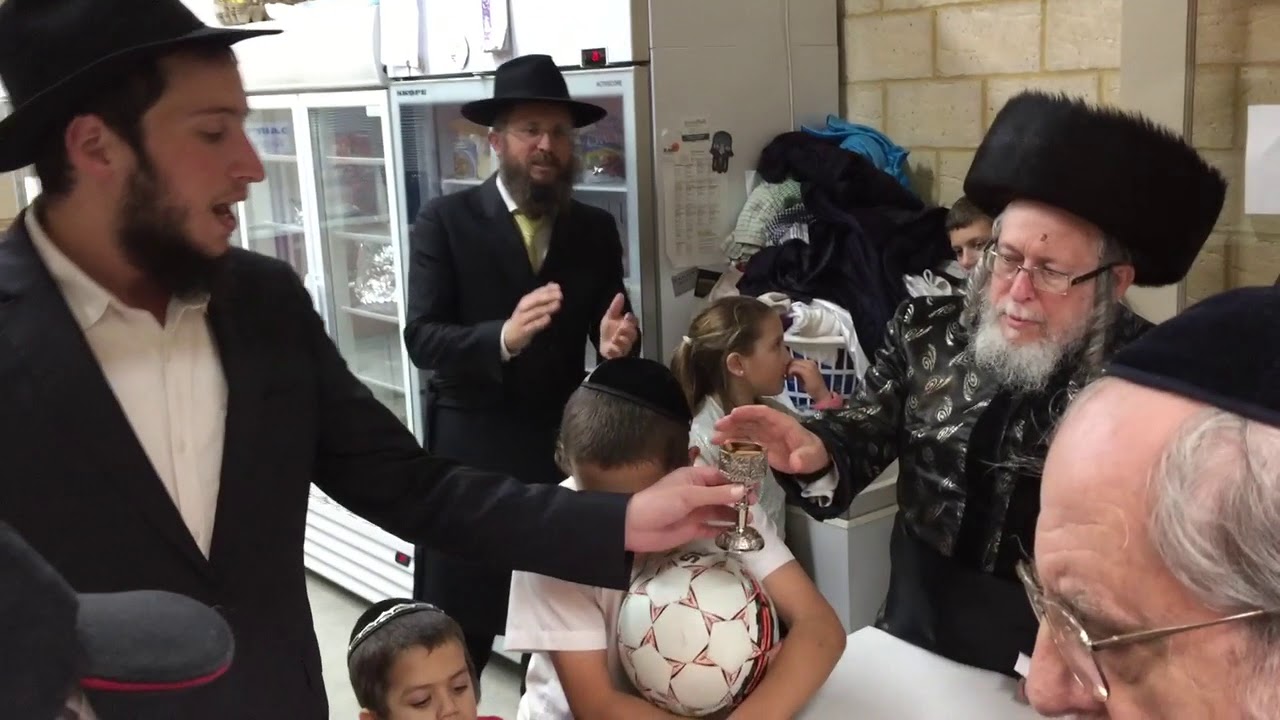
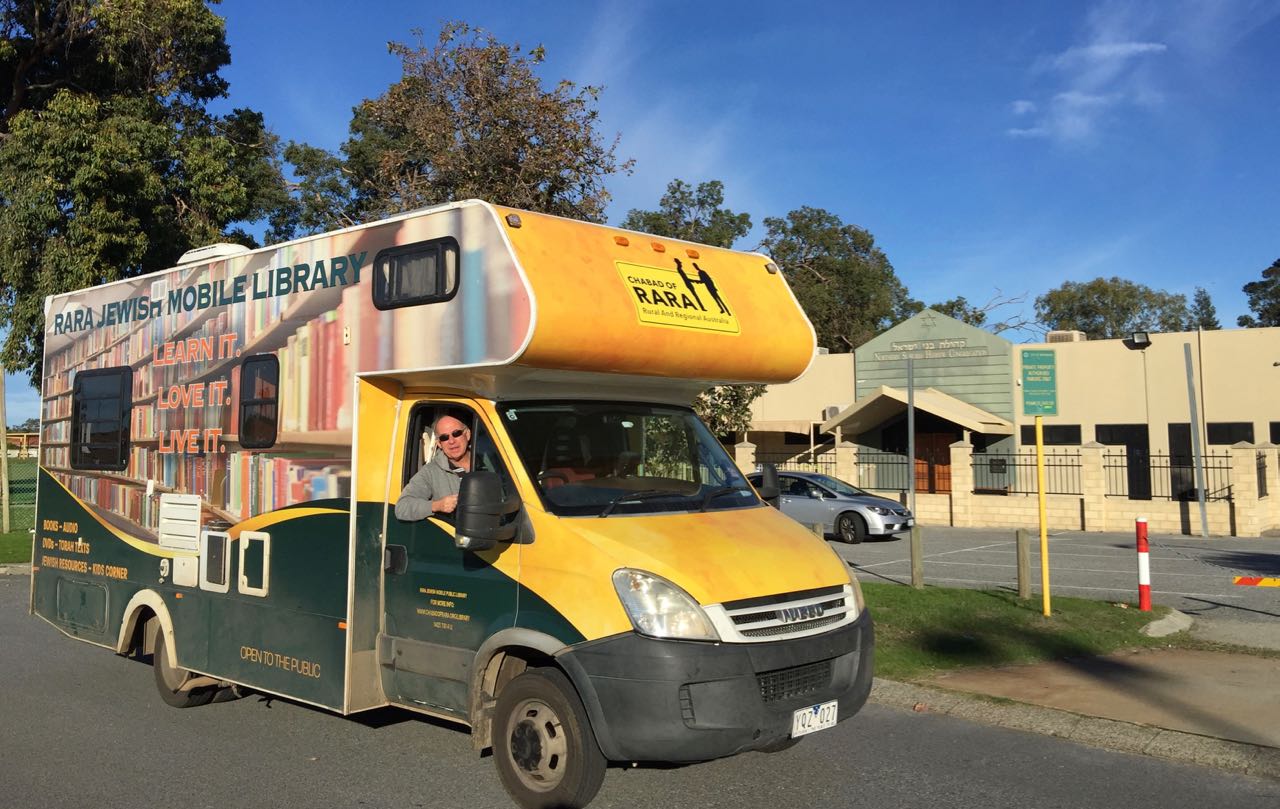
Mendy of RARA and the Stropkover Rebbe.  Other guests were Moishe, the Rebbe’s assistant, and Moishe from RARA

Source: youtu.be/wzTfMchMCCs

Some special photos for our albums
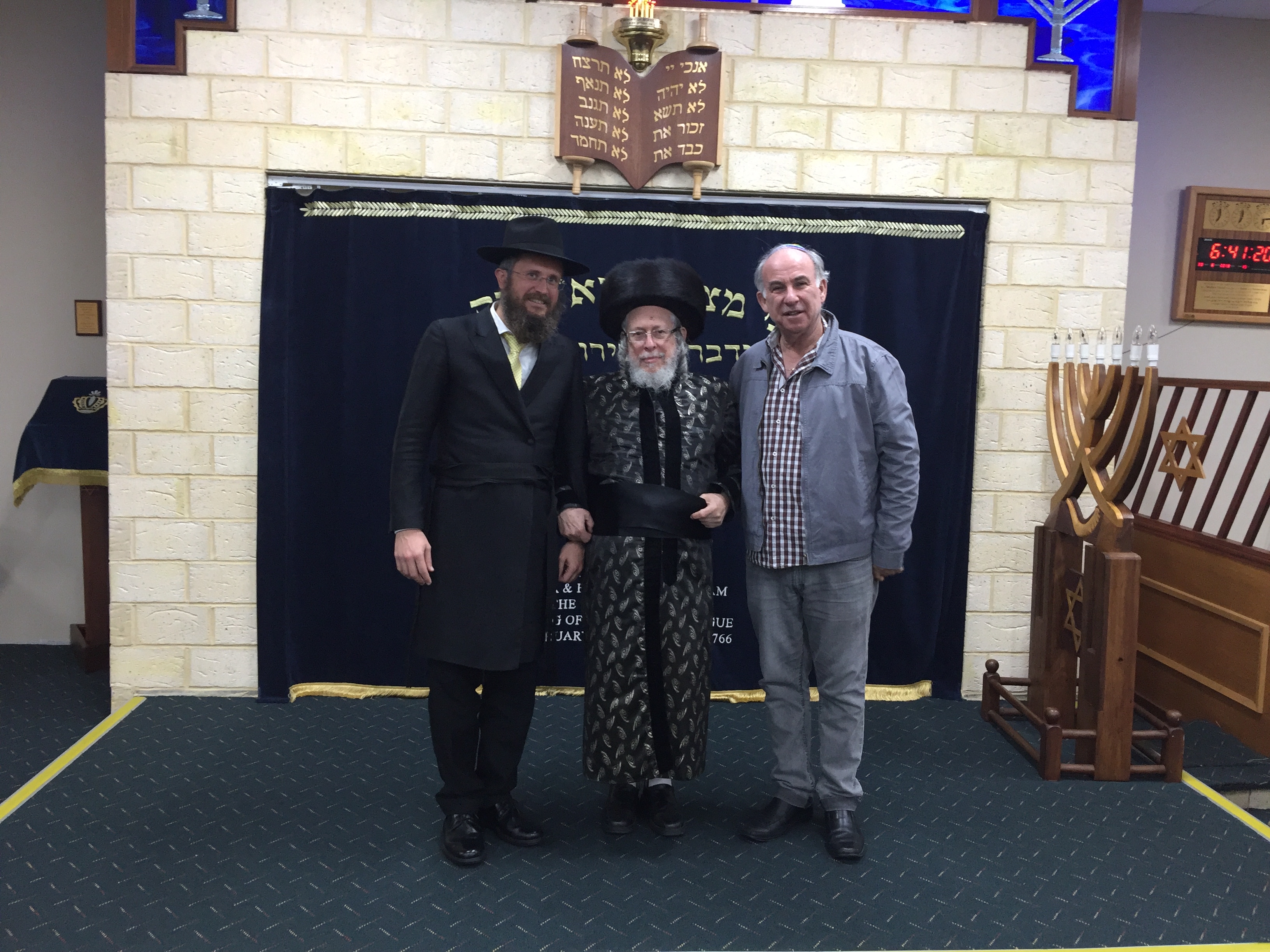
With Rabbi Shalom White and the Rebbe
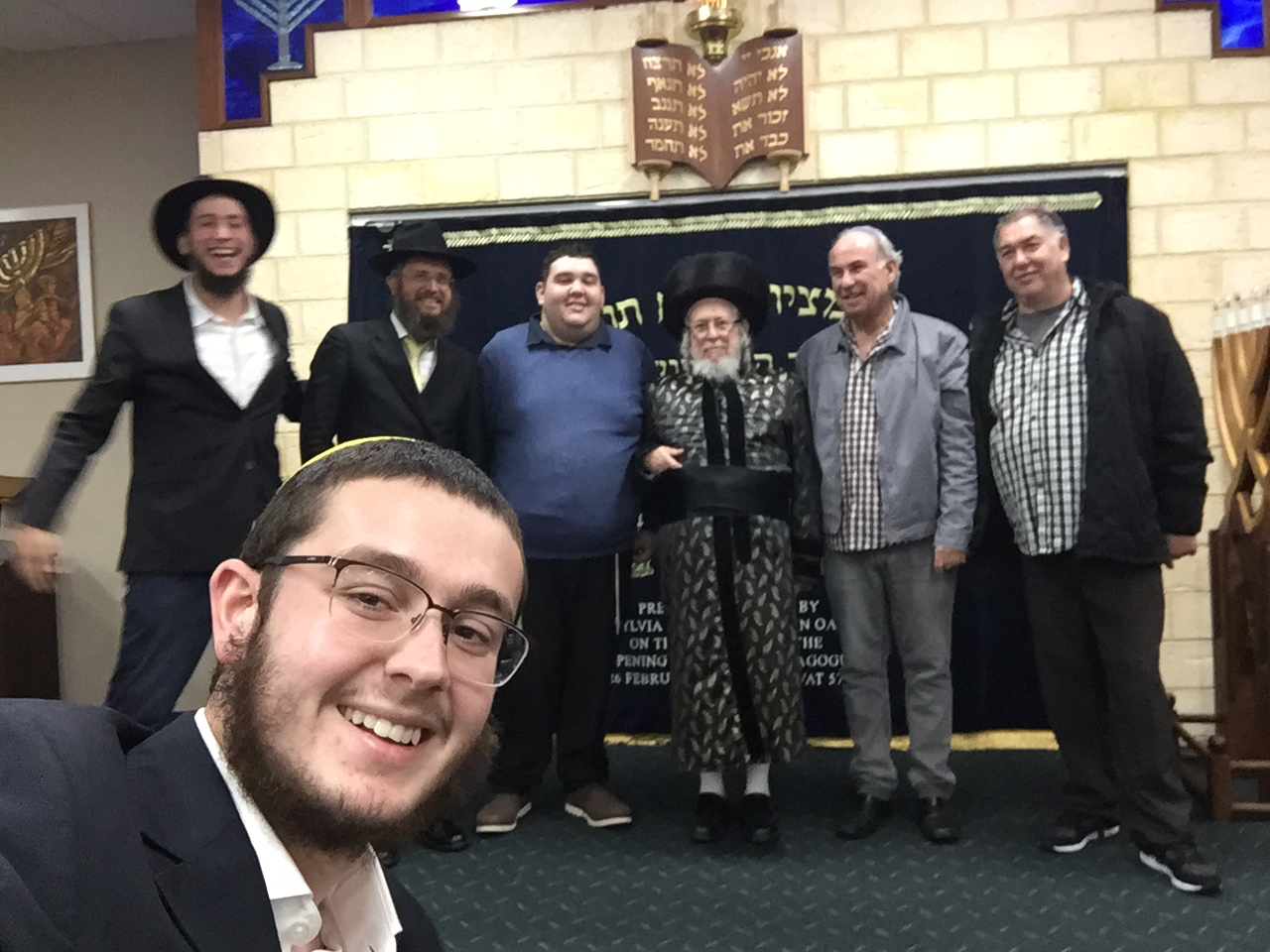
Mendy, Rabbi White, Sheldon Manushewitz, the Rebbe, Michael Manushewitz and Moishe in front
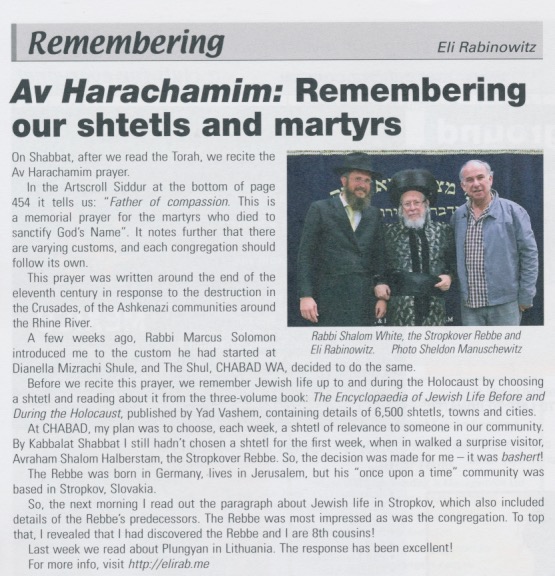
The Maccabean

13 July 2018

Earlier after the torah reading on shabbat we recited Av Harachamim

A noteworthy custom fitting the mood of the Sefira period deals with the prayer Av Harachamim. Av Harachamim, recited on Shabbat after the Torah reading was written in response to the Crusades. In it we memorialize the righteous martyrs and pray for retribution for their spilled blood. Av Harachamim is generally not recited on Shabbatot which have an added celebratory nature – such as Shabbat Mevarchim (the Shabbat in which we bless the new month). In many congregations during the Shabbatot of Sefirat Haomer, Av Harachamim is recited even on the Shabbatot in which we bless Iyar and Sivan. The Mishna Brura (284,18) adds, that even if there is a Brit Milah that Shabbat, giving us a second reason why Av Harachamim should not be recited, Av Harachamim is still said, since this was the season of the tragedies.

A few weeks ago, Rabbi Marcus Solomon of Dianella Mizrachi Shule, told me about an initiative he had started in his shul.

Before reading the Av Harachamim prayer,  he selects one of the 6500 shtetls that existed before and during the Holocaust from this three volume set:

Rabbi Solomon then shares the story of the particular shtetl to illustrate what we lost in Holocaust!

Today was the first time we did the same at Noranda CHABAD Shul during Shacharit.

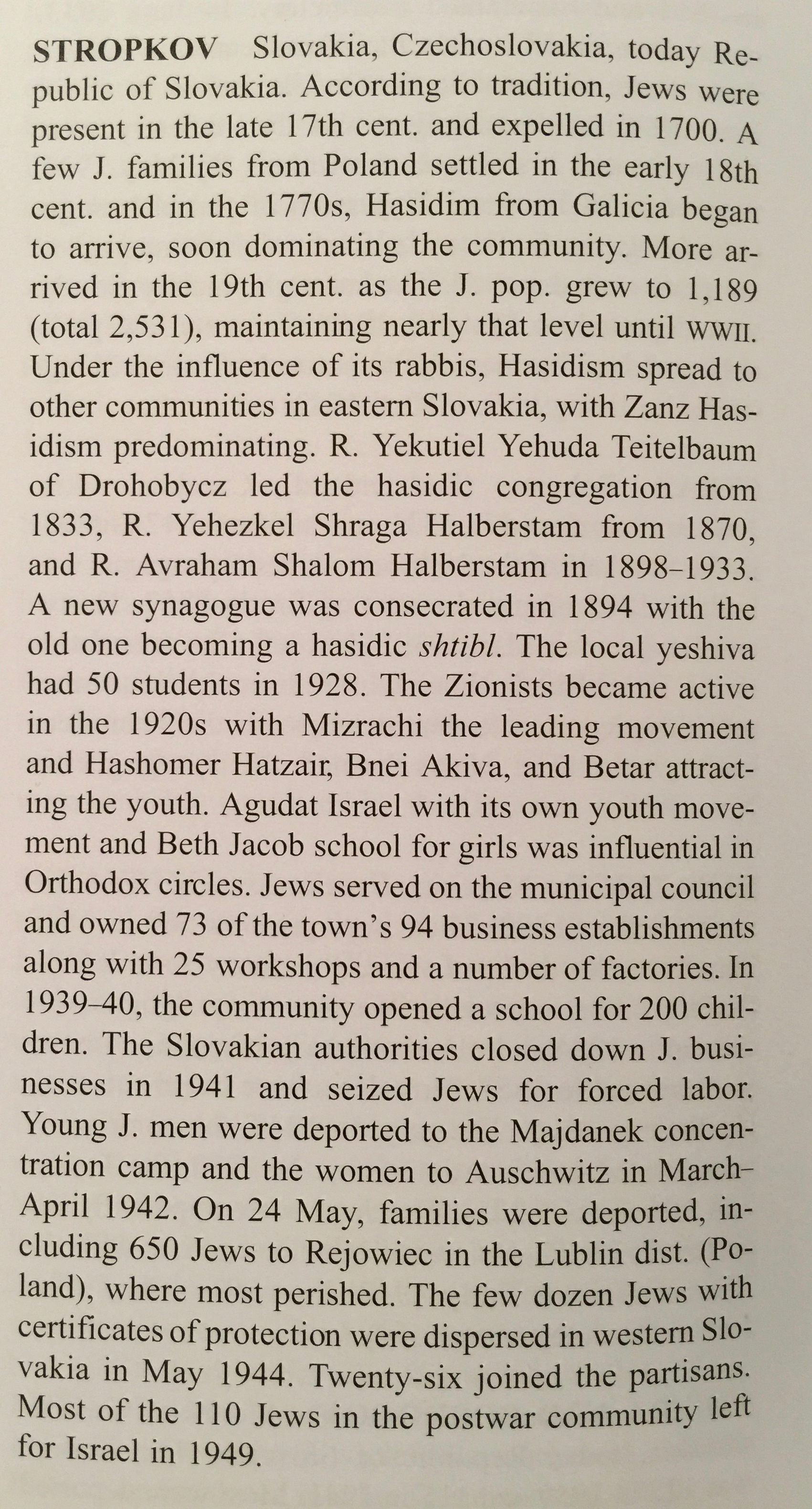
With the Stropkover Rebbe spending Shabbat with us, I chose the following shtetl from Volume 3:


Thanks to Michelle Urban and the JHGS for allowing me to use these books from their excellent library housed at CHABAD.

https://collections.ushmm.org/search/catalog/bib63061

It goes without saying that those in shul were inspired to hear about Stropkov with its Rebbe in our shul. The further connection as 8th cousins was an added bonus for us!

We discussed the Rebbe’s previous visits to Perth and at his request, last night I found this clip I filmed of the Rebbe at Benny Sasson’s barmitzvah June 2000. We did not know our connection then, and here 8 years later, I am pleased to be able to upload it to the internet for all to view and share!

Stropkover Rebbe’s 2000 visit

Stropkover Rebbe’s 2000 visit

At Benny Sasson’s barmitzvah

Source: youtu.be/nn1M-SVGTHk

 
July 2016

IMG_9271

The Stropkover Rebbe has just completed a visit to Perth Australia from Jerusalem.

We were honoured to have him spend Shabbat with us at the CHABAD shul in Noranda WA.

He has visited Perth before.

I took the opportunity on Saturday night to learn more about him and his town.

The Rebbe was born in Germany and lives in Jerusalem. The Stropkover Rebbe’s “once upon a time” community was based in Stropkov in Slovakia.

Map-Stropkov

Stropkov

From Wikipedia, the free encyclopedia
 
Stropkov
Town
Stropkov.jpg
View of Stropkov
Coat of arms
Country Slovakia
Region Prešov
District Stropkov
 
River Ondava
 
Elevation 202 m (663 ft)
Coordinates 49°12′18″N 21°39′05″ECoordinates49°12′18″N 21°39′05″E
 
Area 24.667 km2 (9.524 sq mi)
 
Population 10,866 (2012-12-31)
Density 441 / km2 (1,142 / sq mi)
 
First mentioned 1404
   

Stropkov (Slovak pronunciation: [ˈstropkow]HungarianSztropkópronounced [ˈstropkoː]Yiddishסטראפקאוו‎) is a town in Stropkov DistrictPrešov RegionSlovakia.

Jewish community

Jews first arrived in Stropkov, possibly fleeing Polish pogroms, in about 1650. About fifty years later, the Jews were exiled from Stropkov to Tisinec, a village just to the north. They did not return to Stropkov until about 1800. The Stropkov Jewish cemetery was dedicated in 1892, after which the Tisinec cemetery fell into disuse.

In 1939 the antisemitic Hlinka Party gain control of the Stropkov Town Council. From May–October 1942 the Hlinka deported Jews from the Stropkov area to AuschwitzSobiborMaidanek, and “unknown destinations”. By the end of World War II, only 100 Jews remained in Stropkov out of 2000 in 1942.

Chief Rabbis of Stropkov

The first rabbi of Tisinec and Stropkov was Rabbi Moshe Schonfeld. He left Stropkov for a position in Vranov. He was succeeded in 1833 by Rabbi Yekusiel Yehudah Teitelbaum (I)(1818–1883) who served as Stropkov’s chief rabbi until leaving for a post in Ujhely. The next incumbent was Rabbi Chaim Yosef Gottlieb (1790–1867), known as the “Stropkover Rov”. He was succeeded by Rabbi Yechezkel Shraga Halberstam (1811–1899), a son of Rabbi Chaim Halberstam of Sanz. His scholarship, piety, and personal charisma transformed Stropkov into one of the most respected chasidic centers in all Galicia and Hungary. Rabbi Moshe Yosef Teitelbaum (1842–1897), the son of the aforementioned Rabbi Yekusiel Yehuda Teitelbaum, was appointed as Stropkov’s next chief rabbi in 1880.

The charismatic and scholarly Rabbi Yitzhak Hersh Amsel (c1855–1934), the son of Peretz Amsel of Stropkov, was first appointed as a dayan in Stropkov and then as the rabbi of Zborov (near Bardejov). As legend has it, Rabbi Yitzhak Hersh Amsel died while praying in his Zborov synagogue. He is buried in the Stropkov cemetery where a small protective building ohel was erected over his grave to preserve it. Rabbi Amsel was succeeded in 1897 by Rabbi Avraham Shalom Halberstam (1856–1940). Jews, learned and simple alike, sought the advice and blessing of this “miracle rabbi of Stropkov”, revered as a living link in the chain of Chassidus of Sanz and Sienawa. Rabbi Halberstam served in Stropkov for some forty years, until the early 1930s, when he assumed a rabbinical post in the larger town of Košice. Rabbi Menachem Mendel Halberstam (1873–1954),the son of the aforementioned Rabbi Avraham Shalom Halberstam was then appointed chief rabbi of Stropkov and head of the Talmud Torah. After World War II Rabbi Menachem Mendel Halberstam lived in New York until the end of his life, teaching at the Stropkover Yeshiva, which he founded in Williamsburg, Brooklyn.

The present day Admor of Stropkov is HaRav Avraham Shalom Halberstam of Jerusalem. The Admor runs several yeshivas and kolelim in Jerusalem and other cities in Israel. The Admor dedicates himself to Ahavat Yisrael and to helping many who need to return to their Jewish roots.

Rebbe-Images

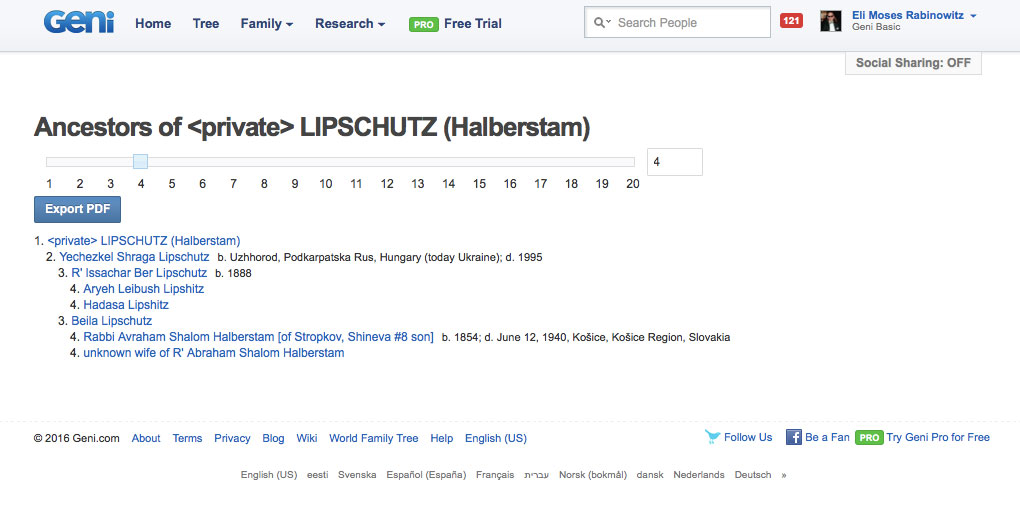
I then went into my Geni account and looked up the Stropkover Rebbe and found what appeared to be his family line.

I recalled that on Shabbat, he had been called up to the torah as HaRav Avraham Shalom ben Yechezkel Shrage.

Havdalah after Shabbat.

IMG_9322

On Sunday I printed out this page on Geni and showed it to the Rebbe who confirmed that this was indeed him – i.e. Avraham Shalom Lipschutz (Halberstam). He also confirmed that his mother was Beila, daughter of Avraham Shalom Halberstam.

Stopkov-4

I also printed out the Geni page which shows our relationship and presented a copy to the Rebbe.

Stropkover-3

So, besides all the friends he has Downunder, he now is happy to have added a 8th cousin in this isolated Jewish community!

We are both members of the Katzenellenbogen Rabbinic Tree.

IMG_9341

What Makes G-d Laugh 

Shabbat Balak

What Makes G-d Laugh

There is an old saying that what makes G‑d laugh is seeing our plans for the future.However, if Tanakh is our guide, what makes G‑d laugh is human delusions of grandeur. From the vantage point of heaven, the ultimate absurdity is when humans start thinking of themselves as G‑dlike.

Source: mailchi.mp/af9131e6afbc/life-without-bumps-3300829?e=678b339d93

Chabad of RARA

Chabad of RARA

Source: www.chabadofrara.org


Vabalninkis To Kurkliai

Vabalninkis

The sign to the old Jewish cemetery.


My 2016 visit – see more photos and details:

Source: elirab.me/vabalninkis/

Kupiskis

The Former Synagogue

Now library, being renovated 


Kupiškis

Kupiškis – Wikipedia

Kupiškis ( pronunciation (help·info)) (Polish: Kupiszki) is a city in northeastern Lithuania. It is the capital of the Kupiškis district municipality. Kupiškis is located on the Lėvuo and Kupa rivers. The name of the city comes from the Kupa River. The Gediminas Bridge crosses the Kupa River. There are six parts of the city, which are named:

Source: en.wikipedia.org/wiki/Kupiskis

Anyksciai

 
Former Jewish area and buildings  
Jewish Cemetery and memorial
 
Anyksciai

Anykščiai – Wikipedia

Anykščiai ( pronunciation (help·info); see other names) is a ski resort town in Lithuania, 20 miles (32 kilometres) west of Utena.[1] The Roman Catholic Church of St. Matthias in Anykščiai is the tallest church in Lithuania, with spires measuring 79 metres (259 feet) in height.

Source: en.wikipedia.org/wiki/anyksciai

Kurkliai

Synagogue

Kurkliai

Kurkliai – Wikipedia

Kurkliai is a town in Anykščiai district municipality, in Utena County, in northeast Lithuania. According to the 2011 census, the town has a population of 374 people.[1] Center of eldership. In town there is Anykščiai Regional Park.

Source: en.wikipedia.org/wiki/Kurkliai

Back