Professor Kassow, YIVO, Polin & Poland

Video of the opening statement in an online YIVO course run by Professor Samuel Kassow, world authority on Ashkenazi Jews.


Samuel Kassow

From Wikipedia, the free encyclopedia

Dr. Samuel D. Kassow (born 1946) is an American historian of the history of Ashkenazi Jewry. He was born in a displaced persons‘ camp in Stuttgart, Germany. His mother survived because a classmate hid her and her sister in a dug-out underneath the barn on his family’s farm, whilst his father was arrested by the Russians and spent the duration of the war in a Soviet prison camp.[1][2] He grew up in New Haven, Connecticut.[3] Kassow earned his B.A. from Trinity College, Hartford, Connecticut, in 1966, his M.Sc. from the London School of Economics in 1968, and his Ph.D. from Princeton University in 1976. He is married to Lisa Kassow, director of the Zachs Hillel House at Trinity College. He has two daughters named Miri and Serena.[4] Kassow was the Charles Northam Professor at Trinity College for many years.

Kassow was a consultant to the Museum of History of the Polish Jews, which opened on the site of the Warsaw Ghetto, and was responsible for two of the eight core exhibitions. [5]

In his books, Who Will Write Our History? Rediscovering a Hidden Archive From the Warsaw Ghetto and Who Will Write Our History? Emanuel Ringelblum, the Warsaw Ghetto, and the Oyneg Shabes Archive, Kassow speaks about the importance of preserving historical documents and the past. He describes the historical events going on during World War Two in the 1940s that affected and eventually eliminated the Warsaw Ghetto. His main focus is the three archives created in absolute secrecy by a small group of people that lived in the Warsaw Ghetto which were uncovered and studied about ten years later.[6]

His 2007 book Who Will Write Our History is currently being adapted to a documentary film of the same title, directed by Roberta Grossman and produced by Nancy Spielberg. It is set to be released in 2017.

Books

  • Students, Professors, and the State inTsarist Russia: 1884-1917, University of California Press, 1989. ISBN 0-520-05760-0.
  • Between Tsar and People: the Search for a Public Identity in Tsarist Russia. Edith Clowes, Samuel Kassow, James L. West eds. Princeton University Press, Princeton, NJ 1991. ISBN 0-691-03153-3.
  • The Distinctive Life of East European Jewry, YIVO, New York 2004
  • Who will Write our History: Emanuel Ringelblum and the Oyneg Shabes Archive, Indiana University Press, 2007

External links

IMG_0101

*************************************

YIVO

From Wikipedia, the free encyclopedia
YIVO
Center for Jewish History NYC.jpg
Established 1925
Location 15 West 16th Street, ManhattanNew YorkUS
Coordinates 40.738047°N 73.993821°WCoordinates40.738047°N 73.993821°W
Director Jonathan Brent
Public transit access Subway14th Street – Union Square
Website YIVO

YIVO (Yiddishייִוואָ), established in 1925 in Wilno, Poland (now Vilnius, Lithuania) as the Yidisher Visnshaftlekher Institut (Yiddishייִדישער װיסנשאַפֿטלעכער אינסטיטוטYiddish Scientific Institute[1]), is an organization that preserves, studies, and teaches the cultural history of Jewish life throughout Eastern Europe, Germany and Russia, as well as orthographylexicography, and other studies related to the Yiddish language. (The word yidisher means both “Yiddish” and “Jewish”.) The English name of the organization was changed to the Institute for Jewish Research subsequent to its relocation to New York City, although it is still primarily known by its Yiddish acronym. YIVO is now a member of the Center for Jewish History.

Activities

YIVO preserves manuscripts, rare books, and diaries, and other Yiddish sources. The YIVO Library in New York contains over 385,000 volumes[1] dating from as early as the 16th century.[2][3] The YIVO Archives holds over 24,000,000 documents, photographs, recordings, posters, films, and other artifacts.[1] Together, they comprise the world’s largest collection of materials related to the history and culture of Central and East European Jewry and the American Jewish immigrant experience.[1] The Archives and Library collections also hold many works in twelve major languages,[4] including EnglishFrenchGermanHebrewRussianPolish, and Ladino .[4]

YIVO also functions as a publisher of Yiddish-language books and of periodicals including YIVO Bleter[5] (founded 1931), Yedies Fun YIVO (founded 1929), and Yidishe Shprakh(founded 1941). It is also responsible for such English-language publications as the YIVO Annual of Jewish Social Studies (founded 1946).

History

YIVO was initially proposed by Yiddish linguist and writer Nochum Shtif (1879–1933). He characterized his advocacy of Yiddish as “realistic” Jewishnationalism, contrasted to the “visionary” Hebraists and the “self-hating” assimilationists who adopted Russian or Polish. Other key founders included philologist and theater director Max Weinreich (1894–1969) and historian Elias Tcherikover (1881–1943).[6]

Founded at a Berlin conference in 1925, but headquartered in Wilno – a city then in Eastern Poland with a large Jewish population – the early YIVO also had branches in Berlin, Warsaw and New York City. Over the next decade, smaller groups arose in many of the other countries with Ashkenazic Jewish populations.

In YIVO’s first decades, Tcherikover headed the historical research section, which also included Shimon DubnowSaul M. GinsburgAbraham Menes, and Jacob ShatzkyLeibush Lehrer (1887–1964) headed a section including psychologists and educators Abraham GolombH. S. Kasdan, and A. A. RobackJacob Lestschinsky (1876–1966) headed a section of economists and demographers Ben-AdirLiebman Hersh, and Moshe Shalit. Weinreich’s language and literature section included Judah Leib (“J.L.”) CahanAlexander HarkavyJudah A. JoffeSelig KalmanovitchShmuel NigerNoah Prilutzky, and Zalman Reisen.[7] YIVO also collected and preserved ethnographic materials under the direction of its Ethnographic Committee.[8] In 1925, YIVO’s honorary board of trustees or “Curatorium” consisted of Simon DubnowAlbert EinsteinSigmund FreudMoses GasterEdward Sapirand Chaim Zhitlowsky.

From 1934–1940, YIVO operated a graduate training program known as the Aspirantur. Named after Zemach Shabad, YIVO’s chairman, the program held classes and guided students in conducting original research in the field of Jewish studies. Many of the students’ projects were sociological in nature (reflecting the involvement of Max Weinreich) and gathered information on contemporary Jewish life in the Vilna region.[9]

The Nazi advance into Eastern Europe caused YIVO to move its operations to New York. A second important center established as the Fundacion IWO in Buenos Aires, Argentina.[10] All four directors of YIVO’s research sections were already in the Americas when the war broke out or were able to make their way there.[11] For their own reasons, the Nazis carried the bulk of YIVO’s archives to Berlin, where the papers survived the war intact, and eventually were moved to YIVO in New York

The Chicago YIVO Society is a third active center today .[12]

Publications

YIVO has undertaken many major scholarly publication projects, the most recent being The YIVO Encyclopedia of Jews in Eastern Europe, published in March 2008 in cooperation with Yale University Press.[13] Under the leadership of editor-in-chief Gershon David Hundert, professor of history and of Jewish Studies at McGill University in Montreal, this unprecedented reference work systematically represents the history and culture of Eastern European Jews from their first settlement in the region to the present day. More than 1,800 alphabetical entries encompass a vast range of topics including religion, folklore, politics, art, music, theater, language and literature, places, organizations, intellectual movements, and important figures. The two-volume set also features more than 1,000 illustrations and 55 maps. With original contributions from an international team of 450 distinguished scholars, the encyclopedia covers the region between Germany and the Ural Mountains, from which more than 2.5 million Jews emigrated to the United States between 1870 and 1920.

The first complete English-language edition of Max Weinreich’s classic book History of the Yiddish Language,[14] edited by Dr. Paul (Hershl) Glasser, was published in two volumes in 2008.


Polin Museum, Warsaw, Poland

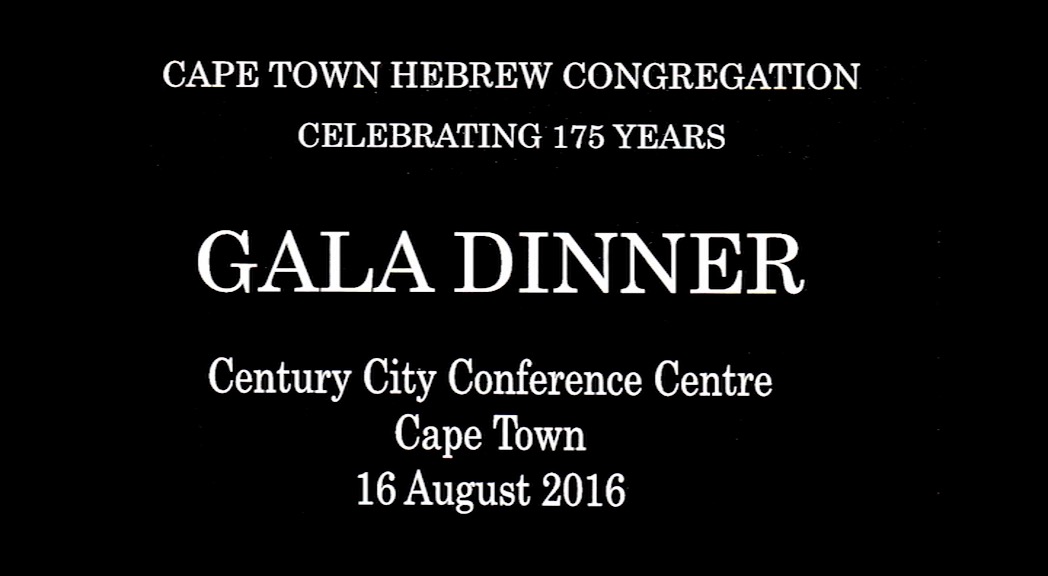
175th Anniversary of Cape Town Jewry – Videos

gala-2

Emdon Video Productions filmed the evening’s celebrations which included:

the hilarious MC, Nik Rabinowitz, no relation;

the Gardens’ chairman Solly Berger, who is my cousin;

Chief Rabbi of the UK & the Commonwealth, Ephraim Mirvis;

Chief Rabbi of South Africa, Warren Goldstein;

Rabbi Yossi Goldman of Sydenham Highlands North Shul;

Rabbi Pinchus Feldman of Sydney;

Rabbi Osher & Sarah Feldman of the Gardens Shul;

and South African music icon, Johnny Clegg.

Thanks to Emdon Video Productions for allowing me to extract some footage from their video.

http://www.emdonvideos.co.za

gala-1
That’s Jill and me on the top right of the display. We were married at the Gardens Shul on 31 July 1977
j-e-wedding

Rabbi Osher & Sarah Feldman of the Gardens Shul

gala-dinner-10

Here are selected clips from the video. This video clip is for South African Jews, especially Boerejode. It is hilarious.


The Cape Town KehilaLink:

ct-k

My Other KehilaLinks

http://elirab.me/litvak-portal/kehilalinks/

The Great Challah Bake – Perth – 3 videos

Some of the crowd

perth-challah-bake-16-1

The three videos

Thursday 10 November 2016

Perth’s Jewish community kicked off its third annual Shabbat Project with a well attended Great Challah Bake at The Jewish Centre.

200 women attended.

Bianca Singer’s instructions, drosha and great Jewish music were heard via headphones on a silent disco – a world first!

A special challah cover was given as a home gift to all who attended.

Video: elirab.digital (me)

Music: Yaakov Shwekey

http://www.theshabbosproject.org

More videos to follow after Shabbat!

The Perth KehilaLink:

perth-kehilalink


Commemorating Kristallnacht

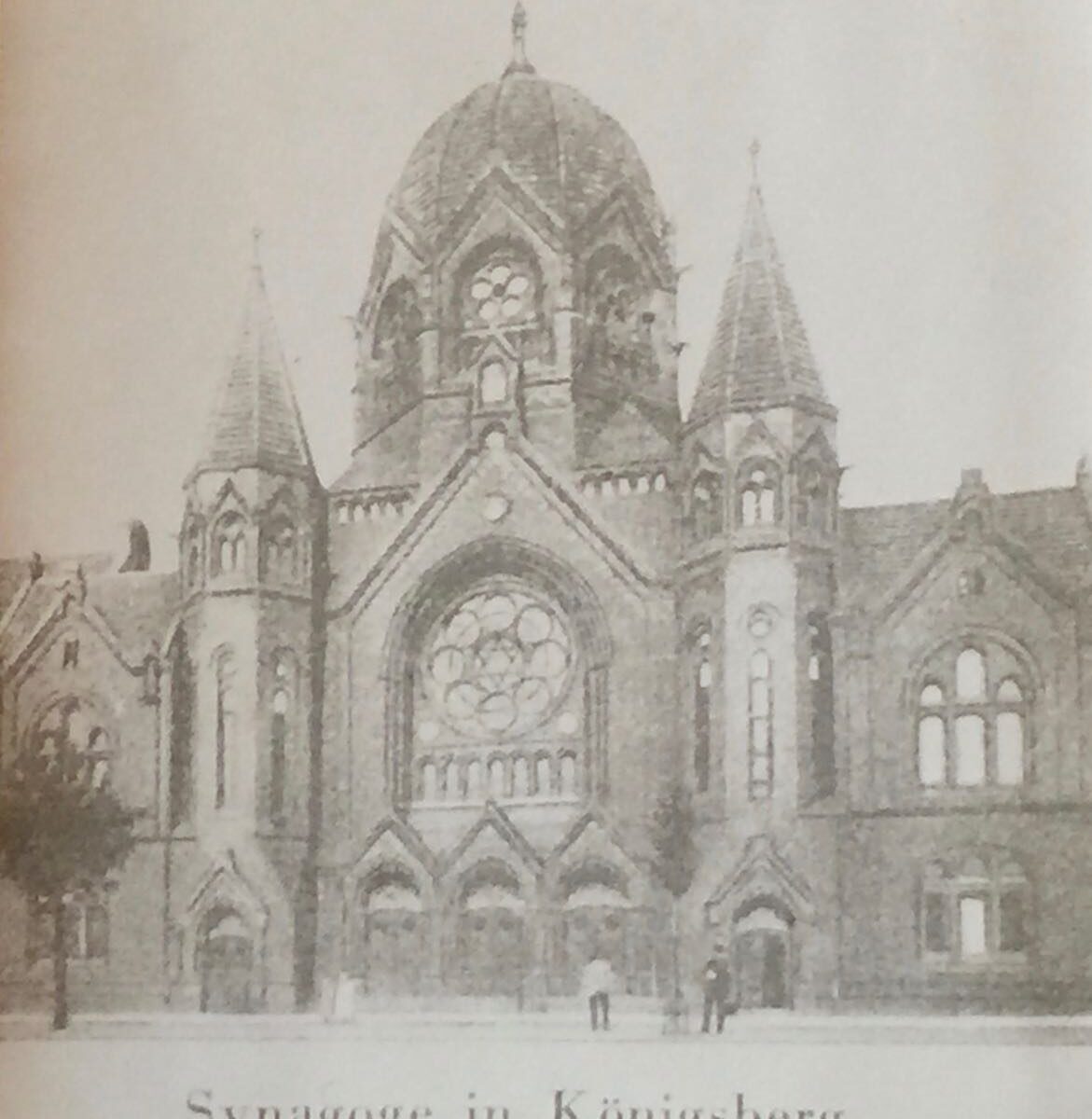
Königsberg Synagogue

img_1655

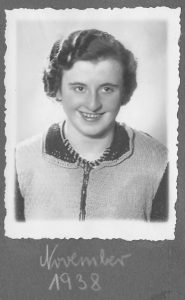
Lore Zusman was born in Königsberg 90 years ago.

Here are her memories of the Königsberg Synagogue, Kristallnacht and a book presented to her mother after the synagogue was destroyed on Kristallnacht in 1938.

Rabbi Reinhold
Rabbi Reinhold Lewin
The back of the photo
img_1913 img_1910 img_1912 img_1909
<
>
The Rebbetzin & son


img_1926 img_1925 img_1924 img_1915 img_1914 img_1916 img_1920 img_1921 img_1922 img_1923
<
>

Königsberg / Kaliningrad KehilaLink with links to the synagogue and Kristallnacht.

kallin

Hear Erika Sternberg’s story on Kristallnacht in Breslau. Click on her image.

erika


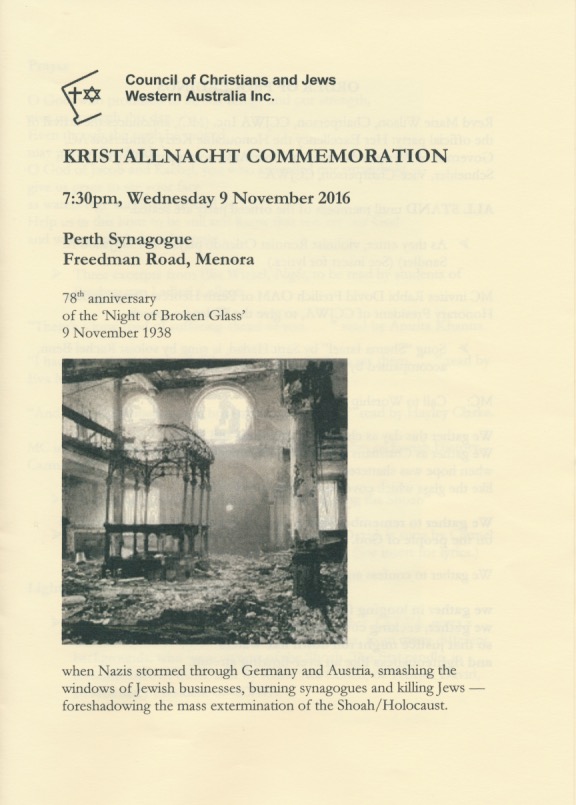
Commemoration in Perth – 9 November 2016

kristallnacht-comm


img_2537 img_2540 img_2554 img_2562 img_2565 img_2567 img_2570
<
>


Just received: An email from Susan Taube of the USHHM

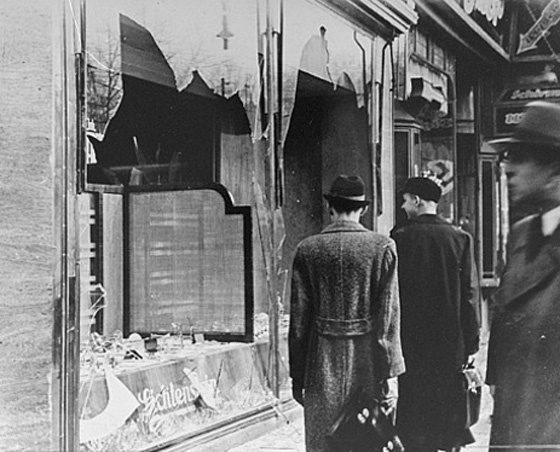
I was only 12 years old when the Nazis ransacked Jewish homes and buildings in my neighborhood on Kristallnacht, “The Night of Broken Glass.”

They took my father away to Buchenwald. My mother, sister, and I didn’t know if we would ever see him again. Our front door was smashed, our books torn apart, our dishes shattered. And with my father gone, we were left to pick up the pieces.

This week marks the 78th anniversary of that terrible night—and though decades have gone by, my memories of it have not faded.

Will you join me in commemorating Kristallnacht by viewing photographs and listening to testimonies in the Museum’s collection?

Photo: Susan Taube has been a volunteer at the Museum since its founding. US Holocaust Memorial Museum

LEARN MORE

Kristallnacht marked an ominous turning point in the Nazi persecution of Jews, and the Museum preserves artifacts and testimonies of the event so that its story can always be told.

We must remember—both to honor the innocent people who suffered that night, and to recognize our responsibility to help those facing hatred and violence today.

Please take a few minutes to explore some of the remarkable evidence in the Museum’s collection from Kristallnacht.

Sincerely,

Susan Taube
Holocaust survivor and Museum volunteer

Photo: Shattered storefront of a Jewish-owned shop destroyed during Kristallnacht. Berlin, Germany, November 10, 1938. National Archives and Records Administration, College Park, MD


Living Historians

CARMEL SCHOOL’S LIVING HISTORIAN PROJECT 2016

audience

The invitation:

As part of their Holocaust Studies program the Year 10 students, in small groups, have interviewed Perth Holocaust survivors and recorded their stories. The personal experiences of the “living historian” opens up a view of history that cannot be found in books. The lessons in life and insights that the students have gained from meeting with their allocated survivors will stay with them long after the project and their years at school have ended.

We usually have an evening where we invite the survivors and parents of the students to view their projects, but we felt that with the amount of effort the students put in to their work, one night is not sufficient. We will therefore be opening our very special exhibition to the Perth Jewish Community on Thursday 27 October at 7pm in the Breckler Troy Hall in the High School.

We invite you to come and view the students’ displays and gain some insight into the lives of the Perth Holocaust survivors and their experiences.

Shirley Atlas – Jewish History teacher

Carmel School, Perth Australia

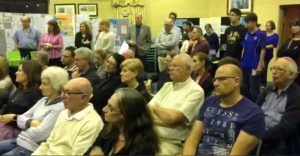
I attended this excellent event which began with an introduction by Jewish History teacher, Shirley Atlas, followed by groups of  Year 10 students introducing their survivor’s story. We were then invited to view their presentations set up around the high school hall.

The survivors featured were from Poland, Hungary, German, Holland and Lithuania.

Here are a few photos taken on the evening

img_2252 img_2254 img_2258 img_2259
<
>

Heiny Ellert’s team – video presentation:


img_2278 img_2277

img_2276
Olivia Walters, Yannai Goldberg, Aaron Grolman, and Teagan Joffe

Heiny’s testimony which I filmed for the Holocaust Institute in 2015:

The Neishtot-Tavrig KehilaLink

http://kehilalinks.jewishgen.org/Naumiestis

neishtot-tavrig

My visit in 2016

Žemaičių Naumiestis

Building Bridges with the TECs in Lithuania

IMG_6816

Here is my update on the TECs – Tolerance Education Centres in Lithuania and how we can help build bridges.

If you know the name of your shtetl, please contact me and I will help you to connect with those who are working with TECs and Lithuanian school students and their teachers. Travelling to the region and meeting with local students has been the most rewarding of my experiences in the past six years.

There are growing numbers of Lithuanians, Poles and those within other communities in the FSU who now learn about their history and about the rich Jewish life that once existed in these towns, which are now devoid of Jews. The internet now offers the best opportunity ever for them to engage with Jewish people from abroad.

There is a further benefit: we can educate our children and grandchildren here in the Litvak diaspora. So little seems to be availble within the school curriculum, even though private Jewish Day School fees are so high.  “Too hard” or “we are covering it” is what I hear! And then there is also the no response…… and another year passes!

It is a real shame that our cultural heritage is in danger of fading away and dying!

Educating about our Jewish cultural history remains my passion and I hope and that there are enough of us out there to make a difference!


There are now 119 Tolerance Education Centres in Lithuania.

Here is the list:

TEC Institutions In Lithuania

Here is an example of three of these projects and how visitors to Lithuania can engage teachers and students involved in these projects.

TEC Institutions’ Projects


TEC News From Lithuania


Herzlia – Atzalyno Bridges

TEC News From Lithuania

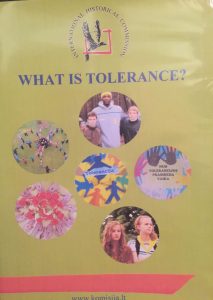
TEC – Tolerance Educational Centres in Schools.

Background

Established by the International Commission for the Evaluation of the Crimes of the Nazi and Soviet Occupation Regimes in Lithuania.
The Commission was established upon the Lithuanian independence, and has been under the chairmanship of Emmanuel Zingeris, the long-serving Jewish Member of the Seimas.

In 2004 the Tolerance Centre principle was approved. The Tolerance Centre in Plunge was the 8th such centre established. There are now in excess of 100. The co-ordinator of the T C in each school, or museum, has autonomy.

The emphasis on the Tolerance Centre in Plunge is on the Jewish tragedy rather than the Russian brutality. Naturally, we are more concerned with the crimes against the Jews. Programs also include a study of Jewish life before WWll.
There are a number of Jews who are against the “Commission” because they are there also to teach about the Soviet regime.


website: www.komisija.lt

newsletter-of-tec1

newsletter-of-tec2

newsletter-of-tec3


newsletter-of-tec4

newsletter-of-tec5

Visit the KehilaLinks for many of these towns

http://elirab.me/litvak-portal/kehilalinks/

Back