New Jewish Websites & Shemot

DSCN1021

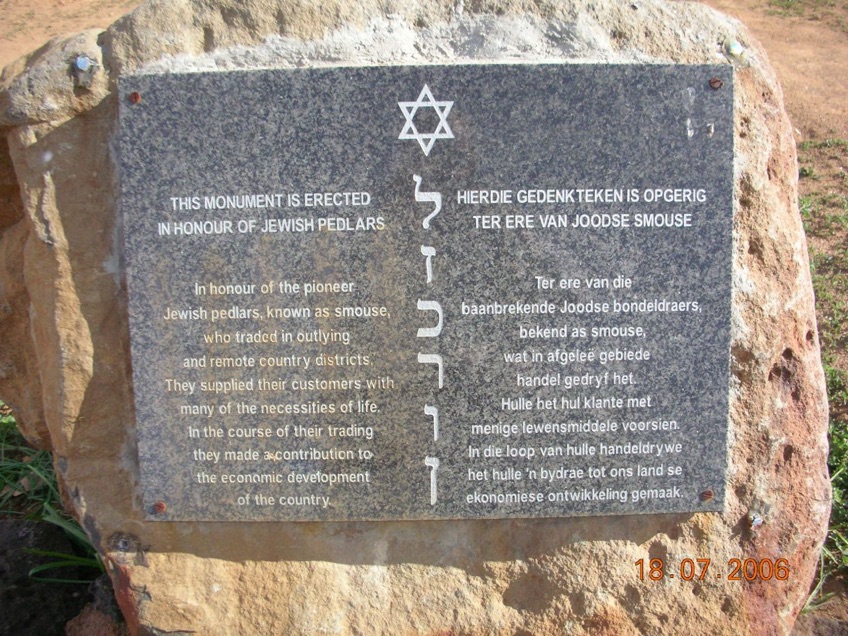
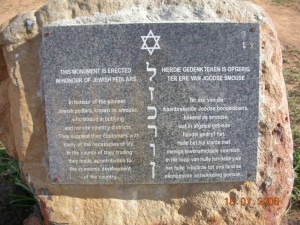
In honour of the Jewish Pedlar or Smous – see Graaf Reinet KehilaLink


Screen Shot 2016-04-07 at 11.09.49 AM

Screen Shot 2016-04-07 at 11.09.36 AM

My article about the Shanghai KehilaLink has been published in the April 2016 edition of Shemot, the publication of the JGS of Great Britain.

http://www.jgsgb.org.uk/shemot

Screen Shot 2016-04-07 at 1.03.27 PM

My interest in family history started in 1992, after my cousin wrote seven ancestors’ names down on a scrap piece of paper.

I have had many genealogical success stories since then. This is due to my often unorthodox, multi focused approach, described by my daughter in law as “tangential”!

In 2011 I visited Eastern Europe for the first time. My heritage travels have taken me back four additional times. I have visited Estonia, Latvia, Lithuania, Belarus, Poland, Hungary, Germany, the Czech Republic and Turkey.

Screen Shot 2016-04-07 at 1.07.19 PM

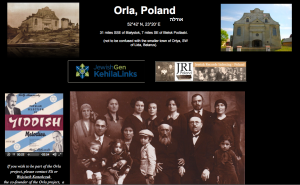
I started writing KehilaLinks in 2011, the first being for Orla, near Bialystok in Poland in 2011.

http://kehilalinks.jewishgen.org/orla

What is a KehilaLink:

JewishGen KehilaLinks (formerly “ShtetLinks”) is a project facilitating web pages commemorating the places where Jews have lived.  KehilaLinks provides the opportunity for anyone with an interest in a place to create web pages about that community.  These web pages may contain information, pictures, databases, and links to other sources providing data about that place.

Kehila קהילה [Hebrew] n. (pl. kehilot קהילות): Jewish Community.  It is used to refer to a Jewish community, anywhere in the world.

Sites are hosted by JewishGen, the world’s largest Jewish genealogical organisation, an affiliate of the Jewish Heritage Museum in New York City. JewishGen provides amateur and professional genealogists with the tools to research their Jewish family history and heritage.

People are invited to send in their own stories, photos and memoirs. There is no cost in participating in a KehilaLink and it is a great way to share one’s family history


My list has grown to 63 websites with 3 more in the pipeline.

The full list and links are available at

http://elirab.me/litvak-portal/kehilalinks/

The Shanghai KehilaLink

Screen Shot 2016-04-07 at 1.12.11 PM

http://kehilalinks.jewishgen.org/shanghai/Home.html

220px-Sugihara_b

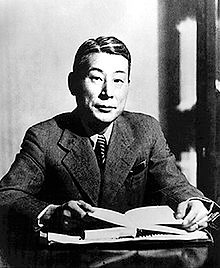
Ironically, the one place I have not been to is Shanghai! Yet, I have been drawn to it by its connection to the Jewish people and especially because of the story of Chiune Sugihara, the Japanese consul in Kovno, the capital of Lithuania during WWII. Against his government’s wishes, Sugihara issued transit visas to Jews, enabling them to get to Shanghai, and therefore saved many lives. The story only surfaced in the 1970s. See  Rabbi Levi Wolff of Sydney Central Synagogue:

http://kehilalinks.jewishgen.org/shanghai/Australia.html

The video:

Sugihara also appears on several of  my other KehilaLinks: Mir in Belarus, Kedainiai in Lithuania, and Sydney and Melbourne in Australia.

See also:

http://elirab.me/australia/sugihara-house-museum/

Four New South African KehilaLinks

This week we went live with:

Grahamstown

Graaff Reinet

Springs

Benoni

Please visit the sites. If you have connections to these towns or cities, please contact me.

There are already some interesting contributions:

Read about the tribute to the Jewish pedlar (smous) from Rabbi Moshe Silberhaft

DSCN1021

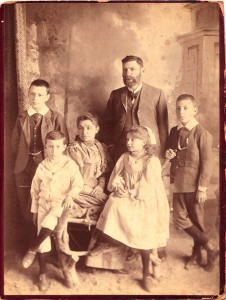
Photos of the Wertheim family from Amanda Katz Jermyn: Read Amanda’s story:

  Julius,Fritz,Mathilda,Hermann,Fanny,Max-Wertheim,-Graaff-Reinet,-abt.-1892.1

Amanda’s grandfather’s uncle, Hermann Wertheim, his wife Mathilde, and children Julius, Max, Fanny and Fritz who lived in Graaff-Reinett. It was taken in about 1892

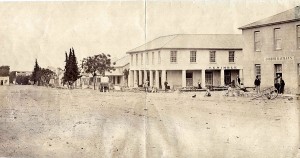
Wille-and-Wertheim-co.,right,-was-Baumann-Bros.,-Graaff-Reinet1

The general store, Wille & Wertheim, formerly Baumann Bros., where Amanda’s grandfather, August Katz came to work for his uncle Hermann Wertheim.

August Katz, Boer War

August Katz, Amanda’s grandfather, in his British Boer War uniform

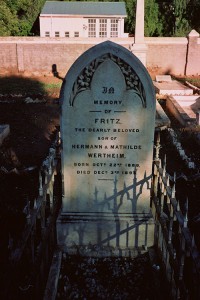
048_4-s

Grave of Fritz Wertheim, son of Mathilde and Hermann Wertheim. Hermann was a brother of Amanda’s great-grandmother, Mathilde Wertheim.

Kol Tuv


Letters From The Pinsker Orphans Left Behind

Letters From The Pinsker Orphans Left Behind

Click on the link above to view the post.

There are several lists of names which are searchable in the WordPress search engine on the top of the sidebar on the right.

Should you wish to receive an email each time I post, please enter your email address and press “subscribe”. Confirm the email that you will receive. It is free!

Details about David Sandler and his books are available by clicking on the link above.

Kosher Shtetl Tour

Hi All

Do you want to experience an inspirational  tour of Latvia, Lithuania & Belarus, led by highly respected and experienced guide, South African Hugh Raichlin, together with local English speaking guides?

Eddie’s Kosher Travel is offering the following excellent tour next June. All Eddie’s Kosher Travel tours are kosher.

Kosher-LITHUANIA

I am helping to promote this tour for Eddie’s Kosher Travel and I am available to answer your queries.

Please contact me at eli@elirab.com as soon as possible to register your interest, as there are limited spaces available.

There are several other KOSHER tours that Eddie’s Kosher Travel offers, so please ask me about these.

Best regards

Eli

Talks in Melbourne and Sydney

For those in Melbourne and Sydney interested in connecting to their roots, learning more about their Litvak heritage, this is for you ………..

your invitation to join me on a photographic journey of the Litvak shtetls.

Below is the advert for Melbourne for this Sunday, 1 November at 8pm.

I will be giving the same presentation at  Sydney Central Synagogue next week Thursday, 5 November at 7pm.

Address: 15 Bon Accord Ave, Bondi Junction NSW 2022

CSC-Exploring-our-Roots-s

Litvaks On The Move!

Let us know your shtetls’ names

Litvish Cropped

(Map – my thanks to Dovid Katz)

We can then update you on the activities in those towns.

For example, there are numerous Jewish projects currently taking place in Seduva, Zagare, Birzai, Plunge, Kedainiai, Joniskis, Kupiskis, Kaunas and Vilnius.

We are also interested in the towns that your Litvak forefathers settled in, after leaving.

Please email your list together with your family names associated with the particular towns and shtetls to:

eli@elirab.com

You can also visit our Facebook pages:

Litvak Portal on Facebook and

South African Shtetl on Facebook

If you wish, we can put you in touch with others with the same connections.

I look forward to hearing from you.

PS – If you are in Jo’burg tonight, I am giving a talk at the SA Jewish Genealogical Society at the HOD.

http://elirab.me/genealogy/two-talks-in-joburg-cape-town/

It would be great to see you there!

Best regards

Eli

South African Shtetl Added

Besides the Litvak Portal:

Screen Shot 2015-08-11 at 9.15.53 am


 elirab.me/litvak-portal          facebook.com/pages/Litvak-Portal/1014205898589973

I have now added South African Shtetl pages:

SA-Shtetl-logo

http://elirab.me/south-african-shtetl

facebook.com/pages/South-African-Shtetl/714975411941007

If you have links to the following shtetls, please contact me:

Lithuanian KehilaLinks (Jewish websites)

Alytus

Arad

Aran (Varena)

Birzai

Druskinkinkai

Kedain

Kibart (Kybartai)

Kopcheve (Kapciamiestis)

Koshedar (Kaisiadorys)

Mariampol

Memel (Klaipeda)

Meretch

Naishtot

Naumiestis

Pilvsk

Ponievez

Pen

Plungyan

Salant

Serey

Shaki

Stokishok

Sudarg

Tavrig

Telz

Utena

Vikovishk

Virbain

Vishey


Other kehilalinks
Latvia

Aizpute


Belarus

Mir

Navahrudak

Brest

Vysokaye


NE Poland

Orla


Litvak Portal – A New Initiative

Litvak Portal:

I have set up a gateway to anything Litvak on Facebook. A website will also be added.

Screen Shot 2015-07-16 at 3.08.33 pm


https://www.facebook.com/pages/Litvak-Portal/1014205898589973

This Facebook page and its associated website will be dedicated information gateways (portals) to aspects of Jewish life, past and present, in Lithuania and those parts of Belarus, Latvia and Poland regarded as Litvak.

Categories to be included:
  • General History and Facts
  • Jewish Cultural History
  • Holocaust
  • Family Histories & Genealogy
  • JewishGen KehilaLinks
  • Geography
  • Education
  • Touring & Travel
  • Photography
  • Museums & Cultural Centres
  • Research
  • Synagogues
  • Jewish Communities
  • Music
  • Shtetl & other Special Projects
  • Litvak Diaspora
  • Diplomacy
Lithuanian KehilaLinks (Jewish websites)

Alytus

Arad

Aran (Varena)

Birzai

Druskinkinkai

Kedain

Kibart (Kybartai)

Kopcheve (Kapciamiestis)

Koshedar (Kaisiadorys)

Mariampol

Memel (Klaipeda)

Meretch

Naishtot

Naumiestis

Pilvsk

Ponievez

Pen

Plungyan

Salant

Serey

Shaki

Stokishok

Sudarg

Tavrig

Telz

Utena

Vikovishk

Virbain

Vishey


Other kehilalinks
Latvia

Aizpute


Belarus

Mir

Navahrudak

Brest

Vysokaye


NE Poland

Orla


I look forward to your suggestions.


Vilnius 5

My fifth visit to Vilnius in as many years. The Jerusalem of Lithuania!

Some images of the Choral Synagogue which around the corner from my hotel, The Conti.

[huge_it_slider id=”7″]

Choral Synagogue, Vilnius

From Wikipedia, the free encyclopedia
Choral Synagogue of Vilnius
Vilniaus sinagoga.jpg
Basic information
Location LithuaniaVilnius’ Old TownLithuania
Affiliation Judaism
Status In use
Architectural description
Architect(s) Dovydas Rosenhauzas
Completed 1903
Specifications
The Choral Synagogue of Vilnius (LithuanianVilniaus choralinė sinagoga) is the only synagogue in Vilnius that is still in use. The other synagogues were destroyed during World War II, when Lithuania was occupied by Nazi Germany.

The Choral Synagogue of Vilnius was built in 1903.[1]

The synagogue is built in a RomanesqueMoorish style.[2]

It is the only active synagogue that survived both the Holocaust and Soviet rule in this city that once had over 100 synagogues.[1]International donations and a small community of Jews in Vilnius support the synagogue. The synagogue holds services and is open to visitors.[2]

My first visit to the Vilnius Jewish Public Library which was most interesting. I met its director:
Žilvinas Beliauskas <zilvinas.beliauskas@vilnius-jewish-public-library.com>

[huge_it_slider id=”8″]

Video of Arcadius & Batya

Web:

Vilnius Jewish Public Library

On Facebook

The Green House and Sugihara

IMG_3536

IMG_3537

[huge_it_slider id=”9″]

Trip Advisor – Green House

Professor Dovid Katz at his home. A most delightful evening with an unforgettable icon!

DSC_7401DSC_7402

DSC_7411DSC_7413

[huge_it_slider id=”10″]

Video of Dov Katz

I met with renowned historian and guide: Ilya Lempertas

IMG_3548

Facebook: Ilya Lempertas

The Wiener Library, London

IMG_3210

Wiener-Library-Google

IMG_3138

IMG_3139 IMG_3141 IMG_3142DSC_5418

 DSC_5417 IMG_3152

IMG_3151

IMG_3155

IMG_3154 IMG_3153

IMG_3211

DSC_5414

DSC_5413 DSC_5415

DSC_5416

DSC_5406

DSC_5425 DSC_5421 DSC_5419DSC_5420

DSC_5430 DSC_5424 DSC_5422

IMG_3146

IMG_3148 IMG_3149 IMG_3150

Wiener Library

From Wikipedia, the free encyclopedia
 The Wiener Library for the Study of the Holocaust and Genocide is the world’s oldest institution devoted to the study of the Holocaust, its causes and legacies. Founded in 1933 as an information bureau that informed Jewish communities and governments worldwide about the persecution of the Jews under the Nazis, it was transformed into a research institute and public access library after the end of World War II. The official name of the institution is “The Wiener Library for the Study of the Holocaust and Genocide”[1] and is now situated in Russell SquareLondon.[2]

History

Alfred Wiener, a German Jew who worked for the Centralverein deutscher Staatsbürger jüdischen Glaubens (Central Association of German Citizens of Jewish Faith), a Jewish civil rights group, spent years documenting the rise of antisemitism. He collected books, photographs, letters, magazines and other materials, including school primers and children’s games,[3] recording the spread of Nazi propaganda and its racist doctrines.[4]

In 1933, Wiener fled Germany for Amsterdam and then settled in Britain. The collection opened in London on 1 September 1939, the day of the Nazi invasion of Poland. It was known as the Jewish Central Information Office and functioned as a private intelligence service. Wiener was paid by the British government to keep Britain informed of developments in Germany.[5]

After the end of World War II, the library used its extensive collections on National Socialism and the Third Reich to provide material to the United Nations War Crimes Commission and bringing war criminals to justice.

The Library’s most successful publishing venture was the production of a bi-monthly bulletin commencing in November 1946 (and which continued until 1983). Another important task during the 1950s and 1960s was the gathering of eyewitness accounts, a resource that was to become a unique and important part of the Library’s collection. The accounts were collected systematically by a team of interviewers. In 1964, the Institute of Contemporary History was established and took up the neglected field of modern European history within The Wiener Library.

During a funding crisis in 1974 it was decided to move a part of the collection to Tel Aviv. In the course of the preparations for this move, a large part of the collections was microfilmed for conservation purposes. The plans to move the library were abandoned in 1980 after the transports had already begun, resulting in a separate Wiener Library within the library of the University of Tel Aviv that consisted of the majority of the book stock, while The Wiener Library in London retained the microfilmed copies.

Today The Wiener Library is a research library dedicated to studying the Holocaust, comparative genocide studies, Nazi Germany, and German Jewry, and documenting Antisemitism and Neonazism. It is a registered charity under English law.[6]

The Fraenkel Prize

The Library also hosts The Fraenkel Prize. This prize, sponsored by Ernst Fraenkel (former Chairman and one of the Library’s Presidents) is for “outstanding work of twentieth-century history in one of The Wiener Library’s fields of interest”. These areas of interest include the following: “The History of Europe, Jewish History, The Two World Wars, Antisemitism, Comparative Genocide, Political Extremism”.[7]

See also

References

Further reading

External links

Coordinates51°31′21″N 0°08′42″W

Back